TL;DR

Get business pricing on tools and workshop supplies
- Business-only prices and quantity discounts
- Tax-exempt purchasing
- Multiple users, one account, clear invoices
A good tactical EDC belt must support your gear without sagging, be comfortable for extended wear, and suit your specific needs. Material, buckle security, and fit are the key factors to get right.
If you’re lugging tools, holsters, or pouches daily, a tactical EDC belt isn’t just an accessory — it’s your foundation. A sturdy, well-chosen belt keeps everything secure, comfortable, and accessible. Yet, with so many options flooding the market, how do you pick the right one?
This guide cuts through the noise. We’ll cover the vital features, recent innovations, and practical tips so you can find a belt that supports your work and your gear — without sacrificing comfort or durability.
Prioritize high-strength materials like reinforced nylon or leather for durability.
Choose a buckle that balances security with quick-release capabilities, such as Cobra-style locks.
Ensure your belt fits snugly—use precise measurements and adjustable systems for all-day comfort.
Support capacity matters: select a belt designed to carry your gear load without sagging.
Stay updated on innovations like modular attachment points and lightweight composites for added versatility.
What Makes a Tactical EDC Belt Stand Out from Regular Belts?
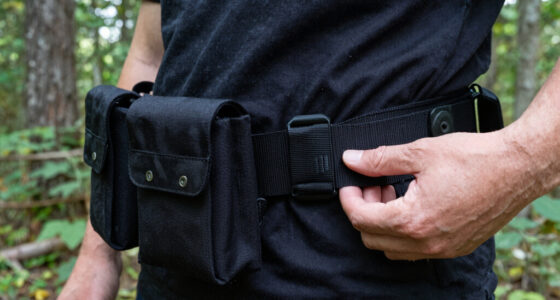
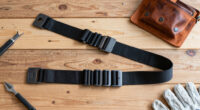
Think of a tactical EDC belt as a rugged backbone for your gear. It’s made from high-strength materials like nylon, reinforced polymer, or thick leather, designed to support weight without sagging. Unlike casual belts, these are built for load-bearing and durability.
For example, a leather belt might look sharp but can crack under heavy load, while a nylon belt with reinforced stitching handles a full load of tools and gear without creases or tears. Material choice impacts how long your belt lasts and how well it bears weight over time.
Why does this matter? Because in real-world situations, a belt that can’t support your gear risks failure at critical moments — gear falling off or causing discomfort during long shifts. The tradeoff often comes down to flexibility versus rigidity; leather offers a classic look but less flexibility, while nylon provides strength and some give. Choosing the right material depends on your environment and the weight of your gear, but durability should always be a priority to ensure safety and longevity.
tactical EDC belt reinforced nylon
As an affiliate, we earn on qualifying purchases.
As an affiliate, we earn on qualifying purchases.
How to Pick the Perfect Width and Thickness for Your Needs
Most tactical belts fall between 1.5 to 1.75 inches wide. This width balances support and compatibility with holsters and pouches, but the choice isn’t just about size — it influences how your gear interacts with your body and your workload.
Thicker belts, around 3-4mm, tend to be more rigid, providing a firm foundation that minimizes shifting and sagging under heavy loads. However, increased rigidity can sometimes reduce comfort if not properly designed, especially during extended wear.
For instance, if you carry a heavy-duty holster and multiple pouches, a 1.75-inch, reinforced nylon belt with a sturdy buckle offers support without feeling cumbersome. Conversely, a thinner belt might seem lighter but can flex or pinch under weight, leading to discomfort and gear instability. The tradeoff involves balancing support with mobility; thicker belts support more weight but can restrict movement slightly. Your choice should be guided by your typical gear load and comfort preferences, but remember: a wider, sturdier belt distributes weight more evenly, reducing pressure points and fatigue over long days.
heavy-duty tactical belt with quick-release buckle
As an affiliate, we earn on qualifying purchases.
As an affiliate, we earn on qualifying purchases.
Which Buckle Type Keeps Your Gear Secure and Easy to Use?
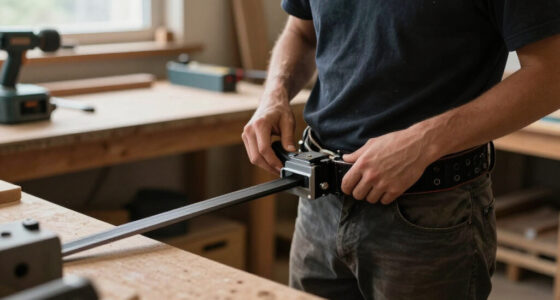
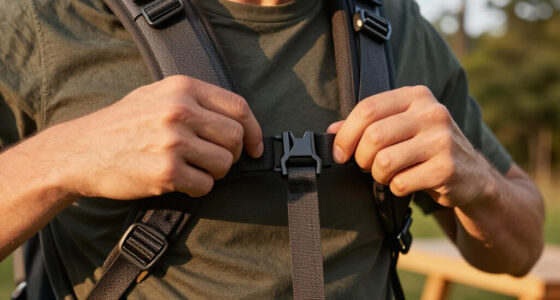
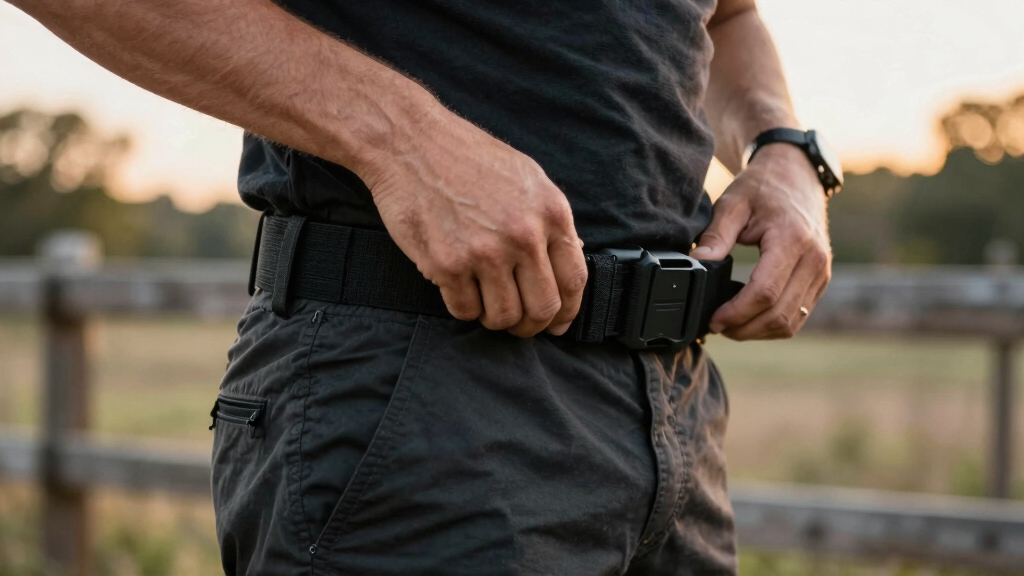
Quick-release buckles, like Cobra or side-release styles, are favorites for tactical belts because they offer a reliable combination of security and speed. These buckles lock firmly, preventing accidental release during intense activity, but are designed to be opened quickly when needed.
Imagine a scenario where you need to access your gear rapidly — a Cobra buckle made from durable aluminum or steel won’t pop open under strain, reducing the risk of losing gear at a critical moment. Yet, with a simple press or pull, you can release the buckle swiftly, which is essential when quick access is necessary.
Why does this matter? Because a buckle that’s too flimsy or prone to accidental opening compromises safety and functionality. Conversely, overly complicated locking mechanisms can slow you down. The best buckles strike a balance: secure enough to withstand daily wear and tear, but easy enough to open in emergencies. In choosing a buckle, consider your typical activity — the right one should support your safety and efficiency without adding hassle.
adjustable load-bearing tactical belt
As an affiliate, we earn on qualifying purchases.
As an affiliate, we earn on qualifying purchases.
How to Adjust and Fit Your Belt for All-Day Comfort
Proper fit is essential for comfort, safety, and performance. An ill-fitting belt can cause chafing, restrict movement, or fail to support your gear properly, leading to fatigue or even injury over long shifts.
Adjustable belts with ratchet or Velcro systems allow for micro-adjustments, enabling you to find that perfect fit. This precision is crucial because your body changes slightly throughout the day due to movement, temperature, or weight shifts.
For example, a tradesperson wearing a belt for 8-12 hours needs a snug fit that keeps gear stable but doesn’t cut off circulation. A ratchet system allows you to tighten or loosen in small increments, maintaining comfort without constant readjustment. To get it right, measure your waist with a flexible tape while wearing your typical work attire, then select a belt that matches that measurement. Always try the belt on with your gear and clothing to ensure it stays comfortable during movement and doesn’t cause hot spots or pinching. Remember, the right fit minimizes fatigue and maximizes safety, so take the time to adjust properly.
As an affiliate, we earn on qualifying purchases.
Support and Load-Bearing Power: Can Your Belt Handle Heavy Gear?
Support capacity is critical because it directly impacts your safety and operational efficiency. A belt that can’t support your gear risks sagging, shifting, or even failure at a crucial moment, which can compromise safety and productivity.
Rigid or semi-rigid belts excel here because they create a stable platform that keeps gear in place, reducing movement and discomfort. For example, if you carry a full-size duty holster and multiple pouches, look for a belt that supports at least 10-15 pounds without bending or sagging. The support isn’t just about comfort — it’s about preventing gear from shifting unexpectedly, which could cause distraction or accidents in demanding environments.
Why is this important? Because a belt that can’t handle your load can lead to gear falling off or causing imbalance, risking injury or loss of critical equipment. When selecting a belt, prioritize reinforced stitching and a sturdy buckle designed for load-bearing. Understanding your gear load and choosing a belt that matches or exceeds that capacity ensures safety, efficiency, and peace of mind during demanding tasks.
Latest Trends and Innovations in Tactical Belts
Recent advancements in materials and design are transforming tactical belts from simple accessories into highly versatile tools. Lightweight composites, for instance, reduce overall weight by up to 30% without sacrificing strength, which is a game-changer for those on long shifts or in physically demanding roles. This reduction in weight lessens fatigue and allows for greater mobility.
Modular systems equipped with attachment points like MOLLE or PALS enable users to customize their gear layout quickly and efficiently, adapting to changing needs or environments. Some belts now incorporate features such as built-in flashlight holders or hydration pack attachments, integrating functionality directly into the belt’s design. These innovations reduce clutter and improve accessibility.
Color options and camouflage patterns have expanded, allowing users to blend seamlessly into urban, woodland, or covert environments, which is crucial for tactical operations and outdoor work. Staying current with these trends means selecting a belt that not only meets your current needs but also offers flexibility for future adaptations, ensuring durability, comfort, and style over time.
Quick Comparison: Top Features to Consider When Buying
| Feature | Why It Matters | Best For |
|---|---|---|
| Material | Supports weight, resists wear | Heavy gear, all-day wear |
| Buckle Type | Security vs. quick access | Fast-paced environments |
| Width & Thickness | Support & compatibility | Heavy gear, comfort |
| Adjustability | Personal fit & comfort | Long shifts, varied gear load |
| Support Power | Prevents sagging & gear shift | Carrying tools & holsters |
Frequently Asked Questions
What material is best for a tactical EDC belt?
Reinforced nylon and thick leather are top choices for durability and support. Nylon belts are lightweight and resistant to weather, while leather offers a tougher, more formal look. Consider your environment and load when choosing.
How do I find my correct belt size?
Measure your waist with a flexible tape while wearing your usual work clothes. Add 2 inches for comfort, and choose a belt with adjustable features or multiple sizing options. Always try it on with your gear for the best fit.
Can I wear a tactical belt casually?
Absolutely. Many belts blend rugged durability with style, making them suitable for casual wear. Just pick a color and design that matches your everyday wardrobe, and you’re good to go.
How much weight can a good tactical belt support?
Most high-quality belts support between 10-20 pounds of gear comfortably. Always check the load capacity specified by the manufacturer, especially if you carry heavy tools or multiple pouches.
Are tactical belts suitable for women?
Yes, many brands offer adjustable, slimmer options designed for women’s waistlines. Look for belts with versatile sizing and styles to match different body shapes and preferences.
Conclusion
Your tactical EDC belt is more than just a strap — it’s the foundation of your gear system. A sturdy, well-fitting belt supports your workload, keeps gear secure, and stays comfortable through long hours.
Remember: the right belt lasts longer, performs better, and makes your day easier. Invest in quality now, and your gear will thank you tomorrow — every day.
Fall Picks
fall essentials
As an affiliate, we earn on qualifying purchases.