TL;DR

Get business pricing on tools and workshop supplies
- Business-only prices and quantity discounts
- Tax-exempt purchasing
- Multiple users, one account, clear invoices
An Ideal Home comparison outlines the trade-offs between resin-bound and gravel driveways, including UK cost estimates of £90–£130 per square metre for resin and £50–£70 for gravel. Gravel is generally cheaper and easier to lay, while resin needs specialist installation and can offer a smoother, lower-maintenance surface; lifespan and appearance depend on materials, preparation and upkeep.
Ideal Home has published a guide comparing resin and gravel driveways, setting out differences in installation, upfront cost, durability and maintenance for homeowners deciding how to surface a driveway. The comparison gives typical UK prices of £50–£70 per square metre for gravel and £90–£130 per square metre for resin, while noting that ongoing upkeep and the quality of installation affect the longer-term choice.
The guide says gravel is usually the simpler material to install and may be suitable for a carefully planned DIY project. Interior designer Samantha-Jane Agbontaen says gravel can be quick to lay, often taking a couple of days with limited groundwork. By contrast, the guide says both resin-bound and resin-bonded surfaces require professional installation. Project consultant Fergus Wickland warns that resin can produce a poor or patchy finish if laid incorrectly or in unsuitable weather.
Cost is another clear difference in the comparison. Agbontaen describes gravel as one of the more affordable driveway options, while pointing out that it needs topping up over time. Zaeem Chaudhary, director of AC Design Solution, gives typical UK estimates of £50–£70/m² for gravel and £90–£130/m² for resin. The figures are estimates in the source, not a quote for any particular property or a guarantee of current local prices.
For durability, Chaudhary says properly installed resin can last 15–20 years; gravel may last longer overall but calls for more regular maintenance. The guide also identifies possible drawbacks for resin, including moss or algae in surface voids, gradual colour change and repairs that can be difficult to blend. Gravel can shift and require replenishment. In either case, the source stresses the importance of proper preparation before the surface is laid.
Balancing Upfront Cost and Upkeep
The choice affects more than the initial appearance of a home. A driveway must support parking and vehicle manoeuvring as well as form the approach to the property, so installation quality, maintenance and repairability matter alongside kerb appeal. Gravel’s lower stated upfront price may appeal to homeowners trying to manage a project budget, but replenishment adds work and cost over time. Resin carries a higher initial estimate and needs a specialist installer, with potential repair and weathering issues to weigh against its more uniform finish.
The source does not provide a single answer for every household: the better fit depends on budget, preferred appearance, site conditions and willingness to maintain the surface. The cost figures offer a starting point for comparing options, rather than a full lifetime-cost calculation.
As an affiliate, we earn on qualifying purchases.
How the Surfaces Differ
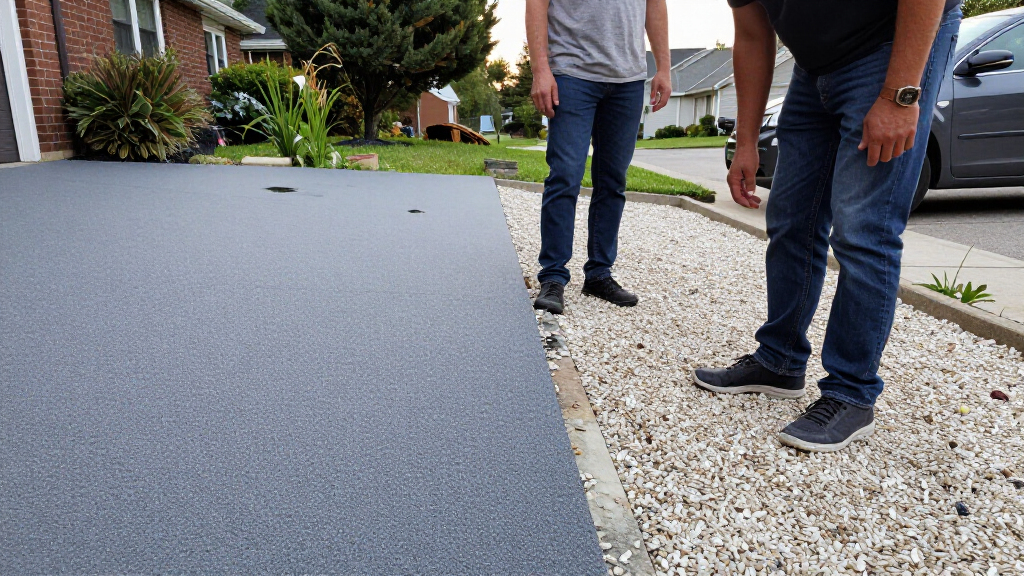
The comparison concerns two common driveway materials that create distinct surfaces. Gravel consists of loose stone, so it can be topped up and is generally easier to lay. Resin driveways use aggregate bound or bonded with resin to create a more fixed surface. The guide says resin-bound is currently the more common option and describes it as longer-lasting and lower-maintenance than resin-bonded, though it provides no separate cost or lifespan figures for the two resin types.
Ideal Home frames the decision around installation, price, longevity and appearance. It notes that both materials come in different colours and styles and can suit different properties. The supplied report cuts off during its discussion of which surface looks better, so it does not provide the full comparison of design preferences or a definitive conclusion on appearance.
“Resin is notoriously difficult to lay, and if not done correctly or laid in the wrong weather conditions, it can result in a poor and patchy finish.”
— Fergus Wickland, project consultant at Beauxfort Landscaping Systems
As an affiliate, we earn on qualifying purchases.
Costs and Lifespan Depend on Conditions
The source does not state when the UK cost estimates were collected, whether they include groundwork or other project expenses, or how regional labour prices affect them. They should not be treated as a fixed price for a specific driveway. It also does not give a quantified lifespan for gravel or a like-for-like lifetime cost that includes topping up and repairs.
Actual performance will depend on sub-base preparation, installation quality, materials, weather exposure and use. The supplied article excerpt ends before completing its appearance comparison, and it does not set out a recommendation for particular property types or site conditions. Homeowners will need project-specific assessments to compare options accurately.
As an affiliate, we earn on qualifying purchases.
Get Site-Specific Driveway Quotes
The guide offers general comparison points, but the next practical step for a homeowner is to have the driveway area and existing base assessed before choosing a surface. Ask installers to specify what their quote includes, such as preparation, drainage, materials and labour, and to explain how repairs and routine maintenance are handled. For gravel, factor in the likely need to replenish stone; for resin, confirm the proposed resin type, installation conditions and suitability of the existing base.
Because the source supplies no local pricing or project assessment, no final cost or material choice can be confirmed from the guide alone. A comparison of written, site-specific quotes can clarify the initial expense and expected upkeep for the property.
As an affiliate, we earn on qualifying purchases.
Key Questions
Which driveway surface costs less upfront?
The guide gives typical UK estimates of £50–£70/m² for gravel and £90–£130/m² for resin. It does not state when the estimates were collected or what additional project costs they include.
Can a homeowner install a gravel driveway?
The guide says a DIY approach to gravel may be possible with research and planning, and describes it as relatively straightforward to lay. Whether that is suitable depends on the site and the work required. The source says resin needs a specialist installer.
How long do resin and gravel driveways last?
Chaudhary says properly installed resin can last 15–20 years. He says gravel can last longer overall but needs more maintenance. The source gives no specific lifespan figure for gravel.
Which driveway needs less maintenance?
The guide describes resin-bound as having lower maintenance requirements than resin-bonded, but says resin may need cleaning and can be difficult to repair invisibly. Gravel needs topping up and ongoing attention. Actual upkeep will vary by installation and use.
What should be checked before choosing?
Compare the condition of the existing base, preparation and installation costs, drainage, expected maintenance and the surface’s appearance. Request site-specific quotes, since the guide’s per-square-metre estimates do not establish the cost for an individual property.
Source: rss
Columbus Day / Indigenous Peoples' Day Picks
long weekend sales
As an affiliate, we earn on qualifying purchases.