
TL;DR
A Hunker gardening report advises against pruning 11 shrubs in October, saying fall cuts can remove next season’s flower buds or prompt growth vulnerable to frost. The suggested timing varies by shrub, and the report does not provide a universal pruning rule or local climate guidance.
Hunker’s seasonal gardening report advises leaving 11 shrubs unpruned in October, warning that fall cuts can remove buds for next spring’s flowers or trigger tender growth vulnerable to winter cold. The guidance covers bigleaf hydrangea, camellia, butterfly bush, flowering almond, fringe tree, weigela, cotoneaster, beauty bush and viburnum, as well as lilac and forsythia.

Get business pricing on tools and workshop supplies
- Business-only prices and quantity discounts
- Tax-exempt purchasing
- Multiple users, one account, clear invoices
The report’s main distinction is between shrubs that flower on old wood—growth produced in a previous season—and those that bloom on new growth. For old-wood bloomers, pruning in fall may cut off buds already formed for the next flowering season. Hunker identifies bigleaf hydrangea, camellia, flowering almond, fringe tree, weigela, beauty bush, viburnum, lilac and forsythia as shrubs for which October pruning can compromise blooms.
Other risks apply to shrubs that flower on new growth. Hunker says October pruning of butterfly bush can leave it more exposed to winter cold, while pruning cotoneaster may encourage new growth that frost can damage. The report recommends waiting until late winter or early spring for cotoneaster, and until new leaves appear the following year before cutting back butterfly bush.
The recommended timing is not identical across the list. Hunker says to prune bigleaf hydrangea in summer after flowering and camellia after its blooms have dropped, usually in late winter or early spring. For fringe tree, it recommends pruning after flowering and concentrating on damaged branches. It advises pruning beauty bush after flowering, limiting cuts to no more than 30% and finishing by mid-summer. Weigela can be assessed in early spring, with dead winter-damaged branches removed.
Fall Cuts Can Cost Spring Blooms
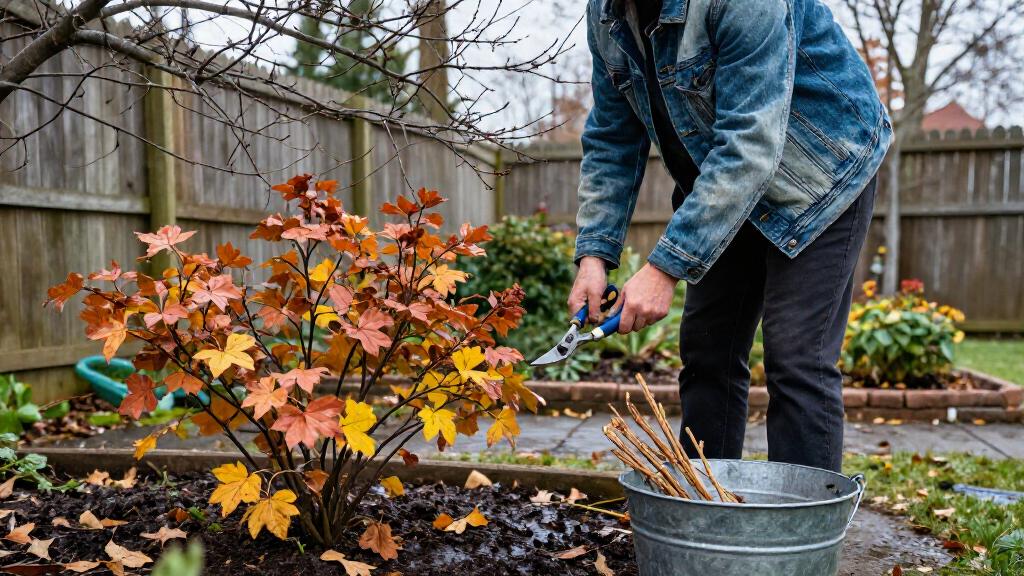
The practical consequence is that a routine October cleanup can affect a shrub’s next display. When a plant has already formed flower buds on older stems, cutting those stems can mean fewer or no flowers the following spring. For shrubs that respond to pruning with new growth, a late-season cut can leave that growth exposed to frost before it hardens.
The report’s advice matters most to gardeners deciding whether to tidy up now or wait for a plant-specific pruning window. It does not say shrubs should never be pruned: it argues that timing and the type of growth that carries flowers should guide the decision. That distinction can also help gardeners avoid treating every shrub in a hedge or border the same way.
Products Worth Considering

Greenworks 24V 8-Tool Combo Kit with Batteries, Cables, and 65W Charger

Greenworks 24V 4-Tool Combo Kit with Drill, Impact Driver, Circular Saw, Flashlight, Two Batteries, and Charger

DEWALT DWM120 10-Amp Deep-Cut Portable Band Saw
As an affiliate, we earn on qualifying purchases.
Why Shrub Timing Varies
Pruning advice depends in part on whether a shrub sets flower buds on old or new growth. According to Hunker, several plants in its list form next year’s buds toward the end of the current growing season. Cutting them back in autumn can remove those buds before they open. The report also notes that some new-wood bloomers may be harmed by fall pruning for a different reason: fresh growth may be vulnerable to winter weather.
The article is a seasonal gardening guide, not a local forecast or a universal horticultural standard. Its specific recommendations include waiting until after flowering for several shrubs and delaying some cuts until late winter or spring. Hunker also describes butterfly bush as invasive in several areas, so gardeners may need to check local guidance before deciding whether to keep or plant it.
“The list of plants to avoid pruning in October is a long one.”
— Hunker
Local Conditions Still Matter
The report does not specify how its recommendations change across different climates, cultivars or unusual weather conditions. It also does not provide a location-by-location pruning calendar or cite horticultural experts in the supplied material. The best timing may depend on the shrub’s exact variety, local frost dates and whether it has finished flowering; those details are not addressed for every plant.
The source names 11 shrubs, but the supplied text gives detailed entries for only nine: the sections for lilac and forsythia are not included. Their identification as old-wood bloomers appears in the report’s introductory explanation, but further species-specific instructions cannot be confirmed from the provided material.
Check Each Shrub Before Cutting
Gardeners can use the report as a prompt to identify each shrub before pruning, then confirm its flowering habits and recommended timing for their region. For plants that bloom on old wood, the key question is whether next season’s buds may already be present. For new-wood bloomers, the concern is whether a fall cut could prompt growth before winter.
Hunker’s seasonal advice is to postpone October cuts on the listed shrubs and prune later in the recommended window—often after flowering or in late winter or spring. Local extension services or qualified nursery staff can help resolve questions about specific varieties and local conditions. The source provides no further update or scheduled follow-up.
Key Questions
Which shrubs does the report say to leave unpruned in October?
Hunker names bigleaf hydrangea, camellia, butterfly bush, flowering almond, fringe tree, weigela, cotoneaster, beauty bush, viburnum, lilac and forsythia.
Why can fall pruning reduce spring flowers?
Some shrubs flower on old wood and form next season’s buds before winter. Pruning those stems in October may remove buds before they bloom.
When does the report recommend pruning bigleaf hydrangea?
Hunker says to prune bigleaf hydrangea in summer, just after it flowers, rather than in October.
Is October pruning harmful to every shrub?
No. The report addresses 11 shrubs, not all garden plants. It says timing depends on the shrub’s flowering growth and the risks of removing buds or encouraging vulnerable new growth.
Does the advice account for local climate?
Not in detail. The supplied report does not give a region-by-region calendar, so gardeners may need to check local guidance and account for variety and frost timing.
Source: rss