
TL;DR

Get business pricing on tools and workshop supplies
- Business-only prices and quantity discounts
- Tax-exempt purchasing
- Multiple users, one account, clear invoices
Heavy-duty work belts carry tools and accessories through demanding work, but “heavy-duty” is not a universal performance rating. Choose by construction, material, fit, tool layout, and compatibility; try the belt loaded with your real tools, follow the maker’s limits, and never use a tool belt for fall protection.
A loaded tool belt can feel like a toolbox strapped to your hips—until the pouch shifts while you kneel, or the buckle digs in halfway through a long shift. Heavy-duty work belts help you carry tools and supplies close at hand, but a tough-looking belt can still be the wrong one for your trade or load.
Here, you’ll learn what they are, what “heavy-duty” does and does not promise, and how to compare leather, nylon, construction, fit, pouches, and suspenders. You’ll also get a practical way to test a belt before trusting it on a full day’s work.
The goal is straightforward: choose gear that lasts and makes your work easier, not a belt that carries every tool you own. A sensible setup keeps the tools you use most within reach and avoids hauling weight you don’t need.
Treat “heavy-duty” as a product description, not a universal performance rating; inspect the stitching, hardware, and attachment points.
Compare leather and synthetic fabric against your work conditions, desired weight, flexibility, and cleaning routine.
Fit the belt with your real tools attached, then bend, kneel, and reach to check for slipping, pressure, or swinging pouches.
Balance the layout and carry only the tools the job needs; consider suspenders if a heavy setup pulls on your hips.
Follow maker guidance, inspect worn parts, and never use a tool belt as fall-protection equipment.
What makes a work belt genuinely heavy-duty?
Heavy-duty work belts are built to support tools, accessories, or equipment during demanding work; the label itself is not a universal performance rating. Look for durable materials, reinforced construction, and hardware made to handle repeated use, then judge the entire loaded setup rather than the name on the tag.
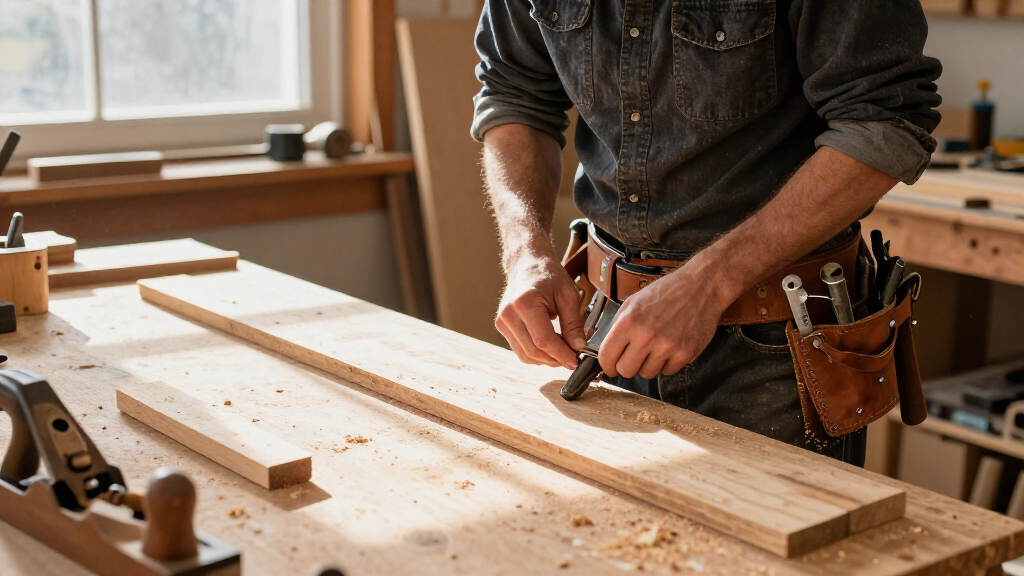
For example, a carpenter who carries a hammer, tape measure, fasteners, and a few hand tools puts repeated strain on the belt’s stitching and pouch attachments. Stress-point reinforcement, secure rivets, and a buckle that stays closed matter because those parts take the tugging and shifting. A wide belt may spread pressure over more of your waist, but width alone doesn’t prove that the belt or its hardware is strong.
Think of the belt as the foundation of a small mobile toolbox: every pouch and tool adds weight to it. Some are simple belts for a few tools; others sit at the center of a modular tool-belt system with interchangeable pouches, rails, or clips. Newer design features—such as padded belts, quick-adjust closures, and suspenders—can make a setup more adaptable, but newer does not automatically mean stronger.
Read the maker’s capacity and care guidance when available, and inspect the belt itself. Check the seam ends, buckle, rivets, and attachment points before you load it for the day. If a stitch is pulling loose or a clip won’t hold securely, swap the damaged part or belt rather than hoping it will last one more shift.
As an affiliate, we earn on qualifying purchases.
Which belt material suits your workday?
Heavy-duty work belts can be made from leather, synthetic fabric, or a combination, and no material wins for every trade. Leather often offers a durable, firm feel that can mold to your body over time; nylon and similar fabrics are often lighter, more flexible, and easier to clean.
Choose around the conditions you face. A carpenter who spends long days carrying a regular hand-tool kit may like a substantial leather belt that settles into a familiar shape. A maintenance worker who moves between indoor jobs and dusty spaces may prefer synthetic fabric that feels lighter and needs less involved cleaning. A hybrid can bring a firm leather contact area together with lighter fabric pouches.
Each choice has a tradeoff. Leather can feel heavy, and moisture followed by poor drying can affect it. Fabric can collect grit, sawdust, and moisture in its seams or pockets. Neither label tells you how well the belt is stitched or how securely its hardware holds; construction and intended use matter as much as the material.
Before buying, handle the belt if you can. Notice whether the edges feel comfortable against your waist, whether the material flexes where you bend, and whether the buckle is easy to adjust with your usual work clothes. Then check the manufacturer’s cleaning instructions. Good maintenance is practical: remove debris, dry wet gear properly, and don’t leave either leather or fabric packed away damp.
As an affiliate, we earn on qualifying purchases.
How can you tell if a belt will fit once it’s loaded?
A work belt fits when it stays secure with your actual tools attached without pinching, slipping, or limiting movement. Test the loaded belt, because an empty one can feel fine on a shelf and behave like a different piece of gear after you add pouches, fasteners, and hand tools.
- Load your usual kit. Add the tools you expect to carry on a normal day, not every tool you own. A plumber’s wrench-heavy pouch will sit differently from a carpenter’s nail and hammer setup.
- Adjust the belt in work clothes. Fasten it where you normally wear it and check that it stays put without biting into your waist.
- Move through work positions. Bend, kneel, reach, and climb a step or ladder only where it is safe to do so. Notice if pouches swing, the buckle presses into you, or tools block your movement.
- Rebalance what feels uneven. Move frequently used tools where you can reach them and spread weight sensibly. Remove tools you rarely use rather than carrying them for the whole shift.
For instance, if your drill bits and fasteners crowd one side of the belt, a long day of reaching and bending can make that uneven pull distracting. Comfort depends on the full setup, including pouch positions, clothing, body shape, and the task—not just the belt’s stated size. If a heavy load still pulls down on your hips, suspenders may help spread some of that weight across your shoulders. They’re an option, not a requirement for every worker.
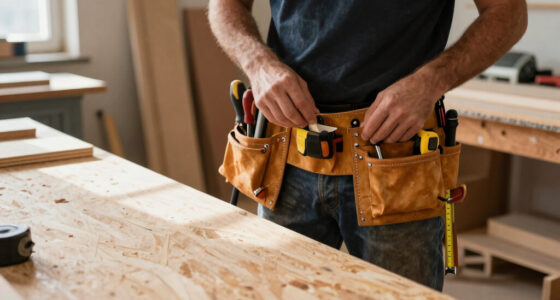
heavy-duty work belt with reinforced stitching
As an affiliate, we earn on qualifying purchases.
As an affiliate, we earn on qualifying purchases.
How should you arrange tools and pouches for fast access?
A useful belt layout puts the tools you reach for most within easy access and keeps the load balanced enough that the belt does not constantly pull to one side. Pocket count is a poor shortcut: a smaller number of well-placed pouches can work better than a crowded belt where tools knock together.
Start with the work itself. A carpenter installing trim might keep a tape measure and pencil where they’re easy to grab, with fasteners in a pouch that stays open enough for quick access. A maintenance worker with only a few hand tools may need a simpler arrangement, while someone switching between tasks may benefit from a modular layout that lets them change pouch positions.
Check pouch depth as well as placement. A shallow pocket may let a tool tip out when you crouch; a deep one may make a small fastener tool awkward to retrieve. Handedness also matters: a right-handed worker may want their most-used tools on one side, while a left-handed worker may prefer the reverse. Try the actual reach rather than copying another worker’s layout.
Modular systems can save you from buying a whole new belt when your work changes, but attachment methods vary. Some use clips, slots, or rails, and pouches from different brands may not fit securely together. Before mixing gear, check dimensions and compatibility with the manufacturer. A pouch that nearly fits is not a dependable attachment when it carries tools all day.
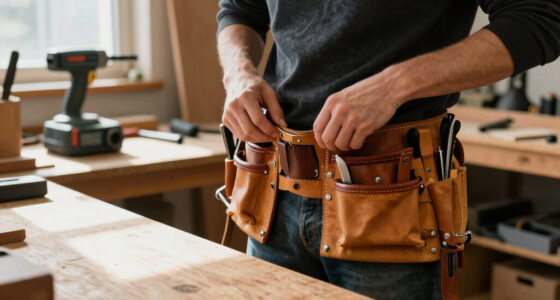
adjustable tool belt for construction
As an affiliate, we earn on qualifying purchases.
As an affiliate, we earn on qualifying purchases.
When do suspenders make a heavy load easier to carry?
Suspenders can help distribute the weight of a heavy tool-belt setup away from your hips, especially when you wear the belt for long periods. They are not a cure-all: a poor fit, an awkward pouch layout, or an unnecessarily heavy load can still make the setup uncomfortable.
Imagine a carpenter carrying a hammer, several fastener pouches, a tape, and hand tools from one room to the next. If the belt keeps dragging down or pressing into the hips, suspenders may spread part of that load over the shoulders. A worker carrying only a tape measure and a couple of tools may find suspenders add bulk without much benefit.
Try the belt and suspenders together with the tools you expect to carry. Adjust them so the belt remains in a comfortable position and the straps don’t rub or restrict your arms when you reach. Fit is personal, so another tradesperson’s favorite setup is only a starting point, not a guarantee that it will suit you.
Also take persistent discomfort seriously. Reduce the load, rebalance the gear, or change the setup rather than pushing through ongoing back or hip pain. If pain continues, seek appropriate professional advice. A belt should help organize your tools; it should not become a reason to ignore discomfort or carry more than the job calls for.
How do you keep a work belt dependable over time?
A work belt lasts longer when you remove grit, dry it properly after moisture, and catch damage before a seam or attachment gives way. Regular inspection takes only a moment and focuses on the parts that hold the loaded setup together: stitching, rivets, buckle, and pouch connections.
At the end of a dusty day, empty the pockets and shake out sawdust, dirt, or metal scraps. Clean the material according to its maker’s instructions instead of using a harsh cleaner that could damage it. If the belt gets wet, let it dry properly before storage; putting damp gear into a closed truck box can leave it musty and rough to handle.
Look closely at the belt where pouches attach and at the points that flex each time you bend. If a rivet loosens, a buckle slips, or fabric starts to tear, stop and work out whether the part can be replaced safely. For a modular belt, confirm that replacement pouches and clips fit the system rather than forcing a mismatch.
A landscaper who checks a belt at the end of a muddy week may spot packed grit and a fraying seam before Monday’s heavier job. Small checks protect your investment, but they don’t make damaged gear dependable. Follow stated load limits, replace worn parts, and never use a tool belt to support a person or connect to fall protection unless that equipment is specifically designed and certified for that purpose.
Frequently Asked Questions
What makes a work belt heavy-duty?
Durable materials, reinforced construction, and sturdy hardware are common signs, but “heavy-duty” is not a universal performance rating. Check stitching, rivets, the buckle, and attachment points, and follow any capacity guidance from the maker.
Is leather or nylon better for a work belt?
Leather often feels durable and can mold to the wearer, but it may be heavier and needs suitable care. Nylon and other synthetics are often lighter, flexible, and easier to clean; choose based on your work conditions and the quality of the whole belt.
How should a loaded work belt fit?
A loaded belt should stay secure without pinching, slipping, or limiting movement. Try it with your actual pouches and tools, then bend, kneel, and reach to see how the weight shifts.
Do suspenders make a tool belt more comfortable?
Suspenders can help spread a heavier load away from your hips, particularly during long shifts. They may add little for a light setup, so test the fit with your usual tools and decide based on how it feels.
Can you use a tool belt for fall protection?
No. A tool belt carries equipment; it must not support a worker or connect to a fall-protection system unless it is specifically designed and certified for that purpose. Use suitable fall-protection equipment and follow applicable safety requirements.
Conclusion
Choose a work belt by how it carries your real tools through your real workday—not by pocket count or a heavy-duty label alone. Check its construction, fit, layout, and attachments while loaded, and keep only the tools the job needs.
A dependable belt should feel like a steady toolbox at your side, not a load you spend the shift fighting.
Halloween Picks
halloween
As an affiliate, we earn on qualifying purchases.