This checklist is for woodworkers looking to make a bench setup more useful for everyday projects, from holding stock steady to refining cuts and managing dust. It includes both equipment picks and advice-only slots so you can focus on the upgrades that fit your work.

Get business pricing on tools and workshop supplies
- Business-only prices and quantity discounts
- Tax-exempt purchasing
- Multiple users, one account, clear invoices
The sections follow practical bench tasks: securing work, clamping assemblies, cutting, smoothing, and dust collection. Each pick is identified by its product name; the advice-only sections explain what to consider without naming a product.
Use the checklist to compare each item with your bench, workpieces, and existing tools. Check fit and compatibility before buying, and work through the sections in the order that best supports your next project.
Bench Vise
A bench vise helps hold a workpiece in place while you saw, plane, or shape it. The right choice depends on the kinds of stock you work with and how your bench is built, so start by checking the bench’s thickness, available mounting area, and underside clearance. Consider how you will use the vise: holding a board along an edge calls for a different arrangement than securing a small part for detail work.
A common mistake is choosing by jaw opening alone. Also think about jaw width, clamping depth, handle clearance, and whether the mounting hardware can be reached beneath the bench. Measure your most frequent workpieces and compare those dimensions with the vise’s stated capacity. If you expect to hold delicate stock, plan for protective jaw faces that suit the material. Confirm that the vise can be positioned without interfering with drawers, legs, or other bench hardware, and check that the mounting approach matches your bench before committing.
What to look for:
- Jaw opening suited to your typical stock
- Jaw width and depth for the work you hold
- Mounting space and underside access
- Handle clearance around bench legs and storage
- Protective jaw faces for delicate materials
Bench Dog Clamps
Bench dog clamps use bench dog openings to secure work across the bench, making them useful when a vise does not provide the hold or reach a task needs. Begin by checking the size, shape, spacing, and pattern of your bench dog holes. Compatibility is essential: a clamp that does not fit the openings or reach the workpiece will not serve its purpose, even if its design looks suitable.
Do not assume all dog holes or clamps share a standard size. Measure the holes and compare them with the clamp’s specified fit, then consider the thickness of your bench and the height of the work surface. Think through the direction of pressure and the dimensions of the stock you commonly secure. A frequent buying mistake is overlooking how the clamp will sit when engaged, including whether it obstructs a tool path or bumps into nearby hardware. If your bench has no dog holes, decide whether adding them is practical before selecting this style of clamp. Match the setup to your bench and the work you actually do.
What to look for:
- Clamp compatibility with measured hole size
- Reach suited to your workpiece dimensions
- Fit for bench thickness and surface height
- Clearance around tools and bench hardware
- A practical way to add dog holes if needed
Parallel Clamps
Parallel clamps are useful for holding assemblies together while you work, particularly when you want the jaws to remain parallel as pressure is applied. The listed pick is Parallel Clamps for Woodworking, 24-inch, 2-Pack. Before choosing it, compare the stated length with the assemblies you commonly make and consider whether two clamps provide the reach and placement options your projects require.
A common mistake is treating clamp length as the only fit check. Also consider jaw depth, bar clearance, how the clamps will be positioned, and whether their handles can be turned without hitting the bench or workpiece. Check the product details for capacity and construction rather than inferring them from the name. For larger assemblies, think about how many contact points are needed to hold the work evenly; for smaller projects, long clamps may be awkward to place. Confirm that the clamping surfaces suit the materials involved, and plan to protect finished or delicate faces where needed. Choose based on your assembly dimensions and working space, not the label alone.
What to look for:
- Length that reaches your typical assemblies
- Jaw depth suited to the stock thickness
- Capacity and construction stated in product details
- Handle access around the workpiece
- Enough clamps and contact points for the assembly
Parallel Clamps for Woodworking, 24-inch, 2-Pack

These heavy-duty parallel clamps feature a 4-way pressure design with parallelogram couplers, ensuring flat panels and flush joints in woodworking projects. Fully adjustable to accommodate panels up to 24 inches wide and 3 inches thick, they are built from durable steel with a powder-coat finish for longevity.
Pros:
- Innovative 4-way pressure for even clamping
- Fully adjustable for various project sizes
- Durable construction with rust-resistant finish
- Includes two clamps for efficient workflow
Cons:
- May be heavier than standard clamps
- Adjustments require manual setup
Best for: Woodworkers whose assemblies fit the stated 24-inch length
Not ideal for: Projects that need a different reach or jaw depth
Bottom line: Check assembly dimensions, jaw depth, and working clearance before selecting this two-pack.
Japanese Pull Saw
A Japanese pull saw cuts on the pull stroke, which can offer a controlled approach to hand sawing. The listed pick is KAKURI Japanese Pull Saw Set for Precision Woodworking – 7" Fine Cut,. The product name identifies a 7-inch fine-cut saw set, but check the detailed specifications to understand what the set includes and whether its intended cuts match your work.
One common mistake is choosing a fine-cut saw for tasks that call for a different tooth pattern or blade length. Consider the thickness and type of stock you typically cut, the cut direction, and whether you need a saw suited to crosscuts, rip cuts, or both. Check the product details for tooth configuration, blade dimensions, handle design, and any replacement or storage information. Make sure you have room to complete the pull stroke without striking the bench or nearby objects. If you are new to pull saws, account for the different motion when planning your work and support the piece so it remains stable throughout the cut. Let the intended cuts and fit guide the choice.
What to look for:
- Tooth pattern suited to the cuts you make
- Blade length appropriate for your stock
- Set contents listed in the product details
- Clearance for the full pull stroke
- Stable workpiece support during cutting
KAKURI Japanese Pull Saw Set for Precision Woodworking – 7" Fine Cut, 7" Flush C

This premium Japanese pull saw set is designed for precise woodworking tasks such as dovetailing, timber joints, and flush cuts. It features interchangeable blades with a quick-change mechanism, ergonomic red oak handles, and comes with a durable canvas carrying case, making it ideal for professionals and woodworking enthusiasts.
Pros:
- High-precision Japanese craftsmanship
- Interchangeable blades for versatility
- Ergonomic red oak handles for comfort
- Durable canvas carrying case
Cons:
- May be expensive for casual users
- Requires proper handling to maintain blade sharpness
Best for: Woodworkers seeking a hand saw for controlled fine cuts
Not ideal for: Tasks that call for a different tooth pattern or reach
Bottom line: Confirm the set contents and tooth pattern match your planned cuts.
Block Plane
A block plane can help refine edges and make small adjustments to a workpiece. The listed pick is Precision Low Angle Wood Block Plane. Its name describes a low-angle design, but the product details should guide your decision on adjustment features, blade setup, and the kinds of work it is intended to handle.
A frequent mistake is expecting a small plane to replace a larger bench plane or to handle every kind of stock equally well. Consider the width and shape of the surfaces you want to refine, how much material you expect to remove, and how the plane will be adjusted and sharpened. Check the sole dimensions, blade details, adjustment controls, and grip in the product information. If possible, consider how the plane fits your hand and whether its controls are accessible while you work. Make sure the tool can be stored safely and that you have a way to maintain the edge. Match the plane to the scale of your tasks, and verify details rather than assuming them from the product name.
What to look for:
- Sole dimensions suited to the surfaces you refine
- Blade details and sharpening access
- Adjustment controls you can operate comfortably
- Grip that fits your hand and working style
- Product specifications for intended tasks
Precision Low Angle Wood Block Plane
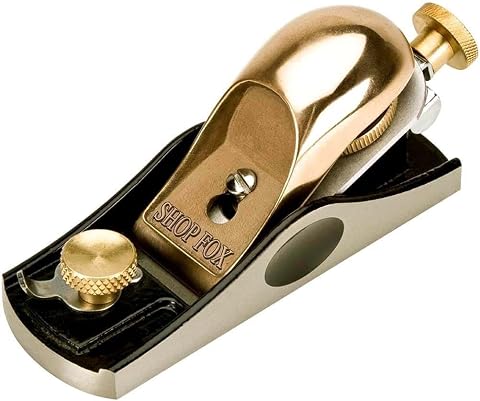
This woodworking tool is designed for precise low-angle planing, ideal for fine finishing and detailed work on wood surfaces. It features adjustable components for accuracy and ease of use.
Pros:
- Provides precise control for detailed woodworking tasks
- Adjustable components for accuracy
- Suitable for fine finishing
Cons:
- Limited information on materials and size
- No user reviews available
- May require additional tools for optimal use
Best for: Woodworkers who want a compact tool for edge refinement
Not ideal for: Work that needs broad or heavy stock removal
Bottom line: Check the plane’s dimensions and adjustment details against your typical tasks.
Dust Extractor Hose
Dust collection can help manage debris around a woodworking bench, and the listed pick is Dust Extractor, 9 Gallon, 1400W, Wet Dry Vacuum Cleaner with Dual Cycl. The product name gives a 9-gallon capacity and 1400W rating, but it does not establish which hoses or tool connections are included. Check the full listing for those details before deciding whether it fits your setup.
A common mistake is assuming a vacuum connects directly to every tool or hose. Compare the connection sizes and types at the extractor, hose, and tools you plan to use; check whether adapters are included or needed. Consider where the unit will sit, how far the hose must reach, and whether the hose can move without pulling the tool or catching on bench hardware. Review the product details for filter and wet-use instructions, and make sure the intended use matches your workspace. Check the power supply requirements and available outlet location as well. A careful compatibility check helps avoid choosing equipment that cannot reach the work or connect as expected.
What to look for:
- Hose and connection details in the full listing
- Compatibility with your tools or required adapters
- Hose reach and routing around the bench
- Filter and wet-use instructions
- Power requirements and outlet access
Dust Extractor, 9 Gallon, 1400W, Wet Dry Vacuum Cleaner with Dual Cyclone Pre-Se

This 9-gallon dust extractor features a dual-stage cyclone separation system, a powerful 1400W motor, and a HEPA filter for efficient dust collection. It is suitable for woodworking shops and heavy cleanup tasks, handling wood chips, shavings, and wet or dry debris with ease.
Pros:
- Effective dual cyclone separation reduces filter clogging and maintenance.
- High suction power with 1400W motor for extended use.
- Large 9-gallon tank suitable for heavy-duty cleaning tasks.
- Includes HEPA filter and anti-static hose for cleaner air and safety.
Cons:
- Relatively heavy at 35.5 pounds, may be less portable.
- Noise level of 80 dB could be loud for some users.
- Single-speed operation limits adjustable suction control.
Best for: Woodworkers whose tools and hoses match the listed connections
Not ideal for: Setups requiring unconfirmed fittings or extra reach
Bottom line: Verify included hose details, fittings, and tool compatibility before choosing the extractor.
For a budget-first upgrade order, start with the task that most often slows your work: securing stock, clamping assemblies, cutting, smoothing, or managing dust. Measure your bench and workpieces first, then prioritize compatibility and fit so each addition works with the tools and space you already have.
You do not need to upgrade every category at once. Use the checklist to identify the next useful addition, verify its details, and build your setup one practical step at a time. A well-matched tool can make the work at your bench feel more straightforward.
Halloween Picks
halloween
As an affiliate, we earn on qualifying purchases.