
TL;DR

Get business pricing on tools and workshop supplies
- Business-only prices and quantity discounts
- Tax-exempt purchasing
- Multiple users, one account, clear invoices
A well-organized, lightweight, and secure tool belt is essential for electricians on ladders. Prioritize safety features, accessibility, and durability to work smarter and safer.
Struggling with a bulky, unorganized tool belt while balancing on a ladder? You’re not alone. The right setup isn’t just about carrying tools; it’s about safety, speed, and reducing fatigue.
Imagine working on a tricky wiring job, hands full, and knowing your tools are within arm’s reach—yet secure and balanced. That’s what a smart tool belt setup delivers. This guide cuts through the clutter to show you exactly how to choose, organize, and wear your gear for maximum efficiency and safety.
Choose lightweight, durable, modular belts with secure tether points.
Organize tools with color coding and magnetic holders for quick access.
Limit your load on the belt to stay balanced and reduce fatigue.
Always double-check your gear and fit before climbing.
Incorporate safety features like tether points and quick-release buckles to prevent accidents.
Best Tool Belt Setup for Electricians on Ladders
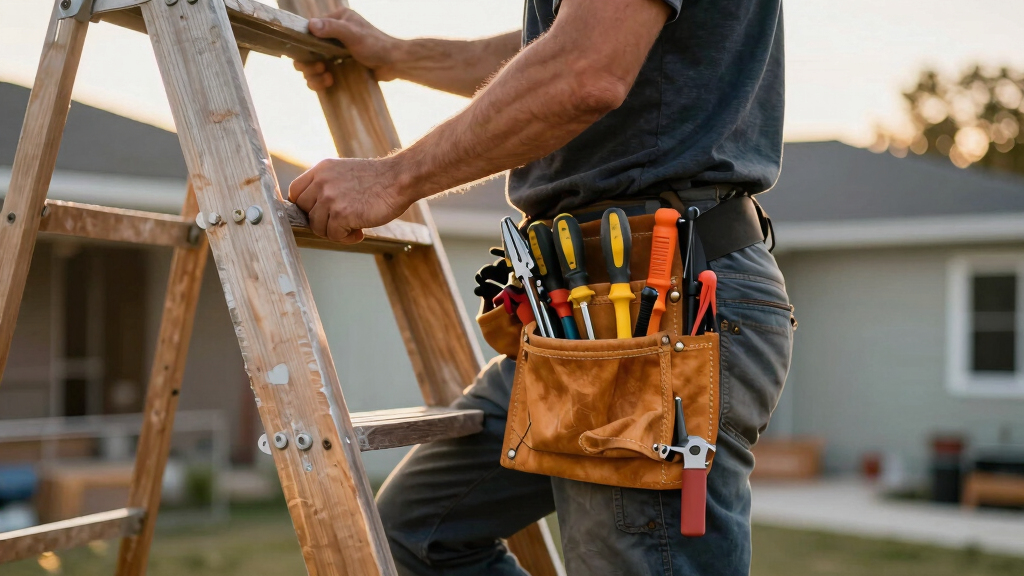
A ladder-ready belt should feel light, balanced and predictable. Carry only the task essentials, keep high-use tools within easy reach, and tether anything that could become a falling-object hazard.
Maintain contact while ascending or descending.
Reduce snag points and unwanted belt movement.
Leave nonessential tools at the staging point.
Inspect fit, stitching, clips and tether points.
Pick the right belt in three moves
The best setup is not the one with the most pockets. It is the one that stays secure, carries the exact load required and lets you move without catching on ladder rails.
Start light, then test durability
Nylon and polyester reduce carried weight and resist everyday abrasion. Leather lasts well but adds mass before a single tool is loaded.
Build for the job, not the toolbox
Use detachable, low-profile pouches so each task gets a tailored load. Fewer unused compartments mean less bulk, sway and ladder contact.
Demand secure retention
Choose reinforced tether points, positive-retention pockets, adjustable straps and a quick-release buckle that remains protected from accidental opening.
How a smart setup reduces risk
Every decision upstream changes how steady, efficient and focused you remain once both feet leave the ground.
Choose a low-profile belt
Less bulk near rails and rungs.
Load only job essentials
Lower mass and fewer snag points.
Balance both sides
More predictable center of gravity.
Tether suitable tools
Reduced falling-object exposure.
Climb with control
Less fumbling and fewer awkward reaches.
What makes the cut?
Prioritize features that control movement, improve retention and withstand repeated contact with rough jobsite surfaces.
| Feature | Basic belt | Ladder-ready setup | Why it matters |
|---|---|---|---|
| Lightweight construction | ~ Variable | ✓ Essential | Reduces fatigue and limits the force of shifting weight. |
| Modular pouches | ✗ Fixed load | ✓ Task-specific | Removes unnecessary bulk and improves access speed. |
| Secure tether points | ✗ Often absent | ✓ Reinforced | Helps prevent suitable tools from becoming falling objects. |
| Adjustable padded fit | ~ Minimal | ✓ Stable fit | Limits slipping, pinching and movement around the waist. |
| Abrasion resistance | ~ General use | ✓ High-wear ready | Protects seams and pouch structure during ladder contact. |
| Low-profile layout | ✗ Deep pockets | ✓ Close carry | Reduces snagging and keeps tools closer to the body. |
Nylon / polyester
Lighter and well suited to long sessions. Inspect high-wear areas and reinforced stitching regularly.
Leather
Long-lasting and structured, but its higher starting weight can accelerate fatigue during repeated climbs.
Put every tool in its working zone
Arrange by frequency and weight. High-use tools stay toward the front; heavier items are split across both sides; secondary tools remain behind the primary reach zone.
Pliers + wire strippers
Balance heavier hand tools against the opposite pouch. Use secure loops with predictable retention.
Tester + daily driver
Reserve prime access for the tools used repeatedly.
Screwdrivers + fasteners
Separate small parts in closed pockets and keep sharp tips contained.
Color-code categories
Use consistent labels for drivers, pliers and small parts to reduce visual searching.
Use magnetic retention selectively
Magnetic holders can help with bits and small metal items, but should not replace secure retention.
Rebalance after every tool change
A single heavy item can shift the belt and alter your center of gravity.
Keep the rear profile clean
Avoid protruding tools that catch on rails or interfere with a harness.
Five checks before the first rung
Tool management complements ladder and fall-protection practices. It never replaces correct ladder setup, suitable footwear, training or required protective equipment.
Fasten the belt snugly
Confirm that it cannot rotate, sag or loosen during movement.
Remove every nonessential
Overloading increases fatigue and can disturb your center of gravity.
Protect three-point contact
The belt must not interfere with your grip, stance or climbing motion.
Secure tools for height
Use rated, compatible lanyards and designated tether points where appropriate.
Check every connection
Look for frayed webbing, damaged clips, loose stitching and worn pockets.
Field FAQs
Use these answers as a starting point, then match your equipment to the task, manufacturer instructions and site safety requirements.
What should electricians choose?
A lightweight, adjustable and modular belt with secure compartments, reinforced tether points and a low-profile fit.
How do tools stay secure?
Use positive-retention pockets, suitable tool lanyards and compatible tethering systems. Never improvise a connection point.
Can a belt be worn with a harness?
Only when the belt does not obstruct harness components, mobility or correct operation. Follow both manufacturers’ guidance.
What belongs on the belt?
The tools required for the immediate task: common drivers, pliers, strippers, tester and a limited supply of small parts.
Light. Balanced. Secured. Checked.
The safest setup is deliberately minimal: every carried tool has a purpose, a stable position and an appropriate retention method.
formula
Why Safety and Comfort Matter More Than Ever on Ladders
When you’re perched on a ladder, your tool belt needs to be more than just handy. It must be secure, lightweight, and balanced to prevent slips or falls. Heavy or poorly fitted belts throw off your center of gravity, making you wobble and fatigue faster.
For example, a common mistake is overloading one side with heavy tools. That shifts your weight and increases the risk of losing your footing. The best setup keeps your tools close and evenly distributed, so you stay steady and alert.
Look for belts with padded, adjustable straps and a low profile. These features help you move freely without feeling like you’re carrying a brick.
Beyond comfort, proper safety and balance reduce the risk of accidents, especially when working at height. An unbalanced belt can cause sudden shifts, leading to loss of control or falls. Choosing the right materials and fit means fewer distractions and a more confident climb, which is crucial in maintaining safety standards on the job.
As an affiliate, we earn on qualifying purchases.
How to Pick the Perfect Tool Belt for Ladder Work in 3 Easy Steps
- Choose lightweight, durable materials. Nylon and polyester are tough yet light. Leather offers durability but adds weight. Consider the tradeoffs: lighter materials reduce fatigue but may wear faster, while heavier materials like leather last longer but can be cumbersome. Balance your choice based on your workload and comfort needs.
- Opt for modular, ladder-friendly designs. Pouches that clip or detach make it easier to access tools without snagging on the ladder or risking dropping tools. Modular systems also allow customization, so you can adapt the setup for different jobs—adding or removing pouches as needed. This flexibility minimizes clutter and maximizes efficiency.
- Look for safety features. Tether points, quick-release buckles, and tool lanyards prevent tools from falling, which is vital when working at height. These features not only protect workers below but also prevent the loss of expensive tools. Investing in these safety elements can significantly reduce the risk of accidents and improve overall safety compliance.
Remember: your goal is a setup that feels natural, doesn’t shift, and keeps your tools secure at all times. Think about the tradeoffs—sometimes a lighter belt might sacrifice some durability, but it improves comfort and safety during extended climbs. Prioritize features that align with your specific tasks and environment.
modular safety tool belt for electricians
As an affiliate, we earn on qualifying purchases.
As an affiliate, we earn on qualifying purchases.
Compare Top Ladder-Ready Tool Belts: What Features Make the Cut?
| Feature | Why It Matters |
|---|---|
| Lightweight Construction | Reduces fatigue during extended climbs and work sessions, allowing you to work longer without discomfort. Heavier belts can cause strain, leading to quicker fatigue and potentially unsafe movements. Balancing weight and durability is key to maintaining focus and stability. |
| Modular Pouches | Allows customization based on the specific tools needed for each job. This flexibility helps prevent unnecessary bulk, reducing strain and improving access speed. Properly arranged pouches also help distribute weight evenly, which enhances balance and safety. |
| Secure Tether Points | Prevents accidental drops, especially when working at height. Proper tethering minimizes the risk of tools falling on people below or causing damage. It also provides peace of mind, allowing you to focus on your work rather than worrying about losing equipment. |
| Adjustable, Comfortable Straps | Ensures a snug fit that won’t slip or pinch, crucial for mobility on ladders. Well-fitted straps help maintain balance and reduce the effort needed to keep the belt in place, directly impacting safety and comfort during climbs and work. |
| Durable, Abrasion-Resistant Material | Withstands wear and tear from repeated ladder contact and rough conditions. Durable materials extend the lifespan of the belt and maintain safety features over time, preventing failures that could lead to accidents. |
For example, a Klein Tools belt with nylon construction, multiple detachable pouches, and tether loops offers a good balance of these features, but understanding the tradeoffs—such as weight versus longevity—helps you choose the best fit for your specific needs.
magnetic tool holders for electricians
As an affiliate, we earn on qualifying purchases.
As an affiliate, we earn on qualifying purchases.
Smart Organization Hacks for Ladder Work
Keep your most-used tools right where you can grab them—no fumbling. Use color-coded pouches or labels for quick identification. For instance, a red pouch for screwdrivers, a blue one for pliers.
Place frequently used items at the front and secondary tools at the back. Think of it like a well-packed backpack—easy to access, less clutter.
Consider adding magnetic strips or clip-on holders for small metal tools like screwdrivers or bits. This minimizes slipping and keeps your workspace tidy.
And don’t forget to check your belt’s weight distribution regularly—uneven load leads to fatigue and instability. Proper organization not only speeds up your workflow but also contributes significantly to safety by preventing awkward movements or sudden shifts that could cause falls.
As an affiliate, we earn on qualifying purchases.
Safety Tips You Can’t Ignore When Using a Tool Belt on a Ladder
Always secure your belt properly before climbing. Loose straps or poorly fitted belts are a recipe for accidents. An improperly fitted belt can shift unexpectedly, throwing off your balance or causing you to trip.
Maintain three points of contact when climbing. Your belt shouldn’t interfere with your grip or balance, and overloading your belt can make maintaining three points more difficult, increasing fall risk.
Limit your load. Overstuffing your belt throws off your balance and increases fall risk. A good rule: carry only what’s necessary for the task. Overloading not only makes movement awkward but also shifts your center of gravity, which can be dangerous at height.
Use tethered tools—clip small tools to your belt or harness. If they slip, they won’t fall onto someone below or cause injury. Proper tethering is a critical safety measure that prevents falling objects and potential injuries.
Check your gear before every climb. Look for frayed straps, loose stitching, or damaged clips. Safety isn’t optional; it’s a fundamental part of every ladder job. Regular inspections help catch issues early, preventing accidents caused by equipment failure.
Frequently Asked Questions
What is the best type of tool belt for electricians working on ladders?
The best tool belt is lightweight, adjustable, and modular. Look for belts with multiple compartments, tether points, and quick-release features that suit ladder work.
How can I keep my tools secure while working on a ladder?
Use tool lanyards, tethering systems, and belts with secure loops and pockets. Regularly check that tools are firmly clipped or stored to prevent drops.
Are there safety tips for using a tool belt on ladders?
Yes. Always wear your belt properly fitted, keep three points of contact when climbing, limit your load, and tether tools to avoid accidents. Double-check your gear before each climb.
What materials are best for ladder work tool belts?
Durable nylon or polyester belts are ideal for lightweight strength, while leather offers longevity but adds weight. Consider the work environment and comfort preferences.
How should I organize my tools for quick access?
Place frequently used tools in front-facing pouches, use color coding or labels, and add magnetic strips for small metal tools. Keep the setup simple and accessible.
Conclusion
Getting your tool belt setup right isn’t just about efficiency. It’s about safety, comfort, and confidence at every height. A balanced, well-organized belt lets you focus on the task, not your gear.
Remember: a smart setup means fewer trips up and down the ladder—and a safer day at work. Take the time to customize your gear, and you’ll notice the difference every time you climb.
Fall yard work Picks
leaf blowers
As an affiliate, we earn on qualifying purchases.