
TL;DR

Get business pricing on tools and workshop supplies
- Business-only prices and quantity discounts
- Tax-exempt purchasing
- Multiple users, one account, clear invoices
Cleaning a canvas tool bag involves emptying it, spot or deep cleaning with mild products, and air drying. Proper maintenance keeps it durable and stain-free, extending its life for heavy use.
Always assess your bag’s condition before cleaning to avoid causing damage.
Use mild, biodegradable cleaners and avoid harsh chemicals like bleach.
Spot clean for minor stains, but deep clean with gentle hand washing when needed.
Never put your bag in a hot dryer — air dry in a shady spot to prevent weakening fabric.
Regular maintenance, including waterproofing and prompt repairs, extends your bag’s lifespan.
Practical care guide · Canvas maintenance
How to Clean a Canvas Tool Bag
Your tool bag is a workhorse. Empty it, assess the fabric, clean with mild products and air dry it carefully to remove dirt without sacrificing the strength that makes canvas so dependable.
Empty every pocket before water touches the bag.
Minutes for baking soda paste to work on a stubborn mark.
Dryer heat, heaters or harsh direct sun.
Shade, ventilation and patience preserve the fibers.
Know what you’re cleaning before you begin.
Water can push loose grit deeper into canvas and stress existing damage. A careful dry inspection makes every later step safer and more effective.
Clear every compartment
Remove tools, fasteners, accessories and removable inserts. Check narrow sleeves and hidden pockets by hand.
Release loose debris
Turn the bag upside down and shake out sawdust, grit and gravel before they become embedded during washing.
Lift surface dirt
Use a soft, dry brush around zipper teeth, pocket corners, handles and seams where dried mud tends to hide.
Find weak points
Look for tears, fraying and loose stitching. Repair fragile areas first and check the manufacturer’s care instructions.
Spot clean first. Deep clean only when needed.
The least aggressive method that solves the problem is usually the best method for preserving canvas strength.
Spot cleaning
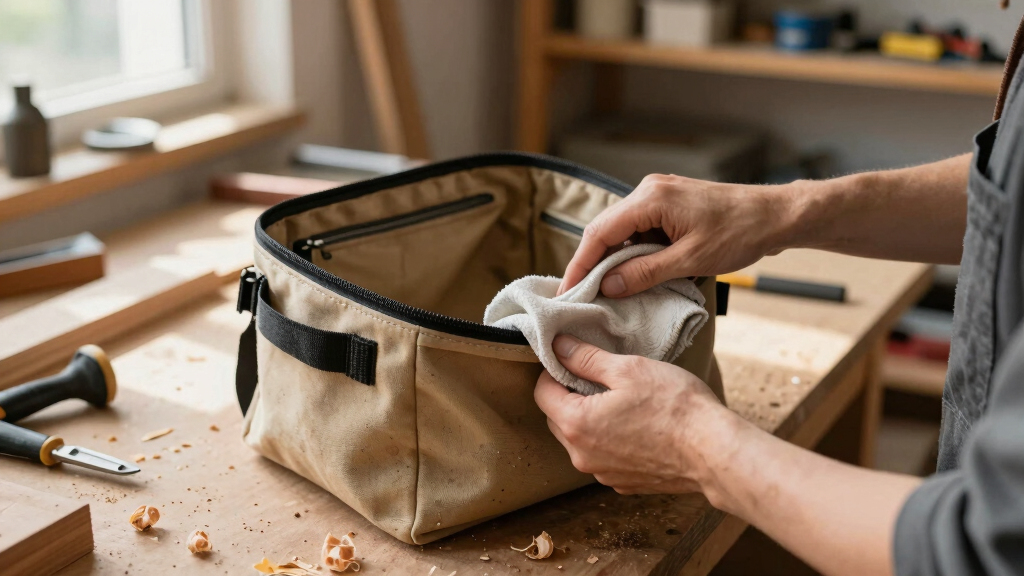
Blot fresh spills promptly. Apply diluted mild detergent with a damp cloth or soft sponge, working only on the affected area.
- Test the cleaner on a concealed patch first.
- Blot oil instead of spreading it with hard scrubbing.
- Use baking soda paste for grease or dried mud.
- Wipe away cleaner with a fresh damp cloth.
Deep hand wash
Use cool or lukewarm water with mild biodegradable detergent. Hand washing gives you control around seams, handles and reinforced pockets.
- Submerge only if the care label permits it.
- Agitate gently with a soft brush or sponge.
- Rinse until the water is clear and soap-free.
- Support the wet bag rather than pulling its handles.
Assess
Read the label and find damage.
Dry prep
Empty, shake and brush.
Clean
Spot treat or hand wash.
Rinse
Remove all soap residue.
Air dry
Ventilate fully in shade.
What actually works on canvas?
Cleaning power matters, but so does fiber safety. Mild products reduce chemical stress while targeted treatments solve specific problems.
| Product type | Best for | Canvas safety | Advantages | Tradeoff |
|---|---|---|---|---|
| Mild biodegradable detergent | General cleaning | ✓Preferred | Gentle, water-based and suitable for routine care | May not fully lift old paint or heavy grease |
| Baking soda paste | Grease, mud and stubborn marks | ✓Targeted use | Inexpensive, accessible and mildly abrasive | Requires careful application and gentle scrubbing |
| Canvas waterproofing spray | Future moisture and stain resistance | ~Check label | Adds a protective barrier after cleaning | Needs periodic reapplication |
| Bleach or harsh solvent | Not recommended | ✕Avoid | No meaningful fabric-care advantage | Can discolor canvas and weaken its fibers |
The smart combination
Clean with the mildest effective product, dry the bag completely, then apply a canvas-compatible waterproofing treatment according to its instructions. The cleaner removes today’s grime; the treatment helps resist tomorrow’s moisture and stains.
A simple cleaning-intensity scale.
More dirt does not automatically justify harsher chemicals. Increase coverage and contact time before increasing aggression.
Five rules worth remembering.
Routine care prevents buildup, protects the canvas and makes major cleaning sessions less frequent.
Assess first
Repair tears and fraying before washing can make them worse.
Keep it mild
Choose biodegradable soap and avoid bleach or harsh solvents.
Target stains
Spot clean small marks; reserve deep washing for widespread grime.
Skip the heat
Air dry in shade to reduce shrinking, fading and fiber damage.
Maintain often
Brush off dirt, treat spills quickly and renew water resistance.
Start by assessing your bag’s condition — know what you’re dealing with
Before you dive into cleaning, take a good look at your canvas bag. Are there tears, fraying, or signs of weakness? For example, if you notice a small tear near a pocket or frayed edges on the seams, these are signs that the fabric is weakening. If the fabric is torn or severely damaged, a deep clean might not be worth it until repairs are made. For minor dirt or stains, a gentle cleaning can make your bag look almost new. Checking the manufacturer’s instructions can also save you from accidentally damaging a specialty bag that needs special care.
As an affiliate, we earn on qualifying purchases.
How to prepare your bag for cleaning — step-by-step
- Empty all tools and accessories. Shake out loose dirt and debris, like small gravel or sawdust that might have accumulated in corners.
- Use a soft brush or cloth to remove surface dust and mud, especially around zippers and seams where dirt can hide.
- Inspect pockets and seams for hidden dirt or damage, such as a pocket that’s become loose or a seam starting to fray.
waterproofing spray for canvas bags
As an affiliate, we earn on qualifying purchases.
As an affiliate, we earn on qualifying purchases.
The best way to spot-clean your canvas tool bag
Spot cleaning isn’t just about removing stains; it’s about preserving the fabric’s integrity while maintaining appearance. For example, if you spill oil on your bag at a job site, acting quickly with a damp cloth can prevent the stain from setting into the fibers. Using mild detergent minimizes chemical stress on the fibers, preventing weakening or discoloration—think of it like cleaning a delicate piece of clothing rather than scrubbing a stubborn stain with harsh chemicals. When you dampen a cloth or sponge, it allows for controlled application, reducing the risk of water seeping into seams or pockets where it can cause mold or mildew. For stubborn stains like grease or mud, a baking soda paste acts as a gentle abrasive that lifts dirt without damaging the fabric. Applying it carefully ensures you target only the stain, preventing unnecessary wear on the surrounding material. For instance, if you notice a mud splatter after a day working outdoors, applying the baking soda paste directly on the mud, then letting it sit for 10 minutes before wiping, can lift the stain effectively without harming the fabric. Immediate action on stains, like oil spills, prevents them from setting, which would require harsher chemicals or more aggressive scrubbing later—both of which can compromise the fabric’s durability.
As an affiliate, we earn on qualifying purchases.
Deep cleaning your canvas bag — when and how
Deep cleaning is more than just a thorough wash; it’s about restoring the fabric’s resilience and appearance without compromising its integrity. For example, if your bag has accumulated layers of grease from oil spills or mud from outdoor work, a gentle hand wash can help restore its look and strength. Hand washing allows for controlled scrubbing, reducing the risk of fabric stress, especially around seams or handles. Using a mild, biodegradable detergent ensures cleaning without harsh chemicals that could weaken fibers over time. Rinsing thoroughly removes residual soap, which can attract dirt if left behind. If machine washing, placing the bag in a laundry bag or pillowcase protects it from the agitation that can cause fraying. For instance, placing your bag in a mesh laundry bag prevents it from banging against the washing machine drum, which could tear weak spots. Air drying is critical because heat from dryers can cause shrinkage or warping, leading to a shorter lifespan or compromised seams. Proper drying preserves the fabric’s strength and prevents mold or mildew growth, especially in humid environments. Imagine hanging your bag in a shaded, breezy spot after a deep clean—this gentle approach keeps the fabric intact and ready for the next job.
As an affiliate, we earn on qualifying purchases.
Comparing cleaning products — what really works on canvas
| Product Type | Best For | Pros | Cons |
|---|---|---|---|
| Mild Detergent | General cleaning | Gentle, biodegradable, safe | Less effective on heavy stains |
| Baking Soda Paste | Stain removal | Natural, inexpensive, effective | Requires scrubbing |
| Waterproofing Spray | Protection & stain resistance | Prevents future stains, water damage | Needs reapplication over time |
How to dry your canvas tool bag without ruining it
Air drying is your best bet. Hang your bag in a well-ventilated area, away from direct sunlight. Sunlight can fade colors and weaken the fabric over time. Shake out excess water first to reduce drying time and prevent water from pooling in seams. For example, after washing, give your bag a gentle shake outdoors to remove excess water, similar to how you might shake out a wet towel. Hanging or laying flat on a clean towel allows for gentle, even drying, which minimizes stress on the fabric and seams. Avoid using heat sources like heaters, dryers, or direct sunlight — heat can cause the fibers to shrink, warp, or weaken, dramatically reducing the bag’s lifespan. In humid climates, using a fan to circulate air can help speed up the process and prevent mold or mildew growth, which thrive in damp environments. For instance, placing a fan near your hanging bag in a garage or shaded porch can help it dry faster without exposing it to direct sunlight. Proper drying not only preserves the fabric’s strength but also prevents mold, which can cause irreversible damage and health issues if left unchecked.
Pro tips to keep your canvas bag looking new longer
- Clean regularly — even if it looks clean. For example, wiping down your bag weekly with a damp cloth after heavy use can prevent dirt buildup that weakens fibers over time.
- Apply a water-resistant spray every 6 months to maintain a protective barrier against water and stains, which can otherwise compromise the fabric’s durability. Think of it like applying a fresh coat of wax to a car to keep it shiny and protected.
- Fix tears and frays immediately to prevent them from worsening, which could lead to more extensive repairs or replacement. For instance, patching a small tear near a pocket with fabric repair tape right away can prevent it from enlarging after use.
- Store in a dry, cool place when not in use. Proper storage in a closet or on a shelf keeps the fabric from exposure to moisture or sunlight, which can cause fading or mold.
- Use a brush or damp cloth for quick surface cleaning weekly. This is like giving your bag a quick brush-down after a day’s work, which keeps dirt from embedding into the fibers and makes deep cleaning less necessary.
Common pitfalls — what to avoid when cleaning your canvas bag
Avoid harsh chemicals like bleach or strong solvents. For example, using bleach to whiten a stained canvas bag might seem effective but can weaken the fabric and cause discoloration, similar to how bleach damages colored clothing. Never toss your bag into a hot dryer — heat causes shrinking, warping, and seam damage, which can compromise the bag’s overall strength and fit. For instance, placing your bag in a tumble dryer to speed up drying may cause the fabric to shrink unevenly or warp, especially if it’s thick or has handles made of different materials. Don’t scrub aggressively with stiff brushes; this can fray or tear the fabric, especially around seams and edges. For example, scrubbing a heavily soiled corner with a stiff brush might seem effective but could cause unraveling or weakening of the fabric threads. Lastly, neglecting proper drying—leaving the bag damp or in humid environments—can lead to mold and mildew growth, which not only damages the fabric but also poses health risks. Imagine storing a damp bag in a closet; over time, mold can develop, causing staining and health hazards. Recognizing these pitfalls and respecting gentle, fabric-friendly cleaning methods ensures your bag remains functional and looks good longer, ultimately saving you money and effort in repairs or replacements.
Frequently Asked Questions
Can I put my canvas tool bag in the washing machine?
Many canvas bags are machine washable, but check the manufacturer’s label first. If it’s safe, use a gentle cycle with cold water. Hand washing is often safer, especially for older or fragile bags, to prevent damage.
How do I remove stubborn stains from my canvas bag?
Apply a mixture of mild soap and warm water with a soft sponge. For tougher stains like oil or grease, a paste of baking soda and water works wonders. Let it sit for 10 minutes before wiping clean.
How often should I clean my canvas tool bag?
Deep clean every few months or when it’s heavily soiled. Regular surface cleaning with a damp cloth or brush keeps dirt from building up and prolongs the bag’s life.
What’s the best way to waterproof my canvas tool bag?
Use a spray-on waterproofing treatment specifically designed for canvas. Follow the product instructions carefully, and reapply every 6 months for ongoing protection.
Can I repair tears or holes myself?
Yes, small tears can be patched with fabric repair kits or heavy-duty tape. For larger damages, professional repairs are recommended to restore strength and appearance.
Conclusion
A clean canvas tool bag isn’t just about looks — it’s about durability. Proper cleaning and upkeep turn a simple carrier into a dependable work companion that lasts for years. Think of it as giving your gear a fresh coat of resilience, ready for whatever the job throws at it. Keep it clean, keep it tough, and your tools will thank you.Halloween Picks
halloween
As an affiliate, we earn on qualifying purchases.