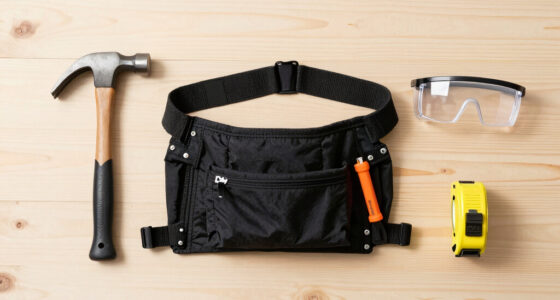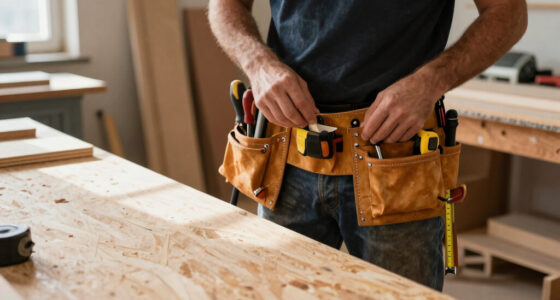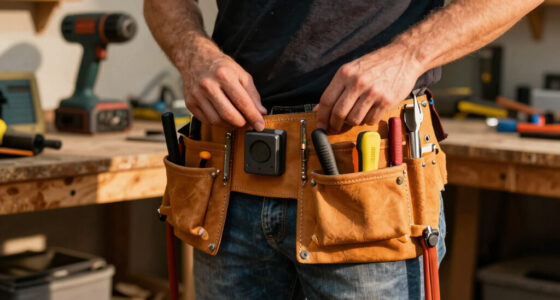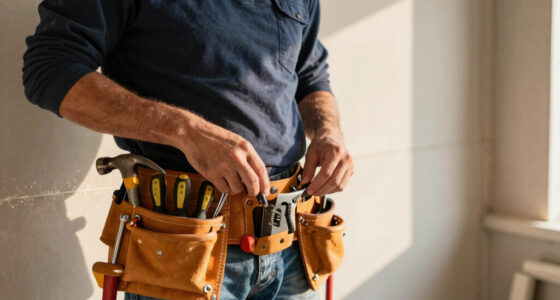

This guide helps tradespeople and other workers choose, fit, and set up a heavy-duty work belt for daily use. You will measure for the right size, compare belt types, check compatibility with your tools and clothing, and arrange the load for comfort and access. The process is suitable for beginners and takes about 30-60 minutes, including trying on the belt and adjusting it.

Get business pricing on tools and workshop supplies
- Business-only prices and quantity discounts
- Tax-exempt purchasing
- Multiple users, one account, clear invoices
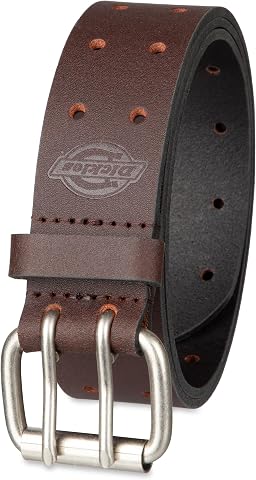
Dickies Men’s Double-Prong Leather Work Belt
- ✔ Material: 100% leather
- ✔ Buckle: Double-prong roller buckle
- ✔ Adjustment: Perforations along the entire strap

MeloTough 2-Inch Nylon Web Work Belt with Quick-Release Metal Buckle
- ✔ Strap material: Nylon web strap; description notes conflicting material details
- ✔ Buckle: Aluminum alloy quick-release buckle
- ✔ Width: 2 inches

Dickies Men’s Genuine Leather Work and Casual Belt
- ✔ Material: 100% genuine leather
- ✔ Width: 1.5 inches
- ✔ Buckle: Metal
A work belt can organize hand tools and fasteners, but it does not replace a fall-arrest harness or other required protective equipment. Choose a belt for the work you do, and follow the safety instructions for any harness or tool system you use.
Difficulty: Beginner | Time: 30-60 minutes
What You’ll Need
Tools & Materials:
- Flexible tape measure
- The work trousers or layers you will wear on the job
- The tools and pouches you expect to carry
- Manufacturer’s sizing and load information for the belt and accessories
Knowledge:
- Basic awareness of the tools you need to carry during a typical task
- Ability to recognize discomfort, restricted movement, or unsafe tool placement while trying on gear
Allow time to try the belt while wearing your actual work clothing. If you use a safety harness, check its manufacturer instructions before adding a tool belt; attachment rules and permitted configurations vary. Do not assume a work belt is rated to support a person or arrest a fall.
Dickies Men’s Double-Prong Leather Work Belt
Among these three, the Dickies Double-Prong Leather Work Belt offers the most distinctive leather-belt fastening setup: a sturdy double-prong roller buckle paired with perforations along the entire strap. More adjustment points can help us fine-tune the fit instead of relying on a small set of standard holes. That makes this the strongest all-around choice in this comparison for buyers who want an adjustable leather belt for workwear and casual outfits.Compared with the Genuine Leather Dickies, this model emphasizes buckle security and adjustment range rather than a stated 1.5-inch width and seven-hole layout. Compared with the MeloTough, it trades quick release and a specified broad waist range for a conventional leather construction and a more traditional appearance. That distinction matters: the MeloTough is easier to take on and off by design, but its 2-inch strap may not work with all belt loops.There are practical caveats. The brand’s sizing guidance says to choose a belt 2 inches larger than pant size, so buyers should check that carefully rather than assume their usual size. The belt is spot-clean only, and the provided details don’t specify strap width, so we can’t confirm loop compatibility from the listing information alone. Nor is a tool-load rating provided. We’d choose it for a dependable-feeling everyday leather belt, not assume it replaces a belt designed and rated for carrying heavy equipment.
Pros:
- Double-prong roller buckle is designed for a secure fit.
- Perforations along the strap allow adjustment across its length.
- Leather styling works with workwear and casual outfits.
- Straightforward spot-clean care instructions.
Cons:
- Sizing guidance requires choosing a belt 2 inches larger than pant size.
- Spot cleaning is the specified care method.
- The supplied details do not state strap width or a tool-load rating.
Best for: Buyers who want a traditional leather workwear belt with a double-prong buckle and adjustment across the strap.
Not ideal for: Shoppers who need a quick-release buckle, clear width information for narrow loops, or a stated capacity for carrying tools.
Bottom line: We rank it first for its combination of a double-prong buckle, extensive adjustment, and versatile leather styling, while noting that its width and load capacity are unspecified.
“We rank it first for its combination of a double-prong buckle, extensive adjustment, and versatile leather styling, while noting that its width and load capacity are unspecified.”
MeloTough 2-Inch Nylon Web Work Belt with Quick-Release Metal Buckle
For buyers who prioritize easy fastening and removal, the MeloTough 2-Inch Nylon Web Work Belt takes a different approach from both leather options. Its quick-release buckle is the clearest convenience feature in this lineup, and the stated 32–51-inch waist fit gives shoppers a defined range to compare against their own measurements. That makes it our pick for broad adjustability, especially when a conventional hole-and-prong setup isn’t the preferred fit.The 2-inch strap is wider than the Genuine Leather Dickies’ 1.5-inch strap, which can give the belt a more substantial workwear profile. But width is not an automatic advantage: the listing warns that it may not fit all belt loops. We’d check the loops on work pants before choosing it. The Double-Prong Dickies provides a leather alternative with perforations along the strap, while the MeloTough’s appeal is its quick-release fastening and stated waist range—not a traditional leather finish.There’s also an information gap worth weighing. The description identifies a nylon web strap, but the product details reportedly contain conflicting strap-material information. Buyers who need certainty about the exact webbing should verify that before purchase. The listed aluminum alloy buckle and 55-inch length provide useful reference points, but no tool-load rating is supplied. This is a practical everyday and outdoor belt option, not a confirmed heavy-tool support belt based on the available specifications.
Pros:
- Quick-release buckle is designed for convenient fastening and removal.
- Stated waist fit spans 32–51 inches.
- 2-inch width gives it a wider profile than the 1.5-inch Dickies Genuine Leather belt.
- Listed for work, outdoor activities, and daily wear.
Cons:
- The 2-inch strap may not fit all belt loops.
- Product information gives conflicting strap-material details.
- No tool-load rating is supplied.
Best for: Buyers who want a quick-release fastening system and a stated waist range that covers 32–51 inches.
Not ideal for: Anyone whose belt loops are too narrow for a 2-inch strap, or who requires unambiguous material details and a rated tool-carrying capacity.
Bottom line: We recommend it for adjustable, quick-release convenience, provided its width suits your loops and you are comfortable checking the material details.
“We recommend it for adjustable, quick-release convenience, provided its width suits your loops and you are comfortable checking the material details.”
Dickies Men’s Genuine Leather Work and Casual Belt
The Dickies Men’s Genuine Leather Work and Casual Belt is the straightforward choice for shoppers who want one belt that can move between work clothes and everyday outfits. Its 1.5-inch strap is narrower than the MeloTough’s 2-inch webbing, a useful distinction for buyers whose pants have more conventional loops. Reinforced edge stitching and a sturdy metal buckle add workwear-oriented construction without the more specialized look of a quick-release buckle.Compared with the Double-Prong Dickies, this model uses a standard metal buckle and seven adjustment holes rather than a double-prong roller buckle with perforations along the full strap. That makes its fit setup simpler to understand, though it offers fewer stated adjustment positions. The Double-Prong is the stronger pick if full-strap adjustment is the priority; this belt makes more sense when leather versatility and a specified narrow width matter more.Fit instructions need care: the description recommends ordering one size up from pant size. That is not the same guidance given for the Double-Prong model, so we shouldn’t assume the sizing rules transfer between them. The belt is also spot-clean only. Although its leather construction and reinforced edges suit everyday workwear, no rated tool capacity or specific heavy-load support is listed. We’d treat it as a sturdy general-purpose belt rather than a tool-rig belt.
Pros:
- Genuine leather strap has reinforced edge stitching.
- 1.5-inch width is narrower than the MeloTough’s 2-inch web belt.
- Seven adjustment holes provide multiple fit positions.
- Available in Regular and Big & Tall sizes.
Cons:
- Sizing guidance recommends ordering one size up from pant size.
- Spot clean only.
- No tool-load rating is provided.
Best for: Buyers who want a 1.5-inch genuine leather belt with reinforced edges for both workwear and casual outfits.
Not ideal for: Shoppers who need extensive adjustment along the strap, a quick-release buckle, or a stated load rating for tools.
Bottom line: We choose it for a narrower, versatile leather profile with reinforced stitching, but not for buyers who need full-length adjustment or verified tool support.
“We choose it for a narrower, versatile leather profile with reinforced stitching, but not for buyers who need full-length adjustment or verified tool support.”
As an Amazon Associate we earn from qualifying purchases.
Before You Start
Decide what the belt needs to do before shopping or assembling it. A belt for carrying a hammer and a few fasteners may be different from a loaded electrician’s or carpenter’s rig. Check the belt’s intended use, size range, construction, buckle, and stated load limits. Check every pouch and attachment separately, since an accessory may have its own limits.
Plan to carry only the tools needed for the task. A heavier setup can increase fatigue and pressure on the hips and lower back. If a job requires fall protection, use an approved harness and attachment arrangement rather than relying on the work belt.
Step-by-Step Instructions
Step 1: List the tools you need to carry
Write down the tools and supplies you use most often during one representative work task. Separate frequently used items from tools you can keep nearby in a toolbox or cart. Include the approximate weight of heavier tools if you can weigh them, and check the belt and pouch load ratings against the planned load.
Keep the list focused: the goal is to carry useful tools securely, not to fill every pocket. Include items that need a dedicated holder, such as a tape measure, hammer, drill holster, or fastener pouch.
Tip: Check whether the tool manufacturer requires a tether or a specific holder, especially when working at height.
Check: You have a short tool list for a typical task and know which items need dedicated holders.
Step 2: Measure over your work clothing
Put on the trousers and any layers you normally wear at work. Wrap a flexible tape around your waist at the point where the belt will sit, keeping it level and comfortably snug. Read the measurement without pulling the tape tight, then compare it with the belt maker’s sizing chart.
Use the maker’s instructions if its sizing method differs from a waist measurement. Do not select a size based only on your usual clothing label; work-belt sizing can differ between brands and may need room for layers or attachments.
Tip: If you wear seasonal layers, measure over the thickest clothing you regularly use, or check whether the belt offers enough adjustment for both conditions.
Check: You have a measurement taken at the belt’s actual wearing position and have matched it to the manufacturer’s chart.
Step 3: Choose a belt and attachment system
Compare belts that suit your expected tools and working conditions. Check the belt width, adjustment range, buckle security, stitching or other construction, padding, and compatibility with your pouches. Confirm that the materials and care instructions suit the environment, such as damp, dusty, or abrasive work.
Choose a belt that holds its shape under your planned load without being excessively bulky. Confirm that pouches attach securely and cannot slide or detach during ordinary movement. Buy compatible accessories from the belt maker or verify that third-party attachments fit the belt system.
Tip: A padded or contoured belt may improve comfort for some users, but it must still fit your body and stay in position when loaded.
Check: The belt size, accessories, intended use, and rated limits match the tools and conditions you listed.
Step 4: Inspect the belt and accessories
Before loading the belt, inspect the belt body, buckle, adjustment hardware, seams, rivets, attachment points, and pouch closures. Look for cracked or bent hardware, torn fabric, loose stitching, sharp exposed edges, or damaged fasteners. Read the care and load instructions.
Do not use gear with damage that could release a tool or prevent the belt from fastening securely. Replace a damaged part with a compatible item approved for the system rather than improvising with cord, tape, or an unverified clip.
Tip: Check used or stored gear carefully; wear can be hidden under a pouch or around a buckle attachment.
Check: The belt and each accessory are intact, fasten correctly, and have usable load guidance.
Step 5: Position the pouches for your work
Fasten the empty belt over your work clothing at the intended position. Arrange pouches so the tools you use most are easy to reach without twisting sharply or reaching across a sharp edge. Keep bulky items from pressing directly into your body when you bend or sit, and leave clear space for any required harness components.
Place tools so their handles are accessible and their points or blades face their holders. Keep fasteners contained, and avoid putting sharp or heavy items where they could strike your leg or fall out when you crouch.
Tip: Test both sides of the belt. Distributing weight can help, but balance the layout around your reach, handedness, and the work you actually do.
Check: The empty layout allows you to reach the main pockets and does not interfere with clothing, movement, or required safety gear.
Step 6: Load the belt and fasten it
Add the tools from your list one at a time, placing each in its intended pouch or holder. Confirm that closures engage and that tools are retained when you move the belt gently. Fasten the belt securely at the planned position; it should stay in place without cutting into your waist or restricting breathing.
Do not exceed the belt or accessory load limits. Leave out tools you do not need for the task, and keep loose parts in a closed pouch rather than an open pocket where they may spill.
Tip: If the belt shifts, avoid overtightening it as the first fix. Recheck the size, position, load balance, and attachment fit.
Check: The belt stays fastened, each tool is retained, and the total load is within the stated limits.
Step 7: Test the loaded setup through normal movements
With the loaded belt on, walk, bend, crouch, reach, and sit if those movements are part of your work. Check for pinching, rubbing, restricted movement, pouch collisions, shifting tools, or a buckle that presses into you. Reach for frequently used tools to confirm you can remove and return them without unsafe twisting.
Make small adjustments to pouch positions or remove unnecessary items, then repeat the movement check. If pain, numbness, or persistent pressure develops, stop using the setup and reassess the fit and load.
Tip: Test in a clear area away from machinery, ladders, and other hazards. Do not test tool retention by swinging the belt or throwing tools.
Check: You can perform the movements your job requires, and the belt and tools remain secure without painful pressure.
Step 8: Recheck the setup before each shift
Before work, fasten the belt and check the buckle, attachments, pouch closures, and tool condition. Remove tools that are damaged, loose, or unnecessary for the task. After a change in clothing, tool load, or work assignment, repeat the fit and movement check.
At the end of the shift, empty the belt, remove dirt or moisture according to the care instructions, and store it where hardware and fabric will not be crushed or damaged.
Tip: Do not keep using a belt that suddenly slips, opens, or develops a torn seam; take it out of service until repaired or replaced.
Check: The belt is checked before use, loaded only for the current task, and stored without damage after work.
Common Mistakes to Avoid
- Buying a belt based on clothing size rather than its sizing chart. — Measure at the belt’s wearing position over work clothing and use the specific manufacturer’s chart.
- Carrying every tool in the shop on the belt. — Carry only task-relevant tools, observe all load limits, and keep less-used items nearby in a toolbox or cart.
- Placing sharp or heavy tools where they can fall, poke the wearer, or obstruct movement. — Use suitable holders, secure closures, and test the loaded layout by walking, bending, and crouching.
- Treating a work belt as fall-protection equipment. — Use only a properly selected, approved fall-arrest system and follow its manufacturer instructions.
Troubleshooting
Problem: The belt slides down or rotates when loaded.
Solution: Recheck the size and wearing position, tighten the adjustment enough to hold without restricting movement, and redistribute or reduce the load. Verify that the pouches attach securely and that the belt is compatible with them.
Problem: The buckle or pouch presses painfully against the body.
Solution: Shift the belt or pouch position and test again while standing, bending, and sitting. Remove bulky items that press into the body. If pressure persists, try a different size or belt design rather than wearing it tighter.
Problem: Tools fall out or a pouch does not stay attached.
Solution: Stop using the affected holder. Check its closure and attachment method, confirm compatibility, and replace damaged or unsuitable parts. Do not rely on improvised repairs to retain tools.
Problem: The belt feels uncomfortably heavy during the shift.
Solution: Remove tools not needed for the current task, keep heavier items in a nearby storage point when practical, and adjust the layout. If discomfort continues, stop and reassess the belt fit and work setup.
What Success Looks Like
Your belt fits over the clothing you wear at work, stays secure without painful tightness, and carries only the tools needed for the task. Pouches and closures retain their contents during ordinary movement; the tools are easy to reach and do not obstruct bending, crouching, or required safety equipment. The load stays within the manufacturer’s limits, and no damaged components remain in use.
Next Steps
Use the belt for a short period on a normal task, then note any pouch that is hard to reach, any tool you did not use, and any pressure point. Adjust the layout before the next shift rather than accepting persistent discomfort. Inspect the belt regularly and after a dropped tool, snag, heavy exposure to moisture, or other event that may have damaged it. Clean and store it according to its care instructions, and replace components that no longer fasten or retain tools reliably.
Frequently Asked Questions
How tight should a heavy-duty work belt fit?
It should stay in position when loaded and during ordinary movement without restricting breathing, digging into your waist, or causing pain or numbness. Try it on over work clothing and test it while bending and crouching; do not use excessive tightness to compensate for a poor size or unbalanced load.
Can I wear a tool belt with a safety harness?
Only use the arrangement allowed by the harness and belt manufacturers and your workplace rules. A work belt is not a substitute for a fall-arrest harness, and tool-belt attachments must not obstruct or alter required harness components.
How much weight can a heavy-duty work belt carry?
There is no single capacity for all belts. Check the manufacturer’s stated limit for the belt, pouches, and attachments, and stay within the lowest applicable limit. A rated limit does not mean that carrying the full amount will be comfortable for an entire shift.
Should I choose leather or a synthetic belt?
Choose based on the maker’s intended use, construction, care instructions, comfort, and compatibility with your attachments. Compare the specific products rather than assuming one material is always stronger or better; exposure to water, dirt, and abrasion may affect care needs.
When should I replace a work belt?
Take it out of service if the belt, buckle, stitching, attachment points, or pouch closures are damaged or no longer hold securely. Follow the manufacturer’s inspection and replacement guidance, and do not patch a load-bearing or tool-retention part with an unapproved repair.
Halloween Picks
halloween
As an affiliate, we earn on qualifying purchases.