
TL;DR

Get business pricing on tools and workshop supplies
- Business-only prices and quantity discounts
- Tax-exempt purchasing
- Multiple users, one account, clear invoices
Storing suspenders correctly keeps their elastic from stretching out. Relax the straps, avoid tension, and store them flat or loosely hung in a cool, dry place. Good storage prolongs usability and saves money.
Suspender elastic is like a delicate rubber band—stretch it too tight, too often, and it loses its bounce. You’ve probably seen those pairs where the straps sag or droop after just a few months. The secret to keeping suspenders in prime shape? Proper storage. Avoid the common mistake of hanging or folding them tightly. Instead, treat your suspenders like fine leather or silk—carefully, gently, and with respect for their materials.
In this guide, you’ll learn exactly how to store suspenders so they don’t stretch out, crack, or weaken prematurely. Whether you wear them daily or keep them as vintage keepsakes, these tips will help you get the most life out of every pair.
Relax suspenders fully before storing—avoid tension on the elastic.
Store suspenders flat or loosely hung on a broad support, never clipped tightly or folded sharply.
Avoid heat, sunlight, and humidity; keep suspenders in a cool, dry, ventilated space.
Use breathable pouches or shallow drawers with gentle compartments for long-term storage.
Be mindful of material differences—leather, silk, and elastic each have unique needs.
How to Store Suspenders Without Stretching
Suspender elastic behaves like a delicate rubber band: hold it under tension, heat, or pressure for too long and it gradually loses its bounce. Relaxed, cool, careful storage preserves fit, appearance, and usable life.
Flat, loose, and free from stress
The safest setup spreads the material naturally without pulling the elastic, sharpening a fold, or concentrating weight on a clip.
Lay them flat
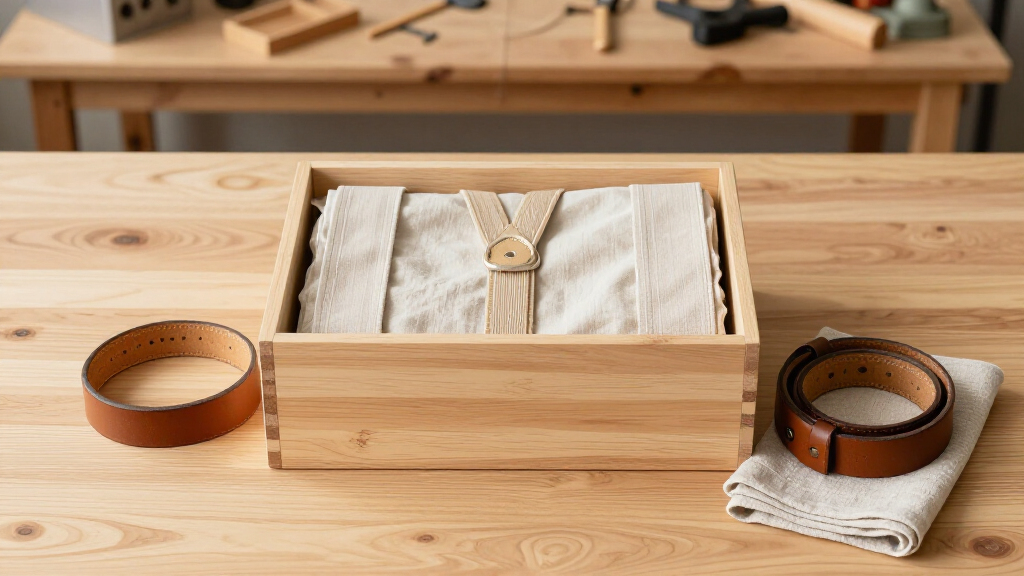
Arrange the straps in a loose S-shape or broad coil inside a shallow drawer. Keep sliders and clips from pressing into the webbing.
Ideal for delicate pairsDrape them loosely
Use a broad, rounded, or padded hanger bar. Let the pair rest in a relaxed loop without stretching it between hooks.
Good for everyday wearProtect and separate
Use a breathable pouch or compartment. Acid-free tissue can isolate metal hardware from fine, vintage, or collectible fabric.
Best for seasonal storageFrom waistband to wardrobe
A calm, repeatable routine prevents tension, creases, snagging, and moisture from following your suspenders into storage.
Detach
Remove from trousers and release every clip or button.
Relax
Loosen adjusters to a neutral, untensioned length.
Clean
Remove dust and body oils; follow maker instructions.
Dry
Allow all fabric and leather details to dry completely.
Shape
Lay flat, form a broad coil, or drape over wide support.
The four pressure points
Storage damage can begin before it becomes visible. Continuous force creates micro-stress, while heat, light, moisture, and compression accelerate material fatigue.
Relative storage risk
Qualitative risk profile: actual deterioration varies with material, age, construction, and duration of exposure.
How sagging begins
One pair does not fit every drawer
Elastic, leather, silk, knitted fibers, and vintage components react differently. Match the storage method to the most delicate material in the pair.
| Material | Preferred storage | Avoid | Best mode |
|---|---|---|---|
| Elastic webbing | ✓Relax fully; lay flat or form a broad, loose coil. | ✕Tension, tight folds, heat, and ultraviolet light. | Flat / loose |
| Leather ends | ✓Lay flat or support in broad, natural curves. | ~Extreme dryness, humidity, and sharp bending. | Supported flat |
| Silk or fine weave | ✓Use a breathable pouch with abrasion protection. | ✕Sunlight, snagging hardware, moths, and crushing. | Pouched flat |
| Knitted fabric | ✓Store flat with the natural knit unstretched. | ~Hanging loads that encourage gradual lengthening. | Flat only |
| Vintage pairs | ✓Handle minimally; use acid-free tissue in a cool, dark space. | ✕Pull-testing old rubber or forcing brittle components. | Archival care |
Keep this. Avoid that.
A good wardrobe environment is ventilated, stable, and free from sources of heat, sunlight, steam, crushing, and sharp pressure.
Do
- Remove suspenders from trousers after wear.
- Loosen sliders to a neutral position.
- Use a broad, smooth, or padded support.
- Keep hardware away from delicate fabric.
- Clean and dry completely before long-term storage.
- Use breathable pouches and gentle compartments.
Don’t
- Hang the entire pair from one clip.
- Roll tightly around your hand or secure with a rubber band.
- Create sharp folds, knots, or compressed bends.
- Stack heavy clothes or boxes on top.
- Store near radiators, windows, damp basements, or bathrooms.
- Use suspenders to bind clothing during travel.
Before you close the drawer
The best choice balances protection with accessibility: flat for fragile or seldom-used pairs, loosely draped for daily wear.
Should suspenders be hung or folded?
Both can work. Flat storage is safest for delicate pairs; daily pairs may be loosely draped over a broad support. Avoid tight folds and narrow wire hangers.
Can they stay attached to trousers?
No. Remove them so the elastic is not stored under waistband tension and the clips or leather ends are not held in a stressed position.
How should suspenders travel?
Form a loose coil inside a garment bag, packing cube, or rigid accessory case. Separate metal clips from shirts and fine fabrics.
Can damaged elastic be restored?
Proper storage can slow further deterioration, but it cannot restore resilience already lost. Brittle, cracked, or permanently lengthened elastic may need replacement.
Why Elastic Loses Its Bounce—And How Storage Matters
Elastic fibers in suspenders are sensitive. When stored under tension—like clipped to trousers or stretched across a hanger—they gradually lose their resilience. Sunlight, heat, and compression speed up this process. Think of a rubber band left stretched on a desk for weeks—eventually, it won’t snap back.
Understanding this process is crucial because it directly impacts the longevity of your suspenders. Tension causes micro-stresses within the elastic fibers, breaking down their molecular structure over time. This means that even if suspenders appear fine visually, their elasticity may have already diminished, leading to sagging or poor fit. Proper storage minimizes these stresses, effectively preserving their original elasticity. The tradeoff is that improper storage accelerates deterioration, forcing you to replace suspenders more frequently, which can be costly and inconvenient. Therefore, investing a little effort into correct storage practices can significantly extend their functional lifespan, saving money and maintaining a sharp appearance.
As an affiliate, we earn on qualifying purchases.
The Best Ways to Store Suspenders—Flat, Loosely, and Without Stress
Choosing the right storage method isn’t just about keeping suspenders neat—it’s about actively preventing elastic fatigue. Flat storage distributes tension evenly across the webbing, avoiding localized stress points that can weaken fibers. For example, laying suspenders flat in a drawer prevents any stretch on specific areas, which could cause permanent deformation over time. Conversely, hanging suspenders loosely on a broad, padded hanger allows gravity to support the webbing evenly, preventing creases or tension buildup. The key is to avoid clips or narrow hangers that concentrate stress on small points, which can lead to tears or stretching. This approach is especially important for high-quality or delicate suspenders with silk or leather accents, as uneven tension can cause permanent damage or deform the material. The tradeoff is that improper storage—such as hanging suspenders tightly or folding sharply—can create stress points that weaken the elastic or damage the fabric, reducing their lifespan and aesthetic appeal. Proper storage ensures the suspenders maintain their shape, elasticity, and appearance for years, making it a worthwhile investment in their longevity.
As an affiliate, we earn on qualifying purchases.
How to Fold or Coil Suspenders Without Damaging Them
- Loosen all adjusters to their neutral position. No tension.
- Align straps without pulling or stretching them.
- Form a broad, loose coil or S-shape—avoid tight rolls or knots.
- Position clips and hardware where they won’t press or dig into the elastic.
- Place in a breathable pouch or compartment if storing in a drawer.
Think of it like gently wrapping a delicate scarf—no tight folds or sharp bends. This method prevents stress concentration on the webbing and hardware, which can cause micro-tears or weaken the elastic fibers over time. Proper coiling or folding distributes tension evenly, reducing the risk of permanent distortion or damage. The tradeoff with improper handling is that tight coils or sharp bends can create lasting creases and stress points, accelerating material fatigue. By following these gentle techniques, you preserve the integrity of the suspenders, ensuring they stay resilient and looking their best for longer.
breathable suspender storage pouch
As an affiliate, we earn on qualifying purchases.
As an affiliate, we earn on qualifying purchases.
Material Matters: How Different Suspenders Need Different Storage Tricks
| Material | Storage Tip |
|---|---|
| Elastic webbing | Keep relaxed, avoid heat and UV light, store flat or loosely coiled. This minimizes the risk of elastic fatigue, which can happen even with minimal tension over time. Proper storage helps maintain elasticity longer, but if the fibers are already weakened, it can’t restore lost stretch. The tradeoff is that neglecting these tips accelerates deterioration, leading to sagging or loss of support. |
| Leather ends | Store flat or supported in broad curves; keep away from excessive dryness or humidity. Leather can crack or warp if stored improperly, so maintaining a balanced environment prevents deterioration. Overly dry storage causes cracks, while too much humidity can lead to mold or weakening. The tradeoff is that improper conditions shorten the lifespan of leather components, diminishing both function and appearance. |
| Silk or fine woven fabric | Lay flat in breathable pouches, protect from abrasion and sunlight. Silk and delicate fabrics are prone to tearing and fading, so gentle handling and proper storage preserve their appearance and integrity. Tightly packed or exposed storage accelerates degradation, making their preservation more difficult. The tradeoff is that neglecting these tips can result in permanent stains, tears, or loss of luster. |
| Knitted suspenders | Prefer flat storage—hanging may stretch the fibers. Knitted materials are more elastic and susceptible to distortion if stretched or pulled unevenly. Proper flat storage maintains their shape and elasticity longer, but improper hanging can cause permanent stretching or distortion. The tradeoff is that improper handling can lead to misshapen or weakened fibers, reducing comfort and durability. |
| Vintage or delicate | Handle minimally; store in a cool, dark environment with acid-free tissue. Vintage suspenders often have fragile materials or aged elastic that require extra care. Proper storage preserves their historical and aesthetic value, but neglect can cause irreversible damage. The tradeoff is that improper storage accelerates deterioration, potentially destroying collectible value and functionality. |
Materials react differently to storage conditions, and understanding these nuances isn’t just about preservation—it’s about making informed choices that balance accessibility, longevity, and appearance. Correct storage can mean the difference between a pair of suspenders that last for decades and one that fails prematurely, costing you time and money.
As an affiliate, we earn on qualifying purchases.
Frequently Asked Questions
Should suspenders be hung or folded?
Both methods work, but flat storage or loose hanging is best to prevent elastic stress. Fold them loosely or drape over a broad hanger—avoid tight folds or clips that pull on the webbing.
Can I leave suspenders attached to my trousers?
It’s better to remove them. Keeping suspenders clipped to trousers can stretch the elastic and strain buttons or clips, leading to premature wear and deformation over time.
Is it safe to hang suspenders by their clips?
No, hanging by clips concentrates stress on the hardware and fabric. Use broad, padded hangers or lay them flat to avoid unnecessary strain and damage.
Should suspenders be shortened before storage?
Loosen the straps into a relaxed, neutral position. Do not force the adjusters to their extremes or create tight folds, as this can stretch or weaken the elastic.
Can suspenders be rolled?
Yes, but only in a loose, broad coil or S-shape. Tightly rolling or folding can compress the elastic and create lasting bends, reducing their lifespan.
Conclusion
Think of suspenders as a delicate web—handle them gently, and they will serve you longer. Proper storage isn’t complicated, but it makes all the difference in how long your favorite pairs stay snug and resilient. Treat them right, and they’ll reward you with years of reliable support.
Next time you take off your suspenders, loosen the sliders, and lay them flat or hang them loosely. Your future self will thank you when they look and perform like new, even after years of wear.
Halloween Picks
halloween
As an affiliate, we earn on qualifying purchases.