TL;DR

Get business pricing on tools and workshop supplies
- Business-only prices and quantity discounts
- Tax-exempt purchasing
- Multiple users, one account, clear invoices
A fall-protection harness is a vital safety device for DIYers working at heights over 6 feet. Proper fit, regular inspection, and correct attachment to rated anchor points are key to preventing injuries. New features and standards improve safety and comfort for everyday projects.
Ever found yourself on a ladder, nervously eyeing the ground below? Working at heights, even for small DIY projects, can turn risky fast. The right fall-protection harness isn’t just gear—it’s your safety net, spreading out the force of a fall and preventing serious injury.
In this guide, you’ll learn what makes a harness effective, how to pick the right one, and simple steps to keep it in top shape. Whether you’re roofing, pruning, or installing gutters, understanding these basics keeps you safer and more confident on the job.
Always ensure your harness fits snugly but comfortably, adjusting straps precisely.
Perform a thorough inspection before each use, looking for signs of wear or damage.
Attach to rated, secure anchor points—never compromise on anchor strength or stability.
Stay updated on new harness features that improve comfort and safety, like padding or sensors.
Follow a simple safety routine before heights work to prevent accidents and injuries.
Work Above Six Feet With a Safer System
TL;DR A fall-protection harness is vital safety gear for DIYers working at height. The essentials are simple: choose a snug full-body harness, inspect it before every use, and attach it to a rated anchor point with compatible connectors.
Proper fit can reduce fall-related injuries by up to 80%.
The harness spreads fall force across stronger body areas, but only when straps, buckles, lanyards, and anchors are working together correctly.
Keep potential free fall distance short enough to reduce impact forces.
Use secure, rated anchor points for each person attached.
Feet above ground where fall protection becomes a smart baseline.
Use begins with checking webbing, stitching, buckles, and labels.
Shoulders, chest, hips, and legs distribute force during arrest.
Loose fit, weak anchors, skipped checks, and poor clearance planning.
What the Harness Actually Does
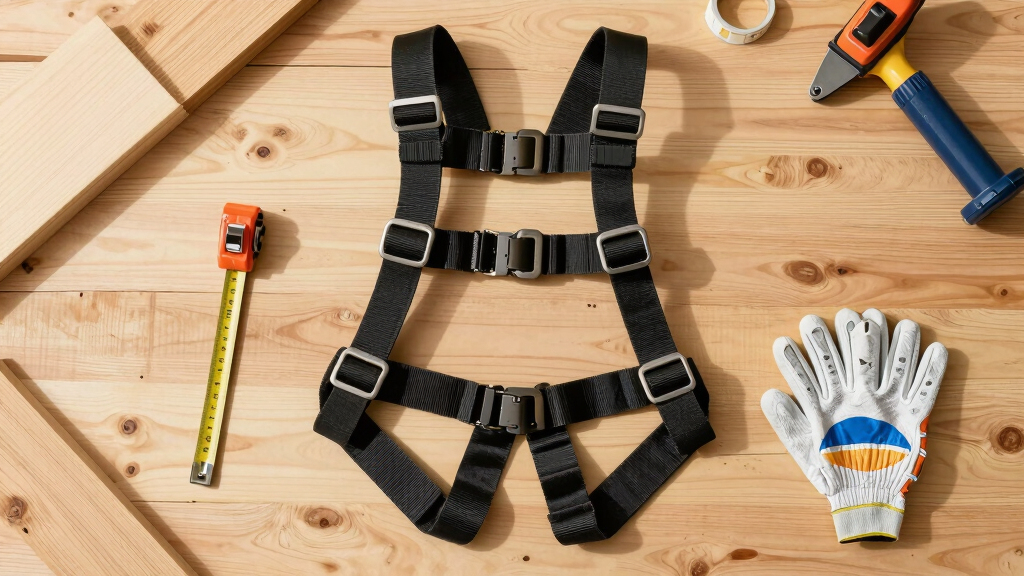
A fall-protection harness is not just a belt with straps. It is a load-distribution system that keeps your body oriented, connects you to an anchor, and helps limit injury when a slip becomes a fall.
Distributes Impact
Shoulder, chest, hip, and leg straps spread fall forces so they are less concentrated on ribs, pelvis, or the lower back.
Stays in Position
Adjustable straps prevent dangerous shifting. Snug means stable, while too tight can restrict movement and cause fatigue.
Connects to Anchors
The harness works only when paired with compatible lanyards, shock absorbers, connectors, and a rated anchor point.
The Five-Minute Pre-Climb Routine
Before roofing, pruning, gutter work, or scaffold projects, run the same repeatable sequence. It turns safety from a guess into a habit.
Choose
Select a full-body harness that meets ANSI or OSHA-aligned safety expectations.
Fit
Adjust shoulders, chest, waist, and leg straps until snug but comfortable.
Inspect
Look for cuts, fraying, damaged stitching, bent buckles, and missing labels.
Anchor
Connect to a rated, stable structure that can handle fall-arrest forces.
Clear
Confirm fall clearance so you cannot hit the ground or a lower level.
Good Setup vs. Risky Setup
Most DIY harness failures come from ordinary-looking shortcuts: a strap left loose, a weak anchor chosen in a hurry, or old webbing that should have been retired.
| Decision Point | Safer Choice | Risky Shortcut | DIY Verdict |
|---|---|---|---|
| Harness Fit | Snug straps, chest strap centered, no sagging leg loops. | Loose webbing that can shift during a fall. | ✓ Essential |
| Inspection | Before every use, plus professional review at least annually. | Using gear with frays, cuts, worn stitching, or damaged buckles. | ✓ Essential |
| Anchor Point | Rated, secure point designed or verified for fall protection. | Loose rafters, gutter brackets, pipe, or unbraced framing. | ✗ Avoid |
| Connectors | Compatible lanyard, locking connector, and shock absorber. | Improvised rope, non-locking hooks, or unknown hardware. | ~ Verify |
| Storage | Dry, clean, shaded place away from chemicals and sharp tools. | Sun-baked truck bed, damp garage floor, or paint-splashed shelf. | ✓ Protect |
Data View: What Matters Most
The biggest safety gains come from the basics done consistently. Newer comfort and smart features help, but they do not replace fit, inspection, and rated attachment.
Up to 80% injury reduction with proper fit.
A harness that is too loose can shift under load. A harness that is too tight can restrict movement and create fatigue. The right fit lets the system do its job.
Traceability Chain
Fall protection works as a connected system. Break one link and the whole setup becomes unreliable, even if the harness itself is high quality.
Project
Roofing, gutters, pruning, ladder work, or scaffolding.
Fit
Snug straps keep the harness aligned under load.
Inspect
Damage checks catch hidden weakness before use.
Connect
Lanyards and locking hardware complete the system.
Anchor
Rated structure absorbs the force of arrest.
Work
Clearance, awareness, and routine keep you safer.
Common DIY Questions
Simple answers for the decisions people usually make right before climbing.
Do I need a harness for small home projects?
Yes, if you are working over 6 feet. Even short falls can cause severe injury, so fall protection is worth the extra setup time.
How do I choose the right harness?
Pick a full-body harness that fits your body, suits the task, includes adjustable straps, and meets recognized safety standards.
Can I use one for roofing or ladder work?
Yes, when it is connected to a proper anchor with compatible lanyards and connectors. The anchor matters as much as the harness.
What upgrades are worth knowing?
Padded straps, quick-adjust buckles, lighter materials, and emerging sensor alerts can improve comfort and reduce setup mistakes.
What Exactly Is a Fall-Protection Harness and Why It Matters
A fall-protection harness is a device designed to secure a person working at height, distributing fall forces across the body to prevent injury. It wraps around your shoulders, chest, and hips, connecting to an anchor point via lanyards or connectors.
For instance, if you’re replacing shingles on a roof and slip, the harness catches you, spreading the impact evenly across your body. Without it, a fall from even 6 feet can cause serious harm or worse. According to OSHA, a harness can mean the difference between a minor scare and a life-threatening accident.
Understanding how a harness distributes force is crucial because it minimizes the risk of localized injuries—such as broken ribs or crushed pelvis—that can occur if fall forces are concentrated on one part of the body. Proper harness design ensures that energy from a fall is absorbed and spread, reducing injury severity. This is why selecting a well-designed, properly fitted harness isn’t just about legality; it’s about your safety and long-term health.
As an affiliate, we earn on qualifying purchases.
How to Choose a Harness That Fits Like a Glove
Choosing the right harness starts with fit. It should be snug but not tight, allowing you to move comfortably without slipping out. Adjustable straps around the shoulders, legs, and chest help dial in that perfect fit.
For example, a DIYer working on a roof might spend a few minutes adjusting straps to avoid chafing or pinching. A poorly fitted harness can slip or cause discomfort, which might lead you to remove it mid-task—dangerous in any situation.
But beyond comfort, proper fit affects safety. A harness that is too loose can shift during a fall, reducing its ability to absorb impact properly. Conversely, a harness that is too tight can restrict movement or cause circulation issues, leading to fatigue or distraction. Always check that the harness stays in place when you move and that straps are snug but not constrictive. Look for models that meet safety standards like ANSI or OSHA, and consider features such as padded straps and quick-release buckles for ease of use and added comfort. Remember, a harness that fits like a glove enhances both safety and confidence, enabling you to focus on your work rather than on discomfort or adjustments.
As an affiliate, we earn on qualifying purchases.
Inspect Your Harness Like a Pro — Don’t Skip This Step
Before each use, examine your harness carefully. Look for frayed straps, cuts, or worn areas. Buckles should latch securely, and stitching must be intact. If anything looks damaged, replace it immediately.
Regular inspections are vital because wear and tear can compromise the integrity of your harness without obvious signs. Small cuts or frays may seem minor but can quickly become catastrophic under the stress of a fall. Damaged stitching or compromised buckles can suddenly fail when you need them most. By catching these issues early, you prevent potential accidents and ensure your gear performs reliably. Think of it as a routine health check for your safety equipment—neglecting it could turn a minor defect into a major accident. Additionally, store your gear in a dry, clean place, away from sunlight and chemicals, to prevent deterioration over time. Proper storage extends the lifespan of your harness, maintaining its protective qualities and ensuring it’s ready when you need it most.
As an affiliate, we earn on qualifying purchases.
Attach Correctly and Use Anchor Points That Won’t Fail You
A harness is only as good as its anchor point. Always connect to a rated, secure anchor that can withstand at least 5,000 pounds per person attached. Never attach to weak or unstable structures like loose rafters or unbraced scaffolding.
For example, when working on a ladder, use a sturdy eye bolt anchored to a solid beam or a purpose-built anchoring device. Proper attachment distributes fall forces and keeps you secure. An improper anchor can turn a fall into a tragedy.
Choosing the right anchor point is critical because it directly influences the effectiveness of your fall protection. An anchor that isn’t rated or isn’t securely attached can break or detach during a fall, rendering your harness useless and increasing the risk of injury. Always verify the load capacity and stability of your anchor before use. When in doubt, consult manufacturer guidelines or a professional. Combining your harness with shock-absorbing lanyards and connectors designed for fall protection ensures that in the event of a fall, the energy is dissipated safely, reducing the risk of injury. Remember, the best harness in the world won’t protect you if it’s attached to a weak or unreliable anchor point. Your safety depends on rigorous selection and proper attachment of rated anchors.
As an affiliate, we earn on qualifying purchases.
Smart Features and Recent Improvements You Should Know About
Newer harnesses pack in features that make DIY work easier and safer. Some include padded straps for comfort, quick-adjust buckles for easy fitting, and lightweight materials for less fatigue.
Emerging tech adds sensors that alert you if your harness isn’t fitted properly or if you’re about to fall—connecting to your phone or a built-in alarm. These advancements boost safety without adding complexity.
Plus, safety standards now emphasize user-friendly designs, making it simpler to comply with regulations without sacrificing comfort.
Your Quick Checklist for Safe DIY Heights
- Choose a harness that fits well and meets safety standards.
- Inspect it thoroughly before each use.
- Attach it to a rated, secure anchor point.
- Use appropriate lanyards and connectors.
- Stay aware of your surroundings and fall clearance.
For example, before starting roof work, double-check your harness fit, anchor point, and clearance zone. This quick routine can save you from accidents.
Frequently Asked Questions
Do I really need a harness for small DIY projects at home?
Yes. If you’re working over 6 feet off the ground, a harness drastically reduces your risk of injury. Even short falls can cause serious harm, so it’s worth the extra step for safety.How do I pick the right harness for my project?
Choose a harness that fits well, meets safety standards like OSHA or ANSI, and suits your activity—roofing, ladder work, or scaffolding. Comfort and proper fit are key to both safety and ease of movement.Can I wear a harness for ladder work or roofing?
Absolutely. Use a harness with a secure anchor point and proper connectors. Always ensure your anchor is rated and attached to a stable structure to prevent falls.How often should I inspect my fall gear?
Check your harness before every use. Look for signs of wear, fraying, or damage. Also, have it professionally inspected annually or if you notice any issues.What common mistakes should I avoid?
Avoid improper fitting, attaching to weak anchors, neglecting gear inspections, or skipping safety training. These errors can turn a safety device into a hazard.Conclusion
Safety at heights isn’t complicated—it’s about smart choices and regular checks. A well-fitted, inspected harness attached to a solid anchor can turn a risky climb into a confident project.
Remember, every second spent preparing could save you from a fall. Gear up, stay alert, and work smarter—your safety depends on it.
Columbus Day / Indigenous Peoples' Day Picks
long weekend sales
As an affiliate, we earn on qualifying purchases.