
TL;DR

Get business pricing on tools and workshop supplies
- Business-only prices and quantity discounts
- Tax-exempt purchasing
- Multiple users, one account, clear invoices
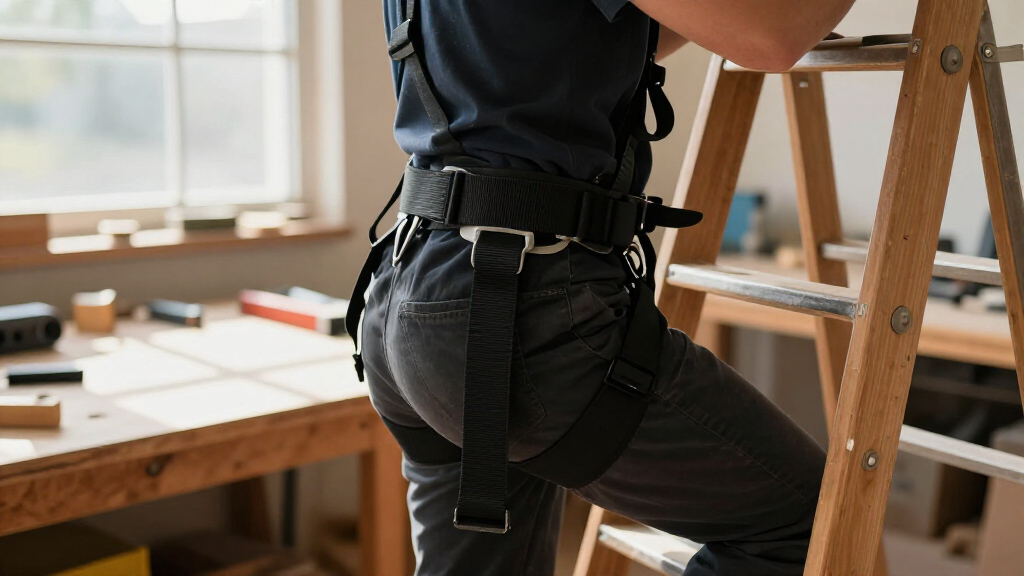
A full-body harness is designed to arrest falls safely by distributing forces across the body, while a positioning belt supports stable work positioning but cannot arrest falls. Using the wrong gear can lead to severe injuries or death. Always choose equipment based on your specific task and hazards.
Imagine you’re working on a roof edge, tools in hand, feeling confident that your gear will keep you safe. But what if that confidence is misplaced? Many workers confuse positioning belts with full-body harnesses. The difference isn’t just about fit—it’s about safety. Choosing the wrong gear can turn a simple fall into a life-threatening injury. This guide clears up the confusion, showing you exactly when and why to pick one over the other.
You’ll learn how each system works, their limits, and the risks of misusing them. Making the right choice isn’t just about compliance—it’s about protecting yourself and your crew during every lift, climb, or work at height.
Never use a positioning belt for fall arrest; it concentrates force dangerously on your abdomen.
A full-body harness distributes fall forces across stronger body parts, reducing injury risk.
Choose equipment based on your specific task, environment, and hazard assessment.
Regular inspection and proper fit are vital to ensure safety when using fall protection gear.
Always develop and practice rescue plans to prevent suspension trauma after a fall.
Full-Body Harness vs Positioning Belt
A harness is engineered to help arrest a fall by distributing force across stronger body areas. A positioning belt supports stable, hands-free work—but it cannot safely stop a significant fall.
Similar purpose. Very different protection.
A suitable harness may include positioning attachment points. A standalone positioning belt, however, never becomes a fall-arrest system simply because it is connected to a lanyard.
Full-Body Harness
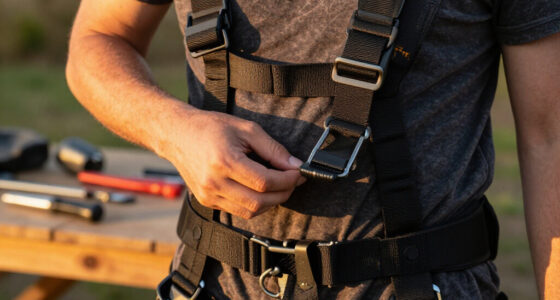
Wraps the shoulders, chest, pelvis, and thighs. When properly fitted and connected within a compatible system, it spreads arresting forces across multiple stronger body areas.
Positioning Belt
Wraps the waist and usually provides two side D-rings. It supports leaning and hands-free work when correctly rigged, but concentrates impact around the abdomen and lower back.
Distribution changes the outcome.
The same fall energy can affect the body very differently. Broad support helps reduce peak loading at a single vulnerable point; narrow waist support magnifies the threat to organs and the spine.
Harness: force across the body
Shoulders, chest, pelvis, and thighs work together to support the worker and help maintain a safer body orientation.
Belt: force at the waist
A narrow support zone transfers impact directly into the abdomen and lower back, increasing the potential for catastrophic trauma.
A belt-stopped fall can become a life-threatening event. A positioning belt is designed to stabilize a worker at the work location—not absorb the energy of a significant free fall.
Match the system to the hazard.
Connection points, body coverage, and permitted movement must all match the intended application. Always follow the equipment manufacturer’s instructions and the site-specific hazard assessment.
| Feature | Full-Body Harness | Positioning Belt |
|---|---|---|
| Primary purpose | Fall arrest, restraint, positioning, or rescue—depending on configuration | Work positioning or travel restraint |
| Body support | Shoulders, chest, pelvis, and thighs | Waist and hip area |
| Connections | Dorsal, sternal, side, shoulder, or suspension points | Usually two side D-rings |
| Fall arrest | Yes Within a complete, rated system | No Never for significant free fall |
| Force distribution | Across thighs, pelvis, chest, and shoulders | Concentrated around abdomen and lower back |
| Typical work | Roofing, scaffolding, towers, lifts, construction, confined spaces | Pole climbing, rebar, telecom, utilities, hands-free positioning |
| Replacement rule | May incorporate positioning features when specifically rated | Cannot replace a fall-arrest harness |
From hazard to rescue.
Protection is more than a wearable component. The worker, harness, connector, energy control, anchorage, inspection routine, and rescue plan must function as one compatible system.
Assess
Identify edges, fall distance, swing hazards, clearance, access, and task movement.
Select
Choose equipment and attachment points explicitly rated for the intended function.
Inspect + Fit
Check webbing, stitching, hardware, labels, compatibility, adjustment, and connection.
Rescue
Plan and rehearse prompt recovery to reduce the danger of prolonged suspension.
Choose fall arrest when…
- A worker can reach an exposed edge.
- A fall could begin before restraint engages.
- The task involves roofs, scaffolds, towers, lifts, or open structures.
- The system must stop a fall after it starts.
Choose positioning when…
- The worker needs stable, hands-free support.
- Movement is strictly limited at the work location.
- The belt is correctly rigged around a pole or approved structure.
- Independent fall protection is added whenever exposure requires it.
Fast answers for safer decisions.
Can a positioning belt arrest a fall?
No. It can concentrate force dangerously around the abdomen and lower back. Use a properly configured full-body harness system for fall arrest.
Can a harness support work positioning?
Yes, when it includes attachment points specifically rated for positioning. Verify each connection point in the manufacturer’s instructions.
Is the lighter option more comfortable?
A belt may feel lighter, but comfort does not establish protection. Correctly sized, adjusted, and ergonomically designed harnesses provide safer distributed support.
What is the most dangerous mistake?
Treating equipment as interchangeable. Select gear by task, exposure, fall clearance, anchorage, system compatibility, and rescue needs.
What a Full-Body Harness Does and Why It Matters
A full-body harness wraps around your shoulders, chest, pelvis, and thighs—think of it as a body-shaped cage designed to distribute shock forces evenly during a fall. When connected to a proper fall-arrest system, it can stop a fall safely, preventing severe injury.
Understanding why this distribution matters is crucial. During a fall, the force exerted on your body can be immense—often thousands of pounds. If this force concentrates on a single point, like the waist or neck, it can cause catastrophic injuries, including internal organ damage or spinal injuries. The harness’s design aims to spread this impact across multiple, stronger parts of your body—like your shoulders, thighs, and pelvis—reducing the severity of injuries and increasing the chances of survival.
Picture a construction worker on a steel beam. If they slip, the harness’s dorsal D-ring at the back engages, spreading the impact across their shoulders, pelvis, and thighs. This broad force distribution minimizes internal injuries and keeps them upright, reducing suspension trauma risk.
Common configurations include fall-arrest, work-positioning, climbing, and rescue harnesses. Each is tailored to specific tasks but all share a common feature: body support that manages fall forces across multiple points, not just the waist.
As an affiliate, we earn on qualifying purchases.
What a Positioning Belt Does and When to Use It
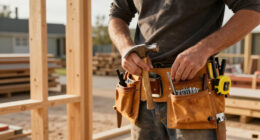
A positioning belt is a simple waist strap with D-rings, meant to hold you steady at a work site—think of it as a support system for stability, not fall protection. It allows you to lean, reach, and work hands-free, but it’s not built to stop a fall.
Understanding why this matters is key. When a fall occurs, the belt’s limited support means it cannot absorb or distribute the impact forces safely. Instead, it transfers these forces directly to your abdomen and lower back, which are vulnerable areas. This can cause internal injuries, such as organ lacerations or ruptures, and even spinal damage if a fall happens from a significant height. The belt’s design prioritizes stability during specific tasks, but it does not provide the comprehensive impact absorption needed for fall arrest.
Imagine a utility worker climbing a telephone pole. They wrap the belt around their waist, connect a lanyard to a structure, and lean back. The belt keeps them in place, but if they slip, the force is concentrated on their abdomen, risking internal injuries. This is why belts are suitable for tasks requiring support and stability, not for fall arrest scenarios.
Positioning belts are ideal for tasks like pole climbing, rebar work, or utility maintenance—where stability matters more than fall arrest. They’re not substitutes for harnesses when falling safety is a concern.
As an affiliate, we earn on qualifying purchases.
Full-Body Harness vs Positioning Belt: How They Compare
| Feature | Full-Body Harness | Positioning Belt |
|---|---|---|
| Primary Purpose | Fall arrest, restraint, positioning | Work positioning, restraint |
| Body Support | Shoulders, chest, pelvis, thighs | Waist, hips |
| Connection Points | Dorsal, sternal, side, shoulder | Usually side D-rings |
| Fall Arrest Capable | Yes | No—only limited movement |
| Force Distribution | Across shoulders, pelvis, thighs | Concentrated on abdomen and lower back |
| Common Use Cases | Roofing, scaffolding, confined spaces | Pole climbing, utility work, rebar |
| Can Replace the Other? | Partially—depends on configuration | Never—only support, not fall arrest |
This side-by-side shows that while harnesses can incorporate positioning features, belts are strictly for support. Using a belt for fall arrest is dangerous and can lead to serious injuries or death. Recognizing their distinct purposes helps prevent dangerous misuse, which could have fatal consequences. The key is understanding that each piece of gear is optimized for specific safety functions—confusing them can compromise your safety and that of your coworkers.
As an affiliate, we earn on qualifying purchases.
Why Using a Belt for Fall Arrest Is a Bad Idea
When a fall is arrested at the waist by a belt, forces can skyrocket beyond safe limits—sometimes over 5,000 pounds. This concentration of energy on your internal organs and spinal column can cause life-threatening injuries. Such high forces can lead to internal bleeding, organ rupture, or even ejection from the belt, which increases the risk of severe trauma or death.
In contrast, a full-body harness is engineered to distribute this impact across multiple, stronger body parts—such as the shoulders, thighs, and pelvis—significantly reducing the risk of catastrophic injury. This force distribution not only helps prevent immediate trauma but also reduces the likelihood of long-term disabilities. The physics behind this difference is crucial: a harness’s design minimizes the peak force transmitted to any single point, whereas a belt’s narrow support concentrates the force, magnifying injury potential. Recognizing this distinction is vital for making informed safety decisions, especially when working at heights where a fall could be fatal.
In real-world terms, a worker slipping from a scaffold with only a belt could suffer internal bleeding, broken ribs, or worse. It’s not just a matter of injury—it can be fatal. Proper understanding of these forces underscores the importance of choosing the right equipment for fall arrest, emphasizing that safety gear is not interchangeable and that proper selection can be the difference between life and death.
As an affiliate, we earn on qualifying purchases.
Frequently Asked Questions
Can a positioning belt be used for fall arrest?
No. Positioning belts are not rated for fall arrest and can cause severe injuries or death if used to stop a fall. Always use a full-body harness for fall protection.Can a full-body harness be used for work positioning?
Yes, if it includes attachment points rated for work positioning. Many harnesses have side D-rings designed for this purpose, but check the manufacturer’s instructions.Are belts or harnesses better for comfort?
While belts may feel lighter, harnesses provide safer, more distributed support during falls. Proper fitting and ergonomic designs also improve comfort with full-body harnesses.What’s the biggest mistake workers make with fall protection?
Using the wrong equipment for the task—like a belt for fall arrest—can lead to catastrophic injuries. Always match gear to the hazard and follow safety standards.How often should I inspect my fall protection gear?
Inspect before each use for obvious damage, and have a competent person perform formal inspections annually or more often if exposed to harsh conditions.Conclusion
The safety of fall protection gear hinges on understanding its purpose. Use a full-body harness when fall arrest is possible, and reserve positioning belts for support and stability. Remember, gear designed for one purpose isn’t safe for another—mistakes can be deadly.
Invest in proper equipment, inspect it regularly, and have a rescue plan in place. Your safety depends on making smart, informed choices every day. After all, when heights are involved, a single mistake can change everything.
Fall yard work Picks
leaf blowers
As an affiliate, we earn on qualifying purchases.