
TL;DR

Get business pricing on tools and workshop supplies
- Business-only prices and quantity discounts
- Tax-exempt purchasing
- Multiple users, one account, clear invoices
Most professional tool belts support 20-30 pounds. Staying within this range, distributing weight evenly, and choosing essential tools can improve safety and comfort during work.
Ever felt that dull ache in your back after a long day with your tool belt? Or noticed how some belts feel like they’re pulling you down? That’s no accident. The right balance of weight and organization can keep you comfortable and safe. In this guide, you’ll learn how much weight your belt should carry, what tools are essential, and how to avoid fatigue or injury. Because a smart setup makes all the difference when you’re on the job.
Whether you’re a seasoned pro or just starting out, understanding the limits of your gear can save your back and boost your productivity. Let’s break down the key aspects of tool belt weight limits and show you how to carry what you need without overloading.
Most tool belts support 20-30 pounds; staying within this range prevents fatigue.
Distribute weight evenly across your belt and suspenders to avoid back pain.
Prioritize essential tools and leave non-essentials at the shop to reduce load.
Choose durable, lightweight materials like ballistic nylon for a better balance of strength and comfort.
Inspect your belt regularly for wear and tear to avoid safety hazards.
Tool Belt Weight Limits and What to Carry
Carry Less. Work Longer. Protect Your Back.
Most professional tool belts support about 20-30 pounds, but the safer everyday target is usually closer to 20-25 pounds. The smartest setup balances weight, keeps essential tools within reach, and leaves rarely used gear in the truck or shop.
pounds is the typical professional tool belt support range.
pounds is the practical comfort ceiling for long workdays.
Over 30 pounds, fatigue and injury risk climb fast.
Load Strategy
How Much Weight Is Safe?
A belt that pulls at your hips, drags one side down, or changes your posture is already telling you something. The goal is not to carry everything you own; it is to carry what lets you work smoothly without building strain hour after hour.
10-15 Pounds
Good for punch lists, quick repairs, inspections, and short tasks where only hand tools and fasteners are needed.
20-25 Pounds
Enough capacity for core tools while keeping movement, balance, and comfort in a sustainable range.
30+ Pounds
Overloading can increase lower-back strain, reduce dexterity, slow movement, and create balance hazards.
Weight Map
The Belt Load Spectrum
Use this as a quick field check: the closer your setup gets to 30 pounds, the more important suspenders, padding, breaks, and tool editing become.
Key insight: staying within the 20-30 pound support range matters, but staying closer to 20-25 pounds is usually more comfortable for full-day work, especially on ladders, stairs, or uneven surfaces.
Carry / Park / Replace
What Deserves a Spot?
Every tool adds weight. Build the belt around the task, favor multi-purpose tools, and keep bulky or rarely used items nearby instead of on your body.
| Item Type | Carry On Belt | Why It Matters | Weight Call |
|---|---|---|---|
| Hammer, tape measure, utility knife | ✓ Essential | High-use tools should stay fast to reach. | Carry daily |
| Pliers, screwdrivers, pencil, level | ✓ Trade dependent | Choose the versions your task actually requires. | Carry selectively |
| Nails, screws, small parts | ~ Limited quantity | Useful, but easy to overpack by habit. | Refill as needed |
| Large drill case, extra bit sets | ✗ Usually no | Bulky gear adds strain and catches on obstacles. | Keep nearby |
| Duplicate tools, rarely used specialty tools | ✗ Leave out | Readiness is useful only when it does not overload you. | Store in vehicle |
Balanced Setup
Distribute Weight Before It Distributes Pain
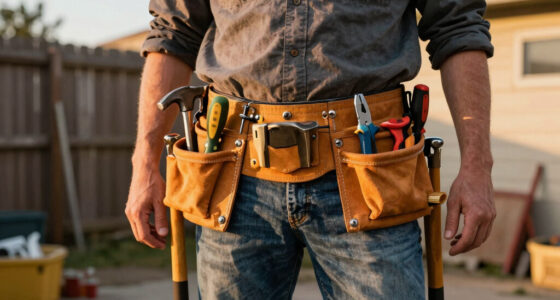
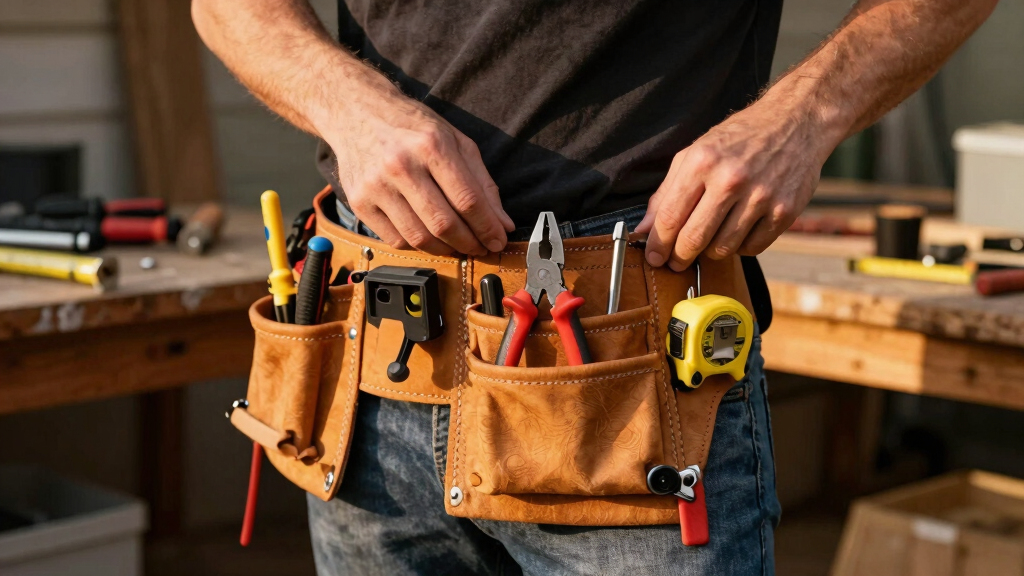
A comfortable belt behaves like a balanced scale. Heavier tools should sit low and close to the body, common-use tools should be easy to reach, and suspenders should share the load instead of letting the waist carry everything.
Edit the Load
Pick tools for the job, not for every possible job.
Center Heavy Tools
Keep hammers and dense gear low, close, and balanced.
Split Left / Right
Avoid one-sided sag that twists your hips and back.
Add Suspenders
Move part of the load from waist to shoulders.
Recheck Midday
Remove extras and adjust straps as the task changes.
Field Checklist
The Safer Carry Rule
A smart setup is part ergonomics, part discipline. The belt should help you work, not become another load your body has to fight.
Best practical rule: carry the lightest kit that completes the next block of work.
When your belt starts pulling, bouncing, snagging, or changing your posture, it is time to remove weight, rebalance pouches, or shift tools to a modular bag, cart, or vehicle.
Before You Start
- 1Keep the belt near the 20-25 pound comfort range when possible.
- 2Use padded belts, suspenders, and modular pouches for better distribution.
- 3Choose ballistic nylon or reinforced polyester when weight matters.
- 4Inspect stitching, straps, buckles, rivets, and fasteners regularly.
- 5Leave bulky, duplicate, and rarely used tools off your body.
How Much Weight Is Safe to Carry in Your Tool Belt?
The quick answer: most professional tool belts support around 20 to 30 pounds. Going beyond that can cause discomfort, fatigue, and even injury. But why does exceeding this limit matter so much? Carrying too much weight forces your body into unnatural postures, increasing strain on your lower back, shoulders, and hips. Over time, this can lead to musculoskeletal issues or chronic pain. Additionally, heavier loads slow down your movements, reduce dexterity, and can compromise your balance, creating safety hazards. Knowing your belt’s limit isn’t just about comfort — it’s about preventing long-term health problems and ensuring you can work efficiently without risking injury. The key is awareness: listen to your body, and recognize when your load starts feeling heavy or unmanageable, so you can adjust accordingly.
To keep it manageable, think of your belt as a backpack. If it starts feeling heavy or pulls on your hips, it’s probably overloaded. The goal: stay within that 20-25 pound sweet spot for all-day comfort.
Why does this matter? Carrying excessive weight can cause your muscles to overcompensate, leading to fatigue that accumulates over the day. Overloading also increases the risk of sudden injuries if your balance is compromised, especially when working on ladders or uneven surfaces. In the long run, consistent overloading can contribute to chronic back pain or joint problems, which might sideline you from work or require medical intervention. Therefore, understanding and respecting your belt’s weight capacity is crucial for both immediate safety and long-term health. It’s a tradeoff: carry enough tools to be efficient but avoid the temptation to load your belt with everything you own — a lighter load keeps you agile and reduces injury risk.
lightweight tool belt for construction workers
As an affiliate, we earn on qualifying purchases.
As an affiliate, we earn on qualifying purchases.
What Tools Are Worth Carrying, and What’s Just Extra Weight?
Every tool adds weight — but not all tools are equally necessary for every job. Carrying only what’s essential can significantly reduce fatigue and improve safety. For example, a carpenter might prioritize a hammer, speed square, and utility knife, while an electrician might carry pliers, wire strippers, and a voltage tester. The tradeoff lies in balancing readiness with mobility; carrying too many tools can bog you down and cause unnecessary strain, but leaving out crucial items can slow your work or force multiple trips. The key is strategic selection: assess your task, choose versatile tools, and leave non-essentials behind. Think critically about what you’ll need during the day — carrying a bulky set of tools that you rarely use is a quick way to add unnecessary weight and fatigue.
Why is this important? Carrying only essential tools ensures you stay light on your feet, reducing muscle strain and fatigue that can accumulate over hours of work. It also enhances your safety—less clutter means fewer chances of tools catching or snagging on obstacles. Moreover, a well-edited tool selection minimizes the risk of dropping or losing tools, which can lead to accidents or delays. The tradeoff: sacrificing a few non-essential tools might feel limiting at first, but it pays off with increased mobility and safety. For example, leaving behind bulky items like a large drill case or extra screwdrivers can make your load more manageable, allowing quicker access to your most-used tools and reducing the risk of overexertion. Remember, strategic packing isn’t just about convenience; it’s a safety measure that helps prevent injuries caused by overloading and poor organization.
Here are some tips to minimize unnecessary weight:
- Limit your tools to essentials for the day, based on the specific job at hand. Consider the scope of work and what tools are truly necessary — avoid packing everything just in case.
- Choose multi-purpose tools when possible to replace several single-function items. This not only saves space but also reduces weight, making your setup more efficient.
- Leave bulky or rarely used items at the shop or in your vehicle to lighten your load. Only carry what you need for immediate tasks to maintain agility and reduce fatigue.
Imagine you’re installing a door frame. Carrying just a hammer, level, and a handful of nails keeps your load light and your focus sharp. This strategic packing not only reduces fatigue but also allows quicker access to what you need, making your work more efficient and safer. The key is to think ahead about the tools you’ll need during the day and only bring those, avoiding the temptation to carry everything just in case. This approach ensures you stay nimble, reduces strain, and keeps safety at the forefront.
ergonomic tool belt with weight support
As an affiliate, we earn on qualifying purchases.
As an affiliate, we earn on qualifying purchases.
How to Distribute Weight for Maximum Comfort
The secret to a pain-free day: evenly spread your tools across your belt and suspenders. Think of your belt as a balanced scale — too much weight on one side throws you off. Uneven weight distribution can cause muscle imbalance, leading to fatigue and discomfort over time. It can also alter your posture, increasing the risk of strain injuries. Using modular pouches and adjustable suspenders allows you to shift weight away from your waist and onto your hips and shoulders, promoting better posture and reducing localized pressure. For example, place heavier tools like drills or hammers in the center or lower pouches, and lighter items like screws or pencils toward the edges. Regularly adjusting straps and reconfiguring your setup ensures that your load remains balanced as you work. Proper distribution not only alleviates strain but also enhances mobility, allowing you to move more freely and stay alert throughout the day. Thinking critically about where you place each tool can make a significant difference in overall comfort and safety.
Why does this matter? An unbalanced load forces your muscles to compensate, which can lead to fatigue, soreness, and even long-term musculoskeletal issues. Proper weight distribution keeps your body in better alignment, reducing the risk of overuse injuries and improving your endurance on the job. It also helps maintain your focus and precision, as discomfort and imbalance can distract or slow you down. Using adjustable pouches and modular systems lets you customize your setup for different tasks and body types, ensuring optimal comfort and safety. Remember, small adjustments can make a big difference over the course of a long workday, so take the time to reevaluate your setup regularly. Proper distribution is not just about comfort — it’s a proactive step toward injury prevention and sustained productivity.
Use your body’s natural movement patterns to inform your setup, and regularly reevaluate your arrangement to adapt to different tasks or signs of discomfort. Small tweaks can prevent long-term musculoskeletal issues and keep your workday productive and pain-free.
As an affiliate, we earn on qualifying purchases.
Comparison of Common Tool Belt Materials and Their Load Limits
| Material | Durability | Weight | Typical Load Limit |
|---|---|---|---|
| Leather | Very high, ages well | Heavy | Up to 25 pounds |
| Nylon | High, resistant to wear | Lightweight | 20-30 pounds |
| Reinforced Polyester | Good, with added durability | Moderate | Up to 25 pounds |
Modern materials like ballistic nylon offer a balance: lightweight yet tough enough to carry a full set of tools without strain. Choosing the right material depends on your work environment and personal preference, but understanding their load limits helps prevent overstressing the material and compromising safety. For instance, while leather may last longer, its weight can add to fatigue, especially over extended periods. Nylon and reinforced polyester provide lighter options that still deliver durability, making them suitable for daily use where weight savings matter. Remember, regardless of material, exceeding recommended load limits can cause premature wear, tear, or failure, so always stay within the specified capacities for safety and longevity.
tool belt organizer for heavy tools
As an affiliate, we earn on qualifying purchases.
As an affiliate, we earn on qualifying purchases.
What Are the Risks of Overloading Your Tool Belt?
Overloading can cause more than just discomfort. It strains your lower back, shoulders, and hips. In some cases, it leads to muscle fatigue or even injury after several hours of work. But beyond immediate pain, excessive weight can also cause long-term health issues. Chronic overloading may contribute to herniated discs, joint degeneration, or repetitive strain injuries, especially if combined with poor posture or repetitive movements. Moreover, an overloaded belt can compromise your balance, increasing the risk of slips, trips, or falls — particularly on uneven surfaces or ladders. Over time, this can result in serious accidents. Recognizing the dangers of overloading emphasizes the importance of respecting weight limits and maintaining proper ergonomic practices. Regularly inspecting your belt for tears or worn straps is also vital, as a damaged or compromised belt can fail unexpectedly, risking injury or tool loss. Prioritizing safety by managing load and maintaining your gear ensures you work smarter and more securely.
Understanding these risks encourages proactive habits: weigh your tools, avoid unnecessary items, and listen to your body. Remember, the goal is to work efficiently without compromising your health or safety.
Frequently Asked Questions
How much weight should I carry in my tool belt?
Most professionals limit their load to around 20-25 pounds. Staying within this range reduces fatigue and injury risk, especially during long days on site.What materials are best for a lightweight yet durable tool belt?
Ballistic nylon and reinforced polyester strike a great balance. They’re tough enough for daily use but light enough to prevent unnecessary strain.How can I prevent fatigue when carrying heavy tools?
Distribute weight evenly, use padded belts and suspenders, and take regular breaks. Adjust your setup for comfort as needed.Are there safety standards for tool belt weight limits?
While specific regulations vary, OSHA recommends ergonomic practices and proper equipment use to prevent musculoskeletal injuries.What is the best way to organize my tools in the belt?
Keep frequently used tools at waist level, balance heavy items near your center of gravity, and remove unnecessary tools to keep weight manageable.Conclusion
Remember, a well-balanced tool belt isn’t just about carrying tools — it’s about carrying them smartly. Respect weight limits, organize wisely, and your body will thank you. Your day will be safer, easier, and more productive.
Next time you pack up, think of your belt as a trusted partner, not a burden. Build your load with care, and you’ll stay strong and steady through every job.
Fall yard work Picks
leaf blowers
As an affiliate, we earn on qualifying purchases.