TL;DR
Listen free for 30 days with Audible
Thousands of audiobooks and originals — cancel anytime.
Start your free trialAs an affiliate, we earn on qualifying purchases.
Modular pouch systems are customizable, durable storage solutions built with high-strength fabrics and versatile attachment platforms like MOLLE. They allow users to configure their gear based on specific needs, making organization efficient and adaptable for trades, outdoor adventures, or emergency response.
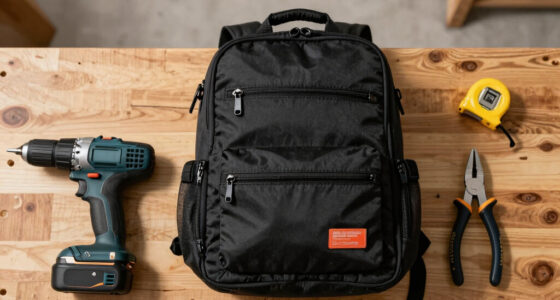
Imagine reaching for your tool pouch and finding exactly what you need, in the right place, every time. That’s the power of a modular pouch system. These systems aren’t just about storage — they’re about building a gear setup that works for your specific tasks, whether you’re on a job site, camping, or responding to an emergency.
You craft a system that fits your workflow, with pouches that attach, detach, and reconfigure in seconds. No more digging through a fixed bag; your gear is organized, accessible, and ready for action. If you’re tired of clutter, or your current setup feels limiting, this guide will show you how modular pouch systems can change the game.
Modular pouch systems let you build a personalized gear setup that adapts to your tasks, saving time and reducing clutter.
Choosing high-quality, weather-resistant fabrics ensures your gear lasts through tough conditions and heavy use.
Start small: build your system gradually, adding pouches as your needs evolve.
Proper maintenance — cleaning, gentle detachment, correct storage — extends your gear’s lifespan.
Comparison tables help you decide if modular systems suit your work style better than fixed gear.
Modular Pouch Systems Explained
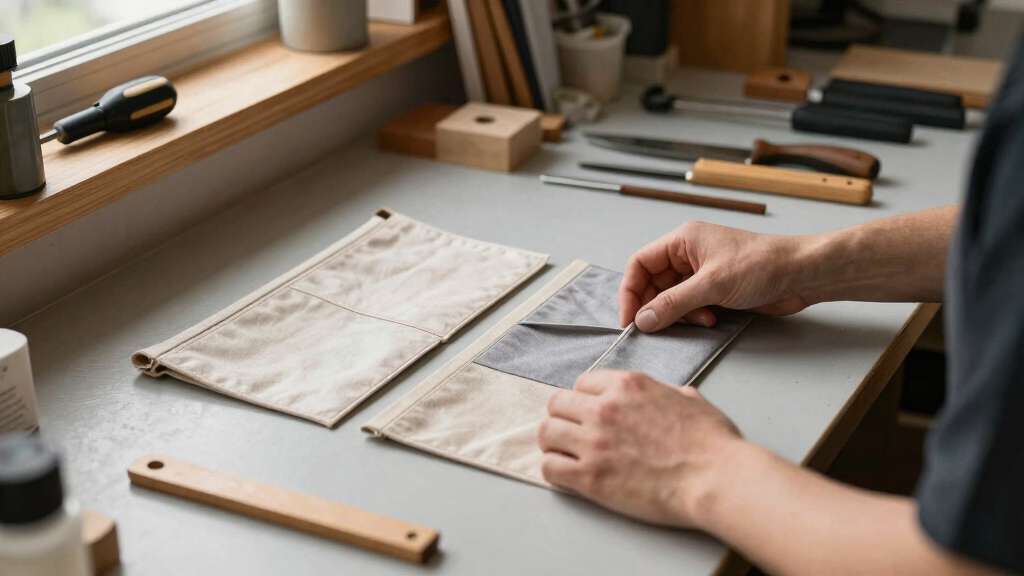
A modular system turns storage into a working interface. Pouches attach, detach and move between belts, packs and panels—putting each tool where your hand expects to find it.
Reported share of military units worldwide using MOLLE-based modular pouch systems.
Build for today’s task, then swap the loadout when the workflow changes.
Add capacity only after real use reveals a repeated need.
Pouch · platform · connector
Military · outdoor · medical · industrial
Match each pouch to a recurring task
Detach or reposition compatible modules
One platform, many possible loadouts
The system works as a coordinated stack. The pouch protects and organizes an item, the platform carries the load, and the connector determines how securely—and how quickly—the module can move.
Pouches
Utility, admin, medical and specialist formats range from compact pockets to large kits. Size, closure, waterproofing and reinforced seams determine protection and access.
Platforms
MOLLE or PALS webbing prioritizes stable configuration. Hook-and-loop panels favor rapid placement. Belts, vests and packs become the base for the complete system.
Connectors
Straps, clips, snaps and hooks control attachment speed. Strong hardware improves reliability, while careful detachment protects webbing and extends service life.
Map the task
List only the tools used repeatedly.
Group by access
Place urgent items within the easiest reach.
Mount securely
Weave, clip or press every module firmly.
Test under load
Walk, bend and work before adding more.
Less searching. Faster transitions.
A well-built loadout reduces clutter and makes essential gear predictable. The gains are strongest when every pouch has a clear purpose and unnecessary weight stays off the platform.
“Imagine reaching for your tool pouch and finding exactly what you need, in the right place, every time.”
The real benefit is not carrying more. It is creating a repeatable relationship between the user, the task and the gear.
Bars show comparative design characteristics, not measured performance percentages. Simplicity falls as pouch count and attachment complexity rise.
Modular versus fixed gear
Modularity is strongest when tasks change frequently. Fixed storage remains compelling when the tool list is stable, minimum weight matters, or a ready-made layout already matches the workflow.
| Decision factor | Modular pouch system | Fixed bag or organizer | Practical verdict |
|---|---|---|---|
| Task changes | ✓Modules swap by assignment | Contents move inside one layout | Modular wins for varied work |
| Initial simplicity | Requires planning and fitting | ✓Ready to load immediately | Fixed gear has the easier start |
| Tool accessibility | ✓Placement follows reach priority | Access depends on preset pockets | Modular supports muscle memory |
| Expansion | ✓Add capacity incrementally | Usually requires another bag | Modular scales with the user |
| Weight control | Easy to overbuild the loadout | ✓Fewer attachment components | Audit modular setups regularly |
| Cross-brand use | Strong with shared MOLLE/PALS sizing | Often limited to internal layout | Verify platform and dimensions |
Durability and flexibility have a cost
Rugged materials, reinforced seams and secure webbing improve protection, but they also add weight, bulk and expense. Build for the environment you actually face—not the most extreme scenario imaginable.
Ruggedness vs. mobility
High-denier nylon, Cordura-type fabrics and water-resistant coatings suit abrasive or wet work. Lighter materials improve comfort for travel and low-impact daily carry.
Security vs. swap speed
MOLLE-style webbing favors stable attachment. Hook-and-loop and quick-release hardware favor rapid changes but require inspection as contact surfaces and connectors wear.
Five rules for a system that lasts
The ideal configuration is rarely built in one purchase. Start with the items you reach for most, test the arrangement during real work and let experience guide every addition.
Build around recurring tasks, not maximum carrying capacity.
Choose weather-resistant fabric and reinforced stress points.
Confirm MOLLE, PALS, hook-and-loop or proprietary compatibility.
Detach gently from the bottom or sides to reduce wear.
Clean, dry and store modules correctly between demanding jobs.
What Are Modular Pouch Systems — And Why Are They a Game-Changer?
Modular pouch systems are customizable storage setups made of multiple pouches that attach to a platform or webbing. They’re designed for quick reconfiguration, offering unmatched flexibility. Think of it as building your own toolbox, but on a vest or belt.
For example, a landscape contractor might attach a small pouch for screws, a larger one for batteries, and a medical kit, all on a single belt. When the day ends, they just unclip the entire system and pack it up. This adaptability makes them a favorite in military, outdoor, and industrial settings.
Why this matters: the ability to customize means you aren’t stuck with a one-size-fits-all approach. You can adapt your gear to the specific demands of each task, which can significantly improve efficiency and safety. However, it also requires understanding your needs and balancing the weight and complexity of your setup—adding too many pouches can become cumbersome, while too few might limit your access. The tradeoff is between versatility and simplicity; mastering this balance is key to maximizing the benefits of modular systems.

ModPouch | Clip-On Modular Tool Pouch (Standard)
- Modular Tool Pouch System: External ModSlots and internal ModPockets
- Compact and Spacious Design: Wide top opening for quick access
- Secure Belt Clip: Fits belts up to 1.75 inches
As an affiliate, we earn on qualifying purchases.
As an affiliate, we earn on qualifying purchases.
How Do Modular Pouch Systems Work? — The Building Blocks
Most systems revolve around two main parts: pouches and mounting platforms. Pouches come in sizes from tiny admin pockets to large medical kits. The platforms—like MOLLE or Velcro panels—are what hold everything together.
Here’s a quick rundown:
- Pouches: Different shapes, waterproof options, reinforced seams. The choice of pouch size and features determines how well your gear is protected and organized. For example, waterproof pouches prevent water damage, which is crucial in wet environments, but they might add bulk. Reinforced seams add durability but can increase weight. Choosing the right balance depends on your specific use case—are you prioritizing ruggedness or lightweight mobility?
- Mounting Platforms: Webbing, Velcro, or snap systems that attach pouches securely. These platforms act as the backbone of your setup, dictating how quickly and securely you can attach or detach pouches. Webbing systems like MOLLE offer high versatility, allowing for multiple configurations, but they may be less quick to reconfigure than Velcro. The tradeoff lies in stability versus speed of adjustment—consider what your operational environment demands.
- Connectors: Clips, straps, or hooks for quick detachment. These enable rapid changes, which can be critical in fast-paced scenarios. However, frequent detachment may wear connectors over time, so quality and proper handling are important for longevity.
Understanding how these components interact helps you design a system that balances accessibility, security, and durability. It’s about choosing the right combination to match your workflow and environment, ensuring your gear remains reliable under stress and over time.

FRTKK Tactical Molle Admin Pouch Utility Laser Cut EDC Tool Pouch Bag Horizontal Modular Pouches Include US Flag Patch and Keychain (Black)
- Laser-cut Molle/PALS Panel: Attach extra gear easily
- Includes US Flag Patch & Keychain: Adds visibility and utility
- Durable 1000D Nylon Material: Water-resistant and long-lasting
As an affiliate, we earn on qualifying purchases.
As an affiliate, we earn on qualifying purchases.
The Benefits of Going Modular — Why Tradespeople Love Them
Switching to a modular pouch system means better organization, speed, and comfort. You can tailor your setup for each job, reducing time wasted searching or adjusting gear.
For example, an electrician might keep wire strippers, screwdrivers, and a small flashlight in dedicated pouches that clip onto their belt. When a task shifts, they swap pouches for a different setup. It’s all about efficiency and space optimization.
Moreover, high-quality fabrics like Cordura nylon don’t just resist tears and water—they also influence the overall lifespan of your gear. Choosing durable materials means fewer replacements and less downtime. However, this also involves a tradeoff: more rugged fabrics tend to be heavier and more expensive. Understanding your environment and workload helps you decide whether investing in premium materials is worth it, or if a lighter, budget-friendly option suffices. The key is balancing durability with practicality to ensure your setup remains functional and comfortable for the long haul.
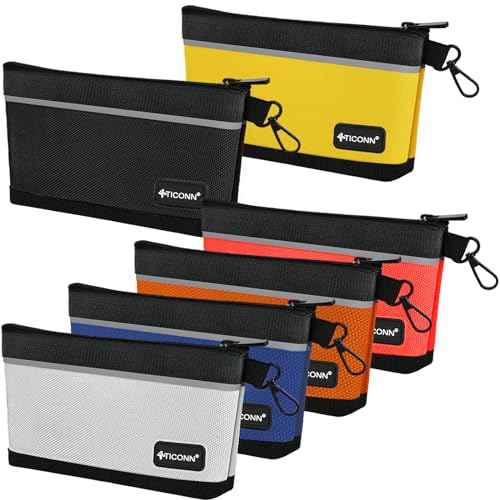
TICONN 6PK Tool Pouches with Zipper, Waterproof 1680D Oxford Small Tool Bag
- Durable 1680D Oxford Fabric: Resists scratches, wear, and wrinkles
- Waterproof and Moisture-Resistant: Keeps tools dry and rust-free
- Convenient Carabiner Clip: Attach to belts or backpacks easily
As an affiliate, we earn on qualifying purchases.
As an affiliate, we earn on qualifying purchases.
Frequently Asked Questions
Can I use modular pouches for everyday carry or travel?
Absolutely. Modular pouches are versatile enough for daily carry, travel, or even hiking. They keep your essentials organized and accessible, whether it’s your wallet, keys, or a compact first aid kit. Just pick pouches sized for your needs and attach them to a belt or backpack for easy access.
Are modular pouch systems compatible across different brands?
Many systems use universal attachment platforms like MOLLE or PALS webbing, which are widely compatible. However, always check the attachment method and sizing before mixing brands, as some proprietary designs may not fit perfectly. Stick to the same platform for seamless integration.
What materials should I look for to ensure durability?
High-denier nylon fabrics like Cordura, reinforced stitching, and water-resistant coatings are best for durability and weather resistance. Avoid cheap polyester options that tear easily or lack water protection, especially if you work outdoors or in wet environments.
How do I detach pouches without damaging the webbing or Velcro?
Gently pull or unclip the pouches, avoiding force that could tear webbing or strip Velcro. Always detach from the bottom or sides first, and store your gear in a dry, safe place to prevent wear and tear over time.

High Speed Gear – ReFlex IFAK System, Police Gear & Military Gear, Medical MOLLE Pouch for Professionals (Black)
- Organized Trauma Aid System: Durable nylon carrier and roll
- Versatile Mounting Options: Ambidextrous, MOLLE compatible, vertical/horizontal
- Quick Access Design: HANK handles, shock cord loops, glove slots
As an affiliate, we earn on qualifying purchases.
As an affiliate, we earn on qualifying purchases.
Conclusion
A well-designed modular pouch system isn’t just a storage solution — it’s a tool that adapts with you. Whether you’re a contractor, outdoor enthusiast, or emergency responder, it makes your gear more accessible, organized, and durable. Think of it as customizing your own toolbox, built exactly for how you work.
Invest a little time in choosing and maintaining your setup, and you’ll find your workflow becomes smoother, faster, and more efficient. Your gear isn’t just storage; it’s your reliable partner in every job, adventure, or emergency.
Flea & tick season Picks
flea and tick prevention
As an affiliate, we earn on qualifying purchases.