
TL;DR

Get business pricing on tools and workshop supplies
- Business-only prices and quantity discounts
- Tax-exempt purchasing
- Multiple users, one account, clear invoices
Reconditioning a dried-out leather belt involves cleaning, applying the right oils or conditioners, and proper storage. Doing this regularly can extend your belt’s lifespan and keep it looking good. Avoid harsh chemicals and over-conditioning for best results.
Nothing’s more frustrating than pulling out a favorite leather belt, only to find it stiff, cracked, and dull. Leather, after all, is a living material—full of natural oils that keep it supple and strong. When those oils dry out, the belt’s resilience fades, and cracks form like fissures in a parched landscape.
If you’ve got a dried-out belt that still holds sentimental value or cost you a pretty penny, don’t toss it just yet. Reconditioning offers a practical, cost-effective way to breathe new life into it. You’ll learn how to identify signs of dryness, choose the right products, and apply them with confidence. Whether it’s a well-worn work belt or a stylish accessory, you can restore its flexibility and shine—no fancy tools needed.
Identify early signs of dryness—cracks, stiffness, dullness—to catch problems before they worsen.
Always clean your leather belt thoroughly before applying any conditioner for better absorption.
Choose natural, pH-balanced oils like mink or lanolin for safe, effective reconditioning.
Apply conditioners in thin layers, let them soak, and buff gently for best results.
Regular maintenance every 3-6 months keeps your belt flexible, shiny, and long-lasting.
Spot the Signs Your Leather Belt Needs Help Before It’s Too Late
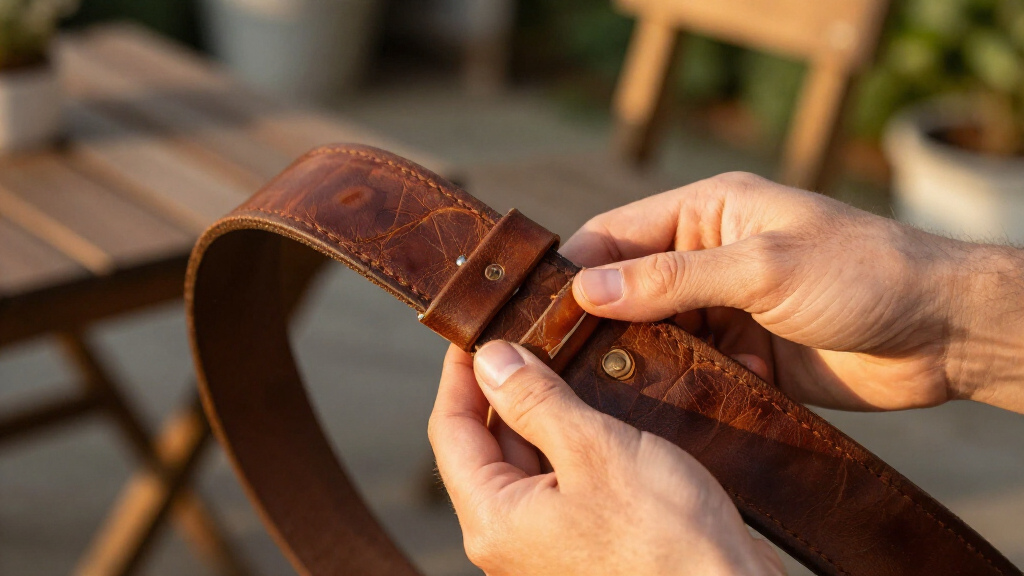
Before you start reconditioning, you need to recognize the early signs of dryness. Cracking, stiffness, and dullness are your first clues. Imagine grabbing your belt and feeling how stiff and brittle it’s become—like trying to bend a piece of cardboard. That’s a clear sign it’s lost moisture.
Another indicator is discoloration—faded, patchy areas hint at depleted natural oils. If the edges fray or the surface cracks when you flex it, it’s time to act. Waiting too long might lead to permanent damage, but catching it early keeps the repair simple and affordable.
For example, I once ignored a belt that started to crack at the buckle hole. A quick reconditioning saved it from splitting entirely, and I wore it for another two years.
As an affiliate, we earn on qualifying purchases.
Clean Your Belt Thoroughly Before Applying Any Conditioner
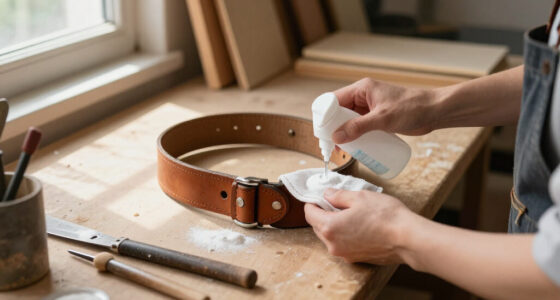
Cleaning is the first step. Dirt, dust, and oils can block your conditioning products from penetrating deeply. Use a soft cloth or a gentle brush to remove surface grime. For more stubborn dirt, dampen a cloth with water—just enough to wipe without soaking.
Imagine wiping away years of dust and grime, revealing the true color and grain of your belt. This step ensures your conditioner can seep into every crack and crevice, making the reconditioning more effective.
For instance, I once cleaned a vintage leather belt with a slightly damp microfiber cloth, and I was surprised how much dirt came off—setting the stage for a much better conditioning job afterward.
natural leather oil for reconditioning
As an affiliate, we earn on qualifying purchases.
As an affiliate, we earn on qualifying purchases.
Choose the Right Products to Bring Your Belt Back to Life
Not all leather conditioners are created equal. Look for products that are pH-balanced and designed specifically for restoring moisture. Mink oil, neatsfoot oil, and lanolin-based creams are popular choices because they mimic natural oils.
Avoid harsh chemicals, alcohol-based cleaners, or household oils like olive or coconut oil. These can stain, weaken, or clog your leather, making the problem worse.
For example, BestBeltShop recommends natural, plant-based oils for everyday belts—these penetrate well and won’t leave a sticky residue. You want a product that nourishes deeply without leaving a greasy film.
As an affiliate, we earn on qualifying purchases.
Step-by-Step: How to Recondition Your Leather Belt in 5 Easy Moves
- Test first: Apply a small amount of conditioner on an inconspicuous spot. Wait 10 minutes to see how the leather reacts.
- Apply evenly: Use a soft cloth or sponge to spread a thin layer of your chosen product across the entire belt surface. Focus on areas that look especially dry or cracked.
- Let it soak: Allow the product to absorb for at least 30 minutes, ideally longer if the leather feels very dry.
- Buff gently: Use a clean, dry cloth to buff away any excess and restore a soft sheen.
- Repeat if necessary: For severely dried leather, repeat this process after a day or two to build up moisture gradually.
Imagine the transformation—stiff, brittle leather turning soft and pliable again, ready to serve you for years more. I’ve done this with an old leather belt that was so dry it squeaked when I bent it; now it’s like new.
leather repair and conditioning products
As an affiliate, we earn on qualifying purchases.
As an affiliate, we earn on qualifying purchases.
Keep Your Belt Soft and Strong with Ongoing Care
Reconditioning isn’t a one-and-done deal. To keep your belt in top shape, condition it every 3 to 6 months. Store it in a cool, dry place—avoid direct sunlight or damp basements—since extreme conditions accelerate drying and cracking.
For instance, I keep my belts hanging in a closet, away from heaters or windows. Regular conditioning keeps them flexible and shiny, preventing the cycle of drying out and cracking.
Remember, a well-cared-for belt can last decades, saving you money and maintaining your style.
Compare the Best Products for Reconditioning Leather Belts
| Product Type | Best For | Pros | Cons |
|---|---|---|---|
| Mink Oil | Deep nourishment, water resistance | Penetrates deeply, restores flexibility | Can darken light-colored leather |
| Neatsfoot Oil | Softening stiff leather | Affordable, effective | Potential for over-saturation |
| Lanolin-based Creams | Moisturizing and protection | Natural feel, easy to apply | May require buffing |
| Plant-based Leather Conditioners | Everyday maintenance | Eco-friendly, gentle | Less penetrating for very dry leather |
Frequently Asked Questions
How do I know if my leather belt is too dry to repair?
If your belt feels stiff, cracks when bent, or the edges fray, it’s a sign it’s too dry. Light cracks can often be fixed, but deep, severe cracking or tearing might need professional repair or replacement. Recognizing these signs early is crucial because the longer you wait, the more likely the damage becomes permanent. Deep cracks compromise the belt’s structural integrity, and over time, the leather can become brittle and prone to breaking. Addressing dryness early allows for effective reconditioning, which can restore flexibility and prevent costly repairs or replacements.
What products are safest for reconditioning my leather belt?
Use natural, pH-balanced conditioners like lanolin creams, mink oil, or specially formulated leather conditioners. These products are designed to mimic the leather’s natural oils, ensuring safe absorption and effective hydration. They also tend to be gentle, reducing the risk of staining or damaging the leather. Avoid household oils or alcohol-based cleaners because they can strip away existing oils, causing further dryness or discoloration. Choosing the right product is essential because some cheap or inappropriate conditioners can leave a sticky residue, clog pores, or even weaken the leather over time, leading to more damage rather than repair.
Can I use household oils like olive or coconut oil?
No, it’s not recommended. These oils can stain, clog pores, or cause the leather to become sticky and weaken over time. Household oils are not formulated for leather and can lead to long-term damage, such as discoloration or deterioration of the material. Leather conditioners are specifically designed to penetrate and nourish without leaving behind residues that attract dirt or cause stickiness. Always opt for products formulated for leather care to ensure your belt remains supple, durable, and visually appealing.
How often should I condition my leather belt?
Every 3 to 6 months is ideal, depending on how often you wear it and environmental factors. Regular conditioning prevents the leather from drying out, cracking, or becoming stiff. If you live in a dry climate or frequently expose your belt to water or sweat, more frequent conditioning may be necessary. Conversely, if you wear your belt infrequently and store it properly, less frequent treatment might suffice. Consistent maintenance not only prolongs the lifespan of your belt but also helps retain its appearance and flexibility, saving you money in the long run.
Will reconditioning fix a severely cracked belt?
It can improve flexibility and appearance, but deep cracks or structural damage may require professional repair or replacing the belt. Reconditioning works best when cracks are superficial or moderate. Severe cracks often indicate that the leather has lost too much moisture and elasticity, making it prone to further deterioration. While reconditioning can soften and fill minor cracks, it cannot restore structural integrity to a belt with deep fissures or tears. In such cases, professional repair or replacement is recommended to ensure safety and longevity.
Conclusion
Reconditioning a dried-out leather belt isn’t magic—it’s about understanding your material and treating it with care. With a few simple steps, you can turn a stiff, cracked belt into a supple, durable piece that looks good and lasts for years.
Think of your leather as a living thing that needs nourishment, not neglect. Keep it conditioned, stored properly, and you’ll enjoy its comfort and style long after others have given up. Your belt isn’t just an accessory—it’s a workhorse that rewards regular care.
Fall yard work Picks
leaf blowers
As an affiliate, we earn on qualifying purchases.