TL;DR

Get business pricing on tools and workshop supplies
- Business-only prices and quantity discounts
- Tax-exempt purchasing
- Multiple users, one account, clear invoices
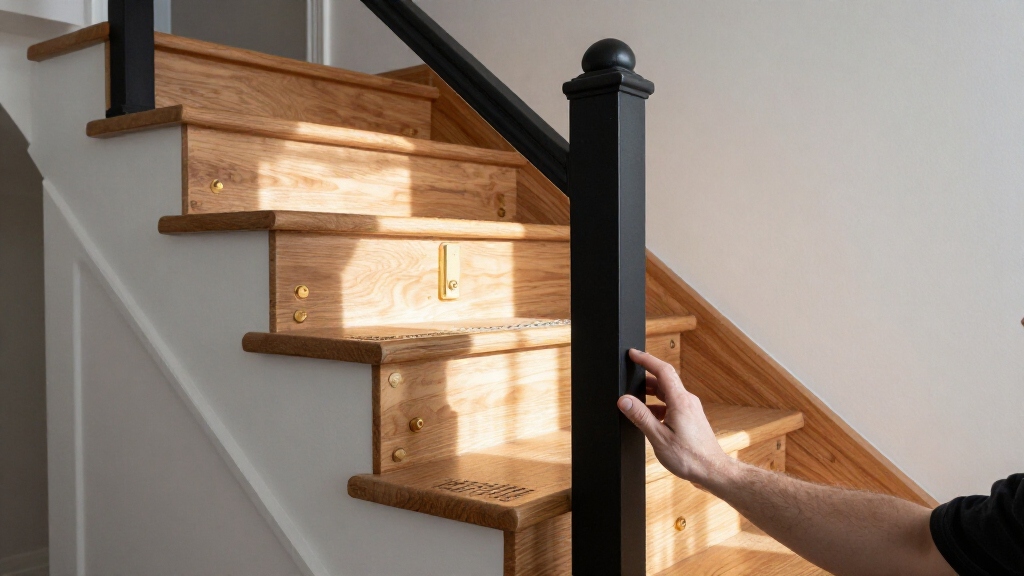
A House Beautiful report outlines four design approaches intended to make stairs safer while maintaining their appearance: add lighting, secure a patterned runner, provide a continuous handrail and close excessive gaps between balusters. The article offers designers’ recommendations, not safety testing or a substitute for local building codes and professional advice.
A House Beautiful report presents four designers’ recommendations for making stairs safer without giving up style: improve lighting, install a securely fastened runner, add a continuous handrail and address wide gaps between balusters. The advice is aimed at households where children, older adults or small pets may be more vulnerable to falls, though the article does not provide safety-test results or replace local building requirements.
Lighting is the first recommendation. Terri Fiori, founder of Fiori + Co. and a Certified Aging in Place specialist, suggests combining stairwell lighting with illumination under handrails. The report describes a renovation where she used recessed lights and touch-activated LED lighting under the rail. That kind of setup can help make steps visible without relying only on a bright overhead fixture, and a touch-activated control may be easier for a child who cannot reach a wall switch.
For stair runners, designer Caroline Aycock recommends patterned designs, particularly for narrow, steep staircases in historic homes. Fiori stresses that how a runner is installed matters: she advises against a loose “waterfall” installation and describes a “Hollywood” wrap, in which the material follows the stair’s contours and is secured beneath the nosing and to the riser. The report says this approach is intended to limit movement and stretching; it does not establish that a runner makes every staircase safe.
The other recommendations address handrails and balusters. Designer Prudence Bailey suggests adding a second continuous handrail where a landing creates a break between stair sections, provided the rail is sturdy and easy to grip. Designer Shannon Crain recommends closely spaced vertical balusters when existing gaps are too wide. House Beautiful gives four inches as a general rule of thumb for maximum spacing, while noting that exact building codes vary by location.
Safety Features Can Shape Stair Design
Stairs are used repeatedly, so poor visibility, a loose walking surface, an interruption in the handrail or wide openings can create hazards for people moving between floors. The designers’ advice matters because it treats safety measures as part of a home’s appearance rather than as additions that must look purely utilitarian. Lighting can be integrated into a rail, a runner can introduce color or pattern, and handrails and balusters can be selected as visible design elements.
The recommendations also point to different needs within a household. Fiori’s lighting example considers people who may struggle to see dim steps, while the continuous-rail and baluster suggestions address gaps in support and openings that could be risky for children or pets. Those are practical design considerations, but a stylish feature alone does not establish that a staircase meets applicable safety standards.
Homeowners planning changes should confirm local code requirements and consider the condition and geometry of the existing stairs. The report’s four-inch spacing guidance is explicitly a rule of thumb, not a universal code statement. A design decision that works in one home may not be appropriate in another.
motion sensor LED stair lights rechargeable
As an affiliate, we earn on qualifying purchases.
As an affiliate, we earn on qualifying purchases.
Four Changes From the Designers
The report is a collection of recommendations from interior designers, rather than an announcement of new building regulations or the findings of a formal study. Its examples focus on improvements that can be incorporated into a range of staircase styles: added light, a fitted runner, a second handrail and altered baluster spacing. The article includes a historic Pittsburgh home with a custom ombré runner as an illustration of how a safety-related feature can also contribute to a room’s design.
For lighting, Fiori links the recommendation to age-related changes in vision and suggests avoiding dependence on one harsh overhead light. For runners, Aycock describes patterned material as a way to make a visual statement, while Fiori focuses on securing the covering to reduce movement. Bailey’s suggestion responds to a handrail break at a landing. Crain’s baluster advice concerns gaps that may be large enough to pose a concern for small children or pets.
These distinctions matter: the recommendations address separate potential problems, and no single change addresses all of them. The source does not say that every home needs all four modifications, nor does it supply measurements for every stair, product specifications or a cost comparison.
““Recessed lighting plus handrail lighting ensured that shadows on the steps were eliminated and a trip to the ER avoided.””
— Terri Fiori, founder of Fiori + Co. and a Certified Aging in Place specialist
stair runner rug non-slip installation carpet
As an affiliate, we earn on qualifying purchases.
As an affiliate, we earn on qualifying purchases.
Codes and Project Details Vary
The source does not identify the publication date, report independent testing of the four recommendations or establish how much each change reduces fall risk. It also does not specify the applicable code for any particular location. While it offers four inches as a rule of thumb for baluster spacing, it says requirements differ depending on where a home is located.
Details such as the right type of handrail, runner attachment, lighting placement and permitted baluster openings depend on the staircase and local rules. The report does not provide product models, installation instructions, project costs or a claim that the recommendations are suitable for every property. Homeowners should treat the design advice as a starting point and verify technical requirements before work begins.
continuous wall mounted stair handrail kit
As an affiliate, we earn on qualifying purchases.
As an affiliate, we earn on qualifying purchases.
Check the Staircase Before Changes
The report does not announce a follow-up study or a scheduled next development. For readers considering an update, the immediate next step is to identify the problem they want to address: dim steps, a slippery or moving runner, an interruption in handrail coverage, or wide baluster gaps. They can then compare design options with local building requirements and the staircase’s existing condition.
Where installation affects rail strength, stair structure or code compliance, homeowners should consult qualified professionals and confirm permit requirements where applicable. A designer can help coordinate finishes and layout, while a qualified contractor or other relevant professional can assess installation and safety details. The central recommendation is to plan appearance and function together, without assuming that a decorative change by itself makes stairs safe.
stair baluster spacing safety infill panels
As an affiliate, we earn on qualifying purchases.
As an affiliate, we earn on qualifying purchases.
Key Questions
What four changes do the designers recommend?
The report recommends adding stair lighting, installing a securely fastened runner, providing a continuous handrail and addressing wide gaps between balusters.
What is a Hollywood-style stair runner?
In the report, Fiori describes a runner that follows the shape of each step and is secured beneath the nosing and to the riser. She contrasts it with a waterfall installation, where the runner falls over the step edge.
How far apart should stair balusters be?
The article gives no more than four inches as a rule of thumb, but says exact building-code requirements vary by location. Check the rules that apply to the home rather than relying on that figure alone.
Do these design tips guarantee safer stairs?
No. The source presents designers’ recommendations, not test results or a guarantee. The appropriate changes depend on the staircase, household needs and local building requirements.
Source: rss
Halloween Picks
halloween
As an affiliate, we earn on qualifying purchases.