TL;DR

Get business pricing on tools and workshop supplies
- Business-only prices and quantity discounts
- Tax-exempt purchasing
- Multiple users, one account, clear invoices
A House Beautiful gardening report recommends seven alternatives to bagging fallen leaves: mow a thin layer into the lawn, leave whole leaves as wildlife cover, or reuse shredded leaves as mulch, compost and garden-bed material. The advice is practical, but the right use depends on leaf depth, garden conditions and whether local leaf collection is available.
House Beautiful has outlined seven ways to reuse fallen leaves rather than bagging them for disposal, including mowing a thin layer into lawns, keeping whole leaves in garden beds for wildlife and turning shredded leaves into mulch or compost. The advice offers homeowners alternatives to yard waste, while emphasizing that leaf thickness and intended use affect how leaves should be handled.
For lawns, the report says homeowners can mow over leaves when the layer is less than one inch thick. Leaves should be as dry as possible before mowing. A mulching mower is recommended; with a standard mower, a second pass at a right angle can break the leaves into smaller pieces. The report says the fragments can return nutrients to the lawn.
For habitat, the report cites the National Wildlife Federation as recommending whole leaves in garden beds. Leaf litter can shelter beneficial insects, spiders, turtles, toads and small mammals during cold months, while some moths and butterflies remain in their chrysalis stage in underbrush. Whole leaves provide better coverage for this use.
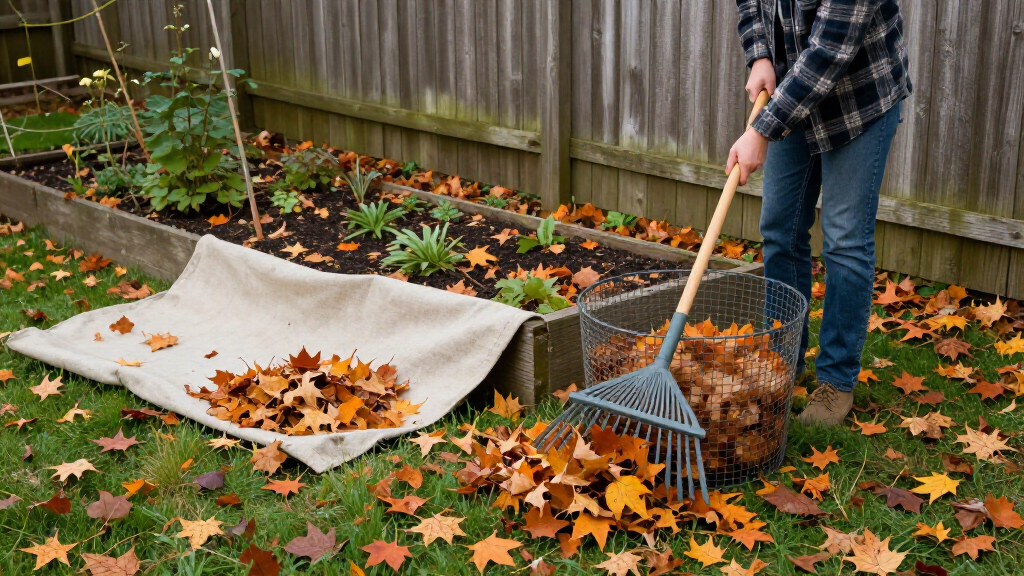
Four other suggestions focus on reusing leaves around the garden: shred them for a two- to three-inch mulch layer around shrubs and perennials; till shredded leaves into beds in fall or work them into the soil in early spring; save leaves as the “brown” material for a compost pile; and use a thick layer to protect greens and perennial herbs. For the last method, the report recommends mounding three to five inches of leaves around and over plants, with wire cages to keep the leaves in place.
Turning Yard Waste Into Garden Resources
Reusing leaves can reduce the amount of yard debris a household sends out for disposal while providing materials for soil cover, compost and wildlife habitat. The specific benefits described in the report include suppressing weeds and reducing erosion with leaf mulch, insulating plant roots through winter freeze-thaw cycles, and giving some animals and insects cover in leaf litter.
The suggestions are not one-size-fits-all. A dense layer left on grass is different from a thin layer that can be chopped by a mower, and whole leaves that help wildlife may be less suitable for a garden path, where they can become slippery or mat down. The report’s options let readers match the handling method to the place and purpose.
As an affiliate, we earn on qualifying purchases.
Seven Uses Beyond the Yard-Waste Bag
The House Beautiful report presents the ideas as seasonal garden tasks. Its first option is to mow a shallow leaf layer into the lawn. The next two are to keep whole leaves for habitat or shred them for mulch. The remaining choices are to till leaves into beds, start or contribute to compost, make a garden path, and cover certain plants to extend harvesting into winter.
For garden paths, the report favors shredded leaves, warning that whole leaves can be slippery and may mat down. For compost, it suggests saving leaves as “browns” to add during the growing season alongside green materials. It also says residents with limited space can check with their municipality: some towns and cities collect leaves and yard debris and turn them into compost offered to residents.
The report attributes the mulch guidance to the University of Delaware, which it says recommends shredded leaves around shrubs and perennials. It advises that a garden fork or spade can turn leaves into soil, so a powered tiller is not required.
“A two- to three-inch layer is sufficient to keep down weeds and reduce soil erosion.”
— House Beautiful report, citing the University of Delaware
As an affiliate, we earn on qualifying purchases.
Choosing the Right Leaf Method
The report does not specify whether every recommendation suits every climate, soil type or plant, and it does not provide a universal schedule for leaf cleanup. Its mowing advice applies to a leaf layer under one inch; other lawn conditions may call for a different approach. It also does not identify which municipalities offer collection, what those programs accept or whether compost is available in every area.
The winter-cover suggestion is limited to plants the report identifies, including Swiss chard, sage, parsley and oregano. It does not make a general guarantee about how long those plants can be harvested, since local temperatures and growing conditions vary.
As an affiliate, we earn on qualifying purchases.
Check Local Conditions Before Reusing
Homeowners can start by checking the depth and dryness of leaves, then choose whether to mow, shred, leave whole or collect them for compost. Before setting aside a large pile, residents can check their local government’s yard-waste guidance for pickup and compost programs. The report offers no later milestone or policy change; its next practical step is seasonal cleanup based on each yard’s conditions and intended use.
As an affiliate, we earn on qualifying purchases.
Key Questions
Can I mow fallen leaves into my lawn?
House Beautiful says mowing can work when the leaf layer is less than one inch thick and the leaves are as dry as possible. A mulching mower is preferred; a second pass at a right angle can help with a standard mower.
Should leaves be shredded before using them as mulch?
The report recommends shredded leaves for mulch around shrubs and perennials, at a depth of two to three inches. It says whole leaves can mat down and are more likely to be slippery on paths.
Why leave whole leaves in garden beds?
Whole leaf litter can provide winter cover for animals and insects, according to the report’s account of National Wildlife Federation guidance. Keeping the leaves intact provides better coverage for that purpose.
What can I do if I do not have room to compost?
The report advises checking with the local municipality. It says some towns and cities collect leaves and yard debris and later offer the resulting compost to residents, though programs vary by location.
Source: rss
Halloween Picks
halloween
As an affiliate, we earn on qualifying purchases.