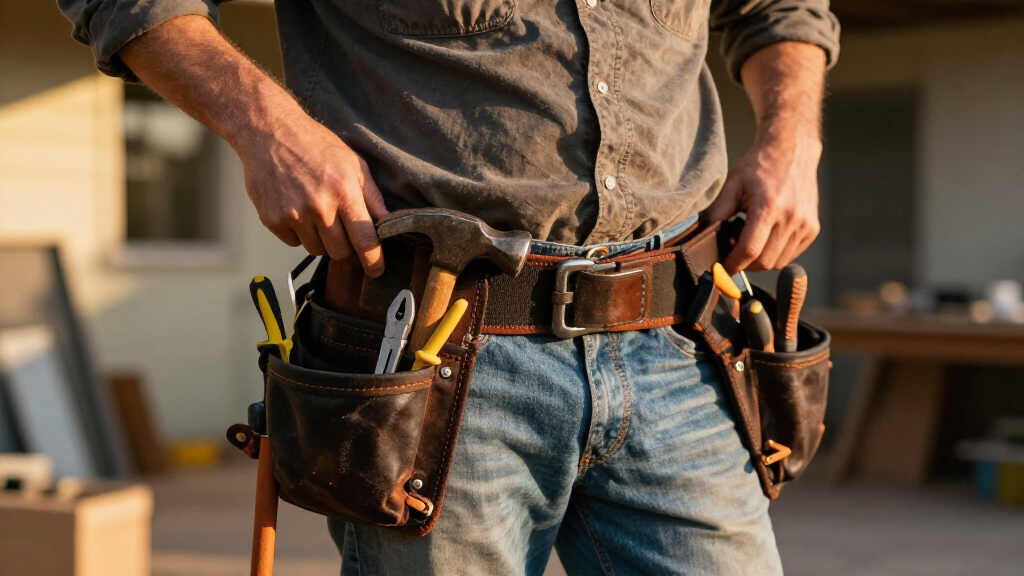

The best heavy-duty tool storage belt overall is the DEWALT Professional Tool Belt Organizer with Suspenders and 25 Pockets, which pairs a genuinely rugged build with weight-distributing suspenders that keep a fully loaded rig comfortable across a full shift. For electricians, the Klein Tools 5225 stands out for its focused, trade-specific layout, while the MagnoGrip 19-Pocket Builder’s Belt wins on value thanks to its magnetic part storage. The core tradeoff in this category is capacity versus comfort: the more pockets you fill, the more a belt alone strains your hips and back, which is why suspenders separate the serious rigs from the weekend pouches. Material choice matters too — leather lasts longest but weighs more, while canvas and 1680D fabric keep things lighter at some cost in longevity. Keep reading for the full breakdown of all 13 belts.

Get business pricing on tools and workshop supplies
- Business-only prices and quantity discounts
- Tax-exempt purchasing
- Multiple users, one account, clear invoices
Complete the kit


Key Takeaways
- Suspenders were the single biggest differentiator: the DEWALT Professional 25-Pocket, the 1680D belt with suspenders, and the Marscamd rig all outperformed belt-only models once pouches were filled past roughly 10 pounds.
- Pocket count is not the same as usability — the Klein 5225 and Arrow electrician belts organize fewer tools better than the 26- and 27-pocket models, which can turn into a scavenger hunt on the jobsite.
- Magnetic zones, found on the MagnoGrip 19-Pocket and the 27-pocket combinable belt, saved real time on screws and nails but added bulk that framers will appreciate more than finish carpenters.
- The budget Dickies 5-Pocket pouch held up fine for light DIY duty, but its thinner canvas and single-clip retention showed exactly where cheap belts cut corners.
- Leather (DEWALT 18-Pocket Organizer) offers the best long-term durability and stiffness for heavy hand tools, but demands a break-in period and costs — and weighs — noticeably more than synthetic rigs.
| Dickies 8-Pocket Padded Tool Belt/Utility Pouch |  | Best Overall | Material: Durable canvas | Pockets: 8 | Belt Width: 3 inches | VIEW LATEST PRICE | See Our Full Breakdown |
| 11 Pocket Heavy Duty Construction Tool Belt with Quick Release Buckle |  | Best Value | Main Pockets: 5 | Small Pockets: 14 | Material: 1000D polyester | VIEW LATEST PRICE | See Our Full Breakdown |
| Klein Tools 5225 Tool Belt |  | Best Modular Foundation Belt | Material: Polypropylene webbing | Width: 2 inches | Waist Size: Up to 48 inches | VIEW LATEST PRICE | See Our Full Breakdown |
| Magnetic Tool Belt for Men, 26 Pockets Heavy Duty Nail Tool Pouch |  | Best for Fastener-Heavy Work | Waist Size: 31-48 inches | Pockets: 26 | Magnetic Zones: 3 | VIEW LATEST PRICE | See Our Full Breakdown |
| Dickies 5-Pocket Canvas Tool Belt Pouch with Adjustable Belt |  | Best Lightweight Starter Pick | Material: Heavy-duty canvas | Pockets: 5 | Belt Included: Yes | VIEW LATEST PRICE | See Our Full Breakdown |
| AWP Tool Belt Tool Rig, Durable Utility Belt Organizer |  | Best Overall Tool Rig | Brand: AWP | Model Number: L-699-P-3 | Material: 600 denier polyester | VIEW LATEST PRICE | See Our Full Breakdown |
| Arrow Heavy-Duty Electrician Tool Belt with 10 Pockets |  | Best for Electricians | Material: Triple-layer heavy-duty fabric | Reinforced Pockets: Yes, 1200D material | Number of Pockets: 10 | VIEW LATEST PRICE | See Our Full Breakdown |
| Tool Belt with 27 Pockets and 3 Magnetic Zones, Freely Combinable Toolbelt |  | Best Capacity and Customization | Number of Pockets: 27 | Magnetic Zones: 3 | Material: 600D Oxford fabric | VIEW LATEST PRICE | See Our Full Breakdown |
| Tool Belt with Suspenders, Heavy Duty 1680D Work Belt for Construction and DIY |  | Best Weight Distribution for Long Days | Material: 1680D Heavy Duty Fabric | Includes: Magnetic Tool Holder, Suspenders, Tool Belt | Model Number: Mjt-tb-001 | VIEW LATEST PRICE | See Our Full Breakdown |
| DEWALT Leather Tool Belt Organizer with 18 Pockets |  | Best Premium Leather Build | Brand: DEWALT | Number of Pockets: 18 | Material: Premium nubuck top-grain leather | VIEW LATEST PRICE | See Our Full Breakdown |
| MagnoGrip 19-Pocket Builder’s Tool Belt with Magnetic Storage |  | Best for Fastener-Heavy Trades | Material: 1680D ballistic polyester | Number of Pockets: 19 | Key Feature: Integrated magnetic tool and fastener pockets | VIEW LATEST PRICE | See Our Full Breakdown |
| Marscamd Tool Belt with Suspenders & Pouches, Heavy Duty Work Belt, Black |  | Best Budget Suspender Rig | Material: 1680D water- and tear-resistant fabric | Waist Size Range: 35″ to 48″ | Pouches: 2 detachable tool pouches | VIEW LATEST PRICE | See Our Full Breakdown |
| DEWALT Professional Tool Belt Organizer with Suspenders and 25 Pockets |  | Best Overall | Pockets: 25 | Material: 1680 denier fabric with dirt-repellant tarpaulin | Belt Width: 5.5 inches | VIEW LATEST PRICE | See Our Full Breakdown |
| heavy-duty tool storage belt | Material |
|---|---|
| Dickies 8-Pocket Padded Tool B | Durable canvas |
| 11 Pocket Heavy Duty Construct | 1000D polyester |
| Klein Tools 5225 Tool Belt | Polypropylene webbing |
| Magnetic Tool Belt for Men | Oxford fabric |
| Dickies 5-Pocket Canvas Tool B | Heavy-duty canvas |
| AWP Tool Belt Tool Rig | 600 denier polyester |
| Arrow Heavy-Duty Electrician T | Triple-layer heavy-duty fabric |
| Tool Belt with 27 Pockets and | 600D Oxford fabric |
| Tool Belt with Suspenders | 1680D Heavy Duty Fabric |
| DEWALT Leather Tool Belt Organ | Premium nubuck top-grain leather |
| MagnoGrip 19-Pocket Builder’s | 1680D ballistic polyester |
| Marscamd Tool Belt with Suspen | 1680D water- and tear-resistant fabric |
| DEWALT Professional Tool Belt | 1680 denier fabric with dirt-repellant tarpaulin |
More Details on Our Top Picks
Dickies 8-Pocket Padded Tool Belt/Utility Pouch
The padded 3-inch belt is what separates this Dickies rig from every other sub-$50 option in this lineup. When a belt is loaded with hammers, drivers, and fasteners, width is comfort — and 3 inches spreads that load across your hips instead of digging into them. Compared with the Dickies 5-Pocket Canvas Pouch, this version trades a little simplicity for genuine load-carrying ability: webbing-reinforced pockets, a puncture-resistant back liner, and eight pockets that keep sharp tools from poking through to your leg. The tradeoff is weight. Fully loaded, it is noticeably heavier than the Klein Tools 5225 belt alone, and the canvas — while tough — will eventually show wear where leather options like the DEWALT Leather Organizer would not. For all-day, multi-trade use at a reasonable price, this pick makes the most sense.
Pros:- Padded 3-inch belt distributes heavy loads comfortably
- Puncture-resistant back liner protects against sharp tool points
- Webbing-reinforced pockets resist tearing under weight
- Fits a wide 32-56 inch waist range
Cons:- Heavy when fully loaded with tools
- Canvas construction wears faster than leather with heavy daily abuse
Best for: General contractors and serious DIYers who carry a full day’s worth of tools and want all-day comfort without leather-belt pricing
Not ideal for: Electricians who need to swap pouches constantly — the integrated design and bulk make it less modular than a bare belt like the Klein 5225
- Material:Durable canvas
- Pockets:8
- Belt Width:3 inches
- Waist Range:32-56 inches
- Color:Tan/Grey
- Reinforcements:Webbing-reinforced pockets, puncture-resistant back liner
Our verdict“The best balance of comfort, capacity, and price for anyone who wears a tool belt all day, every day.”
11 Pocket Heavy Duty Construction Tool Belt with Quick Release Buckle
This belt wins on raw capacity per dollar. Nineteen total pockets — five main, fourteen small — put it in DEWALT Professional Organizer territory at a fraction of the price, and the 1000D polyester with rust-proof rivets holds up better than the plain canvas on the Dickies 5-Pocket pouch. The 2-inch belt is narrower than the Dickies 8-Pocket’s padded 3-inch strap, so expect more pressure on your hips under a full load — that is the cost of the price gap. It also runs bulkier than the minimalist Klein 5225, which matters if you squeeze into tight spaces like crawlspaces or between studs. For framers, plumbers, and electricians who want maximum organization and can tolerate a stiffer ride, this model is better suited than anything else at this price.
Pros:- 19 total pockets for deep organization of tools and fasteners
- 1000D polyester with rust-proof rivets resists jobsite abuse
- Quick-release buckle makes removal fast at breaks and end of day
- Adjustable from 33 to 50 inches
Cons:- Bulky profile catches on framing and tight workspaces
- Unpadded 2-inch belt gets uncomfortable over long shifts
Best for: Budget-minded tradespeople in carpentry, plumbing, or electrical work who need lots of pocket organization without spending leather-rig money
Not ideal for: Anyone with back or hip sensitivity — the unpadded 2-inch belt concentrates weight under heavy loads
- Main Pockets:5
- Small Pockets:14
- Material:1000D polyester
- Reinforcements:Rust-proof rivets
- Belt Width:2 inches
- Belt Adjustment:33 to 50 inches
- Buckle:Quick-release
Our verdict“The most pocket capacity you can get on a budget, as long as you can live without padding.”
Klein Tools 5225 Tool Belt
This is not a storage system — it is the belt you build your own rig on, and that distinction is its whole value. Unlike the all-in-one Dickies 8-Pocket or the 11-Pocket Construction Belt, the Klein 5225 ships bare and accepts tunnel-loop and slotted pouches, so electricians can run a minimal screwdriver-and-pliers setup on Monday and a full drill-bit loadout on Tuesday. The polypropylene webbing shrugs off moisture and the corrosion-resistant metal buckle outclasses the plastic hardware on the Dickies 5-Pocket pouch, which can crack if you snag it on a ladder. The obvious tradeoff: pouches cost extra, so a complete setup ends up pricier than any bundled option here. And the 48-inch waist ceiling excludes larger framers, where the Dickies 8-Pocket stretches to 56 inches.
Pros:- Compatible with tunnel-loop and slotted pouches for custom configurations
- Corrosion-resistant metal buckle far more durable than plastic
- Moisture-resistant polypropylene webbing
- Klein’s reputation for trades-grade longevity
Cons:- No storage included — pouches sold separately
- Caps out at 48-inch waists, smaller range than Dickies options
Best for: Electricians and tradespeople who already own pouches or want to customize their loadout piece by piece
Not ideal for: Buyers who want everything in one box — the bare belt plus pouches costs more than complete rigs like the Dickies 8-Pocket
- Material:Polypropylene webbing
- Width:2 inches
- Waist Size:Up to 48 inches
- Buckle:Metal, quick release
- Hardware:Corrosion resistant
- Pouch Compatibility:Tunnel loop and slotted pouches
Our verdict“The right buy for electricians who see a belt as a platform, not a package — everyone else should grab an all-in-one rig.”
Magnetic Tool Belt for Men, 26 Pockets Heavy Duty Nail Tool Pouch
Three magnetic zones are the feature that justifies this belt’s existence — they do what no pocket in the Dickies 8-Pocket or Klein 5225 ecosystem can: hold loose nails, screws, and bits where you can see and grab them without digging. For roofers, deck builders, and anyone doing repetitive nailing or screwing, that translates directly into fewer dropped fasteners and faster hand movements. The 26-pocket count edges out even the 11-Pocket Construction Belt, and removable pouches let you strip the rig down for lighter tasks — a flexibility the fixed Dickies layouts lack. The tradeoffs are real, though. All that oxford fabric and hardware makes it the bulkiest wear in this lineup on smaller waists, and like most max-capacity rigs, a fully loaded belt gets fatiguing past a few hours.
Pros:- 3 magnetic zones keep loose screws and nails accessible and loss-proof
- 26 pockets offer the most organization in this roundup
- Removable pockets let you customize the loadout
- Reinforced stitching on heavy-duty oxford fabric
Cons:- Very bulky on smaller waist sizes within its 31-48 inch range
- Fully loaded weight causes fatigue during extended wear
Best for: Roofers, framers, and deck builders who constantly handle loose nails and screws and want them magnetically within reach
Not ideal for: Precision trades like finish electrical work — the bulk and dangling pouches get in the way where the slim Klein 5225 shines
- Waist Size:31-48 inches
- Pockets:26
- Magnetic Zones:3
- Material:Oxford fabric
- Adjustable:Yes
- Removable Pockets:Yes
Our verdict“A fastener magnet for high-volume nailing and screwing work — overkill for anyone who carries ten tools or fewer.”
Dickies 5-Pocket Canvas Tool Belt Pouch with Adjustable Belt
Sometimes five pockets is the right number, and this Dickies pouch proves it. Compared with its big brother, the Dickies 8-Pocket Padded belt, this version strips away weight, bulk, and about half the organizational ambition — which is exactly what a homeowner hanging shelves or a hobbyist in the garage actually needs. You give up the padding, so a loaded hammer and drill will remind your hips it is there, and the high-impact plastic buckle is a step down from the metal hardware on the Klein 5225 if you are rough on gear. There are no tool loops or clips, unlike the 11-Pocket Construction Belt, so long-handled tools live in pockets or not at all. But for occasional, light-duty carry at a starter price, this option stands out for doing the basics without excess.
Pros:- Lightweight and low-profile for occasional tasks
- Heavy-duty canvas holds up to hobby-grade use
- Adjustable webbed belt fits 32-52 inch waists
- Very low price point for entry-level storage
Cons:- No padding or comfort features for heavier loads
- Plastic buckle is less durable than the metal hardware on rival belts
- No tool loops or clips for long-handled tools
Best for: DIYers and homeowners who need a simple, affordable pouch for occasional weekend projects with a handful of tools
Not ideal for: Daily professional use — no padding, no tool loops, and plastic hardware won’t survive jobsite abuse
- Material:Heavy-duty canvas
- Pockets:5
- Belt Included:Yes
- Waist Size Range:32 to 52 inches
- Belt Material:Webbed
- Buckle Type:High-impact plastic
Our verdict“The right first tool belt for weekend DIYers — professionals should step up to a padded, pocket-rich rig.”
AWP Tool Belt Tool Rig, Durable Utility Belt Organizer
This AWP rig earns the top spot because it treats a tool belt as a full load-bearing system rather than a simple pouch arrangement. The 18 pockets and reinforced 600D polyester seams mean it survives daily jobsite abuse, while the padded shoulder, back, and waist straps address the real problem with loaded belts: fatigue. Compared with the DEWALT Leather Tool Belt Organizer, which matches the pocket count but skips suspenders entirely, this rig spreads weight across your torso instead of concentrating it on your hips. The carry handles are a small touch that pays off when moving between floors or tossing the rig in a truck. The tradeoff is bulk — anyone carrying fewer than ten tools will find this overbuilt, and the stiff fabric needs a break-in period.
Pros:- Reinforced seams and 600D polyester hold up to daily jobsite wear
- 18 pockets plus tool loops keep a full tool set organized
- Padded shoulder, back, and waist straps reduce fatigue on long shifts
- Carry handles make transport between work areas easy
Cons:- Bulky for users with minimal tool needs
- Heavy-duty material is stiff and uncomfortable until broken in
Best for: Full-time tradespeople like carpenters and mechanics who carry a complete tool set all day and need shoulder support
Not ideal for: DIYers or light-duty users — the full rig layout is bulky and cumbersome when you only need a few tools
- Brand:AWP
- Model Number:L-699-P-3
- Material:600 denier polyester
- Number of Pockets:18
- Included Components:Tool Rig
- Item Type:Carpenter Tool Rig
- Warranty:1 Year
Our verdict“If you wear a tool belt forty hours a week and carry a full kit, this is the most complete, comfortable system in the lineup.”
Arrow Heavy-Duty Electrician Tool Belt with 10 Pockets
Where most belts here chase maximum pocket count, this Arrow belt optimizes for trade-specific organization. The 10-pocket layout includes a tape measure clip and hammer holder, and the 1200D triple-layer fabric with reinforced pockets stands up to sharp pliers, wire strippers, and screwdrivers that shred cheaper canvas. Compared with the Klein Tools 5225, another electrician-focused belt, Arrow offers more storage and adds a reflective strip — a genuine safety feature when you’re working near low-light corridors or active sites. Fit runs generous up to 49 inches, though smaller-framed users may find excess belt to manage. It’s also lighter on capacity than the 27-pocket modular belt, which is exactly the point: electricians need curated access, not bulk.
Pros:- Triple-layer 1200D fabric with reinforced pockets resists punctures from sharp tools
- Purpose-built compartments for tape measure, hammer, and hand tools
- Reflective strip improves visibility on active or dim job sites
- Adjustable ergonomic waist belt fits waists up to 49 inches
Cons:- Too large for smaller waist sizes without trimming excess strap
- Heavy-duty fabric feels bulky for light-duty or home tasks
Best for: Electricians and tradespeople who need fast, organized access to a defined tool set in demanding conditions
Not ideal for: Petite users or light-duty hobbyists — the belt runs large and the heavy fabric feels oversized for occasional tasks
- Material:Triple-layer heavy-duty fabric
- Reinforced Pockets:Yes, 1200D material
- Number of Pockets:10
- Waist Size:Up to 49 inches
- Reflective Strip:Yes
- Additional Features:Tape measure clip, hammer holder
Our verdict“The most trade-focused pick here — electricians who want rugged, safety-conscious organization without pocket overload will be well served.”
Tool Belt with 27 Pockets and 3 Magnetic Zones, Freely Combinable Toolbelt
With 27 pockets and 3 magnetic zones, this belt takes a different philosophy than everything else in this roundup: give the user maximum real estate and let them configure it. The freely combinable, modular design means you’re not locked into a fixed layout like with the AWP Tool Rig, and the magnetic zones let screws, bits, and nails stay within reach without digging through pouches — a trick shared with the MagnoGrip 19-Pocket belt, but with notably more storage here. The five-year guarantee outclasses the typical one-year coverage and signals real confidence in the reinforced 600D Oxford fabric. At 17 oz before tools, it’s reasonably light, but fully loaded it drags, and 27 pockets is overkill if you carry a dozen items. Those buyers should look at the simpler Dickies 8-Pocket belt instead.
Pros:- 27 pockets and 3 magnetic zones offer unmatched storage and fast part access
- Freely combinable modular design adapts to different projects
- Reinforced stress points backed by a 5-year guarantee
- Adjustable 26–46 inch fit with ergonomic support for long wear
Cons:- Overkill bulk for users with minimal tool requirements
- Noticeable weight during very long wear once fully loaded
Best for: Professional carpenters and serious DIYers who carry a large, varied tool load and want to reconfigure their setup per project
Not ideal for: Minimalists and occasional users — most of the 27 pockets will sit empty and add dead bulk
- Number of Pockets:27
- Magnetic Zones:3
- Material:600D Oxford fabric
- Belt Length:26″ to 46″
- Weight:17 oz
- Guarantee:5 years
Our verdict“The storage king of the group — buy it if your tool load justifies the capacity, skip it if half the pockets would stay empty.”
Tool Belt with Suspenders, Heavy Duty 1680D Work Belt for Construction and DIY
This belt’s defining strength is its padded suspender system paired with a wide padded waist belt — a combination that shifts load off your hips and across your shoulders. Compared with the Marscamd Tool Belt with Suspenders, its direct rival, this model uses tougher 1680D fabric, the densest weave in this roundup, and adds a magnetic tool holder that keeps frequently-used fasteners and tools at hand. The AWP Tool Rig also offers shoulder support, but this belt packages it at a friendlier complexity level for mixed construction and DIY work. The honest tradeoff: when every pocket is filled, the whole assembly gets heavy, and the black-and-yellow color scheme is your only option. For plumbers and carpenters pulling ten-hour days, that weight distribution matters more than looks.
Pros:- Padded suspenders plus wide padded waist belt distribute heavy loads comfortably
- 1680D fabric is the toughest weave in this lineup
- Magnetic tool holder keeps fasteners and metal tools instantly accessible
- Multiple pouches and loops suit carpentry, electrical, and plumbing kits
Cons:- Gets genuinely heavy when fully loaded with tools
- Only available in one black-and-yellow color option
Best for: Construction trades, plumbers, and heavy DIY users working long days who need to offload hip strain
Not ideal for: Users with light tool loads or short tasks — the suspender system adds setup time and weight you won’t benefit from
- Material:1680D Heavy Duty Fabric
- Includes:Magnetic Tool Holder, Suspenders, Tool Belt
- Model Number:Mjt-tb-001
- Storage:Multiple tool pouches, pockets, and loops
- Design:Black and yellow professional look
- Unit Count:1
Our verdict“The best choice here for all-day wear with a heavy tool load, as long as you actually need the suspender support.”
DEWALT Leather Tool Belt Organizer with 18 Pockets
This is the roundup’s premium material pick: top-grain nubuck leather with reinforced rivets and double stitching, built to outlast fabric belts that fray at stress points. Where the AWP Tool Rig relies on 600D polyester and the 1680D fabric belt on dense weave, leather ages differently — it conforms to your body over time and shrugs off abrasion that shreds synthetic pouches. The 18 pockets match AWP’s capacity, and the padded belt plus metal D-rings keep it comfortable and versatile. The significant catch: suspenders are not included and must be bought separately, which matters because a fully loaded leather belt is heavy — the DEWALT Professional model with suspenders and 25 pockets solves that out of the box, at a higher total cost. Leather also demands more care than washable fabric.
Pros:- Premium nubuck top-grain leather resists abrasion better than fabric alternatives
- Rivets and double stitching reinforce high-stress failure points
- 18 pockets provide ample organized storage with metal D-rings for extras
- Padded belt and carry handles add comfort and portability
Cons:- Suspenders sold separately — a real gap for heavy daily loads
- Leather requires more maintenance and costs more than fabric options
Best for: Buyers who want a belt that lasts for years and are willing to add suspenders separately for heavy loads
Not ideal for: Budget-conscious buyers or those wanting a complete suspenders-included setup on day one
- Brand:DEWALT
- Number of Pockets:18
- Material:Premium nubuck top-grain leather
- Reinforcement:Reinforced rivets, double stitching
- Comfort:Padded ergonomic belt
- Extras:Metal D-rings, carry handles
Our verdict“The durability play of this roundup — ideal if you invest once and don’t mind adding suspenders yourself.”
MagnoGrip 19-Pocket Builder’s Tool Belt with Magnetic Storage
This option stands out for one reason the rest of the lineup can’t match: integrated magnetic pockets that hold screws, nails, and drill bits exactly where your hand reaches. Compared with the DEWALT 25-Pocket Organizer, the MagnoGrip trades raw pocket count for smarter access — a framer or drywaller pulling fasteners every few seconds will value that more than four extra pouches. The 1680D ballistic polyester holds up against jobsite abrasion, and the padded back support matters once the belt is loaded with hammers and drivers. The tradeoff is weight and bulk; fully loaded, this rig feels like it, and unlike the Marscamd belt with suspenders, there’s no shoulder support to shift load off your hips. This pick makes the most sense for carpenters and builders who work with loose fasteners all day.
Pros:- Magnetic pockets keep fasteners and bits within instant reach
- 19 pockets offer deep organization without aftermarket pouches
- Water-resistant 1680D ballistic polyester with rivet-reinforced stress points
- Padded back support reduces strain on long days
Cons:- No suspenders, so a full load sits entirely on your hips
- Heavy and bulky when every pocket is filled
- Price is not listed, making comparison shopping harder
Best for: Carpenters, framers, and DIY builders who constantly handle screws and nails and want instant magnetic access
Not ideal for: Electricians or anyone carrying mostly hand tools and wires — the magnetic pockets go unused and the bulk isn’t worth it
- Material:1680D ballistic polyester
- Number of Pockets:19
- Key Feature:Integrated magnetic tool and fastener pockets
- Support:Padded back support
- Reinforcement:Rivet-reinforced stress points
- Water Resistance:Yes
- Fit:Adjustable
Our verdict“Buy this if fastener access speed matters more than shoulder-supported comfort; skip it if your tools are mostly handled one at a time.”
Marscamd Tool Belt with Suspenders & Pouches, Heavy Duty Work Belt, Black
Of the three suspenders-included rigs in this roundup, the Marscamd is the price-conscious entry point, and it covers the basics the others do: water- and tear-resistant 1680D fabric, a padded waist belt, and a hammer holder. Where it falls short of the DEWALT Professional Organizer is capacity — just two detachable pouches versus 25 pockets — so a plumber or electrician carrying a wide tool spread will run out of room faster. The 35 to 48-inch waist range suspenders dig in during long shifts. Compared with the MagnoGrip 19-Pocket belt, you get better load distribution but fewer places to put things. This model is better suited to occasional renovators than daily tradespeople.
Pros:- Suspenders distribute weight off the hips for less fatigue
- Detachable pouches let you customize or strip down the rig
- Water- and tear-resistant 1680D fabric survives rough jobsite use
- Adjustable across a wide 35-48 inch waist range
Cons:- Suspenders reported as uncomfortable over long workdays
- Only two pouches — far less capacity than competing rigs
Best for: Budget-minded DIYers and weekend renovators with 35-48 inch waists who want suspenders without paying DEWALT prices
Not ideal for: Slender users under a 35-inch waist, or professionals who need all-day comfort and higher build consistency
- Material:1680D water- and tear-resistant fabric
- Waist Size Range:35″ to 48″
- Pouches:2 detachable tool pouches
- Includes:Hammer holder, adjustable suspenders, outer belt
- Padding:Padded adjustable waist belt
- Color:Black
Our verdict“A reasonable starter rig for light-duty weekend work, but daily pros should spend up for the DEWALT.”
DEWALT Professional Tool Belt Organizer with Suspenders and 25 Pockets
This is the rig I’d point most serious buyers toward, because it solves the two problems the others each fix only one of. Like the MagnoGrip 19-Pocket, it offers deep pocket capacity — 25 of them — but it adds padded suspenders so that capacity doesn’t wreck your back by lunch. Compared with the Marscamd suspender rig, the build quality gap is obvious: double stitching, metal carabiners, and a dirt-repellant tarpaulin layer over the 1680 denier base that shrugs off mud and drywall dust. The wide 5.5-inch belt spreads load across your hips instead of digging in, and carry handles make it easy to haul between floors. The honest tradeoff is weight and bulk — this is the most imposing rig of the three, and on tight crawl-space jobs or ladder-heavy electrical work, a leaner option like the Klein Tools 5225 electrician belt makes more sense.
Pros:- 25 pockets provide the most organized storage in this batch
- Padded suspenders plus a wide 5.5-inch belt distribute heavy loads comfortably
- Dirt-repellant tarpaulin over 1680D fabric handles harsh jobsite conditions
- Metal carabiners and double stitching add real durability
Cons:- Heavy when fully loaded — the price of 25 pockets
- Bulky for extended wear in confined spaces or on ladders
Best for: Full-time carpenters and construction workers who carry a complete tool load all day and need capacity plus shoulder support
Not ideal for: Electricians or workers in tight spaces who need a slim, minimal 2-inch belt that won’t snag
- Pockets:25
- Material:1680 denier fabric with dirt-repellant tarpaulin
- Belt Width:5.5 inches
- Suspender Type:Ergonomic padded suspenders
- Hardware:Metal carabiners
- Construction:Double-stitched seams
- Extras:Sturdy carry handles, high-visibility design
Our verdict“The strongest all-around choice for daily heavy tool loads, provided you have the room to wear it.”
How We Picked
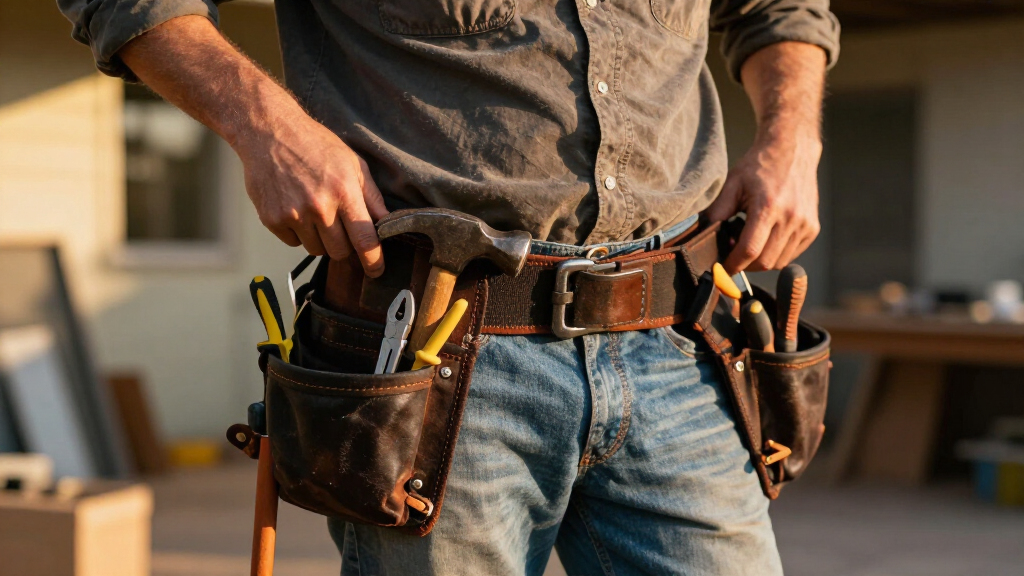
I evaluated each belt against five buyer-relevant criteria, weighted by how the rig would actually be used on a jobsite. Load capacity and material durability came first: 1680D ballistic nylon, double-stitched canvas, and full-grain leather earn higher marks than generic polyester, and stress points like belt loops and grommets were judged for reinforcement. Comfort under load was next, which meant rewarding wider belts (2-inch minimum), padded back panels, and — importantly — suspenders, because a 20-pound rig on a bare belt creates real back strain over a 10-hour day. Pocket layout logic counted more than raw pocket count: dedicated tool loops, quick-access slots, and magnetic zones beat undifferentiated cargo pockets.
From there, I scored trade fit and versatility — electricians need different layouts than framers, so rigs were judged on how well they served their intended trade — and value, which weighs price against expected lifespan rather than just sticker cost. That logic drives the ranking: full suspended rigs like the DEWALT Professional sit at the top because they score well across every criterion, while bargain pouches rank lower not because they fail, but because they only serve lighter-duty buyers. Every pick has a defined role, and the tradeoffs are stated plainly.
Factors to Consider When Choosing Heavy-duty Tool Storage Belts
Choosing a heavy-duty tool storage belt is really a question of matching the rig to your trade, your typical tool load, and how many hours you’ll wear it. Before spending anything, understand where buyers most often go wrong — and where it pays to spend more.
Belt-Only vs. Suspended Rig: The Comfort Math
The most common mistake in this category is underestimating weight. A fully loaded framer’s belt commonly runs 15–25 pounds, and all of that sits on your hips when you use a belt-only rig — which is fine for a two-hour Saturday project and punishing over a full workweek. Suspended rigs shift roughly half that load to your shoulders, which is why professional framers and roofers almost universally wear suspenders. The tradeoff is cost and heat: suspenders add $20–50 and another layer across your back in summer. My advice is honest about your workload — if you carry more than about 10 pounds regularly, budget for suspenders from day one rather than buying a belt-only rig and upgrading later, because you’ll pay twice. Also check whether the suspenders are included and compatible or sold separately, as this varies widely even within the same brand.
Material: Leather, Canvas, or Ballistic Nylon
Full-grain leather is the traditional choice for a reason — it’s stiff enough to hold tool shapes, shrugs off abrasion, and can last a decade, but it’s heavy, expensive, and needs a break-in period before it stops fighting you. Heavy canvas (the Dickies approach) is lighter, softer out of the box, and affordable, though it absorbs water and eventually frays at high-friction points. 1680D ballistic nylon, used in the suspended construction rigs here, hits a middle ground: excellent abrasion resistance, water resistance, and low stretch, at a moderate price. A useful rule of thumb is that material should match your replacement tolerance — if a torn pouch means a lost week, buy leather or ballistic nylon; if you’re a weekend DIYer, canvas will likely outlast your interest in the hobby. Whichever you choose, inspect the stitching at pocket corners and belt attachments, because that’s where every material fails first.
Pocket Count vs. Pocket Logic
Marketing loves big pocket numbers — 26, 27, 25 — but more pockets often means smaller pockets, and a pouch that can’t fit your drill bit set or speed square is wasted nylon. What actually matters is whether the layout matches your tools: electricians want dedicated slots for pliers, wire strippers, and a tape measure with a fish tape loop; framers want wide-open main pouches plus nail slots; mechanics want small-part organization. Magnetic zones are genuinely useful for screws and bits, but they also collect metal shavings and add weight. Before buying, lay out your five most-used tools and mentally assign each a home in the layout — if you can’t, the belt has too many pockets or the wrong ones. Also check for a dedicated knife slot and pencil slots at reachable positions, since these are the tools you grab most.
Belt Width, Buckle Type, and Fit Range
Belt width is a durability issue disguised as a comfort spec. A 2-inch belt (the Klein standard) distributes load better and resists rolling under heavy pouches, while narrower belts bunch and dig in. Buckle type matters more than buyers expect: quick-release buckles are fast but can work loose under heavy, swinging loads, whereas a heavy metal friction buckle takes longer to don but never accidentally releases when you climb a ladder. Fit range is the silent dealbreaker — several belts max out at 48-inch waists, and wearing a belt at its extreme end concentrates stress on the final adjustment holes. If you’re near the size limit, size up or choose a rig with a wider adjustment range. For suspended rigs, check that both the belt and the shoulder harness adjust independently, because sharing adjustment points guarantees a poor fit for someone.
Modularity and Room to Grow
Some rigs — like the freely combinable 27-pocket belt and most AWP and DEWALT organizers — let you slide, remove, or reposition pouches on the belt, while others sew everything into a fixed arrangement. Fixed rigs are cheaper, more stable, and have fewer failure points, but they lock you into one layout forever. Modular systems cost more upfront and can develop sloppy pouch movement unless they include belt stabilizers, yet they adapt when your trade or tool collection changes. For anyone who alternates between tasks — say, rough framing one week and trim work the next — modularity pays for itself. Buyers also underestimate future needs: the belt that fits your current tool set perfectly becomes obsolete the moment you add a nail gun or impact driver. A rig with one or two empty pouch slots gives you room to grow without replacing the whole system.
When to Pay More (and When Not To)
The genuine quality tiers in this category are roughly $20–35 (basic canvas pouches), $40–70 (ballistic nylon rigs with suspenders), and $90+ (leather professional systems). The jump from the first to second tier buys real durability and comfort and is worth it for anyone working weekly. The jump to leather only pays off for daily professional use, where the longer lifespan and better tool retention amortize the cost. A common mistake is the reverse: pros buying cheap pouches twice a year instead of one good rig every five years — do the math on replacement cycles, not price. On the other hand, occasional DIYers who work a few weekends a year gain almost nothing from a $120 leather system. Finally, watch warranty terms: makers of mid-tier and premium rigs typically stand behind stitching and hardware, and a strong warranty is a decent proxy for overall build confidence.
Frequently Asked Questions
Are suspenders really necessary, or is that just upselling?
For loads under about 10 pounds, suspenders are genuinely optional and a quality padded belt will do the job. Past that weight, the physics is hard to argue with: a belt-only rig parks every ounce on your hip flexors and lower back, and occupational health research on construction workers consistently links heavy belt loads to lower-back strain. Suspenders move a large share of that load to your shoulders, which are structurally better suited to carrying it. The catch is that poorly fitted suspenders cause their own problems — chafing straps and reduced overhead reach — so adjustability matters as much as inclusion. If you work full days with a loaded rig, treat suspenders as part of the tool, not an accessory. Weekend users carrying a drill, tape, and a few hand tools can skip them without guilt.
How many pockets do I actually need for my trade?
Electricians and mechanics usually need fewer, more specialized pockets — somewhere in the 5–12 range with dedicated pliers slots and small-part organization — because their tools are slender and specific. Framers, roofers, and general carpenters benefit from the 18–27 pocket range with wide main pouches and nail or fastener slots, since they carry bulkier tools plus loose hardware. The mistake is buying pocket count you won’t use: empty pockets add weight, snag on lumber, and make your most-used tools harder to find. A good exercise is counting the tools you genuinely reach for hourly — that number, plus two for growth, is your target. Trade-specific belts like the Klein or Arrow electrician models outperform bigger general-purpose rigs precisely because every pocket earns its place.
Do magnetic tool belts actually work, or do they cause problems?
Magnetic zones work well for their intended job: holding screws, nails, nuts, and drill bits within instant reach, which saves dozens of trips to a box or pouch per day. The MagnoGrip and 27-pocket combinable belt in this lineup demonstrate the real benefit during tasks where your hands are occupied, like holding a board while grabbing a screw. The downsides are specific, not hypothetical — magnets collect metal debris and shavings that need periodic cleaning, they can interfere with magnetically stored items like mechanical watches or magnetic-tip levels, and cheap magnetic panels lose strength over time. They also add a bit of weight even when empty. If you drive lots of fasteners, they’re a genuine productivity feature; if you mostly do electrical or finish work, they’re dead weight.
Is a leather tool belt worth the extra money over nylon or canvas?
Leather earns its price only under sustained professional use. Its advantages are real: it holds tool shapes without collapsing, resists abrasion far longer than fabric, doesn’t absorb water the way canvas does, and stiffens into a custom fit for your specific tools. The disadvantages are equally real — it’s heavier, costs roughly double a comparable nylon rig, needs occasional conditioning, and requires weeks of break-in before it stops feeling like body armor. A ballistic nylon rig like the 1680D suspended belts delivers 80–90% of the durability at half the weight and cost, which is why many modern tradespeople have switched. My rule: daily professional use justifies leather; everyone else gets better value from quality nylon. Canvas sits below both for durability but is perfectly adequate for light-duty budgets.
Can one tool belt work for both work and home DIY use?
Yes, and that flexibility is exactly what general-purpose rigs like the AWP Tool Rig and Dickies 8-Pocket are built for — a balanced pocket layout that handles wiring on Saturday and deck framing on Sunday. The compromise is that a do-everything belt does nothing perfectly: it lacks the specialized slots an electrician-only belt provides and the raw capacity a framer’s rig offers. The practical approach is buying a modular rig, where pouches can be added or removed depending on the day’s work, letting you strip it down to a drill and tape measure for home tasks and load it fully for jobsite days. Size and weight matter here too — a heavy suspended rig feels absurd hanging pictures at home. If your work and DIY split is closer to 50/50, prioritize adjustability and modularity over trade-specific features.
Conclusion
Matching the rig to the buyer is simpler than it looks. For best overall, the DEWALT Professional Tool Belt Organizer with Suspenders and 25 Pockets wins on the combination of load capacity, suspended comfort, and layout flexibility — it’s the pick for full-time tradespeople who wear a loaded belt all day. The MagnoGrip 19-Pocket Builder’s Belt takes best value, delivering magnetic fastener storage and honest durability at a price that undercuts the suspended rigs by a wide margin. For best premium, the DEWALT Leather 18-Pocket Organizer is the long-haul investment — stiff, abrasion-proof, and built to outlast several nylon rigs, provided you accept the break-in period.
For beginners and casual DIYers, the Dickies 5-Pocket Canvas Pouch is the sensible entry point: cheap, light, and more than enough for a drill, tape, and basic hand tools. Trade-specific needs point elsewhere — electricians should go Klein Tools 5225 or the Arrow 10-Pocket, while framing and roofing pros carrying heavy loads will get the most from the suspended Marscamd or 1680D rigs, and fastener-heavy workers will love the 27-pocket combinable belt’s magnetic zones. Whatever your choice, buy for the weight you actually carry, not the pocket count on the box — that single principle separates a rig you forget you’re wearing from one you can’t wait to take off.
Evergreen bestsellers Picks
bestsellers
As an affiliate, we earn on qualifying purchases.