TL;DR

Get business pricing on tools and workshop supplies
- Business-only prices and quantity discounts
- Tax-exempt purchasing
- Multiple users, one account, clear invoices
A July 1, 2026 ISR Briefing says Ukraine’s Delta system is a working example of software-defined warfare, fusing drones, satellites, sensors and reports into one browser-based battlefield view. The report says Delta’s cloud design has helped push command tools to frontline users, while cyber exposure, jamming and data integrity remain open risks.
A July 1, 2026 ISR Briefing described Ukraine’s Delta battlefield system as a leading example of software-defined warfare, arguing that its cloud backend, browser access and fused sensor map show how command and targeting are changing in the war against Russia.
Delta is described as a situational-awareness and battlefield-management system built through an unusual Ukrainian wartime coalition involving Aerorozvidka, Ukraine’s Defense Ministry structures and the Ministry of Digital Transformation. According to the source brief, the system combines drone feeds, satellite imagery, sensor hits, vetted unit reports and partner intelligence into a geolocated operating view.
The key reported feature is that Delta runs through a browser on ordinary phones, tablets and laptops, while its backend is cloud-native and deliberately hosted outside Ukraine. The brief says that design is meant to reduce the risk that a Russian missile strike or cyberattack on Ukrainian infrastructure could disable the system.
The report also draws a line between confirmed design features and claims that still need outside verification. It treats Delta’s architecture, its role in battlefield coordination and its NATO-standard approach as established in the source record, while saying Ukraine’s claimed figure of 1,500 targets per day is a government claim and has not been independently verified.
Software-defined warfare: how Ukraine’s Delta turned the battlefield into a shared, real-time map
A soldier opens a browser and sees the fused war — drones, satellites, sensors and vetted reports on one live map. The backend is a cloud deliberately hosted abroad so a missile can’t take it down. The clearest case yet of treating warfare as software.
Optical sensors go blind in cloud & dark; an all-weather SAR radar layer — the kind VigilSAR produces — slots into a picture like this as one resilient, sovereign input. vigilsar.com · And note the paradox: to survive missiles & cyberattack, Ukraine hosted its crown-jewel cloud outside its own borders — trading physical sovereignty for operational survivability. Resilience through distribution.
Delta’s lasting lesson isn’t a piece of software — it’s a model of how to build: commodity clients, cloud backend, open standards, relentless iteration, fusion over hardware, and resilience through distribution. It’s why a wartime NGO out-shipped procurement bureaucracies on a fraction of the budget. The platform mattered less than the picture — and the picture is software. Own the fusion layer, own the sovereign feeds into it, and get it to the edge.
Command Moves Into Software
The significance of Delta, according to the briefing, is less about one application than about a shift in military advantage. The report says the scarce resource is no longer only the sensor, but the fusion layer that turns many inputs into a usable, trusted view at the front.
That matters for readers because the model challenges how large militaries have long bought and fielded technology. Instead of bespoke terminals and slow procurement cycles, Delta points to commodity devices, cloud infrastructure, open standards and rapid software updates as battlefield factors.
The brief also highlights a sovereignty tradeoff. Hosting a wartime system abroad may weaken physical control over national infrastructure, but it can increase operational resilience when domestic data centers, communications nodes and military facilities are under attack.
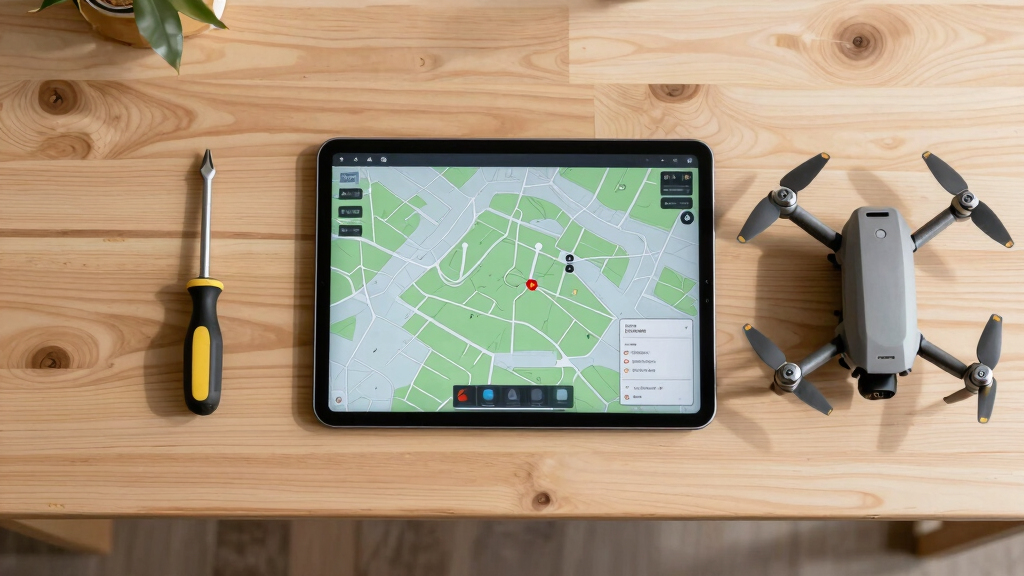
browser-based battlefield management system
As an affiliate, we earn on qualifying purchases.
As an affiliate, we earn on qualifying purchases.
From NATO Pilot To Frontline Tool
The source material says Delta’s roots trace back to a 2017 NATO-related effort aimed at breaking Soviet-style information silos in Ukrainian command structures. The system later became part of Ukraine’s broader wartime digital effort after Russia’s full-scale invasion in February 2022.
The briefing cites a 2024 CSIS analysis using the phrase software-defined warfare to describe this change. In that framing, military power depends not only on tanks, artillery, drones or satellites, but on how quickly armed forces can connect data, software and decision-making.
Ukraine’s case is unusual because a wartime mix of state agencies, military units, volunteers and technology specialists reportedly moved faster than traditional defense acquisition systems. The brief says this is why Delta has drawn attention from analysts watching how digital ministries, NGOs and armed forces can build wartime systems under pressure.
“A soldier opens a browser and sees the fused war.”
— ISR Briefing AI Dispatch, July 1, 2026
cloud-connected drone surveillance equipment
As an affiliate, we earn on qualifying purchases.
As an affiliate, we earn on qualifying purchases.
Cyber, Jamming And Data Risks
Several parts of the Delta story remain uncertain or developing. The brief says cyber risk is high because a widely used battlefield-management system is an obvious target for phishing, malware and intelligence collection.
The system also depends on connectivity, which can be degraded by jamming, damaged infrastructure or battlefield disruption. The source material also flags possible data-poisoning risks when crowdsourced or distributed reports are fused into one operating view.
It is also not clear from the supplied material how much of Delta’s performance can be independently measured. The reported 1,500 targets per day figure remains attributed to Ukraine’s Defense Ministry, and the briefing says it has not been independently verified.
As an affiliate, we earn on qualifying purchases.
Militaries Watch The Fusion Layer
The next issue is whether Ukraine’s model becomes a template for other militaries. The briefing suggests armed forces will study Delta’s cloud design, browser-based access, NATO-aligned standards and rapid software updates as they rethink battlefield command systems.
Analysts will also watch how Ukraine protects the system against cyberattacks, jamming and false data. The broader test is whether software-centered battlefield tools can stay trusted, resilient and controlled as they spread across units, sensors and partner networks.
secure military communication devices
As an affiliate, we earn on qualifying purchases.
As an affiliate, we earn on qualifying purchases.
Key Questions
What is Ukraine’s Delta system?
Delta is a Ukrainian battlefield-management and situational-awareness system that combines reports, drone feeds, satellite imagery, sensors and intelligence into a shared map for military users.
Why is Delta linked to software-defined warfare?
The briefing links Delta to software-defined warfare because the advantage comes from data fusion, cloud hosting, browser access and rapid updates rather than from a single weapons platform.
Is the 1,500-targets-per-day figure confirmed?
No. The source material says the 1,500 targets per day figure is a Ukrainian Defense Ministry claim and has not been independently verified.
What are the main risks for Delta?
The main risks identified in the briefing are cyberattack, degraded connectivity from jamming, false or poisoned data, and the escalation risk of faster battlefield decision loops.
Why does hosting Delta abroad matter?
Hosting the backend outside Ukraine may help protect critical cloud infrastructure from domestic missile strikes or local outages, but it also creates a sovereignty tradeoff over where sensitive military systems reside.
Source: Thorsten Meyer AI
Columbus Day / Indigenous Peoples' Day Picks
long weekend sales
As an affiliate, we earn on qualifying purchases.