TL;DR

Get business pricing on tools and workshop supplies
- Business-only prices and quantity discounts
- Tax-exempt purchasing
- Multiple users, one account, clear invoices
A stiff tactical belt is designed to support heavy loads, so it will never feel like a soft cotton belt. You should break it in by wearing it for short periods, adjusting the fit precisely, and flexing it gently, while strictly avoiding heat or harsh chemicals.
You just unboxed your new tactical belt. It’s thick, rigid, and feels more like a piece of industrial strapping than something you’d wear around your waist. You try to buckle it, and it fights back. The first day of wear feels like wearing a cardboard tube. You might be tempted to soak it, bake it, or fold it in half to make it pliable. Don’t do that.
Here is the reality: a stiff tactical belt is designed to support equipment without sagging or rolling. Its rigidity is a feature, not a bug. But that doesn’t mean you have to suffer through weeks of discomfort. The right approach is usually gradual wear and precise adjustment—not aggressive bending or heat.
This guide walks you through the safe, practical steps to make your belt comfortable for daily carry or duty use. We’ll cover how to adjust the fit, how to flex the materials correctly, and what common “hacks” will actually ruin your gear. Let’s get your belt working for you, not against you.
Check the manufacturer’s care instructions before applying any break-in methods; heat and soaking can ruin polymer stiffeners.
Adjust the belt fit precisely before judging comfort; most pain comes from incorrect sizing or tension, not stiffness.
Use a gradual wear schedule, starting with 1-2 hours of indoor wear and slowly increasing time and load over 2-3 weeks.
Flex the belt gently by rolling it; never fold it sharply or step on it, as this creates permanent weak points.
If the belt remains painful after proper break-in, it may be the wrong stiffness or width for your intended use.
Check the Materials Before You Touch It
Before you start bending or wearing your belt, you need to know what it’s made of. Tactical belts vary wildly in construction. Some use reinforced nylon webbing, while others incorporate polymer stiffeners, leather layers, or metal hardware. The manufacturer’s guidance should always take priority over internet forums.
Why does this matter? Because a method that works on a simple canvas belt might destroy a modern modular system. For instance, if your belt has a polymer stiffener core, applying heat can warp it. If it has hook-and-loop closures, soaking it can ruin the adhesive backing. Always check the care label or the manufacturer’s website first.
Look for specific warnings. Does it say “machine washable” or “spot clean only”? Does it mention a specific temperature limit? If you can’t find the info, assume the belt is sensitive to heat and harsh chemicals. When in doubt, stick to gentle, manual methods.
Products Worth Considering

DEWALT 20V MAX Cordless Brad Nailer Kit, 18 GA (DCN680D1)

Greenworks 24V Brushless Cordless Reciprocating Saw Kit

Milwaukee M18 FUEL 1/2-Inch High Torque Impact Wrench with Friction Ring Kit
As an affiliate, we earn on qualifying purchases.
Fix the Fit Before You Try to Soften It
Most discomfort from a new belt isn’t actually stiffness—it’s bad fit. If your belt is too tight, it digs into your hips. If it’s too loose, it shifts and feels awkwardly rigid because it’s not anchored properly. You need to dial in the fit before you judge the comfort.
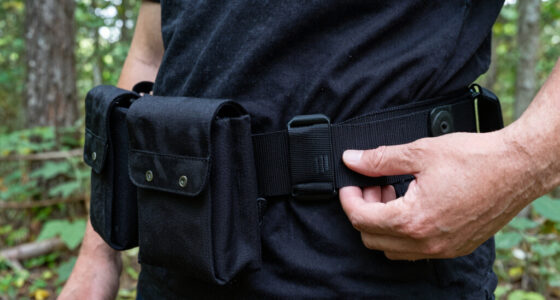
Wear the belt at the exact position you intend to use it. If you carry it high on your waist for a holster, wear it there. If you wear it lower for a tool bag, wear it there. Use the same clothing you’ll wear on the job. A thick work shirt changes how the belt sits compared to a t-shirt.
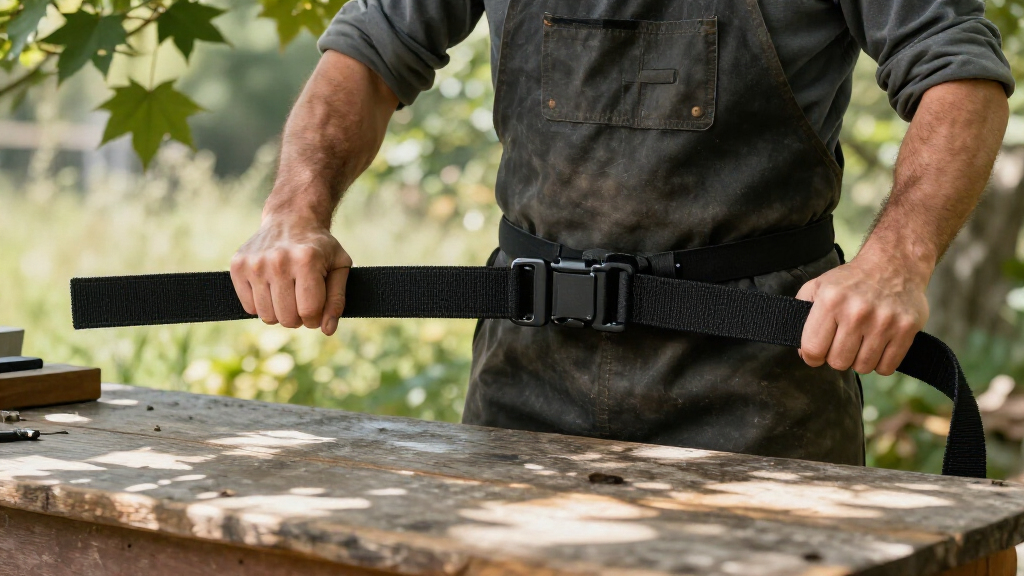
Adjust the buckle so it sits comfortably on your stomach or hip bone, not directly on a bony prominence. Make sure the tongue of the buckle isn’t pinching your skin. A common mistake is buckling it too tight to prevent sagging. Instead, use an inner belt or keepers to stabilize the outer belt. This reduces the need for excessive tension, which is a major source of pain.
The 5-Step Gradual Wear Schedule
You can’t rush a stiff tactical belt. The goal is to let the materials settle into your body’s shape and your buckle’s position. This process takes time, but it preserves the belt’s integrity. Here is a safe, step-by-step schedule to follow.
- Days 1-3: Short Indoor Wear. Wear the belt for 1-2 hours at home. Do light activities like cooking or cleaning. This lets the belt bend naturally around your waist without the stress of heavy gear.
- Days 4-7: Extended Daily Wear. Increase wear time to 4-6 hours. Wear it during your normal daily routine. Pay attention to pressure points. If it hurts, take it off. Don’t push through pain.
- Week 2: Light Load Introduction. Start adding light gear. A phone, a small flashlight, or a multi-tool. This teaches the belt how to carry weight in specific spots. The stiffness will feel less like “board-like” and more like “supportive.”
- Week 3: Full Load Simulation. If you’re using it for work or duty, start carrying your typical load. Test the setup carefully. Ensure the belt doesn’t twist or roll when you move.
- Ongoing: Maintenance Checks. Once a week, check for fraying or loose stitching. Adjust the fit as your body or clothing changes.
This gradual approach prevents the “break-in” from becoming a “break-down.” It allows the nylon fibers and stiffeners to relax slightly under normal tension, rather than being forced into unnatural shapes.
Gentle Flexing: How to Bend It Without Breaking It
Yes, you can help the belt soften up, but you have to do it correctly. Flexing the belt helps reduce the “board-like” feel by encouraging the materials to move. However, sharp folds or kinks can damage the core, stitching, or outer fabric.
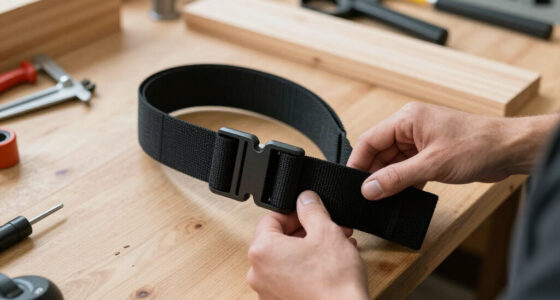
Here’s the right way to flex it: Hold the belt at both ends and gently roll it into a loose cylinder. Then, unroll it. Repeat this in different directions. You’re looking for a smooth, even bend. Think of it like breaking in a new pair of leather boots—you’re encouraging movement, not forcing a crease.
What you should never do: Fold the belt in half and step on it. This creates a permanent crease that can weaken the webbing. Also, avoid bending it repeatedly at the same point, like the buckle hole. This can stretch the holes or tear the stitching. If you feel resistance or hear cracking, stop immediately. That’s not the belt softening; that’s the belt failing.
Why Heat and Soaking Are Dangerous Myths
The internet is full of bad advice. You’ll see people suggesting you soak your belt in water, put it in the dryer, or use a hair dryer to “soften” it. Do not do this. These methods can cause irreversible damage.
Most modern tactical belts use synthetic materials like nylon or polyester. These materials are heat-sensitive. Applying heat can deform polymer stiffeners, making the belt lose its shape and support. It can also melt adhesives that hold layers together. Once that happens, your belt is no longer safe to carry heavy loads.
Soaking is equally risky. Water can seep into the core, causing rust on metal hardware or swelling in certain composite materials. It can also weaken the bond between the webbing and the stiffener. If the manufacturer doesn’t explicitly say it’s safe to soak or heat, assume it isn’t. Stick to air-drying if you get it wet, and keep it away from radiators or open flames.
When to Give Up: Is It the Wrong Belt?
Sometimes, a belt stays stiff because it’s designed to stay stiff. If you’ve followed the gradual wear schedule, adjusted the fit, and flexed it gently, but it’s still painful or uncomfortable, you might have the wrong tool for the job.
Consider the stiffness level. A belt rated for heavy-duty load bearing (like carrying a full duty belt with a firearm, handcuffs, and radio) will always feel stiffer than a low-profile everyday carry (EDC) belt. If you’re using a heavy-duty belt for light EDC tasks, it will feel like overkill.
Also, check the width. A 1.5-inch belt might feel too narrow and dig in, while a 2-inch belt might feel too bulky and rigid. If the belt is still uncomfortable after two weeks of gradual wear, it’s likely a mismatch between your body, your load, and the belt’s design. Don’t try to force a square peg into a round hole. It’s better to switch to a different model than to compromise your comfort or safety.
Frequently Asked Questions
How long does it take to break in a tactical belt?
It depends on the construction and how often you wear it. Most belts feel significantly more comfortable after 1-2 weeks of daily wear. However, very rigid, heavy-duty belts may never feel “soft” because they are designed to remain stiff for load-bearing purposes.Can I use heat to break it in faster?
No. Unless the manufacturer explicitly approves it, avoid heat. Hair dryers, heaters, or hot water can deform polymer stiffeners, weaken adhesives, and damage nylon webbing. This often voids the warranty and compromises the belt’s strength.Should I break it in with gear attached?
Start without gear. Wear the belt empty for the first few days to get a comfortable fit. Once the belt sits well on your body, gradually add light gear. This prevents uneven stress on the belt and helps you identify pressure points early.Why does my belt feel uncomfortable or dig in?
Common causes include incorrect sizing, excessive tension, or an unsuitable belt width. If the belt is too tight, it digs into your hips. If it’s too loose, it shifts and feels rigid. Try adjusting the buckle position or using an inner belt to stabilize it.Can I cut or modify the belt to fit better?
Only if the manufacturer provides specific instructions for doing so. Cutting tactical webbing can cause it to unravel or compromise reinforcement layers. This usually voids the warranty and can make the belt unsafe for carrying heavy loads.Conclusion
Breaking in a stiff tactical belt isn’t about turning it into a soft, floppy accessory. It’s about adapting your fit and your body to a piece of gear designed for support. By wearing it gradually, adjusting the tension, and avoiding risky hacks like heat or soaking, you’ll get the comfort you need without sacrificing the durability you rely on.
Remember: a belt that hurts is a belt you’ll stop wearing. Take the time to break it in correctly, and it will serve you reliably for years. If it still feels wrong, it’s okay to admit it’s not the right belt for you. Your back and hips will thank you.