
TL;DR

Get business pricing on tools and workshop supplies
- Business-only prices and quantity discounts
- Tax-exempt purchasing
- Multiple users, one account, clear invoices
Securely attaching a holster to a battle belt involves choosing compatible gear, using the right attachment method, and positioning for quick access. Proper setup ensures safety, durability, and ease of use during intense activity.
Match your holster to your belt’s width and your activity for a secure fit.
Use the attachment method that fits your quickness needs: loops for stability, clips for speed, webbing for versatility.
Position your holster at 3-4 o’clock for right-handed draw, adjusting for comfort and quick access.
Regularly inspect and tighten attachment points to prevent accidental dislodging.
Stay updated on new quick-release and hybrid holster designs for better performance.
Pick the Right Holster and Belt Compatibility for Your Setup
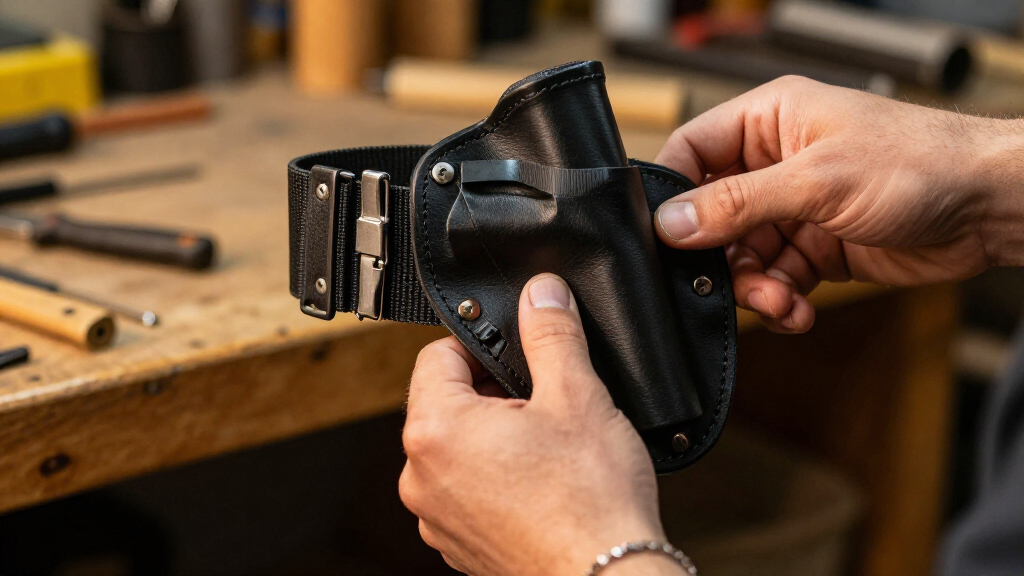
Your first step is matching your holster to your belt. A battle belt typically measures 1.5 to 2 inches wide, so choose holsters designed for these widths. For example, a paddle holster or belt slide holster with a 1.75-inch loop fits most standard tactical belts snugly. If your belt is thicker or custom-made, verify the holster’s compatibility before buying. This prevents frustration and ensures your gear stays put during movement.
Imagine running, crawling, or jumping — a loose holster won’t cut it. Compatibility isn’t just about fit; it’s about confidence that your firearm stays secure when you need it most. The bottom line? Match your holster’s attachment method to your belt’s design and your activity level for a seamless fit. Choosing the right combination ensures that your gear remains stable during rapid movements, which can be the difference between quick response and fumbling. A poor fit can lead to accidental dislodging or discomfort that distracts you during critical moments, so investing time in proper compatibility saves you trouble later.
As an affiliate, we earn on qualifying purchases.
Choose the Best Attachment Method — Loop, Clips, or MOLLE?
Holsters attach to belts using various methods. Each has its pros and cons, depending on your needs and the tradeoffs involved.
- Loop Attachments: Holsters with belt loops slide over your belt, providing a very secure and stable connection. This stability is crucial for all-day wear and prevents shifting during movement. However, the tradeoff is that they can be slower to put on or remove, which might be inconvenient in situations requiring rapid gear changes.
- Clips or Hooks: Quick-attach clips latch onto the belt’s edge, allowing for rapid attachment and removal. This is advantageous when you need to switch gear quickly or adjust positions frequently. The downside is that if clips are not properly secured or are of lower quality, they can loosen or detach during vigorous activity, risking firearm loss. Ensuring high-quality clips and regular checks can mitigate this risk, but it remains a consideration.
- MOLLE or PALS Webbing: Modular systems with webbing allow you to customize holster placement anywhere on a webbed platform, offering maximum versatility. This system is ideal for tactical setups where different gear configurations are needed. The tradeoff is that MOLLE attachments can be bulkier and require compatible gear, which might add weight or complexity to your setup. Properly configured, they offer a balance of security and adaptability, but initial setup and compatibility checks are essential to ensure they meet your needs.
Understanding these tradeoffs helps you select a method that aligns with your activity demands, whether prioritizing speed, stability, or adaptability. For example, a police officer might prefer loop holsters for all-day security, while a dynamic trainer might favor quick-release clips for rapid gear changes. Recognizing the implications of each method ensures your holster setup supports your operational needs without compromising safety or performance.
As an affiliate, we earn on qualifying purchases.
Step-by-Step: How to Attach Your Holster to a Battle Belt
- Select the attachment method based on your holster type and activity needs.
- Position your holster on the belt at your preferred location — usually 3-4 o’clock for right-hand draw or 8-9 o’clock for left-handed users.
- Secure the holster using the provided loops, clips, or webbing. Tighten retention screws if available, ensuring the firearm won’t fall out during vigorous movement.
- Test the setup by drawing your firearm smoothly. Adjust the angle and tightness for quick, natural access.
- Inspect regularly for wear, loose clips, or damage. Replace or tighten as needed.
For instance, a tactical trainer might start with a belt slide holster, then tweak the position after testing during drills. The goal? Fast, natural draw without fear of accidental dislodging. Regularly testing your setup helps identify any weak points or loose attachments that could compromise safety or speed. Adjustments might include tightening screws, repositioning the holster, or changing the angle to optimize draw speed and retention. Remember, a holster that moves or shifts during activity can cause delays or accidental exposure, so thorough testing and fine-tuning are essential to a reliable setup.
quick release holster for combat belt
As an affiliate, we earn on qualifying purchases.
As an affiliate, we earn on qualifying purchases.
Compare Popular Attachment Options in a Quick Table
| Method | Ease of Use | Security | Ideal For |
|---|---|---|---|
| Loop Holsters | Moderate | High | Steady, all-day wear |
| Clips/Hooks | Fast | Moderate | Training, quick access |
| MOLLE Webbing | Customizable | High | Modular setups, tactical use |
As an affiliate, we earn on qualifying purchases.
Recent Trends Making Holster Attachment Better and Faster
Modern tactical gear keeps evolving. Quick-release mechanisms now let you detach your holster in seconds, critical in high-pressure situations. Hybrid holsters combine belt slide stability with drop-leg quick access, offering versatility. Lightweight, high-strength materials like Kydex make holsters durable without adding bulk.
For example, some users now prefer magnetic retention for rapid draw, which holds securely but releases instantly when needed. These innovations mean your gear stays reliable, no matter how intense the movement or environment.
How to Keep Your Holster Secure During Action
Proper attachment is only part of the story. To keep your holster secure during movement, double-check the tightness of retention screws and clips. Use holsters with adjustable retention to fine-tune the fit—this prevents accidental drops. Regularly inspect your attachment points; wear and tear can loosen even the best gear over time. Practice drawing and re-holstering in training to confirm everything stays in place.
For instance, a security officer might find that tightening retention screws after every shift keeps the firearm locked in even during vigorous pursuit or sudden stops. This ongoing maintenance ensures that your holster remains reliable, especially in high-stress situations where a loose or malfunctioning attachment could be dangerous or compromise your response time.
Position Your Holster for Fastest Access and Comfort
Positioning your holster correctly on your battle belt is key. Most right-handed users prefer 3 to 4 o’clock, which aligns with their natural draw. Left-handed folks lean toward 8 to 9 o’clock. Adjust the angle for a smooth, natural draw—too forward or backward can slow you down.
Imagine drawing from a holster at a slight forward tilt — it feels more natural, like opening a drawer. The right placement reduces fatigue over long shifts and makes quick response second nature. Proper positioning not only improves speed but also minimizes strain on your wrist and shoulder, especially during extended periods of use. Experimenting with slight adjustments can help identify the most comfortable and efficient angle for your body type and operational style.
Final Tips to Keep Your Holster Setup Tight and Reliable
Always test your setup in a safe environment before actual use. Check that your firearm clears smoothly and re-holsters easily. Regularly tighten screws and inspect clips for wear. Remember, a well-maintained setup lasts longer and performs better.
Think of your gear like a car — regular check-ups prevent breakdowns. Keep everything snug and in top shape, so you’re ready for anything. Investing time in routine maintenance ensures that your holster remains secure during critical moments, reducing the risk of failure when it matters most. Periodic inspections and adjustments are simple habits that significantly enhance reliability and safety in demanding situations.
Frequently Asked Questions
How do I choose between a loop and clip attachment?
Loops offer a more secure fit ideal for all-day wear, while clips provide faster access, perfect for dynamic environments. Consider your activity and draw speed when choosing.Can I attach multiple holsters or pouches to one belt?
Absolutely. Systems with MOLLE or PALS webbing are designed for modular setups, letting you attach multiple holsters, pouches, and accessories exactly where you want them.Is a drop-leg holster better than a belt-mounted holster?
It depends. Drop-leg holsters give quick access, especially in tactical scenarios, but may be less comfortable over long periods. Belt-mounted holsters provide stability and are often more comfortable for extended wear.How often should I check my holster’s attachment points?
Inspect at least once a month, or more frequently if you’re active or in harsh environments. Look for loose clips, worn straps, or damaged webbing to keep everything secure.What materials make the most durable holster attachment points?
Kydex, reinforced nylon, and heavy-duty polymer are popular for their strength, lightweight nature, and resistance to wear and tear during rigorous use.Conclusion
Attaching a holster to your battle belt isn’t just about gear — it’s about safety, speed, and confidence. Take the time to pick the right setup, position it properly, and keep everything tight. When your gear fits perfectly, every move becomes instinctive, letting you focus on what really matters — the task at hand.Fall yard work Picks
leaf blowers
As an affiliate, we earn on qualifying purchases.