
TL;DR

Get business pricing on tools and workshop supplies
- Business-only prices and quantity discounts
- Tax-exempt purchasing
- Multiple users, one account, clear invoices
Powerlifting belts are uniform, stiff, and designed for maximal core bracing during heavy lifts. Bodybuilding belts are tapered, softer, prioritizing comfort and mobility. The right choice depends on your lifting style and goals.
A powerlifting belt offers uniform, stiff support ideal for maximal lifts, while a bodybuilding belt prioritizes comfort with a tapered, flexible design.
Thickness impacts rigidity: 10 mm belts suit most, but 13 mm belts provide maximum support for experienced lifters.
Proper fit and placement are more important than belt type—aim for snugness that allows full breathing and effective bracing.
Belts enhance performance mainly during heavy, low-rep lifts; avoid over-relying on them for light or accessory work.
Stay updated on federation rules if competing—belt dimensions and materials are often regulated.
Powerlifting Belt vs Bodybuilding Belt
One feels like uniform armor around your torso. The other contours to your body for easier movement. Both can support bracing—but they are engineered for very different training priorities.
Choose uniform stiffness for maximal bracing. Choose a tapered, flexible profile for comfort and mobility.
Same category. Different geometry.
The belt’s shape changes the surface available for your abdominal wall and obliques to push against. Back padding alone is not the same as circumferential support.
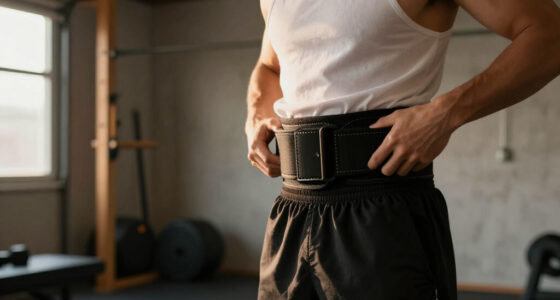
Uniform armor
Same width around the torso. A large, consistent bracing surface makes this design especially useful for heavy squats, deadlifts and maximal compound lifting.
Tapered mobility
Wide at the back, narrow at the front. The softer shape reduces restriction during machines, rows, accessory exercises and higher-volume training.
| Feature | Powerlifting belt | Bodybuilding belt |
|---|---|---|
| Shape | Uniform width | Wide back, narrow front |
| Typical thickness | 10–13 mm | Usually thinner |
| Rigidity | High | Low to moderate |
| Main use | Heavy squats and deadlifts | General gym training |
| Front bracing surface | Large and consistent | Smaller and less restrictive |
| Comfort and mobility | Lower until broken in | Higher immediately |
| Common closures | Lever or prong | Prong, buckle or hook-and-loop |
| Competition use | Common, subject to rules | Less common |
Resistance helps—until it gets in the way.
A rigid belt gives the trunk stronger feedback and resistance. A flexible belt sacrifices some uniformity to make breathing, positioning and repeated movement easier.
More to brace against
Firm circumferential resistance can help increase intra-abdominal pressure and torso rigidity during maximal efforts.
Pinching and restriction
Thick leather may catch the ribs, hips or abdomen and can complicate the deadlift starting position.
Comfort across volume
A softer tapered belt is easier to tolerate through high-rep work and exercises requiring greater torso movement.
Thickness, closure and fit matter.
Thicker is not automatically better. The best belt is one that fits your torso, permits a full breath and creates reliable resistance when you brace.
Versatile rigidity
Easier to break in and comfortable enough for most lifters while still providing substantial support for heavy work.
Maximum stiffness
Favored by some heavier or advanced powerlifters, but it can be excessive for smaller athletes or difficult deadlift positions.
Room to breathe
Tighten enough to resist expansion—not so much that full breathing becomes impossible or the belt causes pain.
The secure-fit chain
Use the belt as a tool, not a substitute.
Belts are most useful when loading and fatigue make torso rigidity difficult to maintain. They do not replace sound technique or trained bracing.
Intensity guide
There is no universal threshold, but belts are typically most valuable during demanding, low-repetition compound lifts.
Squats and deadlifts
Use during heavy, low-rep sets when consistent bracing and confidence are the priorities.
Accessories and warm-ups
Curls, lateral raises and light machine work rarely benefit from a rigid lifting belt.
Lever or prong
Lever is fast and repeatable. Single-prong is slower but easier to adjust between lifts or weight changes.
Check federation rules
Dimensions, thickness, materials and closure designs may be regulated by the organization running your meet.
The belt does not hold your spine in place.
It provides a firm surface for your abdominal muscles to push against. Effective support still depends on a full breath, a strong 360-degree brace and sound lifting technique.
What’s the real difference between a powerlifting and a bodybuilding belt?
Powerlifting belts are like a uniform armor—the same width all around, usually 4 inches, made from thick, stiff leather or synthetic material. They’re built to brace your core during heavy squats and deadlifts, providing maximum circumferential support. In contrast, bodybuilding belts are tapered—wider across the back, narrower at the front—designed for comfort and freedom of movement. They’re softer, more flexible, and better suited for a variety of gym exercises.
Take a typical powerlifting belt: it’s 10-13 mm thick, rigid, and provides a consistent surface for abdominal bracing. A bodybuilding belt, however, might be 6-10 mm thick, with a softer profile, allowing easier breathing and less restriction during high-rep or accessory work. The shape of each belt directly influences how you brace and how comfortable you feel during different lifts.
As an affiliate, we earn on qualifying purchases.
Why does belt rigidity matter? The pros and cons of stiff vs flexible support
Rigid belts—like a powerlifting belt—offer firm resistance, making your abdominal muscles push harder against the belt, boosting intra-abdominal pressure. This helps stabilize your spine during max lifts. But the stiff, often thick leather can pinch ribs, restrict movement, or feel uncomfortable during high-rep sets or dynamic exercises. Conversely, flexible belts—common in bodybuilding—are more comfortable but provide less uniform resistance, which can be enough for moderate lifting but might fall short in heavy, low-rep work.
Understanding these tradeoffs is crucial because the rigidity of your belt directly impacts how effectively you can brace during lifts. A stiff belt enhances stability and support, enabling you to lift heavier weights with better control, but it may limit mobility and cause discomfort if not fitted properly. Conversely, a flexible belt offers comfort and range of motion, which is advantageous during high-rep or accessory movements, but might not provide enough support for maximal efforts. The choice hinges on your training priorities: if you’re pushing for max lifts, stiffness is beneficial; for general training or high-rep work, flexibility can prevent fatigue and injury risk.
As an affiliate, we earn on qualifying purchases.
Thickness and shape: How to pick the perfect belt for your body and lifts
The thickness of a belt impacts how rigid and supportive it feels. 10 mm belts are versatile—offering a good balance between support and comfort, suitable for most lifters. 13 mm belts provide maximum stiffness, favored by experienced powerlifters lifting near their max. But thicker isn’t always better: smaller athletes or those new to lifting might find a 13 mm belt too stiff, potentially restricting breathing or causing discomfort during lighter sets. Consider your body size and lifting style because a stiff belt that’s too rigid for your anatomy could hinder your movement or cause discomfort, reducing your ability to brace effectively.
The belt shape also matters. Powerlifting belts are uniform in width, offering consistent support that helps maintain intra-abdominal pressure during heavy lifts. Bodybuilding belts are tapered—wider at the back for lumbar support, narrower at the front for less restriction. For example, a short-torso lifter might prefer a tapered belt to avoid pinching, allowing greater mobility, while a long-torso athlete might choose a traditional powerlifting style to ensure maximum support. The shape and thickness should complement your body proportions and the type of lifts you perform most often, balancing support and comfort to optimize performance and safety.
As an affiliate, we earn on qualifying purchases.
Closure styles and fit: What makes a belt secure and easy to use?
Belts come with different closures: lever, prong, hook-and-loop. Each has its perks. Lever belts are quick to tighten, highly repeatable, and popular among powerlifters pushing heavy loads. Prong belts are simple, adjustable, but slower to fasten, often requiring manual adjustment each time. Hook-and-loop (Velcro) belts are lightweight and easy to adjust, ideal for frequent changes, but may lack the rigidity needed for maximum support during heavy lifts. The choice of closure impacts how quickly and securely you can put on your belt, especially when transitioning between sets or during competitions.
Choosing the right fit is key. A belt should be snug—resisting expansion during a lift—without being so tight it restricts full breathing or causes pain. Proper fit ensures your core can brace effectively while maintaining comfort. The belt’s position is also important—typically around the waist, just above the hips—though this can vary based on individual anatomy and lift style. An ill-fitting belt can compromise support and even lead to injury, so taking the time to find the right fit and closure type tailored to your routine is essential for safety and performance.
As an affiliate, we earn on qualifying purchases.
When and why you should wear a belt — and when to skip it
Belts shine during heavy, low-rep lifts—think squatting 90% of your max or deadlifting near your limit. They help you brace more effectively, giving a boost in stability and confidence. But for lighter sets, accessory exercises, or movements like curls or lateral raises, belts are usually unnecessary. Overusing a belt during lighter training can lead to dependency, potentially weakening your natural core strength over time. Moreover, excessive reliance on a belt might cause you to neglect developing core stability through proper bracing and technique. Therefore, understanding when to wear a belt is crucial: use it as a support tool during maximal efforts, but avoid overusing it in situations where natural core engagement is more beneficial for long-term strength development.
For example, if you’re training for a powerlifting meet and working with 85-95% of your max, a good belt can be the difference between a grind and a successful lift. On the flip side, if you’re doing high-rep accessory work or lighter movements, skipping the belt allows your core muscles to activate naturally, fostering strength and resilience. The key is to match your belt use to your training intensity and goals, ensuring that it enhances performance without hindering natural development or mobility.
Research and real-world results: Do belts really boost your lifts?
Research indicates that lifting belts can increase intra-abdominal pressure, which correlates with improved stability during heavy lifts. This added stability allows the lifter to generate more force and maintain proper spinal alignment, especially during maximal efforts. According to sports science studies, belts may enhance performance for maximal lifts by providing a mechanical advantage—acting as an external brace that complements core activation. However, the evidence also suggests that belts are not a substitute for proper technique or training progression; they are tools that amplify your existing strength and stability when used correctly.
Real-world: a powerlifter using a 10 mm belt reports feeling more confident during her 1RM squat, lifting 10% more than without a belt. She emphasizes that her technique remained consistent, and the belt was an aid—not a crutch. This highlights that belts can be effective when integrated with good form and training discipline. Conversely, over-reliance or improper use can create a false sense of security, potentially leading to technique breakdowns or injury if not combined with proper training. Therefore, belts are most beneficial as part of a comprehensive approach that includes technique, programming, and recovery.
Which belt suits your training style? Powerlifting vs. bodybuilding — pick your champion
If your focus is maximal strength—squats, deadlifts, heavy presses—a powerlifting belt is your go-to. The uniform, stiff support helps you brace for peak lifts by providing consistent intra-abdominal pressure, which is crucial when lifting near your maximum capacity. If you’re more into high-volume, varied exercises—like curls, shoulder presses, or circuit training—a bodybuilding belt offers comfort and mobility, allowing for a greater range of motion and less restriction during high-rep sets or accessory work. The choice significantly impacts your workout quality: a supportive belt can enable heavier lifts, but too stiff or restrictive a belt during lighter movements might hinder movement and muscle engagement.
Many lifters switch between the two depending on the session. For heavy, low-rep days, the powerlifting belt offers stability and support for maximal effort. For lighter, high-rep workouts, a tapered, softer belt might be more enjoyable and less restrictive, encouraging full movement and core activation. Understanding your training priorities and choosing a belt that aligns with those goals can help optimize both performance and recovery, making your training more effective and sustainable over time.
Latest trends and innovations in belt design
Today’s belts go beyond simple leather. Adjustable lever systems make tightening a breeze—no tools needed—and allow for consistent, quick adjustments during training or competitions. Synthetic materials like nylon or technical fabrics offer lighter, more flexible options that can adapt to movement without sacrificing support. Contoured, narrower designs help fit shorter torsos or specific body shapes, improving comfort and support where needed most. Hybrid belts combine features—such as uniform support with softer materials or ergonomic contours—creating versatile options that cater to both powerlifters and bodybuilders. These innovations reflect a shift toward personalized support, enabling lifters to tailor their gear to their body type and training demands, ultimately enhancing performance and reducing injury risk.
Competition rules and what to watch for when choosing a belt
Most powerlifting federations regulate belt width (around 10 cm), thickness (up to 13 mm), and material. These rules ensure fairness and safety during competitions, but they also mean that not all belts are legally acceptable everywhere. Always verify your federation’s rules before buying a belt for competition. A belt labeled “powerlifting-approved” isn’t always accepted in every federation; some may have stricter standards or specific material restrictions. Non-compliance can lead to disqualification or the need to replace gear at the event, which can be costly and disruptive. Therefore, understanding the exact specifications—such as maximum width, thickness, and approved materials—is essential to ensure your equipment meets the standards and that your training gear is competition-ready.
Myths busted: What belts can and can’t do for your lifting and health
Myth 1: “Belts make your core weak.” In reality, using a belt doesn’t automatically weaken your core muscles. Proper bracing techniques, combined with belt support, can actually reinforce core engagement when used correctly. The key is that the belt is a tool to enhance your natural strength, not replace it.
Myth 2: “Belt prevents back injuries.” A belt can help stabilize your spine during maximal lifts, but it doesn’t prevent injuries on its own. Proper technique, appropriate load management, and adequate recovery are critical factors in injury prevention. Relying solely on a belt can give a false sense of security, leading to riskier lifts or neglect of proper form.
Myth 3: “Beginners shouldn’t wear belts.” Beginners can benefit from learning how to brace effectively with a belt, especially during heavy lifts, as it helps develop good technique and core strength early. However, they should avoid over-reliance and focus on mastering proper form without a belt first, so they build a solid foundation.
Myth 4: “More tightness equals better support.” Over-tightening can hinder diaphragmatic breathing and proper bracing, reducing support and possibly causing discomfort or injury. The goal is a snug, comfortable fit that supports your core without constricting airflow or movement. Finding the right balance is essential for safety and performance.
Your quick guide: How to pick the right belt for your lifts
- Assess your training volume and load—heavy, maximal lifts benefit from stiffer, wider belts that provide maximum support and stability.
- Measure your waist at the belt position—use the manufacturer’s sizing chart for accuracy, considering your body shape and comfort preferences.
- Decide on thickness—10 mm belts are versatile and suitable for most, while 13 mm belts offer maximum support for advanced or heavy lifters. Think about your lifting style and whether you prefer a more flexible or rigid feel.
- Choose shape—uniform width for consistent support during heavy lifts, tapered for enhanced mobility and comfort during lighter or accessory work. Match the shape to your body proportions and movement needs.
- Select closure—lever for quick, reliable tightening; prong for adjustable, secure fit; hook-and-loop for convenience during frequent adjustments. Consider your training environment and how often you’ll need to adjust your belt.
Frequently Asked Questions
Can I wear a powerlifting belt for bodybuilding exercises?
Yes, a powerlifting belt can be used for heavy, compound movements in bodybuilding. However, its stiffness might feel restrictive during high-rep or isolation work, making a tapered or softer belt preferable for comfort.How tight should my lifting belt be?
It should be snug enough to resist expansion during a lift but not so tight that it restricts full breathing or causes discomfort. You should be able to take a deep, forceful breath into your abdomen while wearing it.Is a 13 mm belt always better than a 10 mm belt?
Not necessarily. A 13 mm belt offers more rigidity and support, ideal for maximum lifts, but can be uncomfortable or harder to break in. A 10 mm belt provides good support for most training, especially for smaller or newer lifters.Are lever belts faster to use than prong belts?
Yes, lever belts allow quick, consistent tightening and release, making them popular among powerlifters. Prong belts are simple but require manual adjustment, which can be slower during a session.Should I buy a tapered or uniform-width belt?
Choose based on your body shape and comfort. Tapered belts suit shorter torsos or those seeking greater mobility, while uniform-width belts provide consistent support for heavier, low-rep lifts.Conclusion
Choosing the right belt isn’t about the stiffest or thickest—that’s a myth. It’s about matching support, comfort, and your training style. Think of your belt as a tool, not a magic fix. With the right fit, it can help you lift safer, stronger, and more confidently.Fall Picks
fall essentials
As an affiliate, we earn on qualifying purchases.