TL;DR

Get business pricing on tools and workshop supplies
- Business-only prices and quantity discounts
- Tax-exempt purchasing
- Multiple users, one account, clear invoices
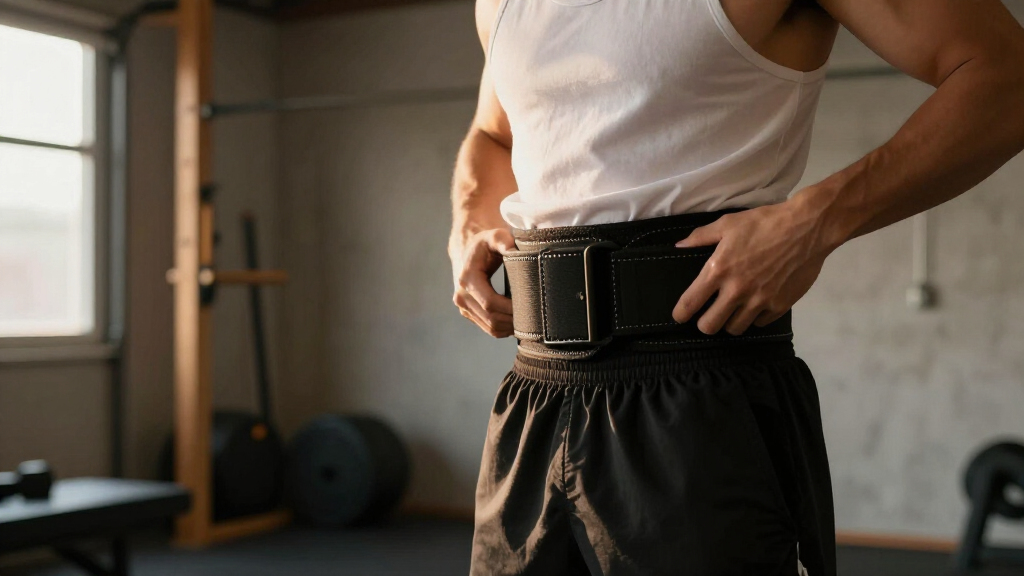
The ideal lifting belt width balances support with freedom of movement. A 4-inch belt suits most powerlifters, but shorter torsos or specific lifts may benefit from 3-inch or tapered belts. Fit, position, and bracing ability matter most.
Measure your rib-to-hip clearance before choosing a belt width — it’s more important than height or weight.
A 4-inch belt suits most powerlifters, but shorter torsos or deep hip flexion may benefit from a narrower 3-inch or tapered belt.
Test belt fit in actual lifts at light loads to ensure comfort and support, not just fit when standing still.
Support depends on proper positioning and bracing, not just belt width — aim for a belt that allows full abdominal expansion.
Adjust belt placement and width based on your lifts and body shape for consistent, effective support.
How to Choose a Lifting Belt Width
The ideal belt balances firm abdominal support with freedom to breathe, hinge and reach your normal setup. For many powerlifters, that means four inches. For shorter torsos or lifts with deep hip flexion, three inches or a tapered profile may work better.
Find your usable torso space
Measure in the posture where the belt must perform—not only while standing upright. Your rib-to-hip clearance indicates the maximum width likely to fit without pinching or changing your mechanics.
Locate the bottom of the rib cage and the top edge of the pelvis. The vertical space between them is where your belt must operate.
Assume your lifting posture
Sit, hinge or squat into the position that creates the least torso space.
Locate ribs and pelvis
Feel for the lowest rib and the upper edge of the hip bone at belt level.
Measure vertically
Use a tape measure or a firm strip of paper to record the available gap.
Allow movement clearance
Your belt should fit inside the space without digging in when you brace or flex.
Match width to body and movement
More surface area can improve bracing contact, but only until the belt collides with your ribs or pelvis. Comfort and brace quality outrank maximum width.
2–2.5″
High clearance for very short torsos and specialized Olympic-lifting preferences.
Tradeoff: less surface area for abdominal contact.3″
A strong option for short torsos, deadlifts and positions where the torso closes sharply.
Tradeoff: may feel too narrow for lifters wanting broad contact.4″
Commonly suits average or long torsos across powerlifting and general strength work.
Tradeoff: can pinch ribs or hips when torso space is limited.Tapered
Creates extra clearance at the abdomen or hips while retaining broader rear coverage.
Tradeoff: variable feedback and possible federation restrictions.Which profile fits your lifts?
Use this as a shortlist, then confirm the choice under movement. The same lifter may also adjust belt position between squats and deadlifts.
| Width | Typically suits | Mobility | Bracing area | Potential drawback |
|---|---|---|---|---|
| 2–2.5″ | Very short torsos, small lifters, specialized Olympic lifting | ✓High | ~Low | May provide less surface for a forceful brace |
| 3″ | Short torsos, sumo or conventional deadlifts, deep hip flexion | ✓Strong | ~Moderate | May feel narrow for some maximal-strength work |
| 4″ | Most powerlifting, general strength, average or long torsos | ~Fit-dependent | ✓Broad | Can contact ribs or hips on shorter torsos |
| Tapered | Dynamic lifting, mobility-focused athletes, shaped clearance needs | ✓High | ~Variable | Less uniform feedback; rules vary by federation |
| Contoured | Lifters seeking anatomical clearance around ribs or hips | ✓Individual | ~Individual | Highly shape-dependent and not always competition legal |
✓ Strong match ~ Depends on anatomy, lift and placement
Fit it under real movement
A belt that feels fine while standing can pinch, shift or block your setup under load. Test the intended width in your actual squat, deadlift or clean pattern.
Position
Place the belt where you normally brace. Adjust slightly higher or lower if needed.
Expand
Brace outward around the full torso—not only forward into the buckle.
Rehearse
Perform your normal setup and confirm that the belt does not alter stance or posture.
Load lightly
Complete several controlled repetitions before increasing the weight.
Decide
Keep the width only if it remains stable, comfortable and easy to brace against.
Strong brace, normal technique
- ✓Full abdominal expansion in every direction
- ✓Your usual squat depth and deadlift setup
- ✓Stable contact without folding or sliding
- ✓Consistent breathing and brace preparation
Pinching, compensation, distraction
- ×Pressure against the lower ribs or hip crest
- ×A changed stance, exaggerated back extension or shallow setup
- ×Folding, bruising or painful pressure points
- ×Restricted abdominal expansion under load
Three factors that complete the fit
Width is only one measurement. Thickness, placement and waist sizing influence how the belt feels and performs, but they solve different problems.
Controls stiffness
A thicker leather belt resists deformation and takes longer to break in. It does not increase torso coverage.
10–13 mm Common rigid-belt rangeChanges clearance
Some lifters wear the same belt higher for deadlifts and lower for squats. Small position changes can prevent rib or hip contact.
High ↕ Low Lift-specific adjustmentControls closure range
Circumference determines belt length, hole range or lever setting. It does not determine the ideal belt width.
Fit ≠ Width Separate measurementsSupport comes from integration—not width alone
The right belt is the widest one that lets you brace forcefully, reach your normal positions and lift without rib or hip interference.
Start at 4 inchesMove to 3 inches or shaped profiles when clearance demands it
What does belt width really do? Why size matters (or doesn’t)
Belt width influences how much of your torso the belt covers, but it doesn’t automatically mean more support. It’s a surface area — not a magic shield.
Think of it like the width of a steering wheel. A bigger wheel offers more control, but if it’s too big for your hands, it’s awkward. Similarly, a wide belt can feel supportive but also restrictive if it hits your ribs or hips.
Most powerlifters start with a 4-inch belt, which provides a broad contact surface for effective bracing. But if it presses into your ribs or pelvis, support turns into discomfort or even pain. The key is how well you can brace against it, not just how wide it is. A wider belt isn’t inherently better; it must fit your body and movement patterns to be effective. An overly wide belt may limit your ability to expand your abdomen fully or move naturally during lifts, reducing the support it can provide. Conversely, a belt that’s too narrow might not offer enough surface area to generate the necessary intra-abdominal pressure for maximal support. The tradeoff lies in balancing coverage with mobility—understanding that support is not just about size but about how well the belt integrates with your anatomy and technique.
As an affiliate, we earn on qualifying purchases.
How to measure your rib-to-hip gap in seconds
Measuring your rib-to-hip clearance is the first step. Use a tape measure or a piece of sturdy paper. Sit or stand in your natural lifting position, then locate the bottom of your rib cage and the top of your hip bone.
Wrap the tape or paper around your torso at that level. The distance between them shows the space you have for belt width.
If your space is tight, a narrower belt might sit more comfortably. If you have plenty of room, a wider belt can provide support without pinching. This measurement helps you determine the maximum belt width that won’t restrict your movement or cause discomfort. It’s crucial because a belt that’s too wide for your rib-to-hip gap can push into sensitive areas, limiting your ability to breathe and brace effectively during lifts. Conversely, a belt that’s too narrow might not provide enough surface area for effective intra-abdominal pressure, especially during heavy lifts. Therefore, understanding your anatomy through this measurement guides you in selecting a belt that supports your core without impeding your natural movement or causing pain, ultimately contributing to better lift stability and safety.
narrower lifting belt for short torso
As an affiliate, we earn on qualifying purchases.
As an affiliate, we earn on qualifying purchases.
Test your belt width in real lifts — don’t guess
Once you pick a belt width, test it in your favorite lifts. Wrap a belt or a stiff strip of material around your torso at the intended position. Assume your typical squat, deadlift, or clean stance.
Brace your core as if lifting heavy. Does the belt stay stable? Does it allow full expansion of your abdomen? Or does it pinch, restrict, or need you to change your stance?
Try a few reps at light weight, then gradually increase. Your ideal belt width supports your brace without forcing you into awkward positions. It’s important to evaluate how the belt behaves during actual lifts because static fitting doesn’t tell the full story. A belt that feels comfortable when standing still might become restrictive or unstable under load. Proper testing ensures that the belt maintains its supportive qualities during dynamic movement and heavy loads, preventing potential support loss or discomfort that could compromise your technique or safety. Remember, the best belt is one that integrates seamlessly into your lifting pattern, enhancing stability rather than hindering it.
As an affiliate, we earn on qualifying purchases.
Comparison: Which belt width is right for your lifts?
| Belt width | Ideal for | Potential drawbacks |
|---|---|---|
| 2–2.5 inches | Short torsos, Olympic lifts, specialized athletes | Less surface area for bracing, may feel less supportive |
| 3 inches | Deep hip-flexion moves, deadlifts, short torsos | Less abdominal contact, may be too narrow for some |
| 4 inches | Most powerlifting, general strength, longer torsos | Pinches ribs or hips if not fitted right |
| Tapered/contoured | Dynamic lifts, mobility-focused athletes | Less uniform support, individual fit |
As an affiliate, we earn on qualifying purchases.
Choosing the right width for your lifts
Every movement demands a different fit. For example, a 4-inch belt offers broad support for squats, especially if your torso is long and upright. But if your ribs are close to your hips, it might pinch or feel restrictive.
In deadlifts, especially sumo, a 3-inch belt can be more comfortable, letting your hips and torso move freely while still providing support. Olympic lifters often prefer narrower, flexible belts to keep mobility high.
Remember: the goal isn’t to fill your waist with metal but to create a firm, comfortable brace. Measure, test, and adjust accordingly.
How body shape and lifting style influence your choice
Your torso length, rib-to-hip clearance, and movement patterns
play a bigger role than just height or weight. Shorter torsos with close rib and hip bones often prefer narrower belts to avoid pinching.If you perform deep squats or deadlifts with a lot of hip flexion, a tapered or contoured belt might give better clearance. Conversely, a long-torso lifter might find a broad 4-inch belt fits better without interference.
Ultimately, tailoring your belt choice to your anatomy ensures consistent, strong bracing without discomfort. Recognizing how your body proportions affect belt fit helps you avoid support gaps or pinching points that could weaken your brace or cause pain during lifts. The right choice minimizes the risk of support loss, allowing you to focus on technique and strength development.
Thickness and stiffness: what matters after width
Think of belt thickness as the stiffness of a steel bar. A 13mm leather belt feels more rigid than a 10mm one, influencing how it conforms and how much support it provides.
Thicker belts — around 13mm — are stiffer. They hold their shape longer but can feel intrusive, especially if your torso is small or your flexibility is limited. This stiffness can enhance support during maximal lifts but might restrict breathing or movement if not fitted properly. Conversely, thinner or softer belts provide more flexibility, which can be beneficial for dynamic lifts or athletes with limited mobility. The tradeoff is that they might not offer as much rigid support for the heaviest lifts. Selecting the right thickness involves balancing support needs with comfort and mobility—knowing that stiffer belts are better for maximal support but may sacrifice some flexibility, while softer belts prioritize mobility at the potential expense of support.
Adjusting belt position for best support
Position your belt so it covers the strongest brace zone without pinching. For most, that’s just above the belly button or slightly lower for squats. Deadlifters often wear the belt higher, near the lower ribs.
Experiment with angles — sometimes tilting the belt upward or slightly off-center helps clearance and bracing. The key is comfort and support, not a fixed rule. Proper positioning ensures the belt engages the core muscles effectively, providing maximum support during lifts. An incorrectly placed belt can shift support away from the critical area, reducing its effectiveness and potentially causing discomfort or injury. Adjusting the belt’s height and angle allows you to tailor support to your anatomy and movement pattern, ensuring consistent brace and stability across different lifts.
Remember, the belt should stay stable during lifts without requiring constant readjustment.
When and why to switch your belt width
If your current belt pinches your ribs or hips, or restricts your setup, it’s time to consider a narrower or differently shaped belt. Comfort directly impacts your lifting consistency and strength gains. Discomfort can lead to poor technique, reduced confidence, and even injury over time. If your current belt causes pain or forces you into unnatural movements, it’s a sign that your body needs a different fit. Similarly, if the support feels inadequate during heavy lifts, a wider or stiffer belt might be necessary. Regularly reassessing your belt fit ensures you maintain optimal support and comfort as your training progresses or your body adapts. Remember, the goal is to find a belt that enhances your lifts without becoming a source of distraction or injury risk.
Final tip: support is about fit, not just width
The best support comes from a belt that fits your body perfectly. Width is just one piece of the puzzle. Focus on anatomical clearance, comfort, and how well you can brace against it. A well-fitted belt allows you to generate intra-abdominal pressure efficiently, translating into stronger, more stable lifts. Conversely, a belt that doesn’t fit well—either too tight, too loose, pinching, or restricting—can undermine your efforts and increase injury risk. Support is a dynamic feature, dependent on how the belt interacts with your anatomy during movement. Prioritize finding a belt that contours to your body, provides even support, and allows full, natural breathing and bracing. Remember, the goal isn’t just support for the sake of support but support that enhances your technique and confidence.
Support your lifts with a belt tailored to your body — not just a standard size. Your strongest lifts start with a fit that feels right, not just looks right.
Frequently Asked Questions
Is a 4-inch belt better for everyone?
No. While a 4-inch belt is a solid default, it can be too wide for short torsos or deep hip flexion lifts. Always measure and test to find what fits your body best.Should I get a 3-inch or 4-inch belt?
Choose 4 inches if it comfortably fits between your ribs and hips without pinching. Opt for 3 inches if the wider belt presses into bones or limits your setup. Fit over general rules.Does a wider belt support more?
Not necessarily. Support depends on how well the belt fits your anatomy and allows bracing. Excess width can restrict movement and reduce effectiveness if it causes discomfort.Do women need narrower belts?
Not automatically. Body proportions matter more than gender. Some women prefer narrower belts for better clearance, but many use standard widths comfortably.When should I switch to a different belt width?
If your current belt pinches, restricts, or doesn’t support well during heavy lifts, it’s time to consider a narrower or differently shaped belt. Comfort and support are key.Conclusion
Choosing the right belt width isn’t about the biggest or widest option. It’s about fit, comfort, and how well you can brace during your lifts. Focus on your anatomy and movement demands, and your perfect belt will naturally support your strength gains. Remember, a well-fitted belt is a tool, not a restriction — use it to brace, not fight your body.Fall yard work Picks
leaf blowers
As an affiliate, we earn on qualifying purchases.