
TL;DR

Get business pricing on tools and workshop supplies
- Business-only prices and quantity discounts
- Tax-exempt purchasing
- Multiple users, one account, clear invoices
A proper tool belt setup helps plumbers work faster and safer. Focus on organization, weight balance, and durability to improve daily performance and reduce fatigue.
Ever try working all day with a poorly arranged tool belt? It’s a nightmare—tools slipping, searching for that one wrench, feeling exhausted before noon. Your setup isn’t just about carrying tools; it’s about being quicker, safer, and less tired. A smart, practical setup can save you minutes per job, cut fatigue, and even prevent injuries.
In this guide, you’ll learn how to set up your tool belt like a pro—balancing weight, organizing tools logically, and choosing durable materials. No fluff, just real-world tips to make your workday smoother and safer.
Choose a durable, adjustable belt with padded support for all-day comfort.
Organize tools based on frequency of use, placing the essentials at your fingertips.
Distribute weight evenly—heavy tools near your hips, lighter items at the front—to prevent fatigue.
Regularly maintain and upgrade your belt as your tools and work conditions change.
Stay updated on the latest modular and ergonomic designs to boost productivity.
A faster, safer plumbing day starts at the belt.
A smart setup is not just storage. It controls reach, weight, posture, and daily fatigue. Organize essentials by frequency, keep heavy tools near the hips, and choose durable materials that survive water, mud, grease, and long shifts.
Most plumbers carry a compact but demanding load through an 8-10 hour workday.
Better organization can reduce job time through quicker tool access and less fatigue.
Put the tool where your hand already wants to go.
Heavy tools stay close to your center of gravity.
Adjustable waistbands reduce chafing, slipping, and back strain.
Leave rarely used tools in the truck to cut unnecessary weight.
Swap pouches as jobs, tools, and work conditions change.
Choose the belt around your body, not the catalog photo.
Fit, material, and support decide whether your setup helps you move or quietly wears you down. Load the belt before judging it: walk, bend, kneel, and work through typical reach patterns for at least 30 minutes.
Snug, adjustable, stable
A proper fit prevents sliding and pinching while keeping tools from shifting during overhead work, tight-space repairs, and repeated bending.
Padded waist plus lumbar help
Padding spreads pressure across the waist and lower back, reducing the hotspots that become fatigue by midday.
Leather or reinforced nylon
Water-resistant, tough materials handle wet floors, mud, grease, abrasion, and daily wear without losing shape.
Build the belt in the same order you work.
Start with what you reach for constantly, then add job-specific tools only where the extra weight earns its place.
Anchor
Fit the belt loaded with your real daily tools.
Sort
Group tools by frequency, size, and sharp edges.
Place
Put high-use tools at front and heavy tools near hips.
Test
Bend, crawl, climb, and check whether anything drifts.
Tune
Move weight as fatigue appears through the day.
Put essential tools at fingertip distance.
Organization is more than neatness. It reduces search time, protects small parts, and keeps your movement pattern predictable when the job gets cramped or messy.
| Feature | Best For | Pros | Tradeoff | Use Daily? |
|---|---|---|---|---|
| Deep Pouch | Bulky tools like pipe wrenches and cutters | ✓ Secure and spacious | ~ Can feel bulky if overloaded | ✓ Yes, when balanced at the hip |
| Fast-Access Loop | Pliers, screwdrivers, tape measure, flashlight | ✓ Quick one-hand grab | ~ Limited capacity | ✓ Yes, for most-used tools |
| Small Parts Pouch | Fittings, fasteners, washers, small adapters | ✓ Keeps tiny parts contained | ~ Needs regular cleanout | ✓ Yes, if secured closed |
| Oversized Catch-All | Mixed tools without sorting | ~ Easy to load quickly | ✗ Slows access and adds clutter | ✗ Avoid for daily setup |
Good balance is injury prevention you can feel.
If your belt pulls forward or tips to one side, your lower back and hips do the correction all day. Keep larger tools close to the hip bones and reserve front pouches for lighter, frequently used items.
Carry weight target
Most plumbers carry 10-20 pounds of tools. The sweet spot is the lightest setup that still covers repeated tasks without sending you back to the truck.
Every choice should connect back to speed, safety, or comfort.
A clean tool belt setup turns small decisions into measurable workday gains: fewer searches, fewer dropped tools, better posture, and a setup that adapts as your work changes.
Treat the belt like a working system.
Maintenance prevents small failures from becoming lost time or unsafe work. Upgrades should follow your actual workload: new tools, wetter jobs, heavier service calls, or longer days.
Clean, inspect, repair
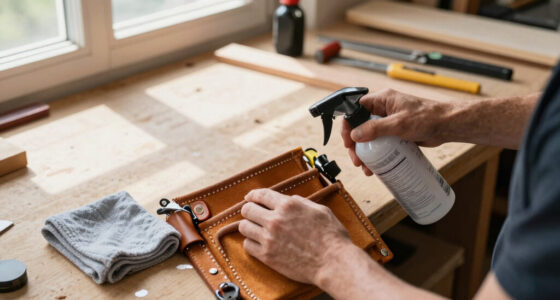
Wipe down nylon after muddy jobs, condition leather to prevent cracking, check stitching, and replace worn clips before they fail on site.
Modular and ergonomic
Ballistic nylon, reinforced polyester, waterproof pouches, lumbar support, and swap-in modules help reduce weight while keeping the setup job-specific.
How to Pick the Perfect Tool Belt for Your Body and Job
Your tool belt should fit snugly but comfortably—no pinching or slipping. Adjustable straps and padded waistbands matter. Imagine a belt that molds to your waist, distributing weight evenly. For a plumber working 8-10 hours a day, a belt that stays comfortable prevents back pain and fatigue.
Choosing the right belt means understanding that fit and material impact not just comfort but also safety and efficiency. A poorly fitting belt can cause chafing, restrict movement, or shift during work, leading to distractions or even injuries. Conversely, a well-fitted belt ensures tools stay in place, reducing the risk of dropping or misplacing them at critical moments. Material choice affects durability and resistance to environmental factors—water, mud, or grease—so selecting water-resistant, tough materials like leather or reinforced nylon extends the belt’s lifespan and maintains functionality over time.
Tip: When trying on belts, load them with your typical tools. Walk around, bend, and see how it feels after 30 minutes. Comfort isn’t just about fit; it’s about how the weight feels over time, affecting your posture and fatigue levels. An optimal belt distributes weight so your muscles aren’t overtaxed, which is essential for preventing long-term injuries.
adjustable padded tool belt for plumbers
As an affiliate, we earn on qualifying purchases.
As an affiliate, we earn on qualifying purchases.
The Key Tools Every Plumber Must Have in Their Belt
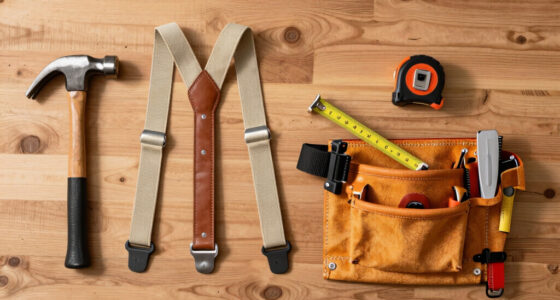
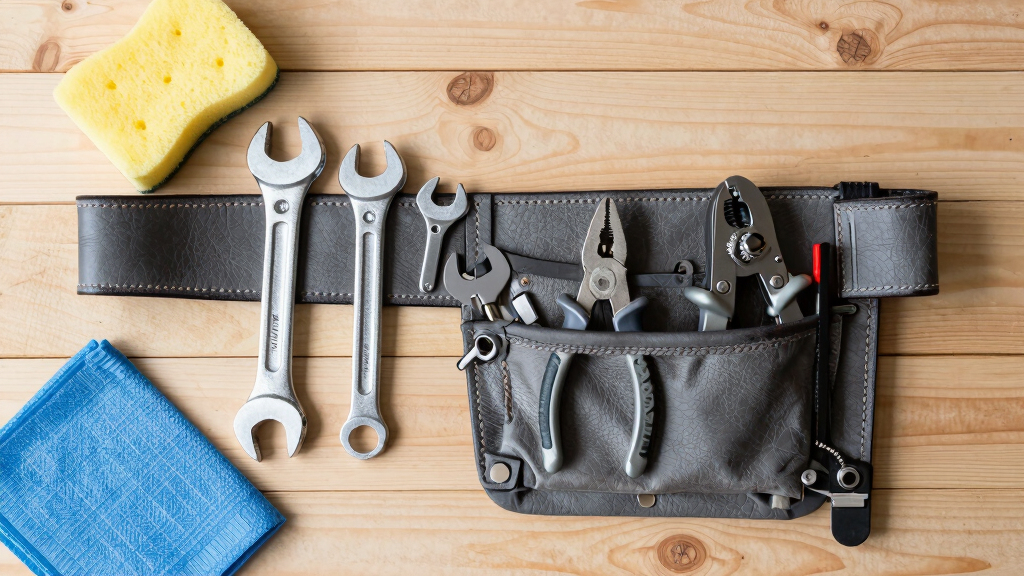
Some tools are non-negotiable—these make or break your day. Think about a sturdy adjustable wrench, a pair of slip-joint pliers, screwdrivers, a tape measure, and a small flashlight. These are your bread and butter, ready when you need them.
For example, you might keep a 10-inch adjustable wrench in a dedicated pouch for quick access, a pocket for screwdrivers, and a loop for pliers. Small parts like fittings or fasteners go into a separate, secure pouch to avoid lost time searching.
Tip: Regularly review your tools—if you use a tool less than once a week, consider leaving it in the truck to keep your belt lighter. Carrying only what’s necessary reduces weight and clutter, making your work more efficient and less physically taxing. This selective approach also minimizes the risk of forgetting or losing critical tools, which can cause delays or unsafe work practices. The key is balancing preparedness with practicality—being ready without overburdening yourself.
ergonomic plumber tool belt organizer
As an affiliate, we earn on qualifying purchases.
As an affiliate, we earn on qualifying purchases.
Organizing Your Tools for Lightning-Fast Access
Organization is everything. Arrange tools based on how often you use them. Place the most-used items front and center—like your tape measure or adjustable wrench. Less-frequent tools, such as pipe cutters or special fittings, go on the sides or in pouches you can reach without bending over.
Imagine reaching for a pipe wrench—your belt should have it within arm’s reach, not buried under other tools. Use different-sized pouches, loops, and pockets to segregate tools by type. This way, you’re not digging through clutter when time is ticking.
Comparison Table:
| Feature | Deep Pouch | Fast-Access Loop | Small Parts Pouch |
|---|---|---|---|
| Best for | Holding bulky tools like pipe wrenches | Quickly grabbing screwdrivers or pliers | Fittings, fasteners, small parts |
| Pros | Secure, spacious | Easy to reach | Keeps small items organized |
| Cons | Can be bulky | Limited capacity | Needs regular organization |
Beyond just placing tools randomly, consider the workflow and ergonomics. Tools you frequently switch between should be positioned at the same height and within easy reach, minimizing unnecessary movement. This strategic placement reduces physical strain and speeds up task completion. Think about how your body naturally moves; aligning your tool placement with these movements leads to a more comfortable and efficient work process. Remember, the goal isn’t just quick access but also reducing repetitive strain and fatigue over the course of a long day.
heavy-duty water-resistant tool belt
As an affiliate, we earn on qualifying purchases.
As an affiliate, we earn on qualifying purchases.
Weight Balance Tips to Keep You Moving Smoothly
Ever feel like your belt is pulling you forward or tipping to one side? That’s because weight distribution matters. Heavy tools should sit close to your center of gravity—near your hip bones—reducing strain on your lower back. Lighter tools can hang at the front or in side pouches.
For example, keep your pipe wrenches and large cutters on your dominant side’s side pouch, while screwdrivers and small parts go on the opposite side. This balanced setup prevents twisting or leaning, especially when you’re working overhead or bending.
Adjust your belt throughout the day. If you notice fatigue creeping in, shift heavier tools or reorganize to keep your posture upright. This continuous adjustment is crucial because your body’s needs change as you move through different tasks. Proper weight distribution not only prevents immediate discomfort but also reduces the risk of long-term musculoskeletal issues. The tradeoff is that it requires mindfulness and occasional reorganization, but the payoff—less fatigue and fewer injuries—is well worth it.
As an affiliate, we earn on qualifying purchases.
How to Maintain and Upgrade Your Tool Belt Over Time
Your tool belt doesn’t last forever. Regular care keeps it in shape and safe. Wipe down nylon belts after a muddy job, and treat leather belts with conditioner to prevent cracking. Check stitching and repair or replace worn pouches.
As your work evolves, so should your setup. Need more space for a new tool? Switch to a modular system. Want better comfort? Upgrade to a padded, ergonomic belt. For example, a plumber who added a cordless pipe threader might need a larger pouch or a specialized loop.
Tip: Keep a small maintenance kit—spare stitching, leather conditioner, and replacement clips—so your belt stays ready for the next day. Regularly inspecting and maintaining your belt prevents small issues from becoming major failures, which could compromise safety or efficiency. Upgrading components—like adding extra pouches or replacing worn-out clips—not only extends the life of your belt but also allows customization based on changing work demands. Think of it as tuning your gear for optimal performance and comfort, ensuring you get the most out of your investment over years of service.
Latest Trends in Plumbing Tool Belts That Save Time and Fatigue
Innovation keeps rolling in. Modern tool belts use lightweight, tough materials like ballistic nylon and reinforced polyester—reducing weight without sacrificing strength. Modular, customizable systems let you tailor your setup to each job. Imagine swapping out pouches for a specific task, then switching back.
Ergonomics also improve. Padded, lumbar-support belts distribute weight better, helping prevent back pain. Some belts even include pockets for small electronic devices—think Bluetooth tools or RFID tags to track your gear.
Weather-resistant designs are now common—waterproof pouches and belts that stand up to outdoor rain or muddy conditions. These trends help you stay organized, comfortable, and efficient, no matter where you’re working.
Understanding these trends allows you to evaluate whether upgrading your gear could lead to significant gains in productivity and comfort. For instance, switching to a modular system means you can adapt your setup quickly for different jobs, reducing setup time and increasing versatility. Ergonomic features like padded belts and lumbar support aren’t just luxuries—they’re investments in your long-term health, reducing fatigue and preventing injuries. Staying informed about these innovations ensures that you’re not only working smarter but also safeguarding your physical well-being over the years.
Frequently Asked Questions
What is the most important factor when choosing a tool belt?
Fit and durability are key. Your belt should fit snugly without pinching, with adjustable straps and padded support. It must also withstand daily wear, so choose tough materials like leather or reinforced nylon.How do I organize my tools to save time?
Prioritize accessibility. Place frequently used tools front and center, in quick-release pouches or loops. Keep less-used tools in side pockets or lower compartments to avoid clutter and search time.Can I customize my tool belt for different jobs?
Absolutely. Modular systems let you swap or add pouches based on the task—be it pipe installation, fixture repair, or outdoor work. Customization keeps your setup efficient and tailored to each day’s work.What materials last the longest in a plumber’s environment?
Leather and heavy-duty nylon hold up best against moisture, mud, and daily wear. Regular maintenance, like leather conditioning and stitching checks, extends their lifespan.Are there ergonomic tips for reducing fatigue?
Yes. Distribute weight evenly, keep heavy tools near your hips, and use padded, supportive belts. Reorganize throughout the day to avoid leaning or twisting, especially when working overhead.Conclusion
A smart tool belt setup isn’t just about holding tools—it’s about working smarter, safer, and longer. Small tweaks in organization, fit, and materials can turn a tiring day into a smooth one. Take a moment to reassess your setup—your back, your speed, and your sanity will thank you.
Remember: the right gear setup is a game-changer. It’s not just about tools; it’s about making your workday easier and safer every step of the way.
Halloween Picks
halloween
As an affiliate, we earn on qualifying purchases.