TL;DR

Get business pricing on tools and workshop supplies
- Business-only prices and quantity discounts
- Tax-exempt purchasing
- Multiple users, one account, clear invoices
A good rolling tool bag balances size, durability, and mobility. Consider your tools, work site conditions, and budget—smart choices lead to less strain and better organization.
Ever hefted a clunky toolbox and felt your back protest? A rolling tool bag can change that. It’s not just about convenience—it’s about working smarter, saving your strength for the job, and keeping tools safe.
In this guide, you’ll learn how to pick a rolling tool bag that fits your tools, withstands tough conditions, and moves smoothly across job sites. Whether you’re an electrician, plumber, or DIY enthusiast, choosing the right bag makes a real difference.
Match your tool load and work environment to the bag size—too small or too big can slow you down.
Prioritize durable, water-resistant materials to withstand tough jobsite conditions.
Choose smooth-rolling, multi-directional wheels for effortless mobility over uneven terrain.
Invest in organized compartments—quick access keeps your work flowing smoothly.
Reputable brands offer longer-lasting bags with better warranty support, saving money over time.
How to Choose a Rolling Tool Bag
A well-matched bag protects your tools, keeps the essentials within reach, and saves your strength for the work that matters. The right choice comes down to load, terrain, construction, organization, and long-term value.
Potential reduction in physical fatigue versus traditional hand-carry options for heavy or bulky loads.
Pounds of tools is a practical medium-capacity target for many everyday jobs.
“Choose for the jobsite you actually work on—not the showroom floor.”
Key selection principleSeven features that earn their space
Start with your daily tool load and work environment. Then evaluate each feature as part of one system: a durable bag is only useful if it remains balanced, navigable, and easy to organize.
Size & capacity
Inventory your largest power tool, longest hand tool, and average daily load. Adjustable dividers or expansion zones add flexibility without forcing an oversized footprint.
Material & build
Ballistic nylon, reinforced polyester, and leather resist abrasion. Inspect the corners, stitching, zipper gauge, base, and water resistance—not just the outer fabric.
Wheels & handle
Rubber or polyurethane wheels absorb vibration. Larger fixed wheels favor rough ground; swivel wheels turn more easily in corridors and tight service areas.
Organization
Pockets, loops, dividers, and padded zones reduce search time and stop sharp or heavy tools shifting. The best layout mirrors the order in which you work.
Empty weight
A rugged bag can become a burden before the tools go in. Look for balanced construction, padded grab handles, sensible lift points, and manageable stair carrying.
Security & support
Lockable zipper pulls and reinforced compartments protect valuable tools. A reputable maker, useful warranty, and replaceable wear parts can justify a higher price.
Find the load sweet spot
Too small means strained seams, buried tools, and unstable packing. Too large adds dead weight and lets equipment shift. Match capacity to the tools you carry most days—not the rare maximum load.
Use the 80% rule
Pack your normal kit so the bag is roughly 80% full. The remaining room accommodates consumables and occasional tools while keeping pockets usable and weight distribution predictable.
Choose mobility for the ground beneath you
Wheel material, diameter, and steering style determine whether a loaded bag glides or fights back. Test with weight inside whenever possible.
| Wheel system | Smooth floors | Gravel / debris | Tight spaces | Heavy loads | Best fit |
|---|---|---|---|---|---|
| Small plastic fixed | ~ Fair | ✗ Poor | ✗ Limited | ✗ Low | Occasional DIY use |
| Rubber fixed | ✓ Strong | ✓ Strong | ~ Fair | ✓ Strong | Construction sites |
| Polyurethane fixed | ✓ Excellent | ~ Good | ~ Fair | ✓ Strong | Mixed indoor / outdoor |
| 360° swivel | ✓ Excellent | ~ Variable | ✓ Excellent | ~ Good | Technicians and facilities |
Larger wheels cross cracks, cords, gravel, and thresholds more easily.
Rubberized surfaces improve grip and absorb jobsite vibration.
Check extension height, side play, grip comfort, and lock security.
From tool inventory to confident purchase
Follow the sequence in order. Each decision narrows the next, preventing attractive but unsuitable features from driving the purchase.
Audit
List daily tools, bulky equipment, fragile items, and total loaded weight.
Map terrain
Note stairs, gravel, mud, thresholds, corridors, rain, and vehicle storage.
Set priorities
Rank capacity, protection, mobility, organization, and security.
Load-test
Roll, turn, stop, lift, open, and access the bag with realistic weight.
Verify value
Compare construction, warranty, replacement parts, and expected service life.
Buy for total value, not the lowest ticket
Basic bags can start around $50, while professional-grade systems may cost several hundred dollars. Higher value comes from longer service life, tool protection, repairability, and warranty support.
Price ÷ useful years
A cheaper bag replaced repeatedly may cost more than a durable model with reinforced stress points, dependable wheels, and useful manufacturer support.
Check the base, wheel mounts, zipper ends, seams, handles, and telescoping mechanism.
Choose lockable pulls, reinforced zones, and padded sections for electronics or power tools.
Modular dividers, lightweight composites, tracking tags, and charging ports add flexibility.
Wipe the fabric, clear wheel debris, inspect fasteners, and store the bag in a dry place.
The best bag disappears into the workflow.
It rolls steadily, opens logically, protects its load, and never makes you think twice about bringing the tools the job requires.
Size and Capacity: How Much Can It Really Hold?
Size is king. Think about your daily load—do you carry just a few screwdrivers and pliers, or do you need space for power tools and bulky gear? A small bag might be fine for light work, but it’ll fall short on big projects.
Look for adjustable compartments or expandable sections. For example, a medium-sized bag that holds around 20-30 pounds of tools often strikes a good balance—big enough for most jobs, yet manageable to roll around.
Imagine lugging a bag that’s bursting at the seams—uncomfortable and slow. Picking the right size keeps your tools accessible without turning your transport into a workout.
Choosing the correct capacity means understanding the nature of your work. Overloading a small bag can strain your back and cause tools to shift, risking damage or loss. Conversely, a too-large bag might be cumbersome, making mobility harder and increasing fatigue. The goal is to find a sweet spot where your tools are organized, accessible, and easy to move, enhancing efficiency and safety.
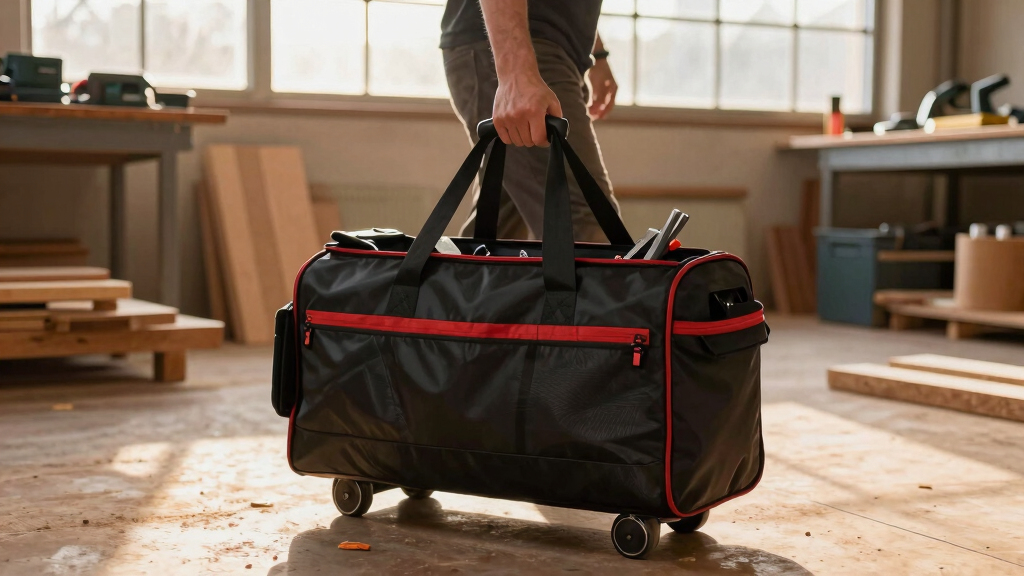
rolling tool bag with durable wheels
As an affiliate, we earn on qualifying purchases.
As an affiliate, we earn on qualifying purchases.
Durability and Material: What Keeps Your Tools Safe?
Durability isn’t just a buzzword. Your bag needs tough materials—think ballistic nylon, reinforced polyester, or even leather. These resist tears, abrasions, and the daily grind of a busy worksite.
Check for reinforced corners, heavy-duty zippers, and water-resistant fabrics. Picture a rainstorm soaking your gear—your bag’s material should shrug that off.
For example, a plumber’s bag exposed to wet pipes and mud benefits from waterproofing and sturdy construction—so tools stay dry and intact.
Understanding the materials helps you evaluate the tradeoff between weight and protection. Heavier fabrics often provide greater durability but can add to overall weight, which might impact mobility. Waterproof features are crucial if your worksite is prone to weather exposure, as they protect your investment and ensure tools remain in prime condition, reducing replacement costs and downtime caused by damaged equipment.
water-resistant professional tool bag
As an affiliate, we earn on qualifying purchases.
As an affiliate, we earn on qualifying purchases.
Mobility and Wheels: How Do You Roll Over Rough Terrain?
Wheels are the foundation of a rolling tool bag. Opt for smooth-rolling, durable wheels—rubber or polyurethane work best. Multi-directional or 360-degree swivel wheels make navigation across uneven surfaces a breeze.
Test handles too—telescoping handles are common, but make sure they lock firmly and extend comfortably. Think about a scenario: rolling across gravel or uneven concrete—your wheels need to handle it without jamming or wobbling.
For instance, a contractor working on a construction site needs wheels that glide smoothly over dirt and debris, saving time and effort.
Choosing the right wheels involves understanding the terrain of your work environment. Larger, rubberized wheels distribute weight better and absorb shocks, reducing strain on your arms and back. Swivel wheels enhance maneuverability in tight spaces, but may be less stable on uneven ground. Fixed wheels offer stability for heavy loads but can be harder to steer. Balancing these features ensures smooth transport, minimizes fatigue, and improves overall efficiency in challenging conditions.
As an affiliate, we earn on qualifying purchases.
Organization and Compartments: Keeping Tools in Check
Ever spend 10 minutes hunting for that one screwdriver? A well-organized bag solves that. Look for multiple pockets, dividers, and specialized compartments—some even have padded sections for delicate tools.
For example, a technician working with small parts benefits from dedicated compartments for screws, connectors, and chargers. It’s about quick access and avoiding chaos.
Imagine arriving on-site and knowing exactly where each tool is—less frustration, more productivity.
Deep organization isn’t just about convenience; it’s a safety measure. Properly compartmentalized tools prevent accidental damage and reduce the risk of injury from sharp or heavy items shifting during transit. Moreover, efficient organization speeds up your workflow, allowing you to focus more on the job and less on searching for misplaced tools, which ultimately enhances your productivity and job quality.
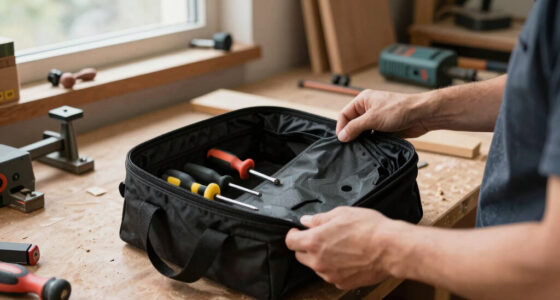
organized tool bag with compartments
As an affiliate, we earn on qualifying purchases.
As an affiliate, we earn on qualifying purchases.
Weight and Portability: Carry Without the Strain
The bag should be lightweight when empty but sturdy enough for daily use. Balance is key. Heavy-duty materials add weight, but a lighter design reduces fatigue.
Picture yourself rolling a 15-pound bag over a long day—easy to maneuver beats heavy and cumbersome every time.
Consider a bag with ergonomic handles and balanced weight distribution—your back and arms will thank you.
Choosing a lightweight but durable bag involves understanding the tradeoff between material strength and ease of transport. A lighter bag reduces fatigue, especially when carrying it over long distances or stairs, but it must still provide sufficient protection for your tools. Features like padded handles, balanced weight distribution, and adjustable straps further reduce strain, making your workday less taxing and more productive.
Security Features: Protect Your Valuables
Security matters, especially if you carry expensive or sensitive tools. Lockable zippers and reinforced compartments act as a safeguard.
For example, a locksmith’s bag with lockable sections keeps tools secure from theft or accidental loss.
Reinforced handles also prevent breakage during rough handling, ensuring your tools stay safe.
Understanding security features helps prevent costly theft or loss, especially when working in public or unsecured sites. Lockable zippers and reinforced compartments serve as deterrents and physical barriers against unauthorized access. Additionally, sturdy handles prevent accidental breakage, which could compromise the safety of your tools and your reputation. Investing in security features ensures your tools remain protected, maintaining your workflow without interruptions or replacements.
Price and Brand Reputation: What’s Worth Your Money?
Quality often costs a bit more, but it pays off. Reputable brands like BestBeltShop stand behind their products with warranties and customer service.
Set a budget—basic models start around $50, while professional-grade bags can run into several hundred dollars. Think about your needs: is durability worth the extra cost?
Remember, a well-made bag lasts years, saving you money in the long run.
Choosing the right price point involves weighing initial investment against long-term value. Cheaper bags might save money upfront but often lack durability, leading to frequent replacements and potential tool damage. Higher-quality brands offer better materials, construction, and warranties, which can be more economical over time. Consider your work frequency, tool value, and environment—investing wisely ensures you get a reliable, long-lasting solution that supports your productivity and safety.
Recent Innovations: What’s New in Rolling Tool Bags?
New materials like lightweight composites and advanced fabrics boost durability without adding weight. Ergonomic handle designs and improved wheel systems make rolling easier and less tiring.
Some bags now feature smart tech—RFID tags, GPS, or built-in charging ports—perfect for tech-savvy workers.
Modular designs let you swap or customize compartments, adapting your bag to different tasks or trades.
Understanding these innovations allows you to select a bag that not only meets your current needs but also adapts to future demands. Lightweight composites improve portability without sacrificing strength, reducing fatigue during long days. Smart features like RFID or GPS enhance security and asset management, while modular systems provide flexibility for different projects. Staying informed about these advancements ensures you invest in a tool that is both innovative and practical, offering long-term value and adaptability in a changing work landscape.
Common Questions: Your Top Concerns Answered
- What size rolling tool bag should I choose? It depends on your tools and how much you need to carry daily. Small for light jobs, large for heavy-duty projects.
- Are rolling tool bags worth it? Absolutely, especially for heavy or bulky tools. They reduce strain and improve efficiency.
- How durable are these bags? High-quality bags with reinforced materials and sturdy wheels last longer—even in rough conditions.
- Can I carry power tools? Yes, but look for padded compartments for delicate tools and chargers.
- What’s the price range? From around $50 for basic models to several hundred for professional-level bags.
Addressing these questions helps you make an informed decision based on your specific needs, environment, and budget. Knowing the nuances of size, durability, and features ensures you select a bag that enhances your workflow and protects your investment, ultimately saving time and money while improving safety and efficiency.
Conclusion
Choosing the right rolling tool bag isn’t about the flashiest features—it’s about what fits your work. Focus on durability, size, and ease of movement, then your tools will serve you better, longer.
Imagine rolling into a job site with a bag that feels like an extension of your arm—organized, tough, and effortless to move. That’s the power of a smart choice.
Fall Picks
fall essentials
As an affiliate, we earn on qualifying purchases.