TL;DR

Get business pricing on tools and workshop supplies
- Business-only prices and quantity discounts
- Tax-exempt purchasing
- Multiple users, one account, clear invoices
Properly organizing your tool belt pouches makes your work faster and safer. Use specific placement strategies, match pouch sizes to tools, and stay adaptable to different jobs.
Ever spent minutes digging through your tool belt for that one screwdriver? It’s frustrating and wastes valuable time. The secret to staying on top of your game isn’t just having the right tools — it’s knowing exactly where they are. Organizing your tool belt pouches isn’t just tidiness; it’s a game-changer for efficiency and safety.
In this guide, you’ll learn how to arrange your pouches smartly, distribute weight evenly, and adapt your setup for different jobs. Whether you’re a seasoned pro or just starting out, a well-organized tool belt makes every day easier.
Match pouch types to specific tools based on size, weight, and usage frequency.
Position your most-used tools in easily accessible pouches at waist level.
Distribute weight evenly to reduce fatigue and prevent injury.
Use color coding or labels for quick identification of tool categories.
Reorganize daily to adapt to changing tasks and maintain safety.
How to Choose the Right Pouches for Your Tools
Start with the basics: your pouches must match your tools. Heavy, bulky screwdrivers and hammers need sturdy, reinforced pouches because they exert more stress on the material and are more likely to cause wear or damage if not properly supported. Smaller, delicate items like nuts or nails go in lightweight, secure compartments to prevent loss or damage. Choosing the right pouch material is crucial; rugged leather or heavy-duty nylon not only withstands daily wear but also resists environmental elements like rain or dirt, which can degrade cheaper materials over time. The right pouch setup feels like an extension of your hand, facilitating quick, confident access while minimizing fatigue and risk of injury. Selecting pouches based on your typical tools and work environment ensures durability, safety, and efficiency, reducing the need for frequent replacements or adjustments during a workday.
Why does this matter? Proper pouch selection influences your overall productivity and safety. Using unsupported or mismatched pouches can lead to faster wear and tear, increasing replacement costs and risking tool loss. Conversely, choosing durable, well-suited pouches ensures your tools stay protected, accessible, and in good condition over time. The tradeoff often involves balancing cost against durability; investing in quality pouches may seem higher upfront but pays off through longevity and fewer disruptions during work.
As an affiliate, we earn on qualifying purchases.
3 Steps to Arrange Your Pouches for Quick Access
- Identify your most-used tools: Placing these in the easiest-to-reach pouches at waist level or slightly above minimizes the time spent searching. This prioritization reduces fatigue from unnecessary movement and allows you to focus more on the task at hand. The implication? A well-placed tool can save seconds but those seconds add up over a long day, directly impacting productivity and safety. If frequently used tools are stored in hard-to-reach spots, it increases your movement, causing fatigue and distraction, which can lead to mistakes or accidents.
- Distribute weight evenly: Keeping the heaviest tools close to your hips and near your center of gravity is vital to prevent strain and long-term musculoskeletal issues. Overloading one side can cause imbalance, leading to discomfort or injury. Light tools, such as small screwdrivers or pencils, can go in upper or side pouches, ensuring overall weight balance and ease of access. Proper weight distribution not only reduces fatigue but also helps maintain your posture, decreasing the risk of chronic injuries. The tradeoff? Overloading certain pouches might seem convenient but increases strain; thus, strategic placement is essential for comfort and safety.
- Group similar tools together: Organizing tools by category—such as all screwdrivers, pliers, or nails—in dedicated pouches accelerates workflow by reducing cognitive load of searching. This organization also helps prevent accidental misuse or damage, as each pouch is tailored to specific tool types, making retrieval more intuitive and reducing the chance of dropping or mishandling tools during busy moments. The deeper benefit? It creates a mental map of your belt, reducing hesitation and increasing confidence in quick retrieval, which can be critical in time-sensitive situations. The tradeoff? Over-categorization might lead to underutilized pouches, so finding a balance is key to maximizing efficiency without clutter.
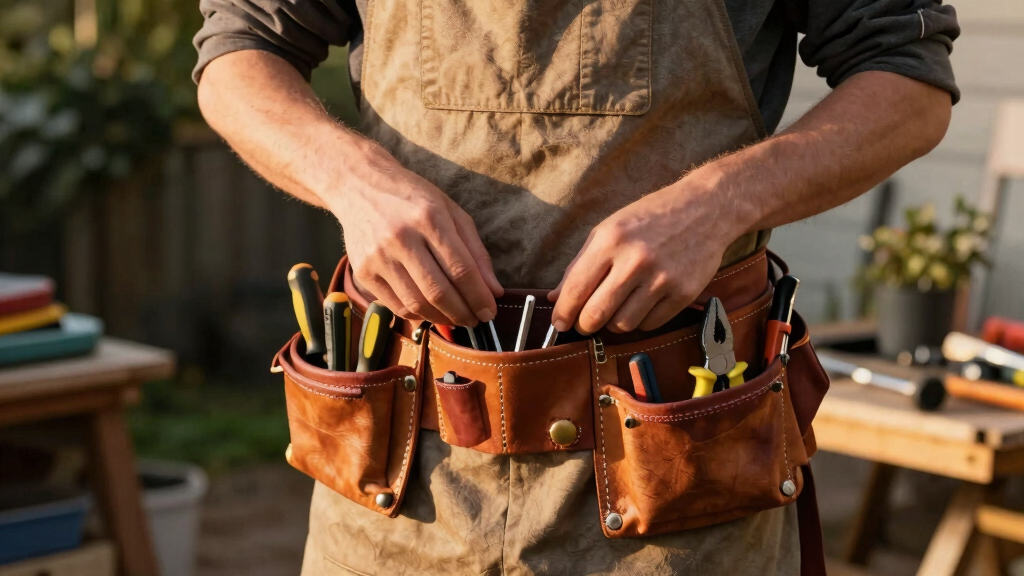
For instance, during a framing job, keeping tape measures and pencils in front allows quick measurements, while screwdrivers on your dominant side facilitate fast adjustments. This thoughtful arrangement minimizes hunting, reduces downtime, and keeps your workflow flowing smoothly, especially in high-pressure situations.
As an affiliate, we earn on qualifying purchases.
Comparison Table: Common Pouch Types & Their Uses
| Pouch Type | Best For | Advantages | Typical Materials |
|---|---|---|---|
| Open-top Pouches | Tools needing quick access, like tape measures | Fast retrieval and easy visibility of contents reduce delays during critical moments, especially when rapid adjustments are needed. They also facilitate quick inventory checks, which can prevent missing tools that slow down work. | Leather, nylon |
| Closed Pouches | Small parts, nails, screws | Prevents spillage and keeps items secure during movement or climbing. This containment reduces the risk of losing essential small parts that can delay progress or create safety hazards. | Reinforced nylon, polyester |
| Specialized Pouches | Power tools, batteries, chargers | Designed for specific tools, they offer tailored protection against environmental factors like moisture, which can damage sensitive equipment. Padding and weatherproof features extend the lifespan of costly tools and ensure they’re ready when needed. | Weatherproof, padded materials |
Matching pouch type to task isn’t just about organization; it’s about understanding the implications for safety and efficiency. For example, an open pouch allows quick access but exposes tools to environmental hazards, which could lead to damage or corrosion over time. Conversely, closed pouches protect delicate items but may slow down access during urgent situations. The tradeoff involves balancing speed and protection based on the specific work context, ensuring you’re prepared for both safety and efficiency needs.
adjustable tool belt with multiple pouches
As an affiliate, we earn on qualifying purchases.
As an affiliate, we earn on qualifying purchases.
How to Keep Your Tool Belt Organized Amid Daily Chaos
Organization isn’t a one-time effort; it’s a continual process that adapts to your workload. Developing a daily habit of quick inspections ensures your setup remains optimal. Each morning, take a moment to assess whether your most-used tools are front and center—this reduces the time spent searching and increases productivity. Rearrange as needed to match your current tasks—what works during a plumbing job might differ from electrical work. Small items like nails or screws benefit from labeled, dedicated pouches, which prevent rummaging and accidental spills, especially when working at heights or in tight spaces. Using color-coded pouches or labels speeds up visual identification, saving precious seconds during busy periods. For example, red pouches for electrical tools or green for plumbing supplies create instant recognition, streamlining your workflow. End each day with a quick audit: remove worn or damaged pouches, replace them, and reorganize based on upcoming tasks. This ongoing process ensures your belt remains efficient and safe, preventing clutter and accidental injuries. Think of your belt as a dynamic system—regularly adjusting it helps you respond swiftly to changing demands, maintaining a high level of safety and productivity.
As an affiliate, we earn on qualifying purchases.
Safety Tips for Organizing Your Tool Belt
Proper organization isn’t just about speed — it’s a fundamental aspect of safety. Keeping sharp, heavy, or hazardous tools in secure, closed pouches prevents accidental injuries, especially in tight or cluttered workspaces. Heavy tools should sit close to your center of gravity, not only to reduce back strain but also to maintain balance during movement, which minimizes the risk of falls or drops. For example, a loose chisel can cause cuts if it slips or falls during a quick move; storing it in a reinforced, closed pouch with a secure flap or lid drastically reduces this risk. Always wear appropriate PPE—gloves, eye protection—when reorganizing or handling tools, as this protects you from accidental punctures, splinters, or debris. Remember, cluttered or unbalanced belts increase trip hazards and can lead to accidents. A tidy, well-organized belt minimizes these risks, ensuring your focus remains on the task, not the safety hazards. If your belt feels unbalanced or uncomfortable, reconfigure the placement of heavy or sharp tools to improve stability and comfort, directly impacting safety and productivity. The deeper safety implication? An organized belt reduces the likelihood of accidental injuries, making your work environment safer for you and your coworkers.
Frequently Asked Questions
How do I decide which tools go in which pouch?
Start by listing your most-used tools. Place them in the most accessible pouches. Group similar items together—like all screwdrivers or all measuring tools—for quick retrieval during work.What materials should I look for in durable tool pouches?
Choose materials like rugged leather, heavy-duty nylon, or reinforced polyester. These resist wear and tear while resisting water and weather damage, especially for outdoor jobs.How often should I reorganize my tool belt?
Reorganize at least once a week, or whenever your workload changes. Daily quick audits help keep your setup efficient and safe, preventing clutter from building up.What safety tips should I follow when organizing tools?
Store sharp or heavy tools securely in closed pouches. Keep heavier tools close to your center to balance weight. Always wear PPE when handling or reorganizing tools for safety.Conclusion
Your tool belt is an extension of your workflow — make it work for you. A little time spent organizing today can save hours of frustration tomorrow. Think of it like tuning your engine: small adjustments lead to smoother performance.
Remember, a well-organized belt isn’t just about speed — it’s about safety, comfort, and confidence. Get into the habit, keep it simple, and watch your workday become a lot easier.
Columbus Day / Indigenous Peoples' Day Picks
long weekend sales
As an affiliate, we earn on qualifying purchases.