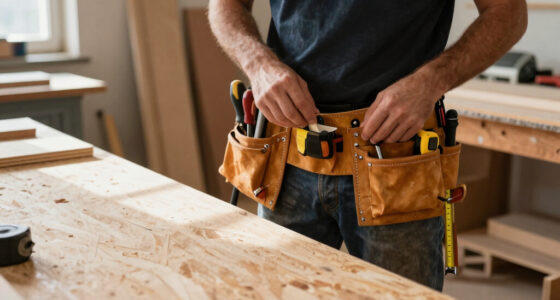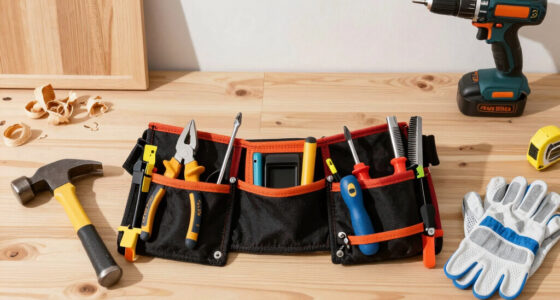

Heavy-duty tool belts are built to carry a working load, but the choice between leather and nylon comes down to how you want that load to feel and how much upkeep you will accept. Leather usually gives a firmer, structured platform for daily use; nylon tends to reduce weight and offer more flexible pocket layouts. For carpenters and other tradespeople who value a stable belt and expect years of wear, leather is often worth the added cost. For workers who prioritize lower weight, easy cleaning or replaceable pouches, nylon can be the more practical buy.

Get business pricing on tools and workshop supplies
- Business-only prices and quantity discounts
- Tax-exempt purchasing
- Multiple users, one account, clear invoices

AWP General Construction Carpenter Tool Rig, Adjustable Padded Tool Belt
- ✔ Material: 600-denier polyester
- ✔ Pockets: 18 pockets and tool loops
- ✔ Fit: One size; maximum waist measurement 50 inches

UUP Magnetic Tool Belt with 26 Pockets and Detachable Pouches
- ✔ Material: Oxford fabric
- ✔ Pockets: 26
- ✔ Magnetic zones: 3

Klein Tools 5225 Adjustable PolyWeb Tool Belt, 32–48-Inch Waist
- ✔ Model: 5225
- ✔ Material: Polypropylene
- ✔ Webbing width: 2 inches
At a Glance
| Criteria | Heavy-duty leather tool belts | Heavy-duty nylon tool belts | Winner |
|---|---|---|---|
| Durability and wear | Thick leather can take years of regular use and develop a worn-in fit; quality and stitching matter. | Reinforced nylon resists abrasion, but seams, fasteners and fabric can wear or fray over time. | Depends |
| Comfort under load | Rigid structure helps keep loaded pouches accessible, though the belt can feel heavy and stiff at first. | Lower material weight can ease fatigue; thin or overloaded designs may sag or shift. | B |
| Organization and customization | Often favors fixed, traditional layouts; sturdy loops and pockets may be less convenient to rearrange. | Commonly offers modular pouches and varied pocket layouts, subject to the model’s attachment system. | B |
| Weather and cleanup | Can handle routine jobsite use but needs drying and occasional conditioning; prolonged moisture can damage it. | Generally easier to wipe clean and less demanding after wet work; drying still matters. | B |
| Weight | Usually heavier, especially in broad, reinforced designs. | Usually lighter for comparable storage capacity. | B |
| Upfront value | Higher initial cost can pay off for long-term, frequent use. | Often costs less to start and can be good value for changing or occasional needs. | Depends |
AWP General Construction Carpenter Tool Rig, Adjustable Padded Tool Belt
For crews carrying more than a few essentials, the AWP stands out as the most complete rig in this group. Its 18 pockets and tool loops give hand tools and accessories designated places, while padded air-mesh shoulder, back and waist straps spread contact across more of the body than a simple web belt. That makes it the strongest fit in this roundup for buyers prioritizing an organized, supported carry over a low-profile setup.Compared with the UUP, AWP has fewer stated pockets and no listed magnetic zones or detachable pouches, so it is less configurable for separating fasteners and task-specific kits. Its advantage is the additional shoulder and back support, which the UUP description does not specify. Against the Klein 5225, AWP is a ready-made rig rather than a base that needs separate holders. The costs are bulk and one-size sizing: when fully loaded, the rig may feel cumbersome, and its maximum waist measurement of 50 inches does not guarantee a comfortable fit for every wearer.Carry handles are a useful detail for transporting or storing the rig between jobs, but they do not make it more compact on the body. Choose AWP when you need substantial built-in organization and padded straps; skip it if you prefer to build a lean setup from individual pouches or want a belt that packs down small.
Pros:
- 18 pockets and tool loops keep tools and accessories organized.
- Padded air-mesh shoulder, back and waist straps provide multiple contact points.
- 600-denier polyester and reinforced seams are specified for the rig.
- Carry handles simplify transport and storage.
Cons:
- One-size sizing may not fit every wearer comfortably.
- The rig may become bulky when fully loaded.
- No magnetic zones or detachable pouches are listed.
Best for: Carpenters and construction workers who want an organized, padded rig with shoulder and back straps for a broad tool load.
Not ideal for: Workers who need a minimalist belt, a clearly size-specific fit, or modular magnetic fastener storage.
Bottom line: Choose the AWP for the most complete, supported carrying setup here, provided its one-size fit and bulk suit your work.
“Choose the AWP for the most complete, supported carrying setup here, provided its one-size fit and bulk suit your work.”
UUP Magnetic Tool Belt with 26 Pockets and Detachable Pouches
The UUP is the storage specialist of this lineup. Its 26 pockets and three magnetic zones give small tools, nails and screws several places to go, while the magnetic areas can keep metal fasteners close at hand during tasks that use them repeatedly. Three detachable pockets and adjustable straps add flexibility, so we can tailor the layout more readily than the AWP’s listed fixed rig or the pouch-free Klein belt.That modularity makes the UUP especially useful for switching between jobs, but the magnets are a focused feature: they hold magnetic items, not every small part or accessory. The other pockets still matter, and the large pocket count may encourage a heavier, bulkier load. Compared with AWP, UUP offers more pockets and detachable sections but does not list padded shoulder or back straps. Compared with Klein, it arrives with extensive built-in organization, while Klein leaves pouch selection to the buyer.Its double stitching, metal rivets and thickened breathable waist belt are durability and comfort features aimed at regular carrying. The stated adjustment range is 31 to 48 inches, a narrower upper limit than AWP’s listed 50 inches. Choose UUP if you want adaptable pocket placement and often handle loose fasteners; pass if your kit is deliberately minimal or you want load support beyond the waist belt.
Pros:
- 26 pockets provide the highest stated storage count in this roundup.
- Three magnetic zones keep metal fasteners accessible.
- Three detachable pockets and adjustable straps allow layout changes.
- Double stitching, metal rivets and a breathable waist belt are specified.
Cons:
- Magnetic zones only suit magnetic items; other contents need pocket space.
- The high-capacity layout may feel bulky for a light tool load.
- The listed waist range ends at 48 inches.
Best for: Workers who carry many small tools and metal fasteners and want detachable pouches to reconfigure their layout.
Not ideal for: Minimalist users, people outside the stated 31–48-inch waist range, or anyone seeking listed shoulder support.
Bottom line: Pick the UUP when fastener access and reconfigurable storage matter more than a streamlined profile or shoulder support.
“Pick the UUP when fastener access and reconfigurable storage matter more than a streamlined profile or shoulder support.”
Klein Tools 5225 Adjustable PolyWeb Tool Belt, 32–48-Inch Waist
The Klein Tools 5225 takes a different approach: it supplies the belt, leaving storage choices to the worker. Its 2-inch polypropylene webbing accommodates tunnel-loop and slotted tool pouches, and the quick-release metal buckle makes fastening and removal straightforward. At 9.6 ounces, it is far lighter than the complete UUP belt described at 1.9 pounds, though that comparison excludes any pouches a Klein owner adds.Compared with AWP and UUP, the Klein has no stated pocket count, magnetic zones or included pouches. That is a meaningful limitation for anyone expecting to unpack a complete tool rig. Its advantage is control: buyers with compatible holders can choose the pouch arrangement they already prefer, instead of carrying a fixed collection of pockets. Corrosion-resistant hardware and a lifetime warranty covering material defects and workmanship during the product’s normal life support its role as a reusable base.The tradeoff is that belt construction alone does not provide the padded shoulder support listed for AWP, and the product depends on separately sourced compatible pouches for tool storage. Its fit is listed up to 48 inches, similar to UUP’s upper limit but without UUP’s stated lower bound. Choose Klein when your pouches are already part of the plan; choose one of the other two when you need an all-in-one organizer.
Pros:
- Lightweight belt at 9.6 ounces before adding pouches.
- 2-inch polypropylene webbing accommodates tunnel-loop and slotted holders.
- Quick-release metal buckle and corrosion-resistant hardware.
- Lifetime warranty on material defects and workmanship for the product’s normal life.
Cons:
- Pouches and holders are not listed as included.
- No built-in pockets or magnetic zones are specified.
- Does not list padded shoulder or back support.
Best for: Tradespeople who already own compatible tunnel-loop or slotted pouches and want a lightweight belt to carry them.
Not ideal for: Buyers seeking a complete rig with pockets included, magnetic fastener storage or padded shoulder support.
Bottom line: The Klein is a sensible durable base for compatible pouches, but it is not a complete heavy-duty tool belt setup on its own.
“The Klein is a sensible durable base for compatible pouches, but it is not a complete heavy-duty tool belt setup on its own.”
As an Amazon Associate we earn from qualifying purchases.
Key Differences
The biggest practical difference is how the belt supports a loaded setup. Leather’s stiffness can help pockets stay open and tools remain in predictable places, which matters when a worker repeatedly reaches for the same tools. That structure comes with extra weight and a break-in period. Nylon’s lower weight can make long shifts easier, while modular designs let users move or replace pouches as tasks change. A poorly supported nylon rig can sag, so reinforcement and fit matter as much as fabric.
Value depends on frequency of use and the cost of replacing or maintaining the setup. A well-made leather belt is a stronger long-term purchase for a worker who wears it most days and wants a stable layout. Nylon is usually the sensible value for lighter loads, varied jobs, wet or dirty conditions, or a tighter budget. Neither material guarantees durability: stitching, rivets, belt width, suspension support and how the belt is loaded affect service life and comfort.
Detailed Comparison
Durability and wear (Heavy-duty leather tool belts wins — moderate)
Leather usually wins for a fixed setup used hard over many years: thick hide can resist routine abrasion and may become more comfortable as it conforms to its wearer. Nylon can also be jobsite-tough, but fabric and seams may fray, and quality varies widely. This is a moderate difference, not a guarantee; reinforced construction and sound stitching matter more than the material label alone.Comfort under load (Heavy-duty nylon tool belts wins — moderate)
Nylon has a moderate advantage when minimizing carried weight matters, especially across a long shift. Leather’s rigid belt can stabilize loaded pockets and keep tools accessible, but the heavier material can add fatigue, and new leather may feel stiff. The better fit depends on load: heavy tools call for a properly supported belt in either material.Organization and customization (Heavy-duty nylon tool belts wins — moderate)
Nylon commonly wins for workers who change tasks or want to reposition pouches, because many systems are modular. Leather tends to suit a consistent arrangement, with robust fixed pockets and loops but fewer easy layout changes. This is a moderate gap when flexibility matters and a minor one for someone who uses the same tools in the same places each day.Weather and cleanup (Heavy-duty nylon tool belts wins — moderate)
Nylon is generally easier to wipe clean and less demanding after exposure to damp or dirty conditions. Leather can stand up to ordinary work but should be dried appropriately and may need occasional conditioning; leaving it wet can shorten its life. The gap is moderate for outdoor, messy work and minor in a dry shop.Weight (Heavy-duty nylon tool belts wins — moderate)
Nylon usually wins because its construction often weighs less before tools are added. That can help reduce fatigue, though a lighter belt that sags under a full load may be less comfortable overall. The difference is moderate for all-day wear and less important for short jobs or light loads.Upfront value (moderate difference)
Nylon commonly costs less at the outset, so it is a minor-to-moderate value win for occasional use, uncertain needs or a limited budget. Leather costs more, but frequent users may justify the premium through long service from a well-made belt. Compare construction and included pouches as well as material before deciding.Heavy-duty leather tool belts: Pros and Cons
Pros:
- Rigid support can keep frequently used tools accessible.
- Quality leather can serve for years and mold to its wearer.
- A traditional pocket layout suits workers who prefer a consistent setup.
Cons:
- Often heavier and stiffer, particularly when new.
- Usually costs more upfront.
- Needs care after getting wet and may benefit from occasional conditioning.
Heavy-duty nylon tool belts: Pros and Cons
Pros:
- Usually lighter, reducing the belt’s empty weight.
- Modular layouts can adapt to different tasks and tool selections.
- Often costs less and is easier to wipe clean.
Cons:
- Fabric, seams or fasteners can wear, especially on lower-quality models.
- Some designs sag or shift under a heavy load without adequate support.
- Material quality and attachment systems vary between products.
Who Should Choose What
Choose Heavy-duty leather tool belts if:
- You wear the same loaded setup most workdays and want stable, structured pockets.
- You prefer traditional fixed storage and are willing to pay more for a well-made belt intended for long-term use.
- You value leather’s firm feel and can maintain it after wet or dirty work.
Choose Heavy-duty nylon tool belts if:
- You want to reduce belt weight during long shifts.
- Your tool selection changes by job and you want to reposition or replace pouches.
- You need a lower-cost setup that is easy to clean and can handle varied work conditions.
Skip both if: Skip both if you carry only a few tools or need to avoid carrying weight at your waist; a small pouch, tool vest or separate tool bag may fit better.
Value for Money
Paying more for leather makes sense when the belt will see frequent, demanding use, its layout suits your trade and the construction is strong enough to justify a long service life. It is poor value if the extra weight or care will discourage you from wearing it. Nylon is the better value for occasional work, evolving tool needs or buyers who want a lighter starting setup. Assess the belt’s stitching, fasteners, support and included storage before treating either material as a bargain.
Final Verdict
Choose leather if you work regularly from a stable, heavily loaded setup and want rigid pockets that can last with proper care; its premium is justified for that user. Choose nylon if weight, modular storage, easier cleanup or lower upfront cost matter more. The biggest deciding factor is whether your daily load benefits more from leather’s structure or nylon’s lighter flexibility. For most buyers whose needs change or who are new to tool belts, a reinforced nylon system is the safer value. For an experienced daily user with a settled layout, invest in quality leather.
Frequently Asked Questions
Is a leather or nylon tool belt better for carrying heavy tools?
Either can carry heavy tools if the belt is properly reinforced and fitted. Leather’s stiffness can stabilize a consistent load, while nylon may need strong backing or suspenders to prevent sagging. Check the belt’s construction and fit for your actual load.
Is leather worth the higher price?
It can be for a frequent user who wants a structured belt and plans to keep the same setup for years. If you use a belt occasionally, need modular storage or want less weight, nylon often gives better value.
Which material is easier to maintain?
Nylon is generally easier to wipe clean. Leather needs appropriate drying after getting wet and may benefit from occasional conditioning to preserve its feel and condition.
Can nylon tool belts handle daily professional use?
Yes. A reinforced nylon belt with strong stitching, dependable fasteners and adequate support can suit daily work. Inspect the specific design and avoid overloading a belt that shifts or sags.
Black Friday Picks

Ninja Foodi DualZone Smart XL Air Fryer, 10-Quart, 6-in-1, Black, DZ550
As an affiliate, we earn on qualifying purchases.