
TL;DR

Get business pricing on tools and workshop supplies
- Business-only prices and quantity discounts
- Tax-exempt purchasing
- Multiple users, one account, clear invoices
Picking a stackable tool box system is about compatibility, durability, and the ecosystem. Focus on a brand that fits your tools, work environment, and long-term needs. A well-chosen system can last years and grow with your workload.
Prioritize compatibility within a single ecosystem to avoid costly adapters and sealing issues.
Choose systems with IP65 sealing and impact-resistant shells for durability in tough environments.
Assess your tools and workflow to select modules that optimize your efficiency and organization.
Consider total costs, including modules, accessories, and potential long-term durability, before investing.
Stay aware of ecosystem expansion trends — upgrading your system is easier when the brand offers versatile, future-proof modules.
Why Compatibility Is Your Top Priority When Buying a Stackable System
The first rule of thumb: pick a system that works with what you already have, or one you plan to grow into. Most brands lock you into their ecosystem, with proprietary latches, connectors, and footprints.
For example, Milwaukee’s PACKOUT modules won’t lock into DeWalt ToughSystem boxes without adapters. So, if you already own Milwaukee gear, sticking with PACKOUT saves headaches and extra costs. Conversely, mixing brands usually means sacrificing some seal integrity and ease of stacking.
Think long-term. If your toolbox needs to expand over five years, choose a system that offers a wide range of modules — drawers, organizers, shelves, and even accessories like workbenches or wall mounts. This investment pays off by avoiding costly system swaps down the road.
Understanding compatibility isn’t just about fitting parts together; it’s about ensuring your entire workflow remains seamless. Incompatible systems can lead to frustration, increased costs, and compromised durability — especially if you have to retrofit or replace components later. Investing in a compatible ecosystem means better integration, fewer leaks, and more reliable stacking, which ultimately saves time and money.
As an affiliate, we earn on qualifying purchases.
What to Look for in Durability and Weather Resistance
Durability isn’t just about dropping your boxes — it’s about resisting dust, water, and impact day after day. The best systems boast IP65 ratings, meaning they’re dust-tight and resistant to water jets. This level of sealing is crucial because it directly impacts the longevity of your tools and the reliability of your storage system in harsh environments. When your equipment can withstand the elements, it reduces the risk of damage, repair costs, and downtime.
Imagine a rainy day in the field. A premium IP65-rated box keeps your tools dry, unlike cheaper models that let water seep in through poorly sealed gaskets. Metal-reinforced corners, impact-resistant copolymer bodies, and heavy-duty latches add years of life to your investment. These features aren’t just about toughness; they’re about preserving the integrity of your tools and maintaining a secure, weatherproof environment for your gear.
For instance, Milwaukee’s PACKOUT boxes have a robust impact-resistant shell and sealed gaskets, supporting loads over 113 kg (250 lb). That’s a real-world advantage when stacking and rolling a fully loaded system. Such high load capacities mean you can confidently transport heavy tools without fear of failure, which is vital for efficiency and safety in demanding work settings.
However, it’s important to recognize that high durability often comes with tradeoffs. Heavier materials, such as thick impact-resistant plastics or reinforced metal corners, can add weight, making transport slightly more cumbersome. Additionally, some sealed systems may be more difficult to open quickly in urgent situations. Balancing these factors depends on your work environment and priorities — if weather resistance and longevity are paramount, investing in higher-rated systems makes sense. Conversely, if weight and quick access are more critical, you might compromise slightly on sealing, choosing lighter or more accessible options. Understanding these tradeoffs helps you select a system that truly matches your needs and reduces the risk of premature failure or inconvenience.
As an affiliate, we earn on qualifying purchases.
How to Pick the Right Modules for Your Tools and Workflow
- Assess your tools — long saws, drills, small parts, or delicate electronics.
- Map out your typical jobs — do you need quick access or long-term storage?
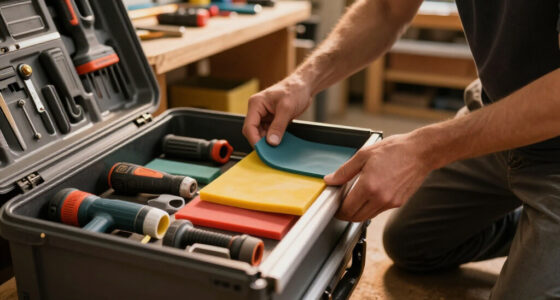
- Choose modules accordingly — large trays for power tools, small organizers for fasteners, foam inserts for delicate parts.
- Consider interior features — removable bins, dividers, or customizable foam for a tailored fit.
For example, a carpenter might prioritize wide drawers for cordless drills and saws, plus small stackable bins for screws and nails. An electrician might need compact wall-mountable organizers and robust tool trays.
Remember, selecting modules isn’t just about fitting your current tools — it’s about anticipating future needs. Modular interior systems that are adaptable allow you to reconfigure as your toolkit evolves, providing long-term value. For instance, choosing a box with removable dividers or foam inserts means you can customize the interior for delicate electronics or larger power tools, reducing the risk of damage and improving efficiency. The tradeoff here is that more complex interiors might add initial cost and complexity but pay off with better organization and tool protection over time. Prioritizing flexible modules ensures your system remains useful as your workload and toolset expand, preventing the need for frequent replacements or upgrades.
As an affiliate, we earn on qualifying purchases.
Comparison Table: Major Ecosystems at a Glance
| Brand | Modules & Accessories | Seal Rating | Load Capacity | Compatibility |
|---|---|---|---|---|
| Milwaukee PACKOUT | Large lineup: drawers, shelves, coolers, radios | IP65 | ~113 kg (250 lb) | Proprietary; adapters available |
| DeWalt ToughSystem 2.0 | Heavy-duty boxes, organizers, workstations | IP65 | ~100 kg (220 lb) | Proprietary; partial interlocking with Tanos |
| Festool Systainer³ | Stackable boxes, workstations, wall mounts | IP54/IP65 | ~60 kg (132 lb) | European footprint; adapters for older models |
As an affiliate, we earn on qualifying purchases.
Frequently Asked Questions
Which stackable system is the best for a work van?
Look for systems with wall-mount options, impact-resistant shells, and modular accessories. Milwaukee PACKOUT and DeWalt ToughSystem are top contenders, offering durability and expanding accessory lines suitable for van racking and quick access.Are Milwaukee PACKOUT and DeWalt ToughSystem compatible?
No, they are proprietary ecosystems and don’t interlock without adapters. If you want a seamless setup, stick to one brand to avoid compatibility issues and compromised seals.Is investing in a premium system worth it?
If you need long-term durability, weather resistance, and a broad accessory ecosystem, premium brands like Milwaukee or Festool are worth the extra cost. Cheaper options might save money initially but often wear out faster or lack essential features.What’s the best time to buy a system?
Look for holiday sales, Black Friday deals, or manufacturer promos. Bundles often include discounts on multiple modules or accessories, making them more affordable and a better value.Conclusion
A smartly chosen stackable tool box system turns chaos into order and work into a smoother process. Focus on compatibility, durability, and your specific needs — then build a setup that lasts for years. Your tools, your workflow, and your bottom line will thank you.Fall yard work Picks
leaf blowers
As an affiliate, we earn on qualifying purchases.