
TL;DR
Listen free for 30 days with Audible
Thousands of audiobooks and originals — cancel anytime.
Start your free trialAs an affiliate, we earn on qualifying purchases.
A rolling workbench offers mobility and combined workspace, while a tool cabinet provides organized, secure storage. Your choice hinges on how you work and your workspace setup. Both have recent upgrades, making them more versatile than ever.
Choose a rolling workbench if you need mobility and a combined workspace, especially for active jobs like auto repair or woodworking.
Opt for a tool cabinet when security, organized storage, and a fixed location matter most.
Modern units now feature modular, customizable options with integrated power and lighting.
Durability depends on materials—heavy steel for cabinets, reinforced casters for workbenches—so match your choice to your environment.
Budget wisely: investing in quality pays off with longevity and better functionality.
Why Your Workspace Needs a Clear Choice: Mobility or Organization?
When you’re tight on space or need to move around a lot, a rolling workbench shines. It combines a sturdy surface with storage, giving you a mobile workstation. If your focus is on keeping tools organized and secure, a tool cabinet offers a dedicated, lockable storage space.
Picture working on a car engine. You need to roll your workbench close to parts, then move it aside when done. That’s the flexibility a rolling workbench provides. Conversely, if you prefer a fixed spot for your tools, a cabinet keeps everything locked tight, ready for the next project.
Choosing between these options impacts your workflow efficiency. A rolling workbench enhances flexibility, allowing you to adapt quickly to different tasks or areas within your workspace. However, this mobility can sometimes come at the expense of security and stability, especially if the casters are not robust. On the other hand, a tool cabinet provides a secure, dedicated space, reducing the risk of tool theft or damage, but it may limit your ability to work dynamically across a larger area. Your decision should consider whether your work involves frequent repositioning or prioritizes long-term security and organization.
Practical takeaway: Assess your typical workflow. Do you need to move your workspace frequently? Or do you prioritize secure, long-term storage? Use this to guide your choice.
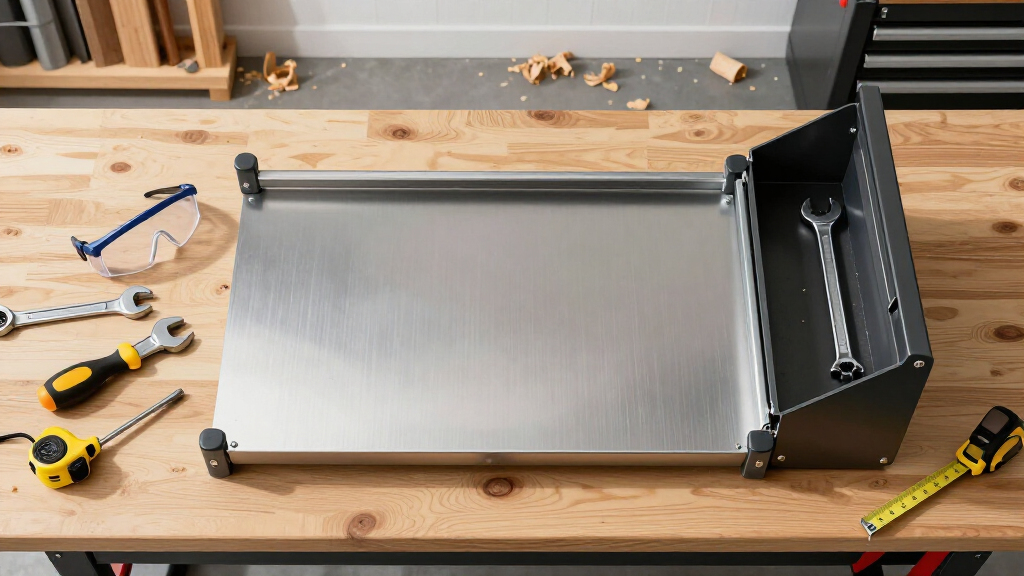
rolling workbench with integrated power
As an affiliate, we earn on qualifying purchases.
As an affiliate, we earn on qualifying purchases.
Rolling Workbench vs Tool Cabinet: The Key Differences at a Glance
| Feature | Rolling Workbench |
|---|---|
| Mobility | High — wheels make it easy to move around |
| Work Surface | Integrated or attachable, ideal for tasks |
| Storage | Combination of drawers, shelves, and compartments |
| Security | Usually lockable drawers, but less secure than cabinets |
| Cost | Typically more expensive due to mobility features |
Understanding these differences helps you weigh the tradeoffs: mobility versus security, flexibility versus stability. While a rolling workbench offers the convenience of moving your workspace to where the work is, it often involves higher costs for durable casters and sturdy construction. A tool cabinet’s strength lies in its ability to securely store tools in a fixed location, making it ideal for environments where theft prevention or dust protection is critical. Both options have their place, but your choice should align with how you prioritize these aspects in your work environment.
Practical decision framework: If you frequently need to reposition your workspace or work on large projects requiring mobility, lean toward a rolling workbench. If your priority is security and long-term storage, a tool cabinet is the better choice.
As an affiliate, we earn on qualifying purchases.
When a Tool Cabinet Outperforms a Rolling Workbench
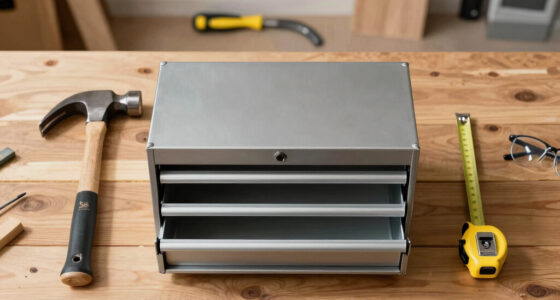
If security, maximum storage capacity, and organization are your top priorities, a tool cabinet wins. These units are built from heavy-duty steel, often with lockable drawers and doors. They’re perfect for storing hundreds of tools, from screwdrivers to power drills, in an organized fashion.
Think of a mechanic’s garage. The tools are all secured behind lockable doors, ready for use. The cabinet stays put, protecting your investments from theft or dust. Plus, many models now include modular accessories, making customization straightforward.
To make the most of a tool cabinet, consider the following practical steps:
- Invest in a model with adjustable shelving to accommodate different tool sizes.
- Use labeled drawers or bins for quick identification and access.
- Secure the cabinet in a dry, stable location to preserve its condition.
Choosing a tool cabinet over a rolling workbench often means sacrificing some flexibility. You get a more secure, stable environment that can withstand harsh conditions and heavy use. This is especially important in commercial or industrial settings where tools are valuable, and security is paramount. However, if your work demands frequent repositioning or workspace reconfiguration, a static cabinet might limit your efficiency. The decision hinges on whether security and capacity outweigh mobility needs.
As an affiliate, we earn on qualifying purchases.
Which Is Better for Heavy-Duty Use? Rolling or Sturdy as a Rock?
Heavy-duty tasks demand durable gear. Both options can handle tough conditions, but with caveats. Rolling workbenches with reinforced casters and corrosion-resistant surfaces are perfect for mobile, messy environments. Heavy-duty tool cabinets with thick steel walls and secure locking mechanisms offer maximum safety and longevity, even in harsh settings.
For example, in a busy auto shop, a rolling workbench with shock-absorbing casters helps move parts quickly without squeaking or wobbling. Meanwhile, a steel tool cabinet stays secure under heavy impact, preventing damage and theft.
Practical action steps: For heavy-duty environments, select a rolling workbench with reinforced wheels and corrosion-resistant surfaces, and regularly inspect for wear. For static, high-security needs, choose a cabinet with thick steel walls and secure locks. Ensure the units are rated for your specific workload and environment to maximize their lifespan and safety.
As an affiliate, we earn on qualifying purchases.
Frequently Asked Questions
Can I combine both a rolling workbench and a tool cabinet in my workshop?
Absolutely. Many tradespeople use a rolling workbench for active tasks and a tool cabinet for secure, long-term storage. Modular setups make it easy to customize your workspace for maximum efficiency.Which is more budget-friendly: a rolling workbench or a tool cabinet?
Basic tool cabinets often start around $200, while entry-level rolling workbenches can be similar or slightly more expensive. High-end models in both categories can reach into the thousands, depending on features and materials.Are rolling workbenches suitable for heavy-duty work?
Yes, but look for models with reinforced casters and sturdy surfaces. Heavy-duty tool cabinets with thick steel walls also handle tough environments well. Match the unit to your workload and environment for best results.Can I add accessories or customize these units?
Many modular units allow adding drawers, pegboards, or power outlets. Customization helps tailor your setup to your specific tools and workflow, increasing efficiency and comfort.How do I maintain these storage units?
Regular cleaning, lubrication of moving parts, and checking lock mechanisms keep them in top shape. For steel units, occasional rust prevention treatments can extend their lifespan.Conclusion
Your workshop setup should match how you work. If you need to move around a lot, a rolling workbench is your best bet. If security and organization top your list, a tool cabinet keeps your tools safe and tidy. Either way, choosing the right storage can make your work faster, safer, and more enjoyable. Think about your workflow — then pick what fits best.Flea & tick season Picks
flea and tick prevention
As an affiliate, we earn on qualifying purchases.