
TL;DR
Listen free for 30 days with Audible
Thousands of audiobooks and originals — cancel anytime.
Start your free trialAs an affiliate, we earn on qualifying purchases.
Properly organizing power tools in a chest saves time and extends tool life. Use clear compartments, modular inserts, and smart storage solutions to keep everything accessible and protected.
If you’re tired of digging through a cluttered toolbox or rummaging for that missing drill bit, this guide is for you. Power tools are an investment, and how you store them can make or break their lifespan. Plus, a well-organized chest speeds up your work and keeps everything safer.
Imagine opening your tool chest and seeing every drill, saw, and accessory perfectly in its place. No more chaos, no more lost parts. You’ll learn exactly how to turn your cluttered mess into a streamlined storage system that works as hard as you do.
Start with a detailed inventory to plan your storage layout.
Use modular trays, foam inserts, and magnetic strips for maximum protection and accessibility.
Arrange tools by how often you use them, keeping essentials front and center.
Label everything clearly to save time and frustration.
Regularly clean and check your storage to keep tools in top shape.
Start with a Clear Plan — Know What You Need to Store
The first step in organizing power tools in a chest is knowing what tools and accessories you have. Take an inventory — drills, saws, sanders, chargers, bits, blades, and safety gear. Categorize similar items to streamline the process. For example, group all drills together, all cutting tools in one section.
Picture your chest as a mini workshop. If you don’t know what’s inside, you’ll waste time looking for that special blade or charger. Planning helps you decide where each item should go for quick access.
power tool storage chest organizer
As an affiliate, we earn on qualifying purchases.
As an affiliate, we earn on qualifying purchases.
Use the Right Storage Tools to Maximize Space and Protect Tools
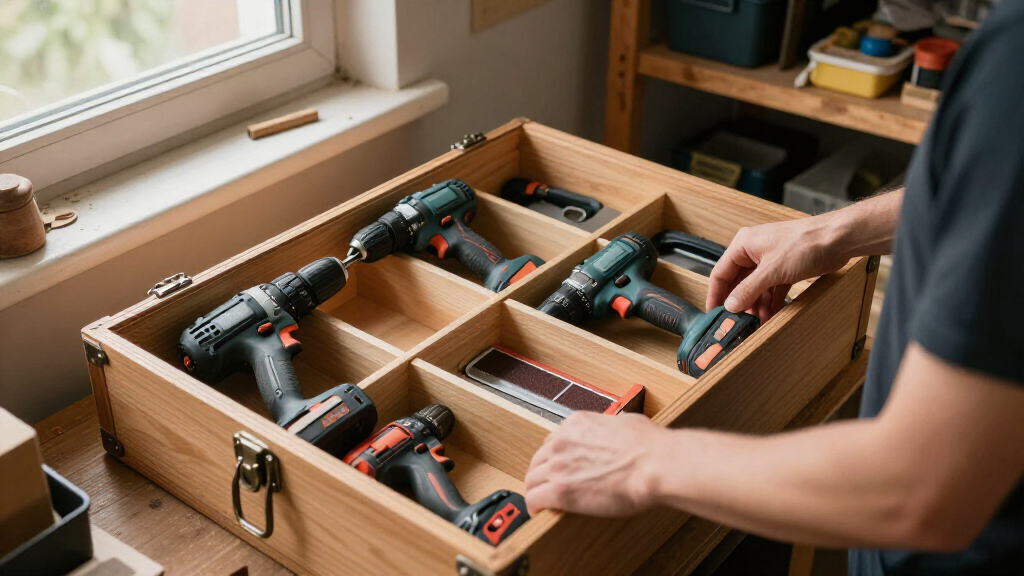
Power tools need sturdy, organized storage. Modular trays, foam inserts, and magnetic strips are your best friends. For instance, a foam insert with cutouts for each tool keeps everything snug and prevents impacts during transit.
Magnetic strips are perfect for small metal accessories like bits and screws. They’re quick to access and keep tiny parts from rolling around or getting lost. Think of your toolbox as a jewelry box — everything in its place.
Choosing the right storage tools matters because it directly impacts the longevity and safety of your tools. Proper inserts prevent accidental damage during transport or storage, while magnetic strips keep small parts from getting misplaced. However, tradeoffs include cost and flexibility; custom foam inserts can be expensive but offer excellent protection, while magnetic strips are affordable but limited to metal items.
modular foam inserts for power tools
As an affiliate, we earn on qualifying purchases.
As an affiliate, we earn on qualifying purchases.
Organize by Usage and Size — Keep Frequently Used Tools Front and Center
Arrange your power tools based on how often you use them. Daily drivers like drills should be easy to grab, ideally at the top or front. Larger, less-used tools can go in the back or on higher shelves.
This setup saves you from digging through layers of equipment every time you start a job. For example, if you’re frequently swapping drill bits, keep them in a labeled, accessible drawer.
Think of it like a kitchen — your most-used utensils should be within arm’s reach, not buried in the back. Prioritizing accessibility reduces the time spent searching and minimizes frustration, especially during urgent projects. But be aware that over-prioritizing convenience might lead to overcrowding in the front, so balance accessibility with overall organization.
magnetic tool strip for metal accessories
As an affiliate, we earn on qualifying purchases.
As an affiliate, we earn on qualifying purchases.
Comparison Table: Storage Solutions for Power Tools
| Solution | Pros | Cons |
|---|---|---|
| Modular Trays | Customizable, stackable, easy to reorganize | May need frequent re-labeling |
| Foam Inserts | Protection from impacts, tailored fit | Costly if custom-made, less flexible |
| Magnetic Strips | Fast access, keeps small parts in place | Limited to metal tools and accessories |
| Pull-Out Drawers | Organization and visibility, easy to access | Can limit space for larger tools |
As an affiliate, we earn on qualifying purchases.
Label Everything — Find Tools Instantly
Clear labels are a game changer. Use waterproof labels or paint markers to mark drawers, compartments, or individual tool spots. When you need that specific drill bit or charger, you’ll find it in seconds.
Labels serve as a quick reference, reducing the time spent searching and preventing frustration during busy workdays. They also help maintain consistency, especially if multiple people access the storage. Well-labeled storage areas foster a disciplined approach, which ultimately extends the lifespan of your tools by reducing mishandling or misplacement. The tradeoff is that labels need maintenance over time—labels can peel or fade, so periodic updates are essential for continued efficiency.
Maintain and Clean Your Storage Space Regularly
Keeping your power tool chest clean and maintained extends its life. Wipe down tools to remove dust and moisture after each use. Check foam inserts and labels for wear and replace as needed.
Imagine a dusty, rusted saw. Now, picture it shining, protected by a foam insert, ready to work whenever you need it. Regular upkeep turns your storage from cluttered to professional-grade.
Pro tip: Store your tools in a dry, cool place to prevent rust. Use silica gel packs or dehumidifiers if needed. Regularly inspecting your storage system allows you to catch issues early—such as broken latches or worn-out labels—minimizing downtime and ensuring your tools remain in top condition. Neglecting maintenance can lead to corrosion, damage, or lost tools, which ultimately increases costs and delays your projects.
Frequently Asked Questions
How do I prevent my power tools from rusting in storage?
Keep your tools dry and store them in a cool, moisture-free environment. Use silica gel packs or a dehumidifier inside your chest. Wipe tools with an oily rag after cleaning to create a protective layer that wards off rust.
What’s the best way to organize small accessories like bits and screws?
Use small, labeled containers or magnetic strips for quick access. Clear plastic drawers help you see everything at a glance, saving time and avoiding misplaced parts during busy jobs.
How can I make my power tools easier to access daily?
Place your most-used tools at the front or on the top shelf. Use shallow drawers or open trays for quick grabbing. Keep chargers and batteries nearby but organized to avoid clutter.
Is it worth investing in custom foam inserts?
Yes, if you want maximum protection and a tailored fit. They prevent impacts and keep tools from shifting during transport. However, consider the cost and whether you need frequent reconfiguration.
Conclusion
A cluttered power tool chest wastes your time and risks damaging your tools. When you organize smartly — using labels, protective inserts, and strategic placement — your work becomes faster, safer, and more efficient.
Think of your toolbox like a well-tuned machine. When every part is in its right place, you work smoother, finish faster, and protect your investment. Get organized — your tools (and your future self) will thank you.
Flea & tick season Picks
flea and tick prevention
As an affiliate, we earn on qualifying purchases.