
TL;DR

Get business pricing on tools and workshop supplies
- Business-only prices and quantity discounts
- Tax-exempt purchasing
- Multiple users, one account, clear invoices
Grass seed can germinate after heavy rain if water drains and the soil stays moist rather than saturated. If rain has displaced seed or left standing water, lawn experts recommend redistributing seed once the soil is workable, aerating waterlogged areas lightly and adding a thin protective covering.
Grass seed may still grow after heavy rain if the water drains away and the soil remains moist rather than waterlogged, according to lawn-care experts cited by Ideal Home. For lawns with pooled water or seed washed into patches, the report recommends redistributing seed, lightly aerating affected ground and covering seed to help keep it in place.
Moisture helps grass seed germinate, but standing water can leave seed short of oxygen or cause it to rot. Lawn care expert Jonathan Davis of Lawnsmith told Ideal Home that seed should germinate normally when rain has drained or soaked into the ground and the soil is moist but not saturated. The outcome depends on how well the water moves through the lawn.
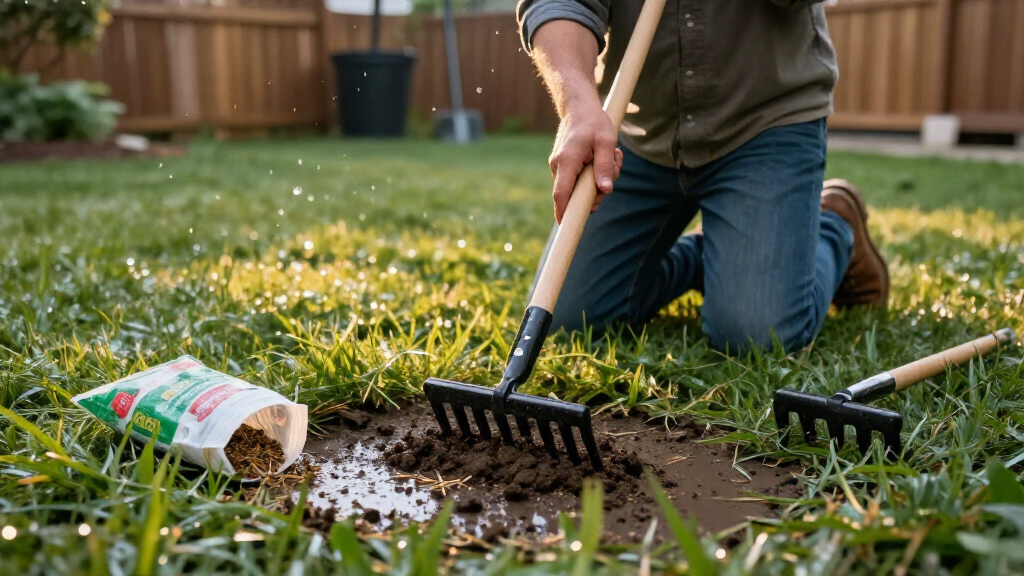
Heavy rain can also wash seed away or gather it in clumps, leaving bare soil beside areas of dense growth. Guy Jenkins, consumer manager at Johnson’s Lawn Seed, advised waiting until the ground is workable before using a rake to redistribute seed over bare areas. Jenkins said germination typically begins within seven to 21 days; patchy areas after that period can be overseeded.
For waterlogged ground, Davis recommends light aeration to make channels that help water drain, with care taken not to disturb seed or stress existing grass. A thin layer of topsoil or compost can also help hold seed in place. The report advises focusing on pooled or flooded areas rather than disturbing the whole lawn.
Keeping Rain From Leaving Bare Patches
The difference between a lawn that recovers and one that needs reseeding may depend on whether water drains and whether seed remains spread across the soil. Standing water and displaced seed can produce uneven growth, so checking the lawn after a storm gives gardeners a chance to address bare patches and pooling before deciding that a full restart is needed.
The recommendations also involve timing. Raking or aerating while the ground is saturated can disturb seed, while working once soil is workable may make it easier to redistribute seed without further damage. The report’s suggested seven-to-21-day germination window offers a period to monitor growth before assessing whether patchy areas need more seed.
Products Worth Considering

EGO POWER+ Cordless Leaf Blower, 765 CFM, with 5.0Ah Battery (LB7654)

EGO POWER+ LB6151 Cordless Leaf Blower with 2.5Ah Battery and Charger

Greenworks 80V Cordless Electric Leaf Blower with 2.5Ah Battery and Charger
As an affiliate, we earn on qualifying purchases.
Moist Soil Versus Waterlogged Ground
The Ideal Home report describes autumn as a favorable time to sow grass seed, but notes that stormy weather can complicate establishment. Seed needs moisture to sprout; the problem is excess water that pools instead of draining through the soil.
The report’s advice draws on comments from Jenkins of Johnson’s Lawn Seed and Davis of Lawnsmith. Their guidance distinguishes between seed in moist, draining ground—which may germinate normally—and seed sitting in standing water or moved by runoff, which can be lost or leave an uneven lawn.
How Much Seed Has Survived
The report does not establish how much seed survives a particular storm or how quickly a given lawn will drain. Results depend on the site and the extent of pooling, runoff and seed displacement. It is also not possible to tell immediately whether a sparse area is simply slow to germinate or has lost its seed.
The seven-to-21-day timeframe is guidance from Jenkins, not a guarantee for every lawn. The source gives no measured germination rate or comparison across soil types, seed varieties or weather conditions. Gardeners must assess their own lawn as it dries and growth develops.
Check Growth Before Reseeding
Once the soil is workable, gardeners can rake seed back across bare areas and lightly aerate places where water has pooled. A thin topsoil or compost covering may help secure seed. Monitor the lawn over the following seven to 21 days, then consider overseeding areas that remain noticeably patchy.
The report does not give a further forecast or a single timetable for all lawns. The next step depends on whether standing water clears, seed remains in place and new growth appears.
Key Questions
Can grass seed grow after heavy rain?
Yes, in many cases. According to lawn-care experts cited by Ideal Home, seed can germinate if rain drains away and the ground remains moist but not waterlogged.
What does standing water do to grass seed?
Seed left in pooled water can rot or be deprived of oxygen, while runoff may wash it away or gather it in clumps. Either can leave bare or uneven patches.
When should I rake seed back over bare areas?
Wait until the ground is workable**, then use a rake to spread displaced seed over bare areas. Avoid working saturated soil, which may make it harder to handle without disturbing the lawn.
How long should I wait to see grass grow?
Guy Jenkins of Johnson’s Lawn Seed said germination typically begins within seven to 21 days. The report recommends overseeding if the lawn remains noticeably patchy after that period.
Can covering seed help after heavy rain?
A thin layer of topsoil or compost can help hold seed in place, according to Jonathan Davis of Lawnsmith. The report also suggests a light natural covering as a way to reduce seed loss.
Source: idealhome.co.uk