TL;DR

Get business pricing on tools and workshop supplies
- Business-only prices and quantity discounts
- Tax-exempt purchasing
- Multiple users, one account, clear invoices
To stop suspenders from slipping, adjust both straps evenly so they hold your trousers at the right height without digging into your shoulders, then position the straps flat and check every attachment. Clean, sound clips need sturdy fabric to grip; if clips keep sliding, button-end suspenders or buttons added by a tailor may give you a more dependable attachment.
A suspender that slides off your shoulder halfway through a workday can turn a simple task into a string of shirt tugs and waistband adjustments. The fix usually starts with the fit and attachment, not with buying the first pair that promises a stronger grip.
This guide helps you track down why your suspenders slip, set the straps so they rest comfortably, and check whether the clips and trousers work well together. You’ll also learn when button-end suspenders, a tailor, or better-fitting trousers make more sense than another round of adjustments.
Think of suspenders like a backpack: even strong straps feel wrong if they sit in the wrong place or carry the load unevenly. A few careful checks can tell you whether you need a small adjustment, a repair, or a different attachment for the trousers you wear every day.
Identify whether the shoulder straps, clips, buttons, or waistband move before making adjustments.
Adjust both sides evenly so the trousers sit at the intended height without shoulder digging or excess pull.
Fasten clips on sturdy, flat waistband fabric, away from bulky seams, and inspect worn teeth and weak springs.
Consider button-end suspenders for regular wear when clips keep sliding; a tailor can add buttons inside the waistband.
If the waistband itself is too large, look at trouser fit or alterations because suspenders do not resize trousers.
A practical fit and fastening guide
How to Stop Suspenders from Slipping
Find where movement starts, then correct the fit, strap position, or attachment. Small, even adjustments often help; clips that keep sliding may call for button ends or a waistband alteration.
01 / Diagnose before adjusting
Find where the movement starts
Stand, bend, and reach in the shirt and trousers you normally wear. Notice whether the straps move on your shoulders, the clips or buttons shift, or the whole waistband drops. Each points to a different fix.
Straps wander or pull
Check for uneven lengths, excess slack, twisting, or a position that makes the straps drift toward your neck or outward.
Clips creep on the waist
Inspect spring tension and teeth. Look for a bulky seam, belt loop, slick surface, or delicate fabric beneath the clip.
Trousers fall as a whole
Check the trouser fit and every attachment point. Suspenders support trousers, but they do not resize an oversized waist.
A tighter strap will not repair a weak clip or an oversized waistband. Check your usual tucked-in shirt, since bunching can change how the straps sit.
02 / Fit and position
Level the trousers, then set the straps
Adjust each side in small, matching steps. The trousers should sit at the height you want while the straps rest comfortably on your shoulders, without digging in, hauling upward, or restricting movement.
Set the waistband
Put on your usual trousers and set their height before changing strap length.
Match both sides
Shorten or lengthen each strap evenly so the waistband stays level.
Lay straps flat
Check that the front and back positions feel balanced and do not bunch or twist.
Move and reassess
Sit, bend, and reach. Make another small adjustment if straps drift or pull hard.
Y-back and X-back designs are not automatically slip-proof. Choose the arrangement that lies flat, feels comfortable, and lines up with secure attachment points.
03 / Clip and waistband check
Give each clip a stable surface
Fasten clips fully onto sturdy, flat waistband fabric and away from thick seams. A strong squeeze is not a universal fix: the clip and the material it grips both matter.
Check teeth and spring
Look for bent or worn teeth, damaged edges, or a spring that no longer closes firmly.
Keep the clip flat
Avoid belt loops, bulky seams, narrow edges, slick fabric, and places where the cloth is thin or fraying.
Do not force a grip
Move the clip if it rocks or catches. Delicate fabric can snag or tear under repeated clamping.
04 / Choose the attachment
When clips keep moving, consider buttons
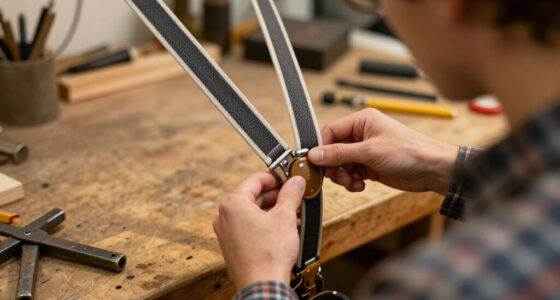
Clip-ons are convenient but depend on grip and fabric. Button-end suspenders attach to buttons sewn inside the waistband, giving regular wear a fixed attachment when the buttons are correctly positioned and secure.
| Attachment | Works well when | Check first |
|---|---|---|
| Clip-on | Clips close firmly on sturdy, flat fabric | Teeth, spring, seams, and waistband condition |
| Button-end | You want a fixed attachment for regular wear | Buttons are firmly sewn inside the waistband |
| Tailor-added buttons | Clips repeatedly slide on everyday trousers | Ask a tailor to place buttons for your suspender layout |
| Trouser alteration | The waistband itself is too loose | Suspender adjustment cannot resize trousers |
Strap drift calls for fit and position checks; clip movement calls for hardware and fabric checks; a dropping waistband calls for a closer look at trouser fit.
Quick reference / Before your day begins
A short troubleshooting order
- 1Wear your usual shirt and trousers; watch what moves as you stand, bend, and reach.
- 2Set the trouser height, then adjust both straps evenly in small steps.
- 3Smooth the straps flat and check that the adjusters have not shifted.
- 4Inspect clips, buttons, and waistband fabric; avoid seams and fragile cloth.
- 5If clips still slide, try button ends or ask a tailor to add buttons.
- 6If the waistband drops, address trouser fit or alterations.
Start with these checks to find why your suspenders slip
To stop suspenders from slipping, first find out whether the straps are sliding off your shoulders, the attachments are moving on your waistband, or the trousers themselves are falling. Those are three different problems, and each points to a different fix. Watch what happens when you stand, bend, and reach overhead.
For example, if the front clips stay fixed but the back strap wanders toward your neck, focus on strap position and adjustment. If the straps stay on your shoulders while a clip creeps down the waistband, inspect the clip and the fabric beneath it. If the whole waistband drops, the trousers may be too loose or the suspender attachment may not be holding.
Try this quick check in the trousers and shirt you normally wear. A bulky flannel tucked into work trousers can change how the straps sit compared with a thin T-shirt, so check your usual setup. Find where movement starts before you tighten anything; a tighter strap won’t repair a weak clip or an oversized waist.
- Shoulder movement: Check whether the straps are too loose, uneven, or poorly positioned.
- Clip movement: Look for weak springs, worn teeth, seams, or slick fabric.
- Waistband movement: Check trouser fit and the placement of every attachment.
That simple diagnosis saves guesswork. It also helps you avoid forcing a clip onto fabric that may snag or tear.
Products Worth Considering

Metabo HPT NT1850DG 18V Cordless 18-Gauge Brad Nailer Kit

WORX WX838L.1 Cordless Brad Nailer, 20V 18GA Brushless Nail Gun

EGO Power+ 15-Inch Battery-Powered String Trimmer with Powerload Technology
As an affiliate, we earn on qualifying purchases.
Adjust both straps so your trousers stay put without shoulder pressure
To stop suspenders from slipping off your shoulders, adjust both sides evenly until the trousers sit at the height you want and the straps lie comfortably. The straps should support the trousers, not haul the waistband upward or press into your shoulders. If you feel a sharp pull when you sit or reach, ease the adjustment and check the fit again.
- Put on your usual trousers and attach the suspenders in their normal positions.
- Set the waistband height before adjusting the straps. Suspenders cannot make an oversized waist fit correctly.
- Shorten or lengthen each side in small steps, matching the left and right strap so the waistband stays level.
- Move naturally: sit, bend, and reach. Make another small adjustment if the straps fall away or pull hard.
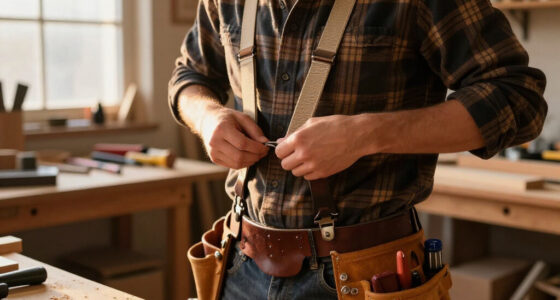
Think of the adjustment like leveling a shelf: a small change on one side can tilt the whole setup. If you shorten only one strap, the waistband may twist and one shoulder may carry more pressure. A carpenter reaching into a tool pouch, for instance, needs the straps to stay put without restricting a full overhead reach.
Comfort is the test. Straps that are too loose can wander; straps pulled too tight can strain the clips or buttons and make movement uncomfortable. Check the fit with your work shirt tucked in as you’ll wear it, since extra fabric can bunch beneath the straps.
Position the straps so they sit flat through a full workday
To stop suspenders from slipping along your shoulders, place the straps so they lie flat and remain in a comfortable position when you move. The front attachments should not sit so far apart that the straps pull outward, or so close that they bunch together. At the back, follow the design’s Y-back or X-back layout and check that the joining point or crossed straps rest comfortably.
Try the setup while wearing the shirt and trousers you use most. If a back strap is creeping toward your neck while you carry a box, the rear attachment may be too close together for your shoulders, or the straps may need a more balanced adjustment. If the straps keep drifting outward, check the front placement and whether the strap length is even on both sides.
Y-back and X-back styles are not automatically slip-proof. The better arrangement is the one that keeps the straps flat, distributes the pull comfortably, and lines up with secure attachment points. A warehouse worker who bends to lift cartons should test that position before a shift, not just while standing still in front of a mirror.
Check again after moving for a minute. Twisted straps and bunched shirt fabric can make a good fit feel unstable. Smooth the straps flat, confirm the adjustment hardware hasn’t shifted, then repeat a bend and reach. Small placement changes can improve comfort, but they cannot compensate for a clip that won’t hold or trousers that don’t fit.
Stop clips from sliding by matching them to the waistband
To stop suspender clips from sliding down, fasten them onto sturdy, flat waistband fabric, away from thick seams, and check that each clip closes firmly. Clip-on suspenders rely on the clip’s condition and the material it grips, so a sound clip can still move on slick or delicate fabric. Don’t assume a stronger squeeze is the answer.
Inspect the clips for bent teeth, worn edges, or a spring that no longer closes with firm pressure. Then check the waistband: a narrow edge, bulky belt loop, or thick seam can prevent the clip from sitting flat. For example, a clip placed across the heavy side seam of canvas work trousers may rock as you bend, while a flat section of waistband gives it steadier contact.
Move each clip to a suitable flat area and close it fully. If the fabric looks fragile, feels thin, or starts to fray, stop using that spot before the clip damages the trousers. Don’t force clips over bulky seams or clamp them onto delicate cloth just to keep the straps in place.
Clean, intact clips and sturdy fabric make a better pairing, but no general grip claim guarantees a fit on every waistband. If the clips keep moving on trousers you wear regularly, button ends can provide a fixed attachment. A tailor can add the buttons inside the waistband, placed to suit the trousers and suspender design.
Choose clips or button ends for the trousers you wear most
Button-end suspenders generally provide a more fixed attachment when the buttons are correctly sewn and positioned; clip-ons are convenient but depend on the clip and the fabric’s grip. The better choice depends on your trousers, how often you wear suspenders, and whether you want to avoid sewing buttons into the waistband.
Imagine getting dressed before a long shift. Clip-ons are quick to attach when you rotate among several pairs of trousers, but you need to check that each waistband gives them a flat, sturdy place to grip. Button ends take more preparation and require trousers with the right buttons, yet they avoid the clip’s dependence on surface grip.
| Attachment | What works well | What to check |
|---|---|---|
| Clip-on | Quick to attach and easy to move between trousers | Clip tension, teeth, fabric strength, seams, and waistband width |
| Button-end | Fixed attachment when buttons are properly placed and secured | Button stitching, button position, and compatibility with the trousers |
For daily wear, button ends may suit you if clips repeatedly slide on the same sturdy trousers. Ask a tailor to sew buttons inside the waistband if you’re unsure where they belong. For occasional use across different trousers, clips may be practical, as long as you check the hardware and avoid delicate or slippery fabric.
Neither style solves every fit problem. Suspenders hold trousers up; they don’t correct an oversized waistband. If the trousers sag even with secure attachments, try a better-fitting pair or ask about alterations.
Pick strap width and material for comfort, not just appearance
To keep suspenders comfortable and steady, choose straps that fit your shoulders and the load your trousers place on them, then check that the hardware and attachments suit the fabric. Wider straps may feel more supportive to some people, but width alone does not prevent slipping. Adjustment, placement, and a reliable grip still do the main work.
Elastic, woven fabric, and leather all behave differently as you move, and construction varies between pairs. A stretchier strap may feel forgiving when you bend, while a firmer one may keep its shape more consistently. Treat those as practical differences to check on the pair you own, not promises that one material will stay put for everyone.
For a concrete example, a tradesperson wearing a loaded tool belt may feel more pressure from the combined weight than someone wearing light trousers. If the straps dig into the shoulders, check whether the trousers are properly fitted and the attachment points are secure before choosing wider straps. Suspenders can help hold trousers, but they are not a substitute for a belt designed to carry tools.
Look over the adjusters, stitching, and connection points as well as the strap material. A loose adjuster can let one side lengthen during the day, and worn stitching can weaken a sound-looking strap. Comfort and sound construction matter more than a “no-slip” label. Claims about stronger clips or special grip can’t guarantee performance on every waistband.
Use this troubleshooting order before replacing your suspenders
To stop suspenders from slipping, fix the first point that moves: shoulder straps, clip, button, or trouser waistband. Work through the checks in order, making one change at a time so you can tell which adjustment helped. If the trousers stay at the right height after each step, you’ve found a workable setup.
- Set trouser height and fit. Start with trousers that fit around your waist; suspenders support them but do not resize them.
- Even out the straps. Adjust both sides until the waistband is level and the straps rest comfortably.
- Check placement. Smooth out twists and make sure the front and back attachments sit flat.
- Inspect attachments. Look for a weak clip spring, bent teeth, loose buttons, or damaged fabric.
- Change the attachment if needed. Try button ends or ask a tailor to add buttons when clips repeatedly slide.
Suppose your clips stay in place while you stand but slide when you lean into a tool chest. Check whether the clips sit over a seam and whether the waistband fabric is sturdy enough to grip. If the attachments don’t move but the rear strap falls away, return to the fit and placement checks instead.
Keep the changes simple and reversible at first. Don’t sew buttons yourself if you’re uncertain about their placement; a tailor can position them for your trousers and suspender design. A careful five-minute inspection can save a pair of trousers from clip damage and show you whether the problem is fit, hardware, or fabric.
Frequently Asked Questions
Why do my suspenders keep slipping off my shoulders?
The straps may be too loose, unevenly adjusted, or positioned in a way that lets them drift. Check that they lie flat and stay comfortable when you sit, bend, and reach. If the clips remain fixed while the straps move, focus on fit and positioning first.
How tight should suspenders be?
They should hold your trousers at the height you want while resting comfortably on your shoulders. They should not dig in, pull the waistband upward excessively, or restrict movement. Adjust both sides evenly and test the fit in the clothes you normally wear.
Are clip-on or button-end suspenders more secure?
Button-end suspenders provide a fixed attachment when the buttons are correctly sewn and positioned. Clip-ons are quicker to use, but their hold depends on clip condition and waistband fabric. If clips keep sliding on your regular trousers, ask a tailor about adding buttons.
How do I stop suspender clips from sliding down?
Close them fully on sturdy, flat waistband fabric, away from thick seams and belt loops. Inspect for worn teeth or weak springs, and avoid clipping onto delicate material. If they still move, button ends may suit those trousers better.
Can suspenders keep up trousers with an oversized waistband?
Suspenders can hold trousers up, but they do not make an oversized waistband fit correctly. If the trousers sag or feel loose around your waist, better-fitting trousers or alterations may solve the underlying fit problem. Check the waistband before tightening the straps further.
Should I choose Y-back or X-back suspenders?
Neither arrangement is automatically slip-proof. Choose the pair that lets the straps lie flat, feel comfortable, and attach securely to your trousers. Test the fit while reaching and bending, since a setup that works standing still may shift during a workday.
Conclusion
Start by watching what moves, then adjust the straps evenly and check the attachment against the waistband fabric. If sound clips still slide, button ends or buttons added by a tailor may give you a steadier connection. Fix the cause before replacing the gear.
A good setup should feel quiet: trousers at the right height, straps flat on your shoulders, and no need to tug at them every time you bend for a tool.