TL;DR

Get business pricing on tools and workshop supplies
- Business-only prices and quantity discounts
- Tax-exempt purchasing
- Multiple users, one account, clear invoices
A curling belt usually results from repeated bending, storage habits, or material issues. You can often flatten it with gentle methods like rolling, weighting, or conditioning, but preventing curling starts with proper storage and fit. Understanding your belt material is key to choosing the right fix.
Ever pull out your favorite leather belt and find it curling at the edges? That little twist can turn a sleek accessory into an eyesore. But it’s more than just cosmetic — curling often indicates underlying issues like storage habits, material quality, or fit problems.
In this guide, you’ll learn how to identify the cause of your belt’s curl and apply practical, proven techniques to flatten it. Plus, discover simple habits to keep your belts looking sharp and lasting longer. Whether you’re dealing with genuine leather or synthetic materials, this advice will help you restore and prevent curling effectively.
Gradual reshaping, like reverse rolling and weighting, effectively flattens mild belt curls without damaging the material.
Proper storage — hanging or loose rolling — prevents new curls and extends belt life.
Matching your repair method to the belt’s material is essential to avoid causing further damage.
Avoid high heat, soaking, and household oils — these can weaken or distort your belt permanently.
Replacing a severely damaged or peeling belt is often more cost-effective than attempting repairs.
How to Stop a Belt from Curling
A curling belt is usually a symptom of repeated bending, poor storage, moisture, dryness, or an unsuitable fit. Identify the material first, then reshape it slowly—the safest repair is controlled, patient, and gentle.
Read the shape before choosing the fix
The curl’s direction and surface condition reveal its likely cause. A simple bend can often be corrected; cracking, bubbling, peeling, or separated layers usually indicate structural damage.
Tip curls inward
Often caused by tight rolling, repeated tucking, an overly long belt tip, or wearing the belt too tightly.
Edges look wavy
Check for humidity, sweat, stretching, narrow belt loops, weak reinforcement, or early delamination.
Surface cracks or peels
This is material failure, not merely a shape problem. Limit home treatment and consider repair or replacement.
The gentle flattening sequence
Use the least aggressive method first. Repeat small corrections over several sessions instead of forcing the belt flat in one attempt.
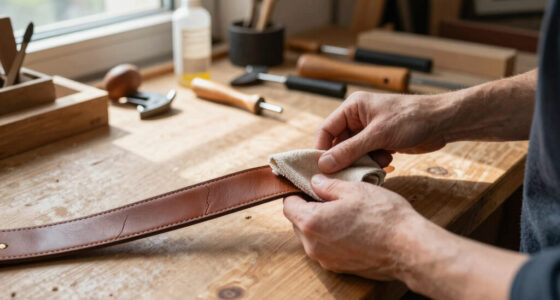
Clean and inspect
Confirm the belt is dry. Stop if layers are separating or the finish is peeling.
Reverse-roll
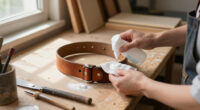
Loosely roll the curled area in the opposite direction, hold briefly, then release.
Apply flat weight
Sandwich the belt between clean, colorfast cloths and place a flat board or books above it.
Condition if suitable
For dry genuine leather only, patch-test and apply a thin coat of leather conditioner.
Rest and reassess
Leave it flat in a warm, dry room away from sunlight, radiators, and other heat sources.
One belt, one care strategy
A treatment that restores genuine leather may stain fabric or damage a synthetic coating. When the material is uncertain, begin with dry, gentle pressure and avoid chemical products.
| Material | Best approach | Conditioner | Avoid |
|---|---|---|---|
| Full-grain or top-grain leather | ✓Gradual reshaping, flat weight, leather-specific care | ~Use sparingly when dry; patch-test first | ✗Soaking, high heat, aggressive bending |
| Bonded leather | ~Temporary flattening with light, even pressure | ~Limited benefit; follow maker guidance | ✗Heavy moisture and treatment of peeling layers |
| Faux leather, PU, or vinyl | ✓Gentle pressure and material-appropriate cleaning | ✗Do not use products made for real leather | ✗Heat, oils, solvents, and forceful rolling |
| Fabric or webbing | ✓Wash only if permitted, reshape, then dry flat | ✗Leather conditioner may stain fibers | ✗High heat and excessive pressing |
| Elastic belt | ~Gentle flattening and rotation between wears | ✗Usually unnecessary | ✗Further stretching and direct heat |
Keep it straight after the repair
Storage and fit determine whether the improvement lasts. Reduce repeated stress, sharp bends, heat, and moisture before they reshape the belt again.
Hang from the buckle
Use a sturdy hook so gravity keeps the belt straight without creasing the tip.
Make a loose coil
If hanging is impossible, roll the belt widely and loosely. Never fold the tip.
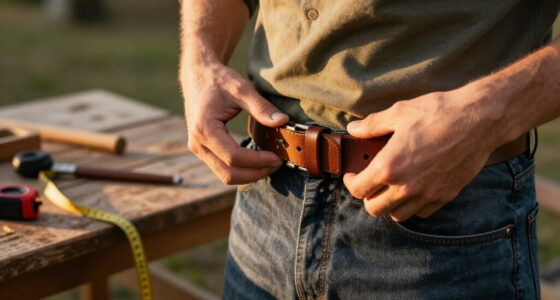
Check length and width
Avoid overly long tips, excessive tightness, and loops that scrape or fold the edges.
Rotate your belts
Resting each belt distributes wear and reduces repeated bending in the same place.
Control heat and moisture
Keep belts away from radiators, direct sunlight, damp rooms, and prolonged sweat.
Condition lightly
Treat genuine leather periodically when it feels dry—not automatically or excessively.
From symptom to a lasting solution
How to Recognize Why Your Belt Is Curling
Before fixing a curled belt, you need to know what’s causing it. Is it from repeated bending, improper storage, or material issues? The direction and appearance of the curl tell a story.
If the tip curls inward, chances are it’s caused by storage habits or over-tightening. Wavy edges often point to moisture problems or stretching. A belt that’s cracked or peeling is a sign of serious wear or poor-quality materials.
For example, a leather belt stored rolled up in a drawer is likely to develop a persistent inward curl. Meanwhile, a synthetic belt exposed to humidity may bubble, peel, or form irregular waves.
Understanding these visual clues is crucial because they reveal underlying causes that may require different remedies. For instance, a belt with cracks indicates dryness and brittleness, demanding conditioning and gentle reshaping, whereas a wavy synthetic belt might need thorough cleaning or replacement. Recognizing these signs helps you choose the most effective fix and prevents unnecessary damage from inappropriate methods.
As an affiliate, we earn on qualifying purchases.
Simple Steps to Flatten a Mildly Curled Belt
- Reverse-roll it gently: Loosely roll the curled section in the opposite direction of the curl. Hold briefly, then release. Repeat over several sessions. This gradual approach prevents damage and allows the material to adapt without tearing or cracking. The reason this works is that it encourages the fibers or layers to realign naturally, reducing the tension that causes curling.
- Apply weight with care: Lay the belt flat between clean cloths, then place a heavy book or flat board on top. Leave for 24-48 hours. This method applies even pressure, gently encouraging the material to flatten without overstressing it. Ensuring the belt is dry and clean beforehand prevents dirt from embedding or mold growth, which could worsen the condition.
- Condition leather sparingly: For genuine leather, wipe off dirt, test a small amount of leather conditioner, then apply thinly. Gently reshape the belt after conditioning to restore suppleness. Conditioning helps prevent cracking and stiffening, which can exacerbate curling, especially in dry environments. It also enhances flexibility, making reshaping easier and more effective.
- Use mild warmth cautiously: Place the belt in a warm, dry spot — no direct sunlight or heat sources. Warmth softens the material slightly, making reshaping easier. This step is useful when the belt is stiff or brittle, but excessive heat can cause warping or melting synthetic finishes.
- Seek professional help for severe cases: When cracks, peeling, or delamination occur, a leatherworker can reshape, reinforce, or repair the belt properly. Professional intervention ensures that structural damage is addressed without risking further harm, which DIY methods might inadvertently cause.
Each step respects the material’s limits, preventing further damage. Patience is key — don’t force the belt flat in one go. Gradual, gentle methods yield the best long-term results and preserve the belt’s integrity.
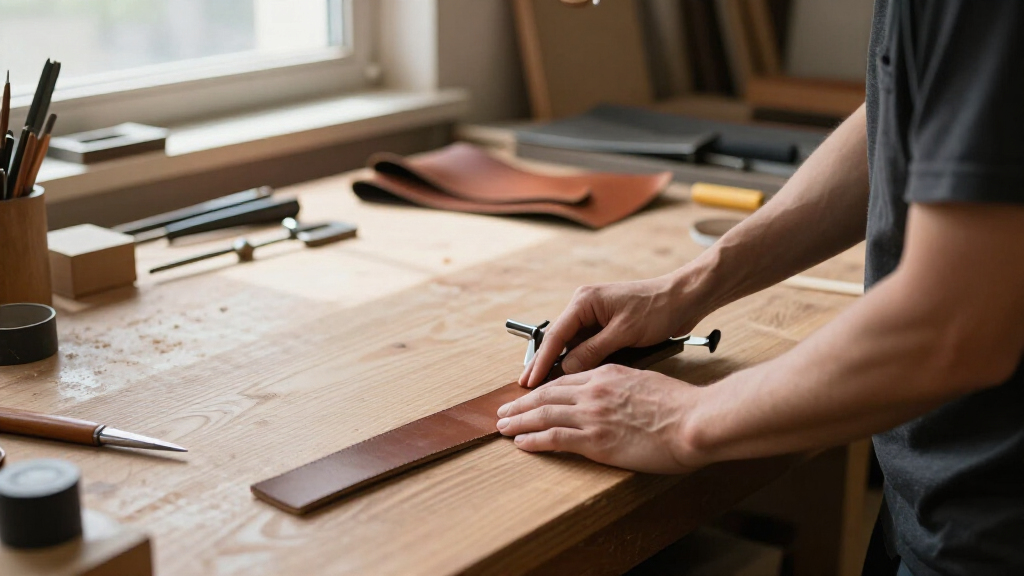
belt flattening and reshaping tools
As an affiliate, we earn on qualifying purchases.
As an affiliate, we earn on qualifying purchases.
How Different Belt Materials Respond to Fixes
| Material Type | Best Fixes | What to Avoid |
|---|---|---|
| Full-grain or top-grain leather | Gradual reshaping, conditioning, gentle weight | Soaking, high heat, aggressive bending |
| Bonded leather | Temporary flattening, light conditioning | Peeling, delaminating, heavy moisture |
| Faux leather / PU / Vinyl | Gentle pressure, cleaning with appropriate products | Applying conditioners meant for real leather, heat |
| Fabric/webbing | Wash, reshape damp, dry flat | Soaking, high heat, heavy pressing |
| Elastic belts | Gentle flattening, rotation | Stretching further, heat |
Matching your belt’s material to the right fix is crucial. For instance, leather responds well to conditioning and gentle reshaping, while synthetic belts often need careful cleaning or replacement. Understanding the material’s properties helps you avoid methods that could weaken or distort the belt further, ensuring a longer lifespan and better appearance.
belt storage hanger for leather belts
As an affiliate, we earn on qualifying purchases.
As an affiliate, we earn on qualifying purchases.
Prevention Tricks to Keep Your Belt Flat and Lasting
- Hang your belt: Use a sturdy hook or hanger, hanging from the buckle — this keeps it straight and reduces curling by preventing unnecessary folds or twists that can set in over time.
- Store flat or loosely rolled: Avoid tight rolls or folding, which can create creases that become permanent. If rolling, make a wide, loose coil, and don’t fold the tip, as sharp bends tend to cause persistent curls.
- Choose the right size: Too long? The tip will tuck and curl, especially when stored or worn. Too tight? It stresses the material, leading to deformation and curling. Proper fit minimizes strain and maintains shape.
- Limit exposure to heat and moisture: Keep belts away from radiators, direct sunlight, and humid areas because these conditions accelerate material deterioration, causing warping, cracking, or molding.
- Rotate your belts: Don’t wear the same belt every day. This distributes wear evenly, reduces stress on any single belt, and helps maintain its original shape longer.
- Condition genuine leather periodically: Light conditioning every few months keeps leather supple and less prone to becoming dry, cracked, or curling. Well-maintained leather resists deformation better over time.
- Use a keeper loop: Instead of folding or knotting the tip, use a keeper to hold it flat. This simple habit prevents unnecessary bending and maintains the belt’s smooth profile, reducing future curling.
Small habits add up. Proper storage and fit habits are your best defense against curling and premature wear. When combined, these practices significantly extend the functional and aesthetic life of your belts, saving money and effort in the long run.
As an affiliate, we earn on qualifying purchases.
What to Avoid When Trying to Fix or Store Belts
Some fixes do more harm than good. Avoid soaking belts in water, applying direct heat, or using household oils like cooking oils or petroleum jelly. These can weaken the material or cause uneven damage, leading to cracks, warping, or delamination that can be difficult or impossible to repair.
Don’t iron belts directly. High heat can scorch or warp synthetic finishes, and pressing without proper support may leave permanent impressions or deform the belt’s shape. Instead, use gentle pressure and indirect heat if necessary, or seek professional help.
Stick to gentle methods and always check manufacturer instructions if available. Improper handling can accelerate deterioration rather than prevent it.
For example, using a hairdryer on high heat to straighten a belt often causes more cracking and warping than it fixes, especially if done repeatedly or at close range. Being cautious with heat and chemicals preserves your belt’s integrity and appearance.
Latest Trends in Belt Material and Care
Newer belt materials aim to reduce curling, stretching, and damage. Reinforced layered constructions, flexible edge paints, and bio-based coatings make belts more durable and easier to maintain. These innovations are designed to combat common issues like deformation and wear, extending the functional life of your belts.
Adjustable ratchet and micro-adjustable belts reduce stress on the material, helping maintain shape longer by eliminating the need for tight holes or excessive bending. Meanwhile, eco-friendly, bio-based, and recycled materials are gaining popularity, but they often require different care routines to prevent curling or delamination. Understanding these new materials helps you adapt your maintenance to ensure longevity and performance.
For example, a belt with layered reinforcement resists stretching and curling better than traditional single-layer designs, making it a smart choice for durability. Meanwhile, some modern finishes are more flexible and less prone to cracking over time, providing better resilience against everyday wear and environmental factors.
When Repair Isn’t Worth It — When to Replace Your Belt
Sometimes, fixing a curled or damaged belt isn’t worth the effort. If the surface is peeling extensively, layers are separating, or the material is cracked across the width, attempts at repair may be futile and could compromise the belt’s safety and appearance.
Safety is another critical factor. A buckle that’s loose or a belt with deep cracks can pose risks of injury or failure, especially if stress points are compromised. Mold or persistent delamination also signals that the belt has reached a point where replacement is the most practical option. Continuing to repair such belts may lead to further damage or sudden failure, which could be inconvenient or unsafe.
For example, a leather belt with peeling surface and cracked edges that a professional can’t restore effectively indicates that replacement will save money and ensure a better appearance and safety. Choosing to replace rather than repair in these cases preserves both your style and safety, preventing potential accidents or further deterioration.
Frequently Asked Questions
Can a curled leather belt be flattened permanently?
Yes, mild curling can often be flattened with gentle methods like weighting or reverse rolling, especially if you correct storage habits. Severe curls or delamination, however, may be permanent or require professional repair. Recognizing the extent of damage helps set realistic expectations and guides appropriate intervention to avoid unnecessary expense or further harm.
Should I wet a leather belt before flattening it?
Generally, no. Excess moisture can cause staining or uneven drying, leading to more damage or warping. Use only minimal, controlled dampening if the manufacturer recommends it or consult a leather expert first. Properly managing moisture ensures the leather’s fibers stay intact and flexible, facilitating reshaping without risking deformation or mold growth.
Can I iron a belt to remove curls?
Direct ironing is risky. High heat can scorch or warp leather and synthetic finishes. Instead, opt for gentle pressure, warm environments, or professional reshaping to avoid permanent damage. Using indirect heat or specialized tools ensures the belt’s integrity is maintained while achieving a flatter appearance.
Does leather conditioner stop belts from curling?
Conditioner helps keep leather flexible and less prone to cracking, but it doesn’t fix structural issues like excessive length, delamination, or severe dryness. Proper fit, storage, and environmental control are essential for preventing curling. Regular conditioning complements these practices but should be part of a broader maintenance routine.
How long should a belt stay under weight to flatten a curl?
Start with 24–48 hours, checking periodically. Mild curls often respond well within this timeframe, but patience and gentle handling are key to avoid causing new dents or impressions. Longer durations may be necessary for stubborn curls, with careful monitoring to prevent over-compression or deformation.
Conclusion
A curled belt is usually a sign that your storage habits, fit, or material care need attention. Taking small, deliberate steps — like gentle reshaping, correct storage, and periodic conditioning — keeps your belts looking sharp and lasting longer.
Remember, a little prevention beats a costly fix. Treat your belts as you do your tools: with care, patience, and respect for their materials. That way, they’ll stay flat, durable, and ready for work or style — for years to come.
Halloween Picks
halloween
As an affiliate, we earn on qualifying purchases.