
TL;DR

Get business pricing on tools and workshop supplies
- Business-only prices and quantity discounts
- Tax-exempt purchasing
- Multiple users, one account, clear invoices
To convert waist size to belt size, measure your waist accurately, then add 1-2 inches for a comfortable fit. Always check brand-specific sizing charts for best results. This method ensures your belt fits snugly without pinching or slipping.
Ever tried to buy a belt, only to find the sizing confusing? You’re not alone. Many people end up with belts that are either too tight or flop around because they didn’t convert their waist size properly.
Getting your belt size right isn’t just about your waist measurement. It’s about understanding how belts are measured and what fits best. In this guide, you’ll learn how to accurately measure your waist, convert that into a belt size, and pick a belt that feels like it was made for you. Because a good fit isn’t just comfortable—it’s a confidence booster, whether you’re at work, out on the town, or on the job site.
Always measure your waist at the same level where you plan to wear your belt, using a flexible tape for accuracy.
Add 1-2 inches to your waist measurement to find your ideal belt size—this provides a comfortable fit for daily wear.
Check brand-specific sizing charts, especially for formal belts, as measurements can vary slightly.
Between sizes? Opt for the larger to ensure comfort and adjustability, especially if your waist fluctuates.
Adjustable belts and those with multiple holes give you the flexibility to find a perfect fit without stress.
Belt sizing field guide
How to Convert Waist Size to Belt Size
Add two inches to a tagged trouser size for a fast estimate. For the most reliable fit, measure through the belt loops and match that reading to the belt’s buckle-to-center-hole distance.
Three numbers that look similar—but mean different things
The word “waist” may refer to a label, a real wearing measurement, or a belt’s usable length. Knowing which number you have prevents the most common sizing error.
Add two inches
A size 34 label is a starting point, not a literal waistband measurement. Use 34 + 2 = size 36 belt.
Match the reading
If the tape reads 36 inches through the loops, seek a belt measuring about 36 inches to its center hole. Do not add two again.
Copy the working fit
Measure from the buckle pin or strap starting point to your most-used hole. Never measure from tip to tip.
Measure the path the belt actually follows
Wear the intended trousers, shirt, and any regular waist-mounted equipment. The tape should follow every loop at the normal wearing height.
Dress normally
Put on the trousers and layers you plan to wear with the belt.
Thread the tape
Run a flexible tape through every belt loop, just as a belt would sit.
Keep it level
Prevent twists or upward drift across the back of the waistband.
Fit it snugly
Use comfortable contact without pulling the tape drum-tight.
Match the center
Choose a belt whose center-hole distance is close to the reading.
Find your starting size in seconds
Move two inches above the trouser label, then use the metric range as a nearby guide. The belt maker’s own usable measurements should settle the final choice.
| Trouser size | Typical belt size | Approximate metric size | Quick calculation |
|---|---|---|---|
| 28 in | 30 in | 75–80 cm | 28 + 2 |
| 30 in | 32 in | 80–85 cm | 30 + 2 |
| 32 in | 34 in | 85–90 cm | 32 + 2 |
| 34 in | 36 in | 90–95 cm | 34 + 2 |
| 36 in | 38 in | 95–100 cm | 36 + 2 |
| 38 in | 40 in | 100–105 cm | 38 + 2 |
| 40 in | 42 in | 105–110 cm | 40 + 2 |
| 42 in | 44 in | 110–115 cm | 42 + 2 |
| 44 in | 46 in | 115–120 cm | 44 + 2 |
Important: S, M, L, and XL are not standardized. Compare usable measurements, not letter sizes.
Usable belt size is not total strap length
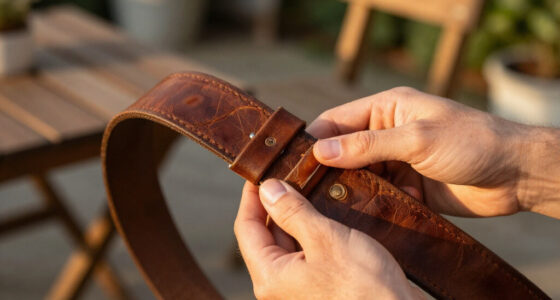
A size 36 belt may measure roughly 42–44 inches from end to end. The buckle, fold, keeper, and pointed tip add length that never represents the wearing size.
How to measure an existing belt
- 1Lay a well-fitting belt flat without stretching it.
- 2Start at the buckle pin—or the point where the strap begins at the buckle.
- 3Measure to the hole you use most often.
- 4Use that distance as the target center-hole belt size.
Aim for hole three
The middle position allows room for clothing changes, meals, and modest weight variation.
Best everyday fastening point
Convert first, round second
European belt sizes commonly use centimeters and may describe the buckle-pin-to-center-hole distance. Makers often round sizes to five-centimeter steps.
Between sizes? Size up in most traditional-belt cases, provided the larger belt still fastens near the middle hole and does not leave an excessive tail.
Check the belt type before ordering
The same measurement principles work for men’s and women’s belts. Adjustment system, width, buckle construction, clothing bulk, and wearing position matter more than the department label.
Ratchet belts
A track replaces holes. Check maximum wearable length before trimming a cut-to-fit strap.
Stretch belts
Elastic material provides extra give, but the listed fit range still matters.
Braided belts
The buckle may fasten through the weave, creating more adjustment than fixed holes.
Reversible belts
Follow the maker’s method because a rotating buckle can change usable length.
| Fit check | Traditional | Ratchet | Stretch / braided | Reversible |
|---|---|---|---|---|
| Center-hole target applies | ✓ Yes | ✗ No holes | ~ Varies | ✓ Usually |
| Brand chart takes priority | ✓ Yes | ✓ Yes | ✓ Yes | ✓ Yes |
| Maximum wearable length matters | ~ Sometimes | ✓ Critical | ~ Check range | ~ Check buckle |
From trouser label to a clean, centered fit
Use the shortcut to create a shortlist, then verify the real wearing path and the maker’s sizing convention.
Trouser label
Use the tagged size only for the plus-two shortcut.
Add two inches
Create a quick belt-size starting point.
Measure the loops
Account for rise, fabric, shirt, and work gear.
Read the brand chart
Confirm its center-hole or fit-range convention.
Fasten at center
Choose useful adjustment room in both directions.
How to Measure Your Waist Like a Pro
Measuring your waist correctly is the first step. Use a flexible, fabric measuring tape—like the kind tailors use. Wrap it around your natural waist, which is usually just above your belly button. Keep the tape snug but not tight. You should be able to slide a finger under it comfortably.
For example, if you’re wearing jeans, stand straight and relax your stomach. Wrap the tape around that spot. Record the measurement in inches. Remember, consistency is key—measure at the same spot every time to get an accurate reading.
Pro tip: Don’t suck in your stomach or push out your chest. Keep your posture natural. This number is your starting point for converting to belt size.
As an affiliate, we earn on qualifying purchases.
The Simple Formula: Waist + 1 to 2 Inches = Belt Size
Once you have your waist measurement, converting it into a belt size is straightforward. The rule of thumb is to add 1 to 2 inches. So, if your waist measures 34 inches, your ideal belt size probably falls between 35 and 36 inches.
This extra inch or two gives you enough room to buckle comfortably without strangling your hips or leaving the belt hanging loose. It’s a sweet spot—tight enough to hold your pants securely, loose enough to breathe.
Choosing the right belt size directly impacts comfort and functionality. A belt that’s too tight can cause discomfort and restrict movement, while one that’s too loose might not hold your pants properly, leading to constant readjustment. Adding 1-2 inches balances these considerations, providing flexibility for daily activities and clothing layers.
For example, if your waist is 30 inches, go for a belt between 31 and 32 inches. Simple. No need to overthink it.
As an affiliate, we earn on qualifying purchases.
Why Adding 1-2 Inches Works — The Science Behind the Fit
Why does adding 1-2 inches make your belt fit just right? Because most belts are designed with multiple holes for adjustability, and understanding this helps you avoid common pitfalls. When you add this extra length, you’re accommodating variations in clothing thickness, weight fluctuations, and different belt styles.
Most belt manufacturers measure their belts from the buckle to the middle hole, which is often considered the optimal fit for daily wear. By adding 1-2 inches, you’re effectively ensuring that the belt can comfortably reach that middle hole regardless of minor changes in your waistline or clothing layers. This flexibility minimizes the risk of buying a belt that feels too tight during colder months or too loose in warmer seasons when clothing layers shift.
Imagine wearing a belt with a suit. The extra inch or two isn’t just about comfort—it’s about maintaining a polished look without feeling restricted. The slight tolerance allows for natural movements, sitting, or even slight weight changes, which are inevitable over time. Choosing a belt with this built-in flexibility prevents the discomfort of a belt that’s too tight or the embarrassment of one that slips off.
Understanding this sizing logic also helps you select belts suited to your lifestyle. For instance, if you often wear layered clothing or engage in physical activity, opting for a slightly larger size ensures your belt remains functional and comfortable, avoiding the need for frequent replacements or adjustments. Conversely, if you prefer a sleek, fitted look, sticking closer to your waist measurement with minimal addition can enhance your silhouette and confidence.
As an affiliate, we earn on qualifying purchases.
How to Pick the Right Belt When You’re Between Sizes
- Check the belt’s sizing chart. Brands often list their belt lengths and corresponding waist sizes.
- If you’re between two sizes, choose the larger one for comfort. A belt that’s slightly too big is easier to adjust with holes or a notch.
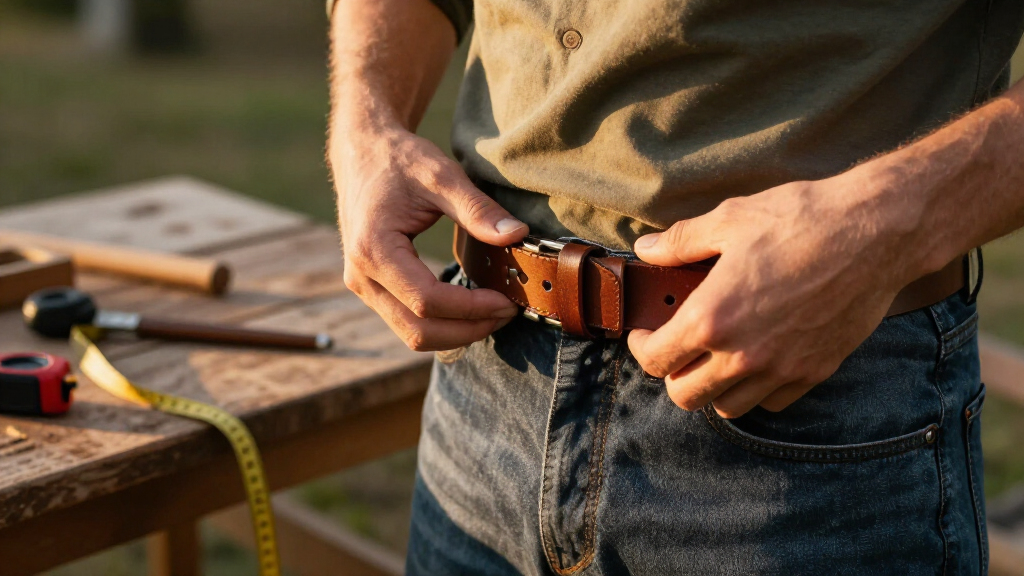
- Test in person if possible. Buckle the belt on the middle hole and see how it feels. It should feel secure but not tight.
- For casual belts with multiple holes, you have room to experiment. For formal belts, a perfect fit is more critical—aim for your waist measurement + 1 inch.
For example, if your waist is 36 inches and the belt you like measures 37 inches, it will probably fit you well. Better to go a little bigger than risk being too tight.
Remember: Comfort trumps size perfection. Your belt should hold your pants without pinching or slipping.
As an affiliate, we earn on qualifying purchases.
Belt Types and Their Unique Sizing Needs
Different belt styles can slightly alter how you choose your size. Formal leather belts are usually measured from the buckle to the middle hole, so accuracy matters more.
Casual belts, especially fabric or canvas styles, often have multiple holes and more adjustability. Some adjustable belts can be trimmed or have sliding buckles, making precise sizing less critical.
For instance, a formal belt sized at 36 inches from buckle to middle hole should fit a 36-inch waist comfortably. Casual belts with extra holes give you flexibility—aim for your waist plus 1-2 inches.
Keep in mind: If you’re between sizes, a belt with more holes or an adjustable feature can save you from buying new every season.
Understanding the nuances of different belt styles ensures you select a size that offers both comfort and style, preventing the common frustration of ill-fitting belts and enhancing your overall look and comfort.
Comparison Table: Belt Sizes vs. Waist Measurements
| Waist Measurement (inches) | Recommended Belt Size (inches) | Notes |
|---|---|---|
| 28-29 | 29-30 | Most belts here are cut to fit comfortably around this range |
| 30-31 | 31-32 | Ideal for casual and formal belts with standard sizing |
| 32-34 | 33-36 | Pick belts that add a little extra for comfort |
| 35-37 | 36-38 | Adjust for style and clothing layers |
| 38-40 | 39-42 | For larger waists, consider adjustable or custom belts |
This table simplifies choosing a belt—just match your waist to the recommended size range. Always double-check brand-specific charts for best fit.
When and Why to Size Up or Down
Choosing the right belt size isn’t just about numbers. If your waist measurement falls right between two sizes, lean toward the larger one for everyday comfort.
For example, a 34.5-inch waist? Opt for a 36-inch belt. It gives you room to move, sit, and breathe without feeling constricted.
Conversely, if you prefer your belt snug, especially under layers or thicker clothing, go for the smaller size. But avoid going too tight—your belt should hold your pants, not cut off circulation.
Remember: Comfort is king. A slightly looser belt can be more comfortable than a tight one that causes pinching or fatigue.
Adjustable and Trimmable Belts Make Life Easier
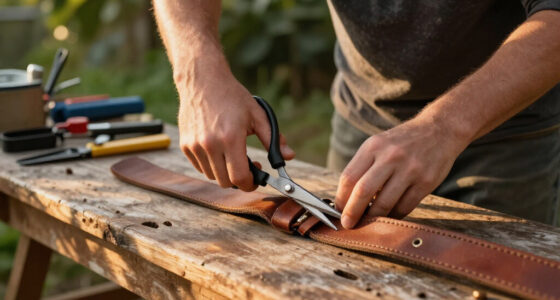
Ever bought a belt that’s just a little too long? Adjustable belts or those with sliding buckles can be trimmed or resized easily. They’re perfect if your waist fluctuates or if you’re still dialing in the perfect size.
For example, many leather belts have a few extra holes or can be cut at home with a sharp blade—just measure carefully first.
In fact, investing in an adjustable belt can save money and hassle. You’ll get a perfect fit without the need to buy multiple sizes or worry about exact measurements.
Tip: Check if the belt’s design allows for trimming or sliding adjustments before purchasing.
Frequently Asked Questions
How do I measure my waist accurately for belt sizing?
Use a flexible measuring tape, wrap it around your natural waistline (just above the belly button), keep it snug but not tight, and record the measurement in inches. Stand straight and breathe normally for the most accurate result.Should I size up or down if I’m between two sizes?
If you’re between sizes, it’s best to size up for everyday comfort. A belt slightly larger allows for easier adjustments and ensures the belt isn’t too tight during sit-downs or with layered clothing.Are belt sizes the same worldwide?
Not always. Most countries use inches or centimeters, but sizing conventions vary. Always check specific brand charts, especially if shopping internationally, to ensure a proper fit.How do I convert my waist size from centimeters to inches?
Divide your waist measurement in centimeters by 2.54 to get inches. For example, 86 cm ÷ 2.54 ≈ 33.86 inches. Use this figure as your starting point for belt sizing.What if I want a tighter or looser fit?
Adjust your belt size based on comfort preference. For tighter fits, go for your waist measurement plus 1 inch; for looser fits, add 2 inches or more. Always test in person if possible.Conclusion
Converting waist size to belt size is all about understanding your measurements and the design of the belt you choose. Remember: adding 1-2 inches to your waist measurement is the most reliable way to get a comfortable, secure fit every time.
Next time you shop, skip the guesswork. Measure, add, and go for a belt that feels just right—no pinching, no slipping, just pure comfort. Your perfect belt awaits, and now you know exactly how to find it.
Halloween Picks
halloween
As an affiliate, we earn on qualifying purchases.