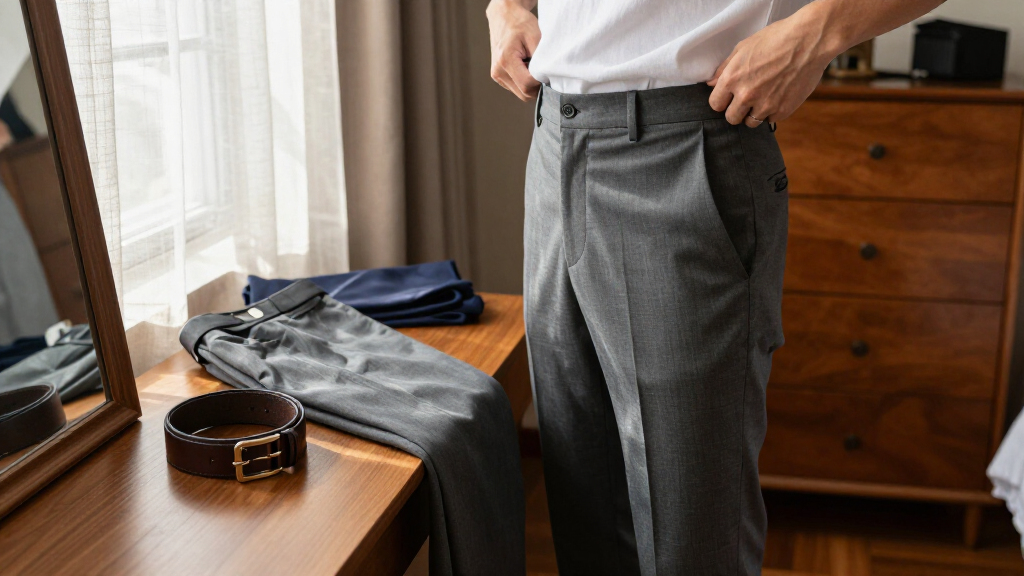

TL;DR

Get business pricing on tools and workshop supplies
- Business-only prices and quantity discounts
- Tax-exempt purchasing
- Multiple users, one account, clear invoices
The best belt width fits comfortably through your trouser loops and matches the trousers’ formality and fabric. A versatile range is 30–35 mm, but always measure loops first for the perfect fit.
Always measure your trouser loops first to pick a belt that slides through easily.
The versatile belt width for most trousers is 30–35 mm, balancing style and durability.
Match belt width to the fabric and formality: narrow for suits, wider for casual wear.
Consider body proportions and belt buckle size to enhance comfort and style.
Don’t force a wide belt into narrow loops — measure accurately, choose wisely.
How to Choose a Belt Width for Trousers
The best belt width fits comfortably through your trouser loops and matches the trousers’ formality and fabric. No fluff — just how to measure, match, and choose a belt that works with your wardrobe, your style, and your daily routine.
Five rules before you buy
According to BestBeltShop, the most versatile belt width for everyday wear is 30–35 mm because it balances formality, durability, and compatibility with most trouser types. Here is the distilled advice.
Always measure your trouser loops first to pick a belt that slides through easily.
The versatile width for most trousers is 30–35 mm, balancing style and durability.
Match width to fabric and formality: narrow for suits, wider for casual wear.
Consider body proportions and buckle size to enhance comfort and style.
Don’t force a wide belt into narrow loops — measure accurately, choose wisely.
How to measure your belt loops before you buy
Measuring your trouser loops is the first step to choosing the right belt width. Four simple steps prevent awkward fits and damaged fabric.
Grab a tool
Use a flexible ruler or a piece of string that can pass through a loop.
Slide & measure
Thread it through a typical belt loop and note the widest point of the opening.
Mark the number
Record the measurement — for example, jeans loops often measure about 33 mm across.
Choose narrower
Aim for a belt 2–3 mm narrower than the loop. A 30–32 mm belt glides through a 33 mm loop.
“A belt that is exactly as wide as the loop opening may bind because of leather thickness, stitching, or a wider belt tip. Clearance is not optional.”
Fit principle · loop clearance ruleFour bands, from sleek to rugged
Narrower belts look more refined; wider belts appear more casual. Remember: measurements vary by manufacturer, so check the actual loop opening rather than trusting labels alone.
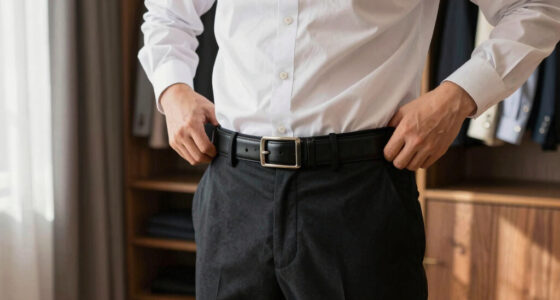
Perfect for tailored suits, dress trousers, and small belt loops. A sleek black belt pairing seamlessly with a navy suit.
Works well with chinos, smart-casual trousers, and dressier denim. Balances formality and durability for daily wear.
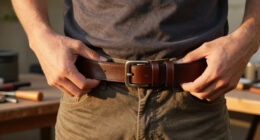
Ideal for jeans, workwear, and cords. Adds a substantial, confident feel to casual outfits.
Western or work belts. Usually too wide for standard trouser loops, but great for rugged, outdoor looks.
Match belt weight to trouser fabric
The belt’s visual weight should echo the cloth. Fine wool suits slimmer, smoother belts; denim and canvas can support wider or thicker leather.
| Trouser Type | Typical Fabric | Recommended Width | Why It Works |
|---|---|---|---|
| Suits & tailored trousers | Fine wool, lightweight cotton | 25–32 mm | Sleek and subtle; won’t overpower a tailored silhouette. |
| Chinos & smart-casual | Chino cloth | 30–35 mm | Medium width balances refinement with everyday durability. |
| Jeans & workwear | Denim, canvas, corduroy, moleskin | 35–40 mm | Heavier cloth visually supports broader, thicker belts. |
| High-rise or pleated trousers | Wool, tailored blends | 25–32 mm | A discreet belt — or side adjusters — preserves a clean waistline. |
Three factors people forget
Body & garment balance
A narrow belt creates a lighter, subtler horizontal line; a wider belt makes a stronger division between upper and lower body. Shorter torsos may prefer moderate widths. Fit and compatibility matter more than prescriptive rules.
Hardware must match
Slim belts look best with small, understated buckles; broad belts support heavier hardware. A large buckle can make even a moderately wide belt look casual.
Width ≠ thickness
A thick leather belt may not thread through close-fitting loops even if its stated width fits. Thick, stiff belts suit denim; thin, supple leather suits tailoring.
What a width change does to your silhouette
The narrow line — 25–30 mm
Creates a lighter, subtler division at the waist. Ideal for dress trousers, suits, and clean formal looks where the belt should whisper, not shout.
The wide line — 35–40 mm
Creates a pronounced division between upper and lower body. Confident with denim and workwear; risks overwhelming fine tailoring.
Quick answers, no fluff
Q — What is the standard belt width for dress trousers?
Most dress trousers work best with belts around 25–30 mm wide. They’re sleek, subtle, and won’t overpower your tailored look.
Q — How do I know if a belt will fit my trouser loops?
Measure your loops with a flexible ruler or string. Choose a belt a few millimeters narrower than that measurement for smooth, comfortable threading.
Q — Can I wear a wider belt with jeans and a suit?
Yes, but it depends on style. Wide belts (35–40 mm) suit casual jeans, while slim belts (25–30 mm) are best for suits. Mixing styles can work if done thoughtfully.
Q — Should belt width match the buckle size?
Generally, yes. Slim belts pair with small buckles for formal looks, while wider belts support larger hardware for casual or statement styles.
Q — Is it okay to skip a belt with tailored trousers?
Many tailored trousers have side adjusters or a clean waistband. If they fit well, skipping the belt can look sharp — but always consider your comfort and style preference.
Why Belt Width Matters More Than You Think
Choosing the right belt width isn’t just about style — it’s about practicality. A belt that’s too wide or narrow can cause discomfort, damage the loops, or ruin your look. When you slip a belt through your trouser loops, you want it to glide smoothly without forcing, folding, or scraping.
Imagine trying to thread a thick rope through tiny eyelets. It’s frustrating and can stretch or tear the fabric. The same applies to belts. The perfect width respects the size of your loops, supporting your trousers’ construction and your daily comfort.
According to BestBeltShop, the rule is simple: your belt must fit comfortably through the loops, with a little clearance for leather thickness and stitching. This clearance is crucial because it ensures the belt can be threaded easily without causing stress on the fabric or the belt itself. If the belt is too tight, it can strain the fabric, leading to premature wear or tearing. Conversely, if it’s too loose, it may slip or look sloppy. Therefore, understanding the importance of proper fit in belt width helps you avoid these issues, ensuring longevity and a polished appearance. Style and function go hand in hand when you get this right — a well-fitting belt supports your outfit and your comfort throughout the day.
As an affiliate, we earn on qualifying purchases.
The Standard Belt Widths and When to Use Them
Here’s a quick rundown of common belt widths and what they’re best suited for:
| Width | Style & Use |
|---|---|
| 25–30 mm | Slim, elegant. Perfect for tailored suits, dress trousers, and small belt loops. Think of a sleek black belt that pairs seamlessly with a navy suit. |
| 30–35 mm | Most versatile. Works well with chinos, smart-casual trousers, and dressier denim. A medium-width belt that balances formality and durability. |
| 35–40 mm | Casual, rugged. Ideal for jeans, workwear, and cords. Adds a substantial, confident feel to casual outfits. |
| Over 40 mm | Statement, Western, or work belts. Usually too wide for standard trouser loops but great for rugged, outdoor looks. |
Remember: measurements can vary by manufacturer. Always check the actual belt loop size before buying. A 35 mm belt might be perfect for your jeans but too wide for your tailored trousers. Choosing the right width means considering the context — what you wear it with, the occasion, and your personal style. For example, a belt that’s too wide for dress trousers can look bulky and informal, undermining a polished look. Conversely, a very narrow belt on casual wear might seem out of place or underwhelming. The key is balancing appropriateness with comfort and style. When you understand these tradeoffs, you can select a belt that enhances your outfit rather than detracts from it, ensuring you look sharp and feel comfortable in any setting.
As an affiliate, we earn on qualifying purchases.
How to Measure Your Belt Loops Before You Buy
Measuring your trouser loops is the first step to choosing the right belt width. Here’s how:
- Grab a flexible ruler or a piece of string.
- Slide it through a typical belt loop, noting the widest point.
- Mark or note the measurement.
- Compare this with belt widths — aim for a belt that’s a few millimeters narrower than your loop measurement.
For example, if your jeans’ loops measure 33 mm across, a 30–32 mm belt will slide through easily without forcing. This simple step prevents awkward fits and potential damage. Proper measurement is crucial because it directly affects how smoothly your belt will fit and how comfortable you’ll feel throughout the day. A belt that’s too wide can be hard to thread and may cause stress on the fabric, leading to tearing over time. A belt that’s too narrow might slip or look disproportionate. By accurately measuring and choosing a belt slightly narrower than your loops, you ensure ease of use and longevity. This small step can save you from frustration and wardrobe mishaps, making your belt-wearing experience more reliable and stylish.
As an affiliate, we earn on qualifying purchases.
Frequently Asked Questions
What is the standard belt width for dress trousers?
Most dress trousers work best with belts around 25–30 mm wide. They’re sleek, subtle, and won’t overpower your tailored look.How do I know if a belt will fit my trouser loops?
Measure your loops with a flexible ruler or string. Choose a belt a few millimeters narrower than that measurement for smooth, comfortable threading.Can I wear a wider belt with jeans and a suit?
Yes, but it depends on style. Wide belts (35–40 mm) suit casual jeans, while slim belts (25–30 mm) are best for suits. Mixing styles can work if done thoughtfully.Should belt width match the buckle size?
Generally, yes. Slim belts pair with small buckles for formal looks, while wider belts support larger hardware for casual or statement styles.Is it okay to skip a belt with tailored trousers?
Many tailored trousers have side adjusters or a clean waistband. If they fit well, skipping the belt can look sharp, but always consider your comfort and style preference.As an affiliate, we earn on qualifying purchases.
Conclusion
Choosing the right belt width isn’t just about looks — it’s about comfort, function, and personal style. Measure, match, and test before you buy. Your perfect belt is the one that fits smoothly, feels good, and complements your outfit every day. Now, step out with confidence — your ideal belt awaits.Fall yard work Picks
leaf blowers
As an affiliate, we earn on qualifying purchases.