
TL;DR

Get business pricing on tools and workshop supplies
- Business-only prices and quantity discounts
- Tax-exempt purchasing
- Multiple users, one account, clear invoices
A Livingetc report examines kogei, a Japanese approach to everyday objects that connects practical use with regional materials, inherited skills and makers’ judgment. Nakagawa executive vice president Tasuku Ogino says kogei is not defined by hand production or a single artisan; the report also cites a decline in Japan’s traditional craft workforce from 288,000 in 1979 to 48,334 in 2022.
Livingetc has published an explainer on kogei, a Japanese approach to everyday objects rooted in regional materials, accumulated knowledge and practical use. Drawing on comments from Tasuku Ogino, executive vice president of Nakagawa, the report says kogei is not defined simply by hand production or by a single master artisan—a distinction that changes how readers might understand craft in the home.
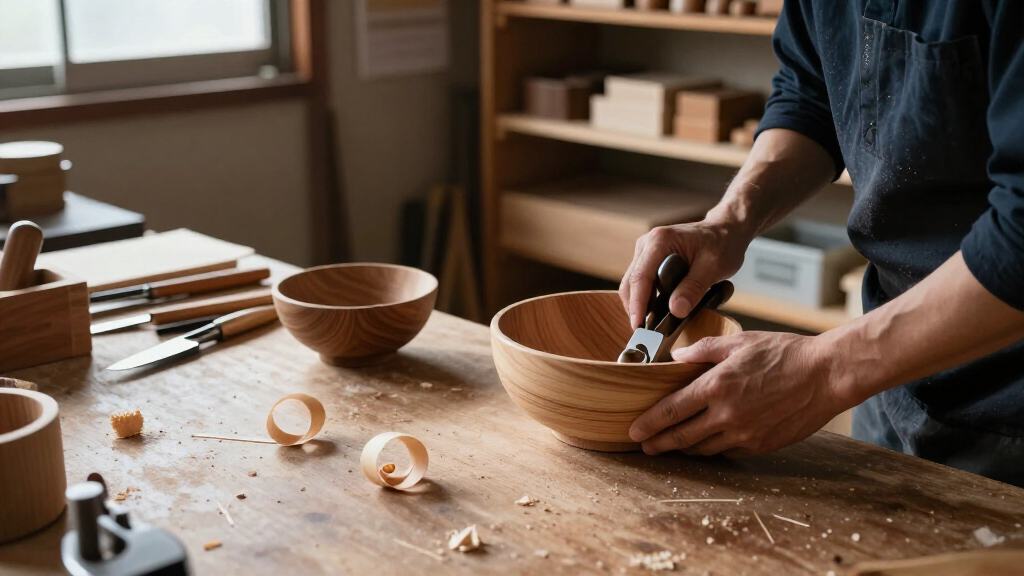
Ogino describes kogei as tools for everyday life, shaped by practical knowledge passed down through generations and by the materials and working conditions of particular regions. The objects, which can include cloth, bowls and kettles, are meant to be used rather than treated primarily as works for display. Their value, in this account, comes from the relationship between function, place and the knowledge involved in making them.
The report distinguishes kogei from both applied art made chiefly to be admired and industrial production focused on uniformity and efficiency. It also challenges the idea that an object must be made entirely by hand to qualify. Ogino says what matters is whether human judgment remains part of production, alongside local roots, inherited techniques and materials.
One example is Nakagawa’s Hana Fukin kitchen cloth, adapted from kaya, a breathable mosquito-net fabric associated with Nara. Although the cloth is woven on machines, operators adjust their work in response to humidity and differences between looms, according to the report. The example illustrates how machine use can coexist with craft knowledge and ongoing human decisions.
Why Everyday Craft Depends on Place
The report’s account makes kogei relevant to readers interested in interiors because it shifts attention from an object’s price, rarity or maker’s signature to how it works and where its methods come from. A practical item can carry a region’s knowledge without being presented as a collectible. For home displays, that perspective suggests looking at ordinary objects as part of a lived environment, rather than separating them from use.
The wider stakes are also economic and cultural. The report cites figures showing that Japan’s traditional craft industries employed 288,000 people in 1979 and 48,334 in 2022. Those figures indicate a substantial workforce decline, though the source does not provide details on how the counts were compiled or whether the definitions remained consistent. Ogino says Nakagawa hopes to sustain the regional networks behind production, not only individual items or techniques.
As an affiliate, we earn on qualifying purchases.
How Kogei Reaches Modern Homes
Nakagawa was founded in Nara in 1716 and, according to the report, now works with more than 800 workshops across Japan. The company brings traditional craft knowledge together with contemporary design for homewares. Its history provides context for Ogino’s perspective, but the source presents his explanation as the company’s account of kogei rather than a formal, universal definition.
The report also notes that Japanese has distinct words for art, craft and everyday craft, placing kogei in the latter category. Japan’s government criteria for traditional crafts begin with an expectation that items are primarily intended for everyday use. The source says 244 crafts are on the government list, with at least one in each of the country’s 47 prefectures. These details frame kogei as a broad network of regional practices, not a single look or decorative style.
As an affiliate, we earn on qualifying purchases.
Limits of the Report’s Evidence
The source is an interiors explainer, not a government assessment of the craft sector. It does not give the publication date, provide the methodology behind the employment figures, or identify how many workers are employed in particular crafts today. The scale and causes of the decline therefore cannot be established from the supplied material alone.
The account also reflects Nakagawa’s interpretation of kogei, through Ogino, rather than a cited consensus among makers, researchers or government agencies. The report offers examples but does not set out a full list of criteria for deciding whether a specific object qualifies. It is also unclear how the cited 244 traditional crafts are classified or how often the list is revised.
As an affiliate, we earn on qualifying purchases.
What to Look for in Objects
The report does not announce a new product, policy or event, and it gives no future milestone. Its practical takeaway is to examine ordinary objects through their use, regional materials, inherited methods and production decisions. In the Hana Fukin example, the cloth’s breathable weave, its adaptation for kitchen use and operators’ adjustments to changing conditions all help explain the connection between function and craft.
Readers seeking a fuller picture of the sector would need additional information from craft organizations, government sources and workshops about current employment, training and the condition of local production networks. Until then, the report’s central point is a way of understanding everyday design—not evidence that a particular intervention will reverse the workforce decline.
As an affiliate, we earn on qualifying purchases.
Key Questions
What does kogei mean?
Kogei refers, in Ogino’s account, to tools and objects for everyday life shaped by local materials, inherited knowledge and makers’ skills.
Does kogei have to be made by hand?
No. The report says hand production alone does not define kogei. Machine-made objects may fit the approach when human judgment, regional knowledge and inherited techniques remain part of their production.
Is kogei the work of one artisan?
Not necessarily. The report describes many everyday craft traditions as collaborative, with specialists handling different stages of production in the same region.
What example does the report give?
It points to Nakagawa’s Hana Fukin cloth, adapted from Nara’s kaya mosquito-net fabric. Its breathable weave suits kitchen use, while machine operators make adjustments as conditions and looms vary.
What is the reported change in Japan’s traditional craft workforce?
The report cites employment of 288,000 people in 1979 and 48,334 in 2022. It does not provide the counting methodology or comparison details beyond those years.
Source: rss
Fall yard work Picks
leaf blowers
As an affiliate, we earn on qualifying purchases.