
TL;DR

Get business pricing on tools and workshop supplies
- Business-only prices and quantity discounts
- Tax-exempt purchasing
- Multiple users, one account, clear invoices
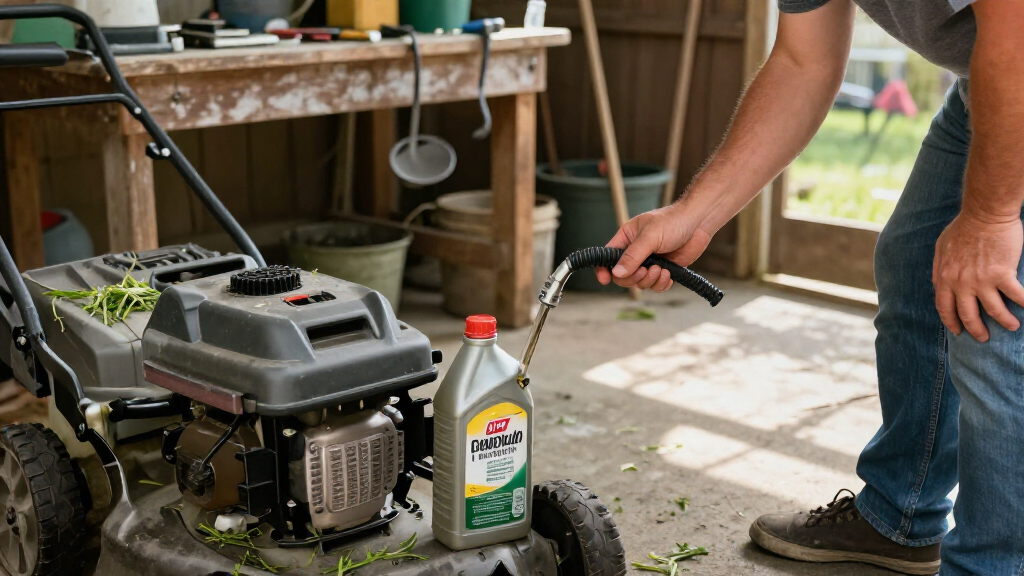
A Hunker report says most residential gas lawn mowers need their first oil change after about five hours of use, then every 50 hours or once a season, whichever comes first. Intervals vary by mower and engine, so the manufacturer’s manual is the final guide; electric mowers and many two-stroke models do not use conventional engine oil.
Most gas-powered residential lawn mowers need their first oil change after about five hours of use, followed by changes every 50 hours or once a season, whichever comes first, according to a Hunker maintenance report. The schedule is a general rule, not a universal interval: mower type, engine, working conditions and manufacturer instructions can all change when service is due.
The early first change is intended to account for the engine’s break-in period, when fine wear particles may enter the oil. After that, the report says heat, dirt and air can degrade or contaminate oil, reducing its ability to lubricate engine parts. Waiting for performance problems is not a reliable maintenance plan; damage may have started before symptoms appear.
For a typical gas mower, use the 50-hour mark or seasonal interval as a prompt to check the manual and service schedule. Count actual operating time rather than relying only on the calendar, particularly if the mower gets frequent use. The report says hot weather, dusty conditions, wet grass and rough terrain may call for more frequent oil changes than the standard schedule.
Other mower categories may have different requirements. The report describes riding mowers as often needing changes around every 100 hours, while zero-turn models may run 50 to 100 hours or longer between changes. It gives a 100-to-200-hour range for diesel engines, but also cites manufacturer-specific schedules that differ from those general figures. Two-stroke machines do not have a conventional crankcase oil reservoir to change, and electric mowers do not use engine oil.
Why Oil Intervals Affect Engine Wear
Oil-change timing affects how well an engine’s moving parts stay lubricated. Using old or contaminated oil for longer than the manufacturer recommends can leave the engine with less effective lubrication, while changing it on schedule is part of routine care. This is especially relevant for owners whose mowing hours vary from week to week: a calendar reminder alone may miss a machine that reaches its service interval early.
The figures in the report are general guidance, not a substitute for model-specific instructions. Applying a 50-hour rule to a machine with a different engine or service schedule could lead to unnecessary maintenance or a missed service. Checking the manual before buying oil or starting work helps owners follow the interval and oil requirements intended for their mower.
Products Worth Considering

DEWALT 20V MAX XR Brushless 3-Speed Oscillating Multi-Tool Kit (DCS356C1)

Metabo HPT 18V Paper Tape Cordless Framing Nailer (30° Kit) NR1890DCA

Makita XNB03M1 18V LXT Brushless Cordless 21° Framing Nailer Kit with 4.0Ah Battery
As an affiliate, we earn on qualifying purchases.
Intervals Differ by Mower Design
The report’s central distinction is between common gas push mowers and other engine designs. A standard residential mower may follow a five-hour initial change and then a 50-hour-or-seasonal schedule. Larger riding engines, zero-turn mowers and diesel equipment may have different service intervals, and brand-specific instructions can depart from broad categories.
Maintenance advice also does not apply equally to every mower. A two-stroke engine uses a different lubrication arrangement and does not have conventional crankcase oil for routine changes; an electric mower has no combustion engine oil to replace. Owners should identify the machine and engine type before following a schedule. Hunker advises checking the owner’s manual or the manufacturer’s website to confirm the exact interval.
Model-Specific Schedules Remain Key
The source gives typical ranges, not a schedule for every make, model or engine. It does not identify a specific mower whose instructions readers can apply, and it does not provide a single interval that covers every riding, zero-turn or diesel machine. The right schedule for an individual mower remains uncertain until its manual or manufacturer guidance is checked.
Operating conditions can also affect how often oil should be changed, but the report does not quantify how many hours to subtract for heat, dust, wet grass or rough ground. Owners should not treat those conditions as a precise alternative schedule; consult the manufacturer if the machine works under unusually demanding conditions.
Check the Manual Before Servicing
Before the next oil change, identify the mower’s model and engine type, then check the owner’s manual or manufacturer website for the initial break-in service, later intervals and specified oil. Keep a record of operating hours where possible and compare it with the stated schedule; also account for seasonal guidance and demanding conditions noted by the manufacturer.
If the manual is unavailable, the manufacturer may be able to provide the correct instructions from the model information. Do not assume the general five-hour and 50-hour guidance applies to a riding mower, diesel engine, two-stroke machine or electric mower. The next service date depends on that model-specific information and the mower’s actual use.
Key Questions
How often should a typical gas lawn mower’s oil be changed?
Hunker’s general guidance is to change oil after the first five hours, then every 50 hours or once a season, whichever comes first. Check the mower manual for its specific schedule.
Does a riding mower follow the same 50-hour interval?
Not necessarily. The report says riding mowers often have an interval around 100 hours, but the correct schedule depends on the engine and model. Follow the manufacturer’s instructions.
Do electric lawn mowers need engine oil changes?
Electric mowers do not use engine oil because they do not have a combustion engine. They may still require other maintenance described in their manual.
Do two-stroke lawn mowers need oil changes?
The report says two-stroke units do not have conventional crankcase oil reservoirs to change. Check the machine’s manual for its lubrication and fuel requirements.
Can mowing conditions affect how soon oil needs changing?
Yes. The report identifies heat, dust, wet grass and rough ground as conditions that may call for more frequent changes. It does not give a universal adjustment, so consult the manufacturer’s guidance for your mower.
Source: hunker.com