TL;DR

Get business pricing on tools and workshop supplies
- Business-only prices and quantity discounts
- Tax-exempt purchasing
- Multiple users, one account, clear invoices
A DIY featured by Hunker shows how to turn two fluted bowls from Dollar Tree and glass taper candleholders into vintage-style decorative planters. The project uses paint or primer and antique wax for its finish; prices and product availability may vary.
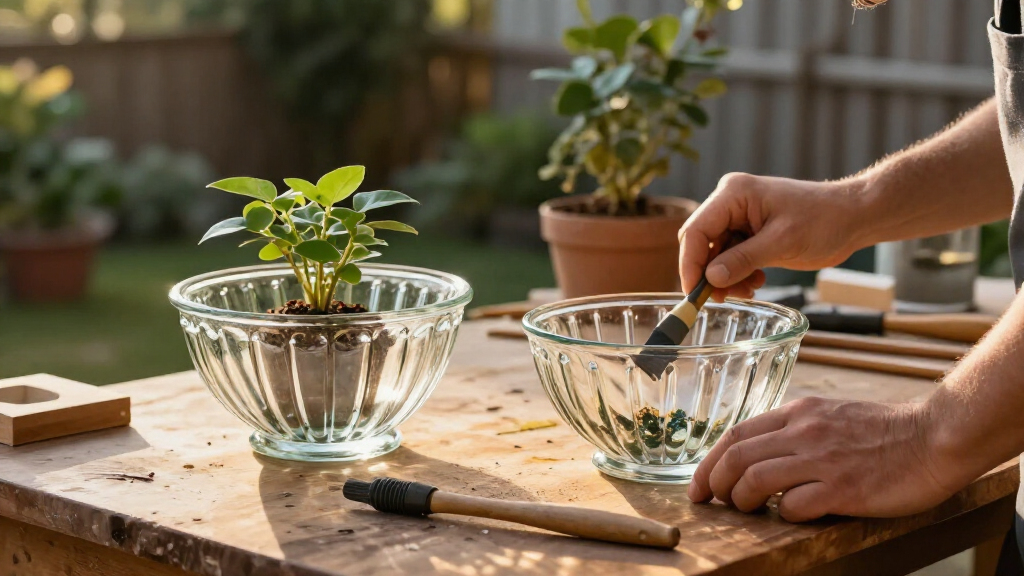
Hunker has reported a Dollar Tree DIY that turns two clear fluted bowls and glass taper candleholders into a pair of vintage-style decorative planters. The project, designed by Facebook creator She’s So CraftDee, uses glue, paint or primer, and antique wax to give inexpensive glass pieces a coordinated, aged finish.
The source lists a two-pack of Carters Corner Clear Flared Bowls from Dollar Tree, priced at $2 in the report, and three glass taper candleholders listed at $1.25 each. Other materials include a hot glue gun, a paint sponge, antique wax, and a choice of primer, acrylic paint, or chalk paint. These prices reflect the report and may change by store, location, or date.
For the shorter planter, the maker applies hot glue to the rim of one candleholder and presses a bowl onto it. For the taller version, two candleholders are glued together at their openings, and the second bowl is attached to the base of one holder. The assembled pieces are then coated with the selected primer or paint, using additional coats if needed for even coverage.
After the base coat dries, antique wax is lightly sponged over each planter and wiped back with a paper towel. Hunker says the creator used Bulls Eye 1-2-3 Plus white primer spray and Waverly Inspirations Chalk Paint Wax; the report lists them at $11 and $7.27, respectively. The finished pieces can hold a real plant cutting or a faux one, according to the report.
A Low-Cost Decorative Alternative
The project offers readers a way to make coordinated home decor from inexpensive glassware rather than buying finished planters. Its appeal is chiefly decorative: the stacked candleholders create different heights, while the paint and wax treatment gives the clear bowls a more aged appearance.
The listed materials also make the idea adaptable. The source says primer, acrylic paint, or chalk paint can be used as the base, and similar wax products are available in other colors. However, the reported prices are not a guarantee of current cost, and the finished items are handmade rather than professionally manufactured planters.
Products Worth Considering

DEWALT 15 Amp 8-1/4-Inch Compact Portable Jobsite Table Saw (DWE7485)

DEWALT 10-Inch Jobsite Table Saw with Rolling Stand (DWE7491RS)

EGO Power+ 9‑Gallon Wet/Dry Shop Vacuum with Remote Control (WDV0900) – Battery Not Included
As an affiliate, we earn on qualifying purchases.
How the Two Heights Are Built
The design depends on repurposing bowls as planter tops and candleholders as supports. One holder makes a short pedestal; joining two holders produces the taller base. The source describes the approach as simple and suitable for novice crafters, though that is the report’s characterization rather than a tested assessment of difficulty.
The finish is central to the vintage look. The creator applies a base coat first, then adds antique wax unevenly and wipes away some of it. Hunker explains that the wax product used is a water-based chalk paint that also acts as a sealant. The report does not provide details about drainage or long-term outdoor use, so the planters are best understood as decorative pieces unless adapted for a plant’s growing needs.
“The construction process is simple”
— Hunker, describing the project
Drainage and Durability Details
The source does not say whether the bowls have drainage holes, how well the glued joints hold over time, or whether the finished planters are suitable for outdoor exposure. It also does not provide a full test of the paint and wax finish when exposed to water. Those details matter for anyone planning to use the pieces with live plants rather than as decorative containers.
Prices and stock are also subject to change. The report gives specific retailers and prices for the materials, but does not confirm current availability or whether the same products are sold at every location.
Check Materials Before Planting
Anyone recreating the project can check local store prices and product labels before buying, then allow the paint and wax to dry fully according to their packaging. Before adding a live plant, they should determine whether the bowl drains and whether the finish can tolerate moisture; otherwise, a nursery pot or faux cutting can keep the decorative vessel dry. The source provides no follow-up testing or durability results, so those practical details remain for makers to verify.
Key Questions
What materials does the planter project use?
Hunker lists two fluted bowls, three glass taper candleholders, hot glue, paint or primer, and antique wax. A paint sponge and paper towel are used to apply and wipe back the wax.
How are the two planters made different heights?
The shorter planter uses one candleholder as a base. The taller one uses two candleholders joined together before the second bowl is attached.
Does the report say the planters are suitable for live plants?
It says they can be filled with a real or faux cutting, but does not explain whether the bowls have drainage or how the finish handles water. Check those details before using a live plant.
Are the listed prices current?
The article gives prices reported for the materials, including $2 for the bowl two-pack and $1.25 per candleholder. Prices and availability can change by retailer, store, and date.
Source: hunker.com