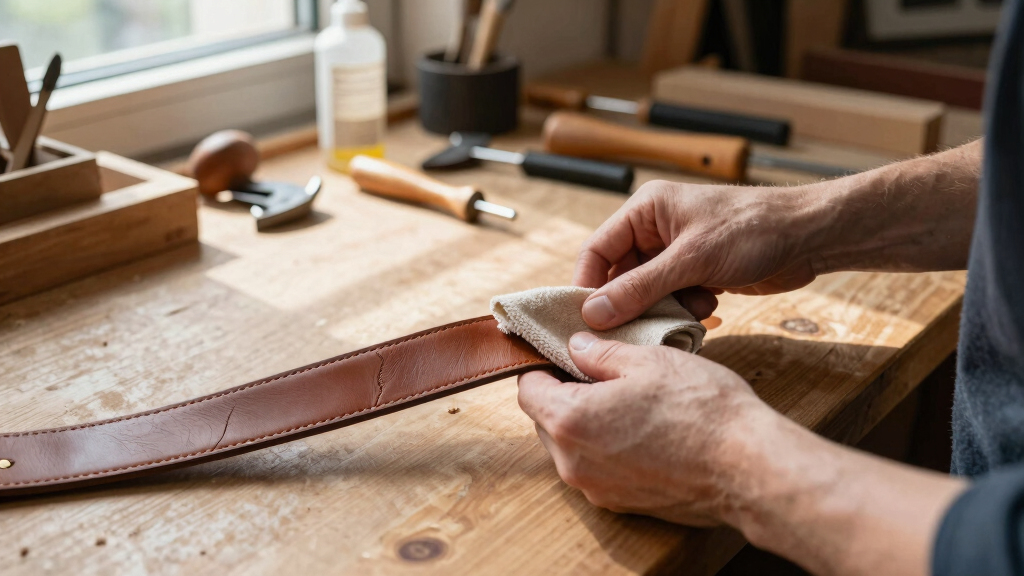

TL;DR

Get business pricing on tools and workshop supplies
- Business-only prices and quantity discounts
- Tax-exempt purchasing
- Multiple users, one account, clear invoices
Regular cleaning and conditioning keep leather belts supple and looking fresh. Use gentle cleaning, quality conditioners, and proper storage to prevent cracks and fading over time.
Use the right type of cleaner and conditioner for your leather belt to avoid damage.
Clean your belt with a soft, dry cloth regularly and condition every 3-6 months.
Avoid excess water, heat, and plastic storage to preserve leather’s flexibility and appearance.
Choose conditioners based on your belt’s dryness and desired finish—mink oil, neatsfoot, or creams.
Proper storage and regular maintenance can extend your belt’s life by years.
How to Condition and Clean Leather Belts
A well-worn belt should gain character—not cracks. Gentle cleaning, measured conditioning and breathable storage preserve its flexibility, finish and story for years.
Know the leather before you treat it
Different surfaces respond differently to moisture, friction and oils. Full-grain and top-grain leather accept careful conditioning; suede and nubuck need specialist dry methods.
Full-grain
The strongest, least processed leather. It develops a rich patina and generally needs minimal, gentle intervention.
Soft cloth · light conditioner · avoid over-treatmentTop-grain
A smoother, more processed finish that still benefits from routine cleaning and a compatible leather cream.
Patch test · mild cleaner · moderate conditioningSuede + nubuck
Delicate raised fibres stain easily. Water and ordinary conditioners can flatten the nap or leave permanent marks.
Special brush · suede cleaner · no standard oilsClean without stripping natural oils
The goal is controlled dirt removal—not saturation. Work gently, use very little product and allow the belt to dry at its own pace.
Dust
Wipe the entire belt with a soft, dry cloth or suitable soft brush.
Test
Try cleaner on a hidden spot. Stop if colour or texture changes.
Clean
Use a barely damp cloth with mild soap or leather-specific cleaner.
Pat dry
Blot away moisture with a clean cloth. Never twist or wring the belt.
Air dry
Lay flat or hang naturally, away from radiators and direct sunlight.
Excess water can cause warping and stiffness; direct heat drives out oils and encourages cracking.
Give the leather a drink—not a bath
Apply a small amount with a soft cloth in circular motions. Let it absorb, then buff away residue. Dry climates may require more frequent care; humid conditions usually require less.
Conditioning spectrum
Aim for a supple feel and healthy sheen—never a greasy surface.
Match the treatment to the finish
Leather-specific formulas are the safest default. Oils may deeply soften and darken; creams offer more controlled nourishment and polish.
| Product | Best use | Softening | Finish effect | Caution |
|---|---|---|---|---|
| Leather cream | Routine care and light dryness | Controlled sheen | Choose a compatible colour or neutral formula | |
| Mink oil | Dry, rugged smooth leather | May darken | Apply sparingly and always patch test | |
| Neatsfoot oil | Very dry, sturdy leather | Often darkens | Too much can oversoften or saturate | |
| Household oils | Not recommended | Unpredictable | Can clog, discolor or become rancid | |
| Suede conditioner | Only when specified for suede | Nap-safe if compatible | Standard leather oils are unsuitable | |
| Harsh cleaner | Avoid | Strips finish | May cause fading, dryness and cracks |
Store it so the shape can breathe
Storage is part of maintenance. Reduce trapped moisture, deep bends and heat exposure to protect both the leather fibres and the belt’s silhouette.
Hang or lay flat
Preserve the belt’s shape and avoid tight coils that create permanent creases.
Choose cool and dry
Keep it away from sunny windows, radiators and damp rooms where mould can develop.
Skip plastic bags
Use breathable storage. Plastic can trap moisture against the leather surface.
The durability chain
Small, consistent actions protect the leather’s natural structure and create a better-looking patina over time.
Leather belt care FAQ
When in doubt, choose the gentlest compatible method, use less product and allow more drying time.
How often should I clean and condition a belt?
Dry-wipe weekly and condition every 3–6 months. Increase care modestly after harsh exposure or during very dry weather.
What if the belt gets soaked?
Pat it dry immediately, reshape it and air dry away from heat. Condition only after it is fully dry.
Can I use olive or coconut oil?
It is safer not to. Household oils can darken, clog or discolor leather. Use a product formulated for leather.
How should I handle a stubborn stain?
Use a stain-appropriate leather cleaner after a hidden patch test. Seek professional help for valuable or delicate belts.
Is waterproofing spray safe?
Only use a spray explicitly designed for the leather type, and follow the maker’s application and ventilation instructions.
Can severe cracks be repaired?
Conditioner may improve dryness, but deep structural cracks usually need professional restoration and may remain visible.
Care for the material, preserve the story.
Regular dusting, restrained cleaning, compatible conditioner and breathable storage keep a leather belt flexible, polished and crack-resistant for years.
The Real Deal: What Kind of Leather Are You Caring For?
Not all leather belts are the same. Full-grain leather, the toughest and most natural, develops a beautiful patina over time but needs gentle care. Top-grain leather is slightly processed but still benefits from regular maintenance. Suede and nubuck, on the other hand, are delicate and require different cleaning methods—water is a big no-no here.
Understanding your leather type is crucial because each has different sensitivities and responds differently to cleaning and conditioning. For example, full-grain leather benefits from minimal intervention—over-conditioning or harsh cleaners can strip its natural oils or cause discoloration. Suede and nubuck, which have a velvety surface, can be easily stained or damaged by water or abrasive tools, so they require specialized cleaning methods like soft brushes and specific cleaners. Knowing these distinctions prevents accidental damage and ensures your belt ages gracefully, maintaining its integrity and appearance over time.
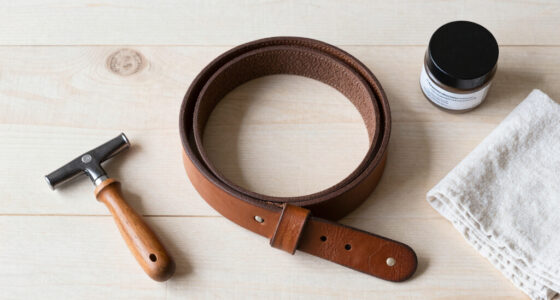
leather belt cleaner and conditioner kit
As an affiliate, we earn on qualifying purchases.
As an affiliate, we earn on qualifying purchases.
How to Clean Your Leather Belt Without Ruining It
- Start with a dry, soft cloth. Gently wipe off dust and loose dirt. It’s like dusting a piece of artwork—no harsh scrub.
- If dirt persists, dampen a cloth with a tiny bit of mild soap or a specialized leather cleaner. Test first on a hidden spot to make sure it doesn’t discolor.
- Gently wipe the entire belt, focusing on stained or grimy areas. Avoid soaking the leather — too much water causes stiffening and cracks.
- Use a clean, dry cloth to pat dry. Let it air dry naturally, away from direct sunlight or heat sources like radiators. Think of it like drying a wet pair of shoes — slow and gentle.
Proper cleaning is about balance: removing dirt without stripping away natural oils or causing damage. Over-cleaning can lead to dryness and cracking, especially if harsh chemicals are used or if the leather is soaked. Conversely, insufficient cleaning allows dirt and oils to embed, accelerating wear. The key is to understand the tradeoff: thorough cleaning preserves appearance and prevents long-term damage, but excessive or aggressive cleaning can accelerate deterioration. Using gentle, leather-specific products and techniques helps maintain this balance, ensuring your belt stays supple and resilient. For instance, a quick wipe after outdoor exposure prevents dirt buildup that can abrade the surface over time. Remember, the goal is to keep the leather’s natural moisture and finish intact—this careful approach prolongs the life and maintains the aesthetic of your belt.
best leather belt cleaning products
As an affiliate, we earn on qualifying purchases.
As an affiliate, we earn on qualifying purchases.
Why Conditioning Is Your Belt’s Best Friend
Conditioning leather is like giving it a drink of nourishment. Leather conditioners, often containing natural oils like mink or neatsfoot, help keep the material soft, flexible, and resistant to cracks. Over time, leather loses moisture, especially in dry environments or with frequent use. Without proper conditioning, the leather can become brittle, leading to cracks and a significantly shortened lifespan. Conversely, over-conditioning or using the wrong products can clog the leather’s pores, trapping dirt and excess oils, which may cause a greasy or sticky surface and even degrade the leather’s natural breathability. The key is finding the right balance—regular, moderate application maintains softness and flexibility without damaging the material. For example, in dry climates or during winter months, more frequent conditioning prevents the leather from drying out and cracking. In humid environments, less frequent treatment helps avoid excess moisture buildup, which can lead to mold or deterioration. Proper conditioning not only restores moisture but also enhances the leather’s natural appearance, giving it a healthy sheen and a more resilient structure. It’s a delicate balance: too little, and the leather dries out and cracks; too much, and it can become sticky or discolored. Consistent, appropriate conditioning preserves the natural properties of your leather, allowing it to age gracefully while maintaining its strength and flexibility, ultimately extending your belt’s lifespan and appearance.
As an affiliate, we earn on qualifying purchases.
Frequently Asked Questions
How often should I clean and condition my leather belt?
Clean with a dry cloth weekly and condition every 3-6 months, more often if exposed to harsh conditions or dry air. Regular maintenance keeps the leather supple and prevents cracks.Can I use household oils like olive or coconut oil on my leather belt?
While DIY solutions are tempting, they can clog or discolor leather. It’s safer to stick with products formulated for leather care, which are designed to nourish without causing damage.What do I do if my leather belt gets soaked?
Pat it dry immediately with a soft cloth. Let it air dry away from heat or sunlight. Once dry, apply a conditioner to restore moisture and prevent cracking.How do I remove stains from my leather belt?
Use a leather-specific cleaner suited for the stain. For stubborn spots, test on a hidden area or consult a professional to avoid worsening the damage.Is waterproofing spray safe for leather belts?
Yes, but only use sprays designed for leather. Follow the manufacturer’s instructions closely to add water resistance without affecting breathability or finish.As an affiliate, we earn on qualifying purchases.
Conclusion
A leather belt is more than an accessory—it’s a tool that needs care to last. Regular cleaning, conditioning, and smart storage keep it flexible, shiny, and crack-free. Treat your belt like a trusted partner, and it’ll serve you well for years to come.Fall Picks
fall essentials
As an affiliate, we earn on qualifying purchases.