
TL;DR

Get business pricing on tools and workshop supplies
- Business-only prices and quantity discounts
- Tax-exempt purchasing
- Multiple users, one account, clear invoices
Measuring your waist correctly involves using a flexible tape at your natural waist, taking multiple readings, and adding 1-2 inches for a comfortable belt fit. Recent trends include adjustable belts and digital tools for precision.
Ever put on a belt and felt it was just a little off? Chances are, your waist measurement isn’t quite right. Measuring your waist correctly is the first step to finding a belt that fits perfectly, feels comfortable, and lasts longer. No fancy tools needed—just a simple tape measure and a few tips to get it right.
In this guide, you’ll learn how to identify your natural waist, use the right measuring tools, and apply recent trends that make fitting belts easier than ever. Whether you’re shopping for a durable work belt or a sleek formal strap, these steps will keep your waist measurement spot-on.
Always measure your natural waist at the narrowest point for accuracy.
Use a flexible, non-stretch tape and measure over thin clothing or bare skin.
Take multiple measurements and average them before choosing your belt size.
Add 1-2 inches to your waist measurement to find the right belt size for comfort.
Modern adjustable belts and digital tools can make fitting easier and more precise.
How to Measure Your Waist for a Belt
A comfortable, durable belt starts with one honest measurement. Find your natural waist, use a flexible tape, repeat the reading, then add a small comfort margin to choose the right size.
The usual comfort allowance for translating a direct waist measurement into belt size.
Average repeated readings to reduce variation from posture, breathing and tape placement.
Measure your body directly and confirm the individual brand’s sizing chart.
Six steps to a reliable reading
Your natural waist is usually the narrowest point between the lower ribs and belly button. Bend gently to one side—the crease that forms is a useful landmark.
Find the natural waist
Locate the narrowest part of your torso, usually above the belly button and below the rib cage.
Use the right tool
Choose a flexible, non-stretch tailor’s tape. A marked string and ruler can work as a backup.
Stand naturally
Keep your feet shoulder-width apart and relax your stomach. Do not suck in or push out.
Wrap it level
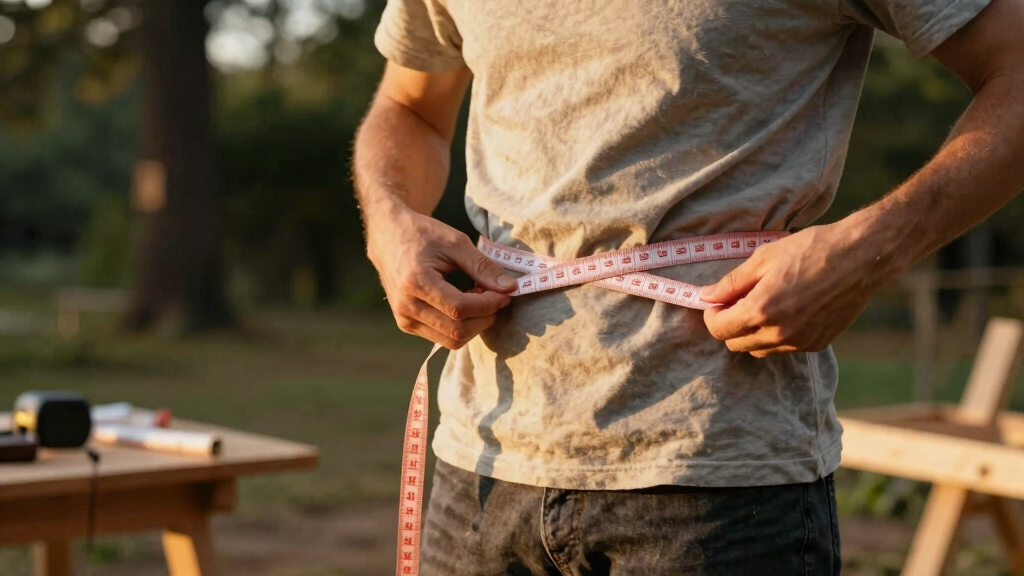
Keep the tape parallel to the floor. It should lie flat without twisting, sagging or climbing.
Snug, never tight
Let the tape touch your body without compressing skin. Measure over bare skin or thin clothing.
Repeat and average
Record at the end of a normal exhale. Take at least two readings and use their average.
From body to belt
Each link matters. A small placement or tension error can carry through to the final size.
Turn your waist reading into belt size
Start with the averaged measurement, add one to two inches for comfort, and then match the result to the brand’s chart. Dress belts may fit closer; casual and work belts often benefit from more ease.
| Measured waist | Recommended belt |
|---|---|
| 28–30 inches | 30–32 inches |
| 31–33 inches | 32–34 inches |
| 34–36 inches | 36–38 inches |
| 37–39 inches | 38–40 inches |
Modern options reduce the guesswork
Ratchet belts
Small, incremental adjustments provide a more precise fit than widely spaced traditional holes.
Multiple settings
Extra holes and adaptable buckles accommodate changing layers, activity and daily fluctuations.
Guided tools
Apps and online converters can guide tape placement and translate measurements into brand sizes.
More body shapes
Broader size ranges and personalized charts make accurate, comfortable fit more accessible.
| Method | Precision | Convenience | Best use |
|---|---|---|---|
| Flexible tape at natural waist | ✓ High | ✓ Easy | Best general starting point |
| Measure a well-fitting belt | ✓ High | ~ Needs reference belt | Replacing a favorite belt |
| Use pant size alone | ✗ Unreliable | ✓ Fast | Rough estimate only |
| Digital sizing guide | ~ Brand dependent | ✓ Guided | Online shopping support |
Fit checks before you buy
Should I measure over clothing?
Measure on bare skin or over thin clothing. Bulky layers can add unnecessary inches and distort the result.
What if my readings differ?
Repeat the process with the tape in the same position, then average the readings for a more stable number.
How tight should the tape feel?
It should be snug enough to stay level but loose enough that it does not indent or compress your skin.
Is the method different for men and women?
The core technique is the same. Body contours vary, so focus on your own natural waist and intended belt position.
Measure directly, average your readings, add 1–2 inches, and verify against the brand’s size chart.
Find Your Natural Waist for the Perfect Starting Point
The key to measuring your waist for a belt? Find your natural waist. This is the narrowest part of your torso—usually just above the belly button and below the rib cage. If you bend to the side, you’ll notice a slight indentation—that’s your natural waist.
For example, if you’re wearing jeans, stand straight and look for that tiny crease or fold where your body naturally pinches in. This spot varies from person to person but is the most reliable point for accurate measurements.
Measuring at the correct height is crucial because it determines where your belt will sit. If you measure too low or too high, your belt may end up sitting incorrectly, causing discomfort or slippage. Properly locating this point ensures your belt will sit comfortably, distribute pressure evenly, and complement your body shape. Misplacing it can lead to a belt that feels tight in one area and loose in another, especially if your body shape or clothing layers change. Understanding this helps you choose a belt that aligns with your natural contours, enhancing both comfort and style.
As an affiliate, we earn on qualifying purchases.
Choose the Right Tools to Measure Like a Pro
Use a flexible, non-stretchable measuring tape. Avoid using a metal ruler or any rigid tool that doesn’t bend to your body’s curves. A soft tape that molds around your waist gives the most precise reading.
For example, a tailor’s tape or a sewing measure works perfectly. If you don’t have one, a piece of string and a ruler can do, but make sure to mark the string before laying it flat to measure.
Ensure the tape is snug but not tight. It should lie flat against your skin or clothing without compressing it. This balance is crucial because a too-loose measurement will give you an oversized belt, while too-tight will cause discomfort and inaccurate sizing. The goal is to mimic how the belt will sit on your body—snug enough to stay in place but not so tight that it causes indentation or restriction. Accurate measurement depends heavily on choosing the right tool and using it properly, as even slight variations can lead to ill-fitting belts that wear out faster or cause discomfort over time.
Pro tip: measure over thin clothing or directly on bare skin for the most accurate result.
As an affiliate, we earn on qualifying purchases.
Step-by-Step: How to Measure Your Waist Correctly
- Stand up straight, feet shoulder-width apart. Relax your stomach muscles. Don’t suck in or push out your belly.
- Wrap the measuring tape around your natural waist, about an inch above your belly button.
- Keep the tape parallel to the ground. It shouldn’t sag or be pulled too tight. Make sure it’s snug against your skin or clothing.
- Take a deep breath and exhale naturally. Record the measurement at the end of a normal exhale.
- Repeat the process at least twice for accuracy. Take the average of your readings. This helps account for small fluctuations caused by breathing, posture, or measurement inconsistency, ensuring your final number truly reflects your body’s natural size.
For example, if your readings are 34.5 inches and 34.8 inches, your average is 34.65 inches. That’s your true waist measurement.
This simple process ensures you get a measurement that truly reflects your body, leading to a better belt fit. Remember, small inaccuracies can compound when choosing belt sizes, so taking multiple readings and averaging them is a critical step in achieving a comfortable, well-fitting belt.
As an affiliate, we earn on qualifying purchases.
How to Convert Your Waist Measurement into Belt Size
Once you have your waist measurement, converting it into a belt size is straightforward. Most belts are sized in inches, matching your waist measurement plus a 1-2 inch buffer for comfort.
For example, if your waist measures 34 inches, look for a belt size around 36 inches. This extra inch or two allows the belt to sit comfortably without feeling tight or loose.
Choosing the right belt size is about balancing fit and function. A belt that’s too tight can cause discomfort, restrict movement, and even lead to faster wear and tear. Conversely, a belt that’s too loose might not hold your pants securely and can look sloppy. The recommended 1-2 inch addition provides enough room for comfort and flexibility, especially when sitting or moving throughout the day. Different styles may require slight adjustments—dress belts often fit closer, while casual or work belts may need a bit more slack for comfort during extended wear. Always consider your activity level and personal preference when selecting the size.
Here’s a quick guide:
| Waist Measurement | Recommended Belt Size |
|---|---|
| 28-30 inches | 30-32 inches |
| 31-33 inches | 32-34 inches |
| 34-36 inches | 36-38 inches |
| 37-39 inches | 38-40 inches |
Always check the specific sizing chart of the brand, since sizes can vary slightly. Remember: your belt size isn’t the same as your pant size, and choosing the right size ensures both comfort and durability over time.
Pro tip: For a perfect fit, try on different sizes or use adjustable belts to fine-tune comfort. This approach reduces the risk of purchasing a belt that doesn’t suit your body’s unique proportions, especially if your measurements fall near size boundaries or if your body shape varies from standard sizing charts.
As an affiliate, we earn on qualifying purchases.
Modern Trends: Adjustable Belts and Digital Tools Make It Easier
Fashion is shifting toward more adaptable belts. Ratchet mechanisms, multiple holes, and quick-release buckles let you customize fit without fuss. If your waist fluctuates, these options make life easier.
Plus, digital tools are on the rise. Some brands offer smartphone apps that guide you step-by-step to measure your waist accurately. Others have online charts that auto-convert your measurements into the perfect belt size.
Imagine snapping a quick photo of yourself or using an app to measure your waist in minutes—no more guesswork. These innovations cater to busy tradespeople and style-conscious folks alike.
Recent focus on inclusive sizing also means more options for different body shapes, making personalized fit more accessible than ever. This trend not only simplifies the process but also promotes body positivity by offering diverse sizing options that cater to all shapes and sizes, ensuring everyone can find a belt that fits and feels good.
Frequently Asked Questions
How do I find my natural waist?
Stand straight and bend slightly to the side. The tiny crease or indentation above your belly button is your natural waist. It’s usually the narrowest part of your torso.
Should I measure over clothing or bare skin?
For the most accurate reading, measure over thin clothing or directly on bare skin. Thick or bulky clothing can add extra inches and skew your measurement.
How tight should the measuring tape be?
Wrap the tape snugly but gently—don’t compress your skin or pull it so tight it leaves an impression. It should lie flat and comfortably around your waist.
What if my measurements vary slightly?
Take at least two or three measurements, then average them. Small differences are normal and averaging gives you the most reliable number.
How do I convert my waist measurement into belt size?
Add 1-2 inches to your waist measurement. For example, a 34-inch waist usually needs a belt around 36 inches for a comfortable fit.
Conclusion
Getting your waist measurement right isn’t just about accuracy—it’s about comfort and durability. A well-measured belt lasts longer, feels better, and complements your style perfectly.
Next time you shop or want to fine-tune your fit, remember these simple steps. Accurate measurements are the foundation of a belt that works as hard as you do.
Fall Picks
fall essentials
As an affiliate, we earn on qualifying purchases.