
TL;DR

Get business pricing on tools and workshop supplies
- Business-only prices and quantity discounts
- Tax-exempt purchasing
- Multiple users, one account, clear invoices
Use a lifting belt during heavy lifts exceeding 80-85% of your 1RM. It supports your spine by increasing intra-abdominal pressure, but it’s not a substitute for core strength or proper form. Balance belt use with core training for best results.
Ever wonder if you should wear a belt every time you squat or deadlift? The truth is, a lifting belt isn’t a fashion statement or a shortcut. It’s a tool that, when used correctly, can keep your back safe and help you push past sticking points.
But using it too often or at the wrong time can do more harm than good. This guide breaks down exactly when you should slip on that belt, how to do it right, and what to avoid. If you’re serious about lifting heavy and staying injury-free, read on.
Use a lifting belt for lifts over 80-85% of your 1RM to maximize support.
Proper bracing and positioning are crucial for belt effectiveness.
Balance belt use with core training to avoid weakening your natural stability.
Choose the right belt type based on your lifts — stiff for powerlifting, flexible for Olympic lifts.
Don’t rely solely on a belt; develop your core muscles through dedicated work.
Use the belt when the weight is heavy enough to demand it.
A lifting belt is a precision tool, not a shortcut. It helps you create more intra-abdominal pressure, stabilize the spine, and stay organized under maximal loads. Save it for heavy squats, deadlifts, presses, and strength phases where form breakdown becomes the real risk.
TL;DR: belt up past 80-85% of your 1RM.
Brace into the belt, keep your technique sharp, and keep training your core so the belt supports your strength instead of replacing it.
Most useful when load approaches your one-rep max.
More pressure through the trunk means more spinal stability.
Squat, deadlift, and heavy overhead pressing benefit most.
The belt complements bracing. It does not replace it.
Top signs it is time to grab the belt.
Use a belt when the session shifts from general training to high-force work where spinal position, fatigue, and bar speed all matter.
Above 80-85% 1RM
As the load nears maximum capacity, a belt helps you keep the trunk rigid and resist sudden loss of position.
Max effort attempts
Near-max singles, doubles, and triples are where extra support can turn a risky grind into a controlled lift.
Strength phases
Powerlifting and maximal strength blocks often justify belt use during the heaviest working sets.
Back feels unstable
If your lower back feels shaky under load, use the belt while also checking technique and fatigue.
Squat and deadlift
Heavy compound lifts create the highest trunk demands and are the most common place to belt up.
Every warm-up set
Keep lighter work beltless so your trunk keeps practicing its own stability and bracing skill.
How the belt actually protects your spine.
The belt works only when you actively brace into it. Think pressure first, lift second.
Place
Set the belt just above the hips, covering the area you can push your abdomen into.
Tighten
Go snug, not suffocating. You need room to breathe and expand against the belt.
Breathe
Take air deep into the belly, then expand outward through the front, sides, and back.
Brace
Hold tension through the full rep so the spine stays rigid under the bar.
The data says: heavy, braced, and selective.
Belt use is most defensible when loads are high enough to challenge spinal stability. Below that point, beltless work builds the skill you still need.
What the belt changes
Wearing a belt can increase intra-abdominal pressure by up to 40%, which helps stiffen the trunk and reduce unwanted spinal motion during heavy lifting.
When to put it on
The practical threshold is not a fixed weight. It is the point where the lift becomes heavy relative to your maximum.
Choose the belt based on the lift, not the look.
More stiffness is not always better. Powerlifting rewards rigid support; Olympic lifting needs mobility and speed through dynamic positions.
| Belt type | Support level | Best for | Flexibility | Use case verdict |
|---|---|---|---|---|
| Powerlifting belt | Stiff, wide, thick | Maximal squat and deadlift | ✗ Low | ✓ Best for maximal strength work |
| Weightlifting belt | Moderate support | Snatch, clean, jerk, front squat | ✓ High | ✓ Best for dynamic Olympic lifts |
| Velcro or prong belt | Variable support | General strength training | ~ Varies | ~ Useful when fast adjustment matters |
Train both ways: belted for peaks, beltless for capacity.
Overusing a belt can reduce how often your stabilizers do their own work. The smarter play is to match the tool to the demand.
Use a belt when…
- The set is above roughly 80-85% of your one-rep max.
- You are attempting a heavy single, double, or triple.
- Your program is focused on maximal strength or powerlifting.
- You can brace correctly and push into the belt throughout the lift.
Skip the belt when…
- The work is light, technical, or early in the warm-up ramp.
- You are using the belt to hide poor positioning or pain.
- You have not learned how to breathe and brace without it.
- The lift requires mobility that a stiff belt blocks.
The practical training logic.
Every good belt decision connects load, bracing skill, movement choice, and long-term core development.
Why a lifting belt can save your back — and when it actually helps
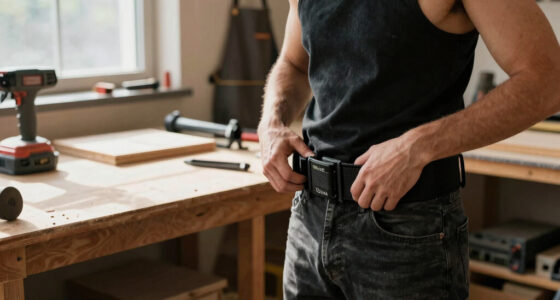
A lifting belt provides external support to your lower back by increasing intra-abdominal pressure. Think of it as inflating a balloon inside your core — this creates a rigid brace that stabilizes your spine during heavy lifts. The importance of this support becomes evident when lifting near your maximum capacity, as the additional stability can prevent sudden movements that might cause injury.
Moreover, this support can help you maintain proper spinal alignment under heavy loads, reducing the risk of herniation or strain. However, it’s crucial to recognize that this support is a supplement, not a substitute, for proper technique and core strength. Relying solely on a belt without developing your core can lead to weaker stabilizer muscles over time, making you more vulnerable in the long run.
As an affiliate, we earn on qualifying purchases.
Top signs it’s time to grab your lifting belt
- Lift exceeds 80-85% of your 1RM. As the load approaches your maximum capacity, the risk of losing stability increases. Wearing a belt can compensate for fatigue and help maintain proper form, which is critical to prevent injuries like herniated discs or muscle strains.
- Performing max effort or near-max effort sets. When pushing your limits, the extra support from a belt can make the difference between a successful lift and a potential injury. It acts as a safeguard, providing confidence that your spine is protected against unexpected shifts or loss of control.
- Training for strength or powerlifting. These disciplines often require lifting heavy weights regularly. The consistent use of a belt during these sessions can help you lift more safely and efficiently, enabling you to train at higher intensities without compromising spinal health.
- Feeling unstable or strained in your lower back during lifts. If your spine feels shaky or you experience discomfort, it’s a clear indication that additional support could be beneficial. Addressing these signs early helps prevent injury and maintains your training consistency.
- During specific phases of training focused on maximal strength. When your program emphasizes lifting near your max, the risk of form breakdown or injury rises. Wearing a belt during these phases ensures your spine remains protected as you push your limits.
Imagine trying a new personal record on squats. Your back feels like it’s bending under the weight — that’s when a belt can provide the extra reinforcement needed to maintain proper alignment, giving you both safety and confidence to succeed.
As an affiliate, we earn on qualifying purchases.
How to wear and brace your belt for maximum safety
- Choose the right belt. Powerlifting belts are typically stiff, wide, and thick, providing maximum support for very heavy lifts. Weightlifting belts are more flexible, allowing greater mobility for Olympic lifts. Selecting the appropriate belt depends on your main lifts and comfort preferences, but remember that the right belt enhances stability without sacrificing movement.
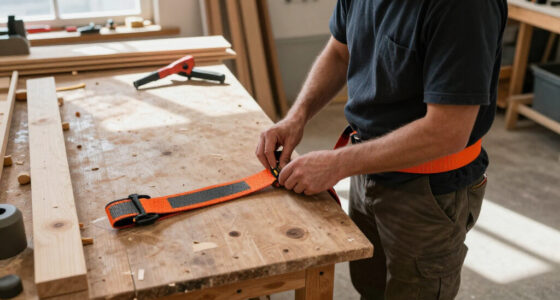
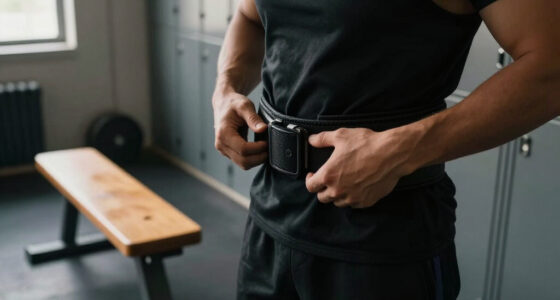
- Position the belt correctly. It should sit just above your hips, snug enough to provide support but not so tight that it restricts breathing or movement. Proper placement ensures that the intra-abdominal pressure is directed where it’s most effective, supporting the lumbar region during lifts.
- Brace your core properly. Take a deep breath into your belly, pushing your abs outward against the belt. Imagine preparing for a punch — contracting your core muscles to create a solid wall of pressure. This intra-abdominal tension is what maximizes the belt’s support and stabilizes your spine.
- Maintain tension during the lift. Keep your abdominal muscles tight throughout the entire movement, not just at the start. Continuous bracing prevents your core from relaxing under load, which could compromise spinal stability and increase injury risk.
For example, during a heavy deadlift, brace your core as if you’re about to be punched — this creates a resilient barrier that supports your spine through the entire lift, reducing the risk of injury caused by unexpected movements or loss of control.
As an affiliate, we earn on qualifying purchases.
The fine line: Overusing a belt can weaken your core
While a lifting belt provides valuable support, over-reliance on it can have unintended consequences. If you consistently use a belt for every set, regardless of the load, your core muscles may become less engaged over time. This phenomenon occurs because the external support shifts the workload away from your stabilizer muscles, leading to a form of muscular disuse that weakens natural stability.
For instance, a powerlifter who belts up for every squat, including warm-up sets, might inadvertently diminish the activation of their abdominal and lower back muscles. Over time, this can reduce their ability to stabilize the spine without the belt, making them more vulnerable to injury during unbelted lifts or unexpected movements.
To avoid this, reserve belt use for truly heavy and maximal efforts, and dedicate part of your training to exercises that strengthen your core, such as planks, side holds, and targeted abdominal work. Balancing belt use with core development ensures that your natural stability remains robust, reducing long-term injury risk and improving overall strength.
As an affiliate, we earn on qualifying purchases.
Belt types and what they’re best for
| Belt Type | Support Level | Best For | Flexibility |
|---|---|---|---|
| Powerlifting Belt | Stiff, wide, and thick | Maximal lifts, deadlift, squat | Low |
| Weightlifting Belt | Flexible, narrower | Olympic lifts, snatch, clean & jerk | High |
| Velcro or Prong Belts | Variable | Versatile, quick on/off | Varies |
Choosing the right belt depends on your lifts and comfort. Powerlifters favor stiff belts for heavy deadlifts, while Olympic lifters prefer more flexible options for mobility. The decision impacts your training quality, as a belt that’s too stiff might hinder mobility in dynamic lifts, while a too-flexible belt might not provide enough support for maximal efforts. Consider your main lifts, comfort, and the tradeoff between support and mobility when selecting your belt.
Should you train with or without a belt? Pros and cons
Training without a belt forces your core muscles to work harder to stabilize your spine, which can lead to greater natural strength development over time. This approach emphasizes building raw stability and resilience, essential for those aiming for long-term functional strength. However, it also means you might be limited in how much weight you can lift safely, especially as loads approach your maximum.
On the other hand, using a belt during heavy lifts provides immediate external support, allowing you to lift heavier weights more safely and confidently. This support can help you push past sticking points and achieve higher training volumes, which are crucial for strength gains. Yet, overusing a belt—especially during lighter or technical lifts—can lead to a dependency that weakens your core muscles and diminishes their natural stabilizing capacity.
Ultimately, a balanced approach, incorporating both beltless training to develop core strength and belt-supported lifts for maximal efforts, offers the best long-term benefits. This strategy ensures you build a resilient, functional core while safely increasing your lifting capacity.
Your game plan: When and how to incorporate a belt
Developing a strategic plan for belt use involves understanding your training goals and recognizing your body’s signals. Start by setting clear thresholds—using a belt for lifts over 80-85% of your 1RM ensures support when it’s most needed without fostering dependency. Incorporate beltless training days to strengthen your core muscles, maintaining balance between external support and natural stability.
Always focus on proper form first; the belt is a support tool, not a crutch. Use it to assist your technique during heavy sets, but prioritize core engagement and correct movement mechanics. Regular core exercises such as planks, leg raises, and anti-rotation holds should be an integral part of your routine to complement belt use and enhance your overall stability.
For example, in a 12-week program, belt up for your heaviest squats and deadlifts to maximize safety and performance, but ensure lighter, technical work is done beltless to keep your core muscles active and resilient. Adjust your plan as you progress, always aiming for a balance that promotes strength development without reliance on external support.
Frequently Asked Questions
Should I wear a lifting belt for all my lifts?
No. Belts are best reserved for heavy, near-max lifts. For lighter sets, focus on proper form and core strength instead.
At what weight should I start using a belt?
Many coaches recommend starting around 80-85% of your 1RM. If you’re lifting near your max, a belt can help support your spine and confidence.
Can wearing a belt weaken my core muscles?
Yes, if used excessively or improperly, a belt can reduce your core activation. Balance belt use with dedicated core training to avoid this.
What type of belt is best for me?
Powerlifting belts are stiffer and better for maximal lifts, while weightlifting belts are more flexible for Olympic lifts. Choose based on your main lifts and comfort.
How do I brace properly with my belt?
Take a deep belly breath, push your abs out as if preparing for a punch, and tighten your core against the belt. Maintain this tension throughout the lift.
Conclusion
When you lift heavy, a belt can be your best friend — or your crutch. Use it wisely, only when the weight demands it, and always pair it with core work. That way, you stay safe and get stronger in the long run.
Remember, a belt isn’t a shortcut — it’s a tool. Keep your form tight, your core engaged, and your focus sharp. Your back will thank you.
Fall yard work Picks
leaf blowers
As an affiliate, we earn on qualifying purchases.