
TL;DR
Heavy-duty work belts are designed to carry tools and support work activities while resisting wear and tear. The best belt matches your specific load, environment, and comfort needs, not just the highest price or thickest material. Regular inspection and proper setup extend their lifespan and safety.
Material choice depends on environment, load, and maintenance—leather for durability, synthetics for weather resistance.
Support and comfort come from proper sizing, load distribution, and using suspenders if needed.
Inspect your belt weekly for wear, fraying, or hardware failure—don’t wait for a break to replace it.
Stitching quality and reinforcement are as important as thickness in ensuring belt strength.
Choose hardware rated for your load, and avoid overloading to prevent discomfort or accidents.
What Makes a Heavy-Duty Work Belt Tough and Lasting?
Heavy-duty work belts aren’t just about thick leather or rugged nylon. They’re about how all the parts come together—materials, stitching, hardware, and reinforcement. Leather belts made from full-grain or top-grain hides offer durability and stiffness, perfect for supporting heavy tools over years. But they need regular conditioning and care, especially in wet weather. Nylon and synthetic belts are lighter, resist water and chemicals, and dry faster—ideal for outdoor jobs in rain or mud. Reinforced fabrics blend weight and abrasion resistance, often with added padding for comfort. Ultimately, the key is how well these materials are stitched, riveted, and reinforced around stress points. A belt with thick material but poor stitching will give out long before a thinner, well-stitched one.
Choosing durable materials is crucial because it directly impacts safety and efficiency. A belt that wears out or tears under load can lead to accidents, dropped tools, or even injury. The tradeoff often comes with weight and flexibility—thicker, more durable belts tend to be heavier and less flexible, which might reduce comfort during prolonged use. Therefore, understanding the work environment and the specific demands of your tasks helps determine whether you need maximum durability or a balance of support and mobility. The construction quality—like reinforced stitching at stress points—can mean the difference between a belt that lasts for years and one that fails prematurely. So, investing in a well-constructed belt is investing in your safety and productivity over the long haul.
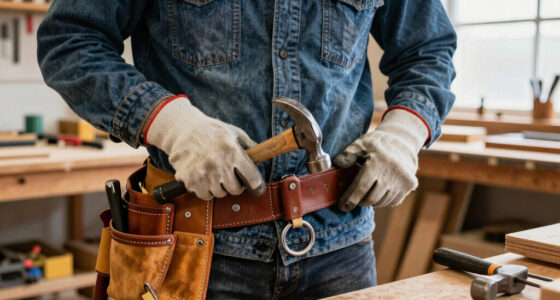
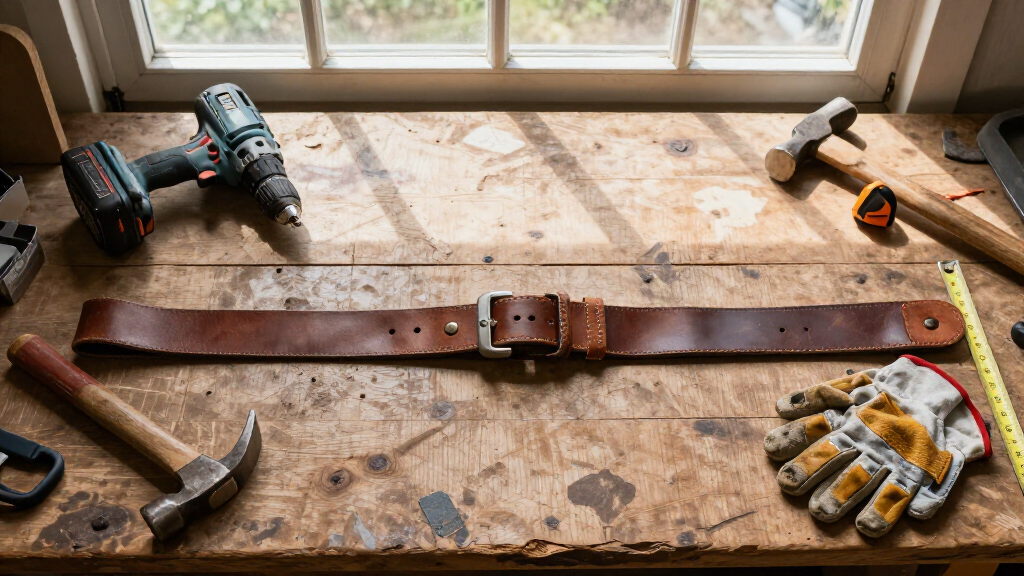
heavy-duty work belt with reinforced stitching
As an affiliate, we earn on qualifying purchases.
As an affiliate, we earn on qualifying purchases.
How to Pick a Belt That Won’t Sag or Twist Under Load
Heavy-duty work belts should support your tools without sagging, twisting, or slipping. The secret lies in size, stiffness, and how you load it up. First, choose a belt wide enough—3 to 4 inches is typical—to distribute weight evenly. Next, check the stiffness; a stiffer belt resists sagging but shouldn’t restrict movement. Fit is everything. Measure around your waist at the point where the belt will sit with typical work gear on. A belt that’s too loose won’t support tools well, while one that’s too tight can cut circulation or cause discomfort.
Load placement matters, too. Keep your heaviest tools close to your body—on the sides or front—so they don’t pull you off-balance. Use multiple attachment points if available, to spread weight and prevent twisting. For example, an electrician might carry a heavy voltage tester and pliers on one side, balanced with a tape measure on the other, to keep posture steady.
Proper load management is essential because uneven weight distribution can lead to fatigue, discomfort, and even musculoskeletal issues over time. A belt that twists or sags not only causes immediate discomfort but can also compromise safety by shifting tools unexpectedly or causing loss of balance. Using load-support features like reinforced attachment points and multiple pouches helps maintain proper posture and reduces strain. Additionally, pairing your belt with suspenders or harnesses can distribute weight more evenly across your shoulders and hips, minimizing localized pressure and fatigue. The tradeoff here is that added support can increase complexity and cost, but the long-term benefits in comfort and safety outweigh these concerns. Proper fitting and load management are key to ensuring your belt enhances your performance rather than hindering it.
leather work belt for construction
As an affiliate, we earn on qualifying purchases.
As an affiliate, we earn on qualifying purchases.
Comparing Popular Materials: Leather vs. Nylon vs. Synthetic Fabrics
| Feature | Leather | Nylon | Synthetic Fabrics |
|---|---|---|---|
| Durability | Very high, lasts years with care | Good, resists tearing and moisture | Variable, depends on quality |
| Weather Resistance | Needs conditioning, vulnerable to water | Excellent, dries fast | Very good, often UV resistant |
| Weight | Heavy | Light | Light to moderate |
| Maintenance | Requires conditioning and care | Minimal, just wash | Low, depends on coating |
| Cost | Higher, especially for quality leather | Moderate to low | Varies widely |
Understanding the differences between these materials helps you pick a belt that aligns with your work environment and durability needs. Leather belts, while expensive and requiring maintenance, offer unmatched longevity and stiffness, making them ideal for heavy, daily use where support is critical. Their natural properties make them resistant to tearing once broken in, but they are susceptible to water damage and need regular conditioning to maintain strength. Conversely, nylon and synthetic fabrics excel in wet or chemically harsh environments because they resist moisture and chemicals better, drying quickly and maintaining strength over time. However, they may wear out faster in abrasive situations if not reinforced properly. The tradeoff involves balancing durability, weight, and maintenance—knowing these nuances allows you to select a belt that not only lasts longer but also performs optimally in your specific work setting.
As an affiliate, we earn on qualifying purchases.
How to Maintain and Extend Your Heavy-Duty Work Belt’s Life
Proper care can turn a good belt into a long-term investment. For leather belts, regularly clean with a damp cloth, then apply a leather conditioner to keep it supple and prevent cracking. Let it dry naturally—avoid heat sources like radiators or direct sunlight. For synthetic belts, remove detachable pouches and wash with mild soap and water. Air-dry thoroughly to prevent mold or warping.
Inspect your belt weekly. Look for frayed stitching, loose rivets, cracked leather, or deformed hardware. Replace or repair worn components immediately. A quick check can prevent a tool-failure mishap or a sudden break on site. Remember, a damaged load-bearing part isn’t just worn out—it’s dangerous.
Maintaining your belt is about more than cleaning; it’s about understanding how each component responds to wear and environmental factors. Leather, for example, can dry out and crack if neglected, compromising strength. Regular conditioning restores suppleness and creates a barrier against moisture that could weaken stitching or hardware. Synthetic belts, while lower maintenance, can suffer from UV degradation or warping if left exposed to harsh sunlight or chemicals. The key is proactive inspection—catching small issues early prevents costly replacements and potential accidents. For instance, a construction worker noticed a rivet was loose on his leather belt after six months. He replaced it before it caused the whole belt to tear during a busy day. Regular inspection and maintenance keep your gear safe and ready for the next day’s work.
As an affiliate, we earn on qualifying purchases.
Why Your Choice of Buckle and Closure Matters More Than You Think
The buckle and closure system hold everything together—and should do so reliably. Common options include roller buckles, quick-release, and multi-point closures. Rollers are dependable and simple, ideal for leather belts that see heavy loads. Quick-release buckles offer speed but vary in strength—check the load ratings to avoid surprises. Multi-point closures provide extra security, preventing accidental openings.
Metal hardware is strong but can corrode or scratch surfaces. In electrical or chemical environments, nonmetallic or coated options are safer. For example, a painter working in a chemical plant prefers a robust buckle made from reinforced plastic to avoid corrosion and accidental release.
Tip: Always test your buckle’s strength before heavy use. A buckle that opens unexpectedly can cause tools to fall, risking injury or damage. When replacing hardware, choose components rated for your load and environment.
Choosing the right buckle and closure system isn’t just about convenience; it’s about ensuring your tools stay secure and your safety isn’t compromised. A poorly designed or weak closure can lead to catastrophic tool drops or sudden releases, especially under heavy loads or in demanding environments. High-quality hardware made from corrosion-resistant materials prolongs lifespan and maintains security, reducing the risk of failure. The tradeoff often involves balancing ease of access—like quick-release features—with the need for secure fastening. In environments with exposure to chemicals or moisture, selecting non-metallic or coated hardware prevents corrosion that could weaken the closure over time. Testing your hardware regularly ensures it maintains its rated strength, preventing unexpected failures during critical moments. In sum, investing in high-quality, environment-appropriate buckles and closures is a small step that offers significant safety and durability benefits.
Best Practices for Choosing a Work Belt for Your Job
Picking the right work belt isn’t just about material or look. It’s about matching features to your tasks. Follow this step-by-step process:
- Identify the tools and gear you carry daily. Note their weight, size, and attachment needs.
- Measure your waist comfortably over your work clothes, allowing room for movement and layers.
- Decide on the belt width—3 to 4 inches offers good support without bulk.
- Choose a material based on your environment—leather for durability, nylon for weather resistance.
- Check the buckle system—preferably a roller or heavy-duty quick-release, rated for your load.
- Consider add-ons like suspenders or modular pouches for better weight distribution.
- Inspect for reinforced stitching, rivets, and hardware designed to withstand repeated use.
Understanding these factors helps you select a belt that not only supports your tools but also aligns with your safety and comfort needs. For example, a roofing crew working in hot sun and rain benefits from a synthetic, waterproof belt with quick-release buckles and detachable pouches. They can adjust quickly between tasks, stay dry, and keep tools secure.