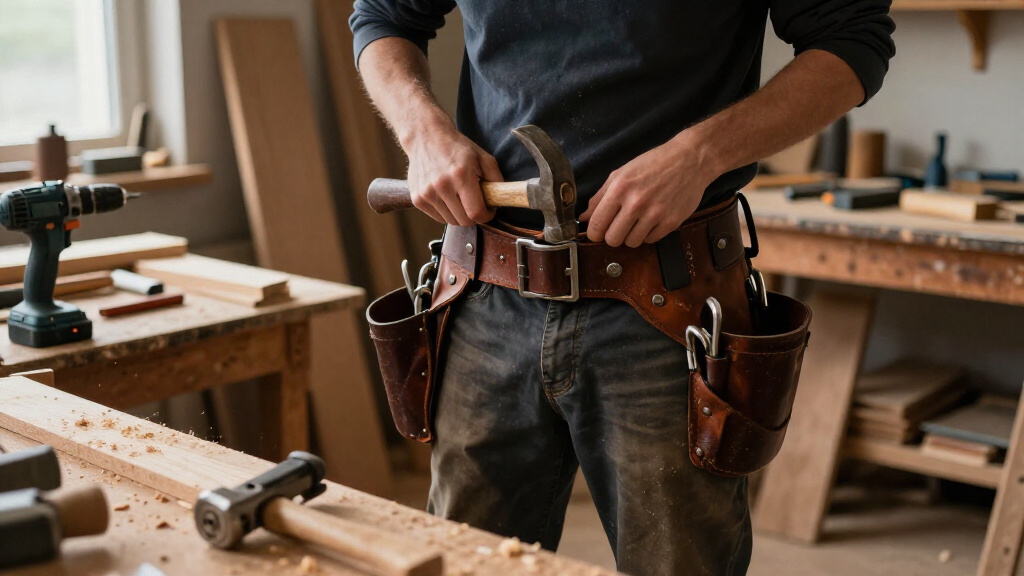

A heavy-duty work belt has one job it cannot fail at: holding up under load, day after day, without stretching, cracking, or rolling over at the buckle. Whether that load is a pair of tool-laden work pants or a full set of pouches on a framing crew, the difference between a belt that lasts a decade and one that sags by spring comes down to leather quality, strap stiffness, and buckle hardware. I compared five of the most popular options on the market to find where the real value sits.

Get business pricing on tools and workshop supplies
- Business-only prices and quantity discounts
- Tax-exempt purchasing
- Multiple users, one account, clear invoices
Two picks rise to the top for opposite reasons. The Carhartt Full Grain Saddle Leather Belt earns my best overall slot because its full-grain saddle leather and reinforced stitching handle daily jobsite flexing while still looking right with jeans on the weekend. The Dickies Double-Prong Leather Work Belt is the best value pick — it costs less than most genuine leather competitors yet offers full-length perforation for a truly custom fit. For tradespeople who actually hang tools from their belt rather than just their pants, the Klein Tools 5415XL is in a different category entirely: a 2-inch-wide platform built to carry pouches, not a casual belt at all.
The central tradeoff in this roundup is pure leather versus blended construction. Full-grain belts like the Carhartt and the brass-buckle option cost more and need occasional conditioning, but they age into something better. The bonded-leather Dickies Industrial Strength belt resists fraying thanks to its nylon overlay but will never develop the character or long-term resilience of solid leather. Sizing quirks — several of these brands run two inches large — are another factor I flag throughout, because an inch of misjudgment turns a great belt into a return shipment.
Complete the kit


Key Takeaways
- Full-grain saddle leather (Carhartt) is the best long-term material choice; bonded leather with nylon overlay (Dickies Industrial Strength) trades authenticity for fraying resistance at a lower price.
- The Klein Tools 5415XL is a 2-inch tool-carrying platform for trades, not a pants belt — it only fits waists 44 to 52 inches and should only be bought for tool support.
- Dickies belts require sizing up two inches from pant size; skipping this step is the most common fit mistake across this lineup.
- The full-length perforations on the Dickies Double-Prong belt give finer size adjustment than punched-hole belts, which matters if your weight fluctuates.
- Only the Klein is made in the USA; the other four are imported, which matters to some buyers more than any spec difference.
| Carhartt Men’s Durable Full Grain Saddle Leather Classic Belt |  | Best Overall | Material: 100% Full-Grain Saddle Leather | Width: 1.5 inches | Construction: Reinforced stitching with rugged hardware | VIEW LATEST PRICE | See Our Full Breakdown |
| Dickies Men’s Double-Prong Leather Work Belt | 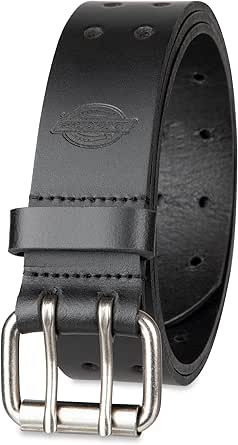 | Best Value | Material: 100% Leather | Buckle: Roller double-prong | Adjustability: Full-length double perforation | VIEW LATEST PRICE | See Our Full Breakdown |
| Full Grain Leather Men’s Work Belt with Brass Buckle | 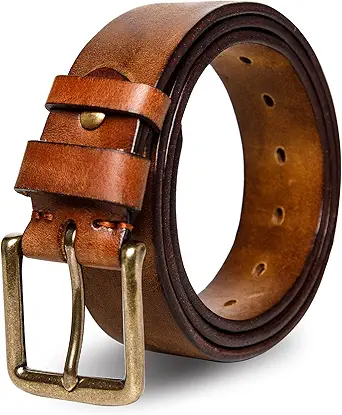 | Best Full-Grain Comfort | Material: 100% Full Grain Leather | Thickness: 5mm | Width: 38mm (1.5 inch) | VIEW LATEST PRICE | See Our Full Breakdown |
| Dickies Men’s Industrial Strength Leather Belt – Workwear, Durable, Reinforced, Heavyweight |  | Best Low-Maintenance Build | Fabric Type: 20% PU, 30% GRS bonded leather, 20% split leather, 30% polyester | Belt Width: 1.5 inches | Construction: Reinforced heavyweight strap with nylon overlay | VIEW LATEST PRICE | See Our Full Breakdown |
| Klein Tools 5415XL Heavy-Duty Leather Tool Belt for Contractors and Electricians |  | Best for Tool-Carrying Trades | Material: 100% Leather | Belt Width: 2 inches | Buckle Type: Double-tongue buckle | VIEW LATEST PRICE | See Our Full Breakdown |
| heavy-duty work belt | Material | Origin | Width |
|---|---|---|---|
| Carhartt Men’s Durable Full Gr | 100% Full-Grain Saddle Leather | Imported | 1.5 inches |
| Dickies Men’s Double-Prong Lea | 100% Leather | Imported | 1.5 inches |
| Full Grain Leather Men’s Work | 100% Full Grain Leather | Imported | 38mm (1.5 inch) |
| Dickies Men’s Industrial Stren | — | Imported | — |
| Klein Tools 5415XL Heavy-Duty | 100% Leather | — | — |
More Details on Our Top Picks
Carhartt Men’s Durable Full Grain Saddle Leather Classic Belt
The Carhartt Full Grain Saddle Leather Classic Belt takes the top spot because it makes the fewest compromises of anything in this lineup. Saddle leather is cut from the firmest part of the hide, and that stiffness is exactly what a work belt needs: it resists the rolling and curling at the buckle that ruins softer belts within a season. Compared with the brass-buckle full grain belt lower in this list, the Carhartt adds reinforced stitching and rugged hardware, which addresses the torn-hole failure point that plain stitched belts eventually suffer.
What makes this pick stand out is its versatility without weakness. The Dickies Double-Prong belt matches it for everyday utility, but its simpler leather won’t wear in with the same rich patina, and the Klein tool belt — while tougher — is unusable as a normal pants belt. The Carhartt sits in the middle: stiff enough for a loaded tool pouch on weekends, refined enough for jeans and a flannel afterward. That balance is why it leads this ranking rather than a more specialized option.
The tradeoffs are real, though. Saddle leather needs occasional conditioning to keep it from drying and cracking, and the color range is narrow. Buyers who want a belt they can ignore for five years with zero maintenance should look at the bonded-leather Dickies Industrial Strength instead — it asks less of you and gives less back.
Pros:- Full-grain saddle leather wears in with a rich patina instead of wearing out
- Reinforced stitching and rugged hardware resist the torn-hole failure common on cheaper belts
- Stiff enough to support loaded pockets and light pouches
- Equally at home on a jobsite or with weekend jeans
Cons:- Leather requires occasional conditioning to prevent drying and cracking
- Limited color options
- The heavy-duty look may read too rugged for dressier wardrobes
Best for: Buyers who want one genuinely heavy-duty belt that works on jobsites and still looks right with casual clothes
Not ideal for: Anyone wanting a zero-maintenance belt or a wide color selection
- Material:100% Full-Grain Saddle Leather
- Width:1.5 inches
- Construction:Reinforced stitching with rugged hardware
- Style:Classic work/casual crossover
- Fit:Standard belt loops
- Maintenance:Periodic leather conditioning recommended
- Origin:Imported
Our verdict“The most complete belt in this lineup — full-grain durability with the versatility to be your only belt.”
Dickies Men’s Double-Prong Leather Work Belt
The Dickies Double-Prong Leather Work Belt proves that a genuinely tough leather belt does not require premium-leather pricing. Its strongest argument is full-length double perforation: instead of a handful of pre-punched holes spaced an inch apart, the entire strap is perforated, so you can dial in your fit to the millimeter. Compared with the Carhartt, which relies on standard hole placement, this matters if your waist fluctuates or you layer differently between seasons.
The roller double-prong buckle is the other differentiator. Two prongs spread the clamping force across two holes instead of one, which dramatically reduces hole elongation — the failure mode that killed most belts your father owned. The roller frame also lets the strap glide through smoothly when cinching, a small quality-of-life detail the cheaper Dickies Industrial Strength model lacks.
Where it falls short of the Carhartt is material refinement: this is workmanlike 100% leather, not saddle leather, and it will not develop the same character over years. It is also spot clean only, and the sizing rule — order two inches above your pant size — trips up first-time buyers constantly. Get the size right and this is the best dollar-for-dollar belt here; get it wrong and you are in a returns queue.
Pros:- Full-length perforation allows near-infinite size adjustment
- Roller double-prong buckle prevents single-hole elongation
- 100% leather construction at a value price
- Available in Regular and Big & Tall sizing
Cons:- Spot clean only
- Requires ordering two sizes up from pant size
- Leather lacks the character and patina of saddle hide
Best for: Budget-conscious buyers who want genuine leather adjustability and a secure buckle without premium pricing
Not ideal for: Buyers who skip the size chart, or those wanting a belt that ages beautifully
- Material:100% Leather
- Buckle:Roller double-prong
- Adjustability:Full-length double perforation
- Width:1.5 inches
- Care:Spot clean
- Sizing:Order 2 inches larger than pant size
- Available Sizes:Regular and Big & Tall
- Origin:Imported
Our verdict“The smartest spend in the lineup — most of the Carhartt’s function at a noticeably lower price.”
Full Grain Leather Men’s Work Belt with Brass Buckle
This Full Grain Leather Work Belt with Brass Buckle occupies an interesting position: it matches the Carhartt’s premium full-grain leather pedigree but charts a different course on feel. Where saddle leather is deliberately stiff, this strap is described as soft and flexible, and at 5mm thick it delivers that comfort without going flimsy. For buyers whose complaint about work belts is break-in pain and stiffness against the hip, this is the pick that answers it.
The vintage brass buckle and deep brown finish also make this the most style-forward option in the roundup. The Dickies Double-Prong belt is pure utility; the Carhartt splits the difference; this belt leans presentable enough to gift or wear somewhere other than a jobsite. That flexibility of context is its quiet strength — but it is also why it sits third rather than first. A softer strap, however thick, gives up some of the load-bearing rigidity that defines a true heavy-duty belt, and the Carhartt’s reinforced stitching gives it an edge in long-term durability.
The odd drawback is care: dry clean only is an unusual and genuinely inconvenient instruction for a work belt that will absorb sweat and grime. And the single deep brown colorway limits matching. Buyers who prioritize all-day comfort over maximum rigidity will still be very happy here.
Pros:- 5mm full-grain leather is thick yet soft and flexible for long wear
- Vintage brass buckle and deep brown finish look sharp beyond the jobsite
- Genuinely heavy-duty construction despite the softer hand feel
- Makes a practical gift thanks to its styling
Cons:- Dry clean only — inconvenient for gear that gets dirty
- Only one color option (deep brown)
- Less rigid than saddle leather for heavy load support
Best for: Buyers who want full-grain leather quality with a softer, flexible feel and a more polished look
Not ideal for: Anyone who wants maximum strap rigidity for hanging gear, or who will balk at dry-clean-only care
- Material:100% Full Grain Leather
- Thickness:5mm
- Width:38mm (1.5 inch)
- Buckle:Brass, vintage style
- Color:Deep brown
- Care Instructions:Dry clean only
- Origin:Imported
Our verdict“The comfort-first full-grain option — premium leather without the stiff break-in period.”
Dickies Men’s Industrial Strength Leather Belt – Workwear, Durable, Reinforced, Heavyweight
The Dickies Industrial Strength Belt is the lineup’s pragmatist. Instead of solid hide, it uses a layered build: bonded leather, split leather, PU, and a polyester/nylon overlay. Purists will side-eye that material list, but there is a coherent argument behind it — the synthetic overlay shrugs off moisture, abrasion, and fraying in ways full-grain leather cannot without regular conditioning. If your belt lives through mud, rain, and concrete dust, this blend asks nothing of you.
Compared with its Dickies sibling, the Double-Prong model, this belt gives up the full-length perforation and roller buckle in exchange for a reinforced, heavyweight strap that resists stretching. It is the belt to buy if your priority is set-it-and-forget-it durability rather than fine-tuned fit — there are no special adjustability features here, just standard holes and a reinforced frame.
Honesty requires naming the ceiling: bonded leather does not age like full grain. Over years, delamination is a known risk with layered straps, and no patina will develop. The Carhartt costs more but is a buy-once product; this one is a buy-and-replace-eventually product that costs less and never needs fussing. Hand wash only is the only care demand, which is still easier than dry cleaning. For high-abrasion trades on a budget, the math works.
Pros:- Nylon overlay resists fraying, moisture, and abrasion better than untreated leather
- Reinforced, heavyweight strap resists stretching under load
- Stylish enough for work and casual wear
- Broad size availability for a comfortable fit
Cons:- Bonded leather construction cannot match full-grain longevity
- No adjustability features beyond standard holes
- Hand wash only, and color options are not clearly specified
Best for: Workers in wet, muddy, or high-abrasion environments who want a fraying-resistant belt with zero leather maintenance
Not ideal for: Buyers who want a single belt to last a decade or value the aging character of real full-grain leather
- Fabric Type:20% PU, 30% GRS bonded leather, 20% split leather, 30% polyester
- Belt Width:1.5 inches
- Construction:Reinforced heavyweight strap with nylon overlay
- Sizing:Order 2 inches larger than pant size
- Care:Hand wash only
- Style:Workwear and casual crossover
- Origin:Imported
Our verdict“The low-maintenance workhorse — engineered toughness over natural leather character.”
Klein Tools 5415XL Heavy-Duty Leather Tool Belt for Contractors and Electricians
The Klein Tools 5415XL is not competing with the other four — it is a different tool entirely. At 2 inches wide and built from 100% leather with a double-tongue buckle, it is a platform for hanging tool pouches, nail bags, and framing equipment, not a belt for holding up jeans. Every other belt in this roundup fits standard belt loops; this one is meant to carry your livelihood. Its USA construction is unique here, and Klein’s reputation among electricians is not marketing fluff.
Compared with the Carhartt or the Dickies Double-Prong, the Klein wins on raw load capacity and nothing else — it is heavier, wider, and cannot be worn through normal pant loops. That is the point. A carpenter who tries to save money by hanging loaded pouches from a 1.5-inch dress-adjacent belt will stretch the holes and warp the strap within months. This model exists to prevent exactly that failure.
Its limitations are structural. The 44-to-52-inch waist range is the only size bracket in this specific listing, so slimmer tradespeople need a different Klein size or a different belt entirely. There is also no padding, which matters on ten-hour days with a full load of tools digging into your hips. Compared with padded suspension rigs, this is the traditional, stripped-down approach: maximum durability, minimum coddling.
Pros:- 100% leather construction made in the USA by a trusted trade brand
- 2-inch width and double-tongue buckle built specifically for hanging loaded pouches
- Heavy-duty build is designed to survive years of professional daily use
- Adjustable within its waist range for a secure, custom fit
Cons:- Only fits waists 44 to 52 inches in this listing
- Heavy weight feels cumbersome when unloaded
- No padding for comfort during long days carrying full tool loads
Best for: Contractors, electricians, carpenters, and framers with 44–52 inch waists who hang loaded tool pouches daily
Not ideal for: Anyone outside the 44–52 inch waist range, or anyone who just needs a belt for pants
- Material:100% Leather
- Belt Width:2 inches
- Buckle Type:Double-tongue buckle
- Waist Size Range:44 to 52 inches
- Intended Use:Tool and pouch support for trades
- Made In:USA
Our verdict“The only true tool belt in this comparison — buy it if you carry tools for a living, skip it if you don’t.”

How We Picked
Since I could not put months of jobsite wear into each belt personally, I built this ranking around the factors that reliably separate a belt that lasts from one that quits: material composition, strap thickness, buckle hardware, adjustability, and real-world fit feedback. Material came first. A belt advertised as “leather” can be anything from full-grain hide to a PU-and-polyester blend, and the performance gap between those is enormous under load. I weighted belts with verifiable full-grain or 100% leather construction more heavily than bonded or blended straps, but I refused to dismiss the blends outright — a nylon-reinforced belt serves a real purpose for buyers who abuse their gear in wet or abrasive conditions.
Second, I judged each belt against the heavy-duty promise in the title, not against casual dress belts. That means buckle security carried real weight: double-prong, roller, and double-tongue buckles all resist pull-off better than a single frame buckle, and stitching reinforcement mattered as much as the strap itself, since torn belt holes are the most common failure point. Third, I considered who each belt is actually for. A contractor carrying tools needs a completely different product than an office worker who wants one belt for weekends and yard work, so I ranked each option within its own lane rather than punishing a tool belt for being unfashionable.
Finally, I factored in practical friction points: sizing accuracy, care requirements, color availability, and the total cost of ownership — including the conditioner a full-grain belt eventually needs. Where two belts were close on build quality, the one with better adjustability or easier care won the higher slot, because those are the details that decide whether a belt gets worn every day or left in a drawer.
Factors to Consider When Choosing Heavy-duty Work Belts
Choosing a heavy-duty work belt comes down to matching construction to your actual workload. These are the factors I weighed hardest when ranking the five belts above.Leather Type Is the Whole Ballgame
Full-grain leather — like the Carhartt saddle leather and the brass-buckle belt — is the top layer of the hide, intact and dense. It resists stretching, accepts holes without tearing, and improves with age. Bonded leather, found in the Dickies Industrial Strength belt, is reconstituted hide scraps bonded with adhesives and backed with synthetics. It is cheaper and more abrasion-resistant out of the box, but it can delaminate over years and never develops patina. If a belt says “genuine leather” without specifying grain, assume something in between and adjust your longevity expectations accordingly.
Buckle Design Determines Failure Mode
Most belts die at the holes, not the strap. A single-prong frame buckle concentrates all clamping force on one hole, which elongates and tears over time. Double-prong designs like the Dickies Double-Prong and the double-tongue Klein buckle split that force across two points, roughly doubling hole life. A roller frame additionally reduces friction as the strap cinches, making adjustments smoother and reducing edge wear. If you cinch and re-cinch a belt a dozen times a day, this is not a minor detail.
Sizing: The Two-Inch Trap
Both Dickies belts in this lineup instruct you to order two inches above your pant size — a pant size 34 needs a belt size 36. This accounts for the overlap length needed to thread the buckle and leave a tail. Belts that skip this convention, like the Carhartt and the Klein, use different size systems, so read each listing’s chart before ordering. Fit errors are the single most common reason work belts get returned, and a too-small belt worn on the last hole concentrates force exactly where holes tear first.
Width and Load Capacity
1.5 inches is the standard — it fits virtually all work pants and jeans and handles pockets loaded with a phone, knife, and hardware. 2-inch belts like the Klein exist for a different reason: distributing the weight of hanging tool pouches across more strap area and wider belt loops or dedicated workwear. Hanging a loaded nail bag from a 1.5-inch belt will stretch and warp it. Match the width to what the belt actually carries, not to how it looks.
Maintenance and Environment
Full-grain leather rewards occasional conditioning with decades of service; skip it and the leather dries, cracks, and fails at the flex points. Bonded-leather blends need almost nothing but eventually need replacing. Wet-trade workers — masons, landscapers, concrete crews — often get better real-world service from a synthetic-overlaid belt than from fine leather, while indoor tradespeople and casual wearers will prefer the full-grain options. The brass-buckle belt’s dry-clean-only instruction is the outlier here and worth factoring in before buying.
Frequently Asked Questions
How much should a quality heavy-duty work belt cost?
Genuine leather work belts cluster between roughly $20 and $60, and the meaningful quality jump happens around the transition from bonded or genuine leather to full-grain leather. The Dickies Double-Prong sits at the accessible end and delivers real durability, while full-grain options like the Carhartt and the brass-buckle belt cost more but age into better belts rather than worse ones. Anything dramatically cheaper is almost certainly bonded or synthetic, which can still work — the Dickies Industrial Strength proves that — as long as you accept a shorter service life. Tool belts like the Klein occupy their own price tier because they are professional load-bearing equipment, not apparel accessories.
Why do Dickies belts tell me to order two inches larger than my pant size?
Pant sizes measure your body, while belt sizes measure the strap from the buckle fold to the middle hole — and you need extra length to thread the buckle, wrap over your waistband, and leave a presentable tail. Two inches is the industry convention that produces a fit centered on the middle holes, which spreads wear evenly and leaves room for adjustment in both directions. If you order your exact pant size, you end up cinching the last hole, concentrating force where leather tears first and leaving no slack for heavier winter layers. The Carhartt and Klein use their own sizing charts, so the two-inch rule only applies where it is explicitly stated.
Is full-grain leather actually worth it for a work belt, or is bonded leather fine?
It depends entirely on how you treat the belt. Full-grain leather is denser, resists stretching, and — with occasional conditioning — genuinely lasts a decade or more, which is why the Carhartt holds the top slot. Bonded leather with a nylon overlay, like the Dickies Industrial Strength, is more abrasion-resistant out of the box, tolerates moisture and grime with zero care, and costs less, but layered straps can delaminate over years and will never develop patina. If you work in wet or gritty conditions and view belts as consumables, bonded is a defensible choice. If you want one belt you stop thinking about, full-grain wins.
Can I use a regular work belt to carry tool pouches?
I would advise against it for anything heavier than a tape measure and a knife. A standard 1.5-inch belt is built to hold up pants, and loaded pouches — a hammer, drivers, fasteners, a drill — concentrate serious weight at the attachment points, stretching holes and warping the strap within months. That is why the Klein 5415XL exists at 2 inches wide with a double-tongue buckle: it distributes tool weight across a wider strap and locks securely under sustained load. A lighter compromise is the stiff Carhartt saddle leather, which handles a lightly loaded pouch for occasional tasks, but daily tool-carrying work belongs on a purpose-built tool belt.
How do I keep a leather work belt from cracking and stretching?
Stretching comes from overload and heat: never hang heavy pouches from a belt not built for it, and avoid leaving leather in a hot truck, where heat cycles dry the fibers and permanently deform the strap. Cracking comes from lost oils, so a leather conditioner applied a few times a year keeps full-grain straps supple — the Carhartt and brass-buckle belts both reward this routine. Rotate between two belts if you sweat heavily, since salt and moisture degrade leather faster than abrasion does. And when a belt does get soaked, let it dry flat at room temperature rather than near a heater, which hardens and shrinks the leather unevenly.
Conclusion
After comparing all five, my recommendations split cleanly by buyer type. If you want one belt that does everything well, the Carhartt Full Grain Saddle Leather Belt is the clear choice — saddle-leather rigidity, reinforced stitching, and styling that survives both the jobsite and the weekend. For value hunters, the Dickies Double-Prong belt delivers genuine leather, a secure double-prong buckle, and infinite adjustability at the lowest sensible price point; just remember the two-inch sizing rule.
Comfort-first buyers who find most work belts stiff and punishing should choose the Full Grain Leather Belt with Brass Buckle — it keeps the 5mm thickness but trades rigidity for flexibility, at the cost of dry-clean-only care. Wet-trade and high-abrasion workers — masons, landscapers, anyone whose belt lives in mud — get better real-world service from the Dickies Industrial Strength belt, whose nylon overlay ignores conditions that would ruin fine leather. And for tradespeople who carry tools for a living, the Klein Tools 5415XL is the only proper answer in this lineup: a USA-made, 2-inch load-bearing platform, provided your waist falls in its 44-to-52-inch range.
The single most important step before clicking buy, regardless of pick: check the sizing chart. Half of the disappointment in work belt reviews traces back to ordering a pant size instead of a belt size. Get that right, and any of these five will outlast the cheap belts they replace.
Halloween Picks
halloween
As an affiliate, we earn on qualifying purchases.