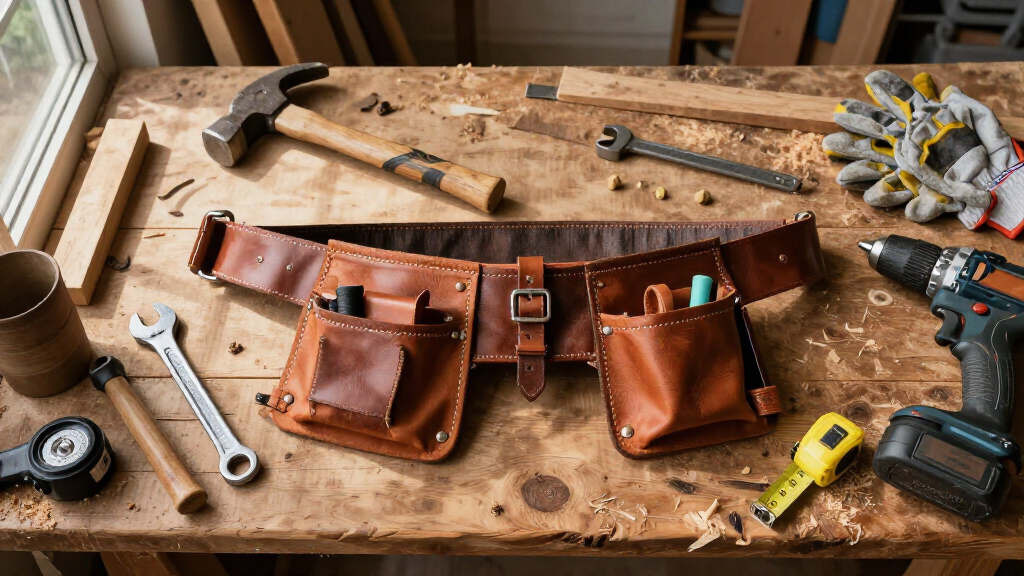

For tradespeople, a durable tool belt is the difference between working efficiently and constantly walking back to the truck. After comparing 15 of the most popular options, the DeWalt Leather 11-Pocket Professional Belt stands out as the best overall pick for its full-grain leather build and trade-ready pocket layout. The Klein Tools 5415 is the stronger choice if you want legacy-grade leather toughness, while the Dickies 8-Pocket Padded belt delivers the best value for apprentices and general contractors on a budget. The main tradeoff in this category is straightforward: leather rigs last longest but cost more and need breaking in, while canvas and padded nylon belts are comfortable immediately but wear out faster under daily jobsite abuse. Keep reading for the full breakdown, including who each belt suits and who should skip it.
Listen free for 30 days with Audible
Thousands of audiobooks and originals — cancel anytime.
Start your free trialAs an affiliate, we earn on qualifying purchases.
Complete the kit


Key Takeaways
- Leather belts (DeWalt, Klein Tools 5415, OX) dominated the durability rankings, but they demand a higher upfront cost and a break-in period that canvas belts avoid entirely.
- Padded nylon belts like the Melotough and the 11-Pocket Poly Web model were the clear winners for all-day comfort, especially for trades carrying 15+ pounds of tools for eight-hour shifts.
- Trade-specific pocket layouts mattered more than raw pocket count — the ARROW and Klein 5225 electrician belts outperformed higher-pocket generalist belts for sparkies because of tool-specific loops and fastener organization.
- The sub-$30 picks (Dickies 5-Pocket, Dickies 2-inch Nylon Web) are genuinely durable for light-duty and weekend work, but daily contractors will wear through them in months, not years.
- Suspender compatibility separated long-term winners from back-pain regrets — only the DeWalt Professional Organizer with suspenders and the D-ring models (Melotough, Padded D-Ring belt) properly distribute heavy loads.


| durable tool belts for tradespeople | Material |
|---|---|
| Dickies 5-Pocket Single Side T | Heavy-duty canvas |
| ARROW Heavy-Duty Electrician T | Triple-layer heavy-duty fabric |
| Padded Tool Belt for Men with | — |
| 11 Pocket Heavy Duty Construct | 1000D polyester |
| OX 3 Inch Leather Tool Belt | Full-grain oil-tanned leather |
| Melotough Padded Tool Belt wit | 600D Ballistic Polyester |
| Carhartt Utility Adjustable To | 1200-denier water-repellent canvas |
| Dewalt Leather Tool Belt | Nubuck top-grain leather |
| Dickies Heavy-Duty Work Belt | Nylon webbing |
| Klein Tools 5225 Adjustable El | Polypropylene webbing |
| DEWALT Professional Tool Belt | 1680 denier fabric, dirt-repellant tarpaulin |
| LEFOR·Z Tool Belt | Tear-resistant nylon |
| AWP Tool Belt Tool Rig | 600 denier polyester |
| Dickies 8-Pocket Padded Tool B | Canvas |
| Klein Tools 5415 Heavy-Duty Le | Leather |
More Details on Our Top Picks
Dickies 5-Pocket Single Side Tool Belt Pouch/Work Apron
For the price of a lunch, this Dickies 5-pocket pouch gets you organized without a serious commitment. The heavy-duty canvas holds up better than the fabric grade suggests, and the 32-to-52-inch webbing belt fits most waists out of the box. Compared with the 19-pocket construction belt later in this list, storage is minimal — but that’s the point: this option stands out for tradespeople or weekend builders who carry a handful of tools, not a full kit. The plastic buckle is the weak link; it survives light duty fine but won’t take the abuse an OX leather belt shrugs off. Four color choices, including painter’s white, make it a smart grab for painters who need a clean, code-appropriate look.
Pros:- Heavy-duty canvas outlasts its price point
- Wide 32-52 inch waist adjustment fits most users
- Painter’s white option meets job-site dress codes
- Featherlight compared to padded rigs
Cons:- Plastic buckle is a durability bottleneck under heavy loads
- No padding means tools dig into your hip by end of day
Best for: Painters, gardeners, and DIYers who need basic tool organization under $20
Not ideal for: Framers and full-time carpenters — five pockets and a plastic buckle won’t survive daily heavy loads
- Material:Heavy-duty canvas
- Number of Pockets:5
- Belt Length:Adjustable from 32 to 52 inches
- Belt Material:Webbing
- Belt Buckle:High-impact plastic
- Color Options:Gray, tan, black, painter’s white
Our verdict“A low-risk first tool belt for light-duty work — buy it to get organized, upgrade when your tool count outgrows five pockets.”
ARROW Heavy-Duty Electrician Tool Belt with 10 Pockets
Electricians need dedicated homes for pliers, strippers, and testers — and this ARROW belt delivers exactly that layout. The triple-layer 1200D fabric with reinforced pockets is a step up in toughness from the Dickies canvas pouch, and the reflective strips are a feature no other belt in this lineup offers, which matters if you’re pulling wire in dim mechanical rooms or on night sites. Ten pockets plus a tape clip and hammer holder cover the trade’s basics without the clutter of the 19-pocket construction belt. The tradeoff: it stops at a 49-inch waist, tighter than the Dickies’ 52-inch range, and there’s no waterproofing for conduit work in wet conditions. Compared with the Klein Tools 5225 electrician belt, ARROW undercuts it on price while matching the pocket logic.
Pros:- 1200D triple-layer fabric handles sharp tool edges
- Reflective strips add low-light job-site safety
- Dedicated hammer holder and tape measure clip
- Ergonomic adjustable waist belt
Cons:- 49-inch waist ceiling excludes larger framers
- No waterproofing for wet or exterior work
Best for: Electricians and low-voltage techs who want trade-specific organization and visibility gear built in
Not ideal for: Waists over 49 inches or trades needing bulk storage — the layout is tuned for hand tools, not fastener-heavy work
- Material:Triple-layer heavy-duty fabric
- Reinforced Pockets:Yes, 1200D material
- Number of Pockets:10
- Waist Size Range:Up to 49 inches
- Includes:Tool pouch, tape measure clip, hammer holder
- Reflective Strip:Yes
Our verdict“The most electrician-friendly belt in this batch — buy it for the pocket layout and reflective safety, not for raw capacity.”
Padded Tool Belt for Men with D-Ring, Adjustable Waist 35.5″-47.2″
If lower-back pain ends your workdays early, this belt’s 5.4-inch-wide padded frame is the reason to pick it. The breathable mesh foam padding spreads loaded-tool weight across your hips instead of concentrating it on one point — something the unpadded ARROW and 19-pocket belts simply don’t address. Four metal D-rings accept suspenders and lanyards, making it a modular foundation you can hang pouches from as your kit grows. The catch is the waist range: 35.5 to 47.2 inches in three discrete sizes (S/M/L), so it’s less forgiving than the Dickies’ continuous 32-52 inch adjustment, and buyers outside the range are out of luck. It’s also bulkier than a bare belt, which feels like overkill on light jobs — this model is better suited to heavy, full-day loads than quick tasks.
Pros:- Breathable foam padding reduces lower-back strain
- 4 metal D-rings for suspenders and attachments
- 1680D high-density fabric resists abrasion
- Wide 5.4-inch frame distributes weight evenly
Cons:- Three fixed sizes instead of continuous adjustment
- Bulky build is overkill for light-duty days
Best for: Tradespeople carrying heavy loads for full shifts who need back support and suspender compatibility
Not ideal for: Waists under 35.5 or over 47.2 inches, or anyone doing occasional light tasks where the bulk is wasted
- Waist Range:35.5″ – 47.2″
- Belt Width:5.4 inches
- Outer Material:1680D high-density fabric
- Inner Material:Breathable mesh
- Sizes:S (38″), M (43″), L (47.2″)
- D-rings:4 metal D-rings
- Buckle Material:Heavy-duty alloy
Our verdict“The comfort-first choice for heavy daily loads — pick it if back fatigue, not pocket count, drives your buying decision.”
11 Pocket Heavy Duty Construction Tool Belt with Poly Web Belt and Quick Release Buckle
With 19 total pockets — five large plus fourteen smaller slots — this belt is the storage champion of the batch, built for framers who live out of fastener pockets. The 1000D polyester with rust-proof rivets is serious construction-grade material, a clear step above the Dickies canvas pouch and roughly on par with ARROW’s 1200D shell. The quick-release buckle is a small quality-of-life win the Dickies’ plastic buckle can’t match: dropping your rig at break takes two seconds. Tradeoffs are real, though. Fully loaded, it gets heavy fast — noticeably more so than the 10-pocket ARROW — and there’s no padding, so pair it with suspenders or accept hip fatigue on long days. Sizing spans 33 to 50 inches, covering most but not all tradespeople.
Pros:- 19 pockets organize a complete carpentry kit
- Rust-proof rivets survive weather exposure
- Quick-release buckle for fast on/off
- 33-50 inch adjustment covers most waists
Cons:- Heavy when fully loaded with fasteners
- No padding — tools press into your hip over long shifts
Best for: Framers and general contractors who need fastener and tool storage for a full day without returning to the truck
Not ideal for: Anyone with a lighter toolkit — all-day weight with no padding punishes you for pockets you don’t use
- Number of Pockets:19 (5 large, 14 small)
- Material:1000D polyester
- Belt Width:2 inches
- Belt Length Adjustment:33 to 50 inches
- Rivet Type:Rust-proof
- Buckle:Quick release
Our verdict“Maximum storage for minimum money — buy it if you carry a full kit daily, skip it if half those pockets would sit empty.”
OX 3 Inch Leather Tool Belt – Heavy Duty Carpenter Belt with Adjustable Waist
This is the belt you buy once. Full-grain oil-tanned leather outlasts every synthetic option here — the 1000D polyester construction belt will fray and the Dickies canvas will wear through long before this leather gives up. The 3-inch width distributes weight nearly as well as the padded belt’s 5.4-inch frame, but with material that stiffens and molds to your body over years instead of compressing into nothing. Riveted stress points match the construction belt’s reinforcement. The costs: leather is heavy on its own before you hang a single tool, it needs occasional conditioning, and OX publishes no stated size range — measure carefully before ordering. Compared with the Dewalt leather 11-pocket belt, OX is a bare platform you customize with your own pouches rather than a pre-configured rig.
Pros:- Full-grain leather outlasts synthetic belts by years
- 3-inch width spreads load comfortably
- Reinforced rivets at stress points
- Molds to your body for a custom fit over time
Cons:- Leather is heavy before tools are even attached
- No published waist size range complicates sizing
Best for: Career carpenters who want a buy-it-for-a-decade leather platform they can hang custom pouches from
Not ideal for: Budget buyers or occasional DIYers — premium leather weight and price are wasted on weekend projects
- Material:Full-grain oil-tanned leather
- Width:3 inches
- Adjustability:Yes
- Reinforced Rivets:Yes
- Intended Use:Carpenter/Construction
Our verdict“The last tool belt a full-time carpenter will need to buy — pay the premium if you’re on sites daily, skip it if you’re not.”
Melotough Padded Tool Belt with D-Ring, Adjustable 44-53 Inch Waist
Most tool belts quietly max out around 48 inches, which leaves bigger-framed tradespeople stranded. This Melotough belt solves that with a 44-53 inch waist range, a size bracket almost nobody else in this roundup covers — the Klein Tools 5225 stops at 48 inches, and the Dickies nylon work belt caps at 52. The foam padding over 600D ballistic polyester is the other draw: if you’re hauling loaded pouches all day, padding matters more than raw fabric weight. The high-visibility black and yellow colorway is a genuine safety feature on active sites. The tradeoff is that this is a belt only — pouches and suspenders cost extra, unlike the Dewalt 11-pocket which arrives fully loaded. And the stiffness that makes it durable makes it overkill for occasional DIY work.
Pros:- Rare 44-53 inch waist range for larger builds
- Foam padding reduces fatigue during all-day wear
- 600D ballistic polyester shrugs off jobsite abrasion
- High-visibility color scheme improves site safety
Cons:- Waist range excludes anyone under 44 inches
- Pouches and suspenders sold separately, adding to total cost
- Stiff heavy-duty build feels excessive for light tasks
Best for: Larger-framed tradespeople (44-53 inch waist) who already own pouches and want a padded foundation belt for full-day wear
Not ideal for: Anyone with a waist under 44 inches, or buyers expecting an all-in-one rig with pouches included
- Material:600D Ballistic Polyester
- Width:2 inches
- Padding:Foam
- Waist Range:44-53 inches
- Buckle:Double metal roller buckle
- Color:Black and yellow high-visibility
- Compatibility:Standard tool pouches and rigs
Our verdict“Buy this if you’re a bigger tradesperson who’s been squeezed out of standard sizing and already has a pouch setup you like.”
Carhartt Utility Adjustable Tool Belt, Brown
Where the Melotough and Klein 5225 are bare belts waiting for pouches, the Carhartt Utility Belt arrives ready to work: pockets, a fastener pouch, a tape measure slot, and dual hammer loops are all built in. That completeness is why it earns this spot — a framer or general contractor can clip it on and start working without assembling a custom rig. The 1200-denier water-repellent canvas also handles rain and morning dew better than the Dewalt’s leather, which needs conditioning to survive moisture. Fit flexibility is excellent at 23 to 50 inches, covering nearly every wearer. The catch is bulk: fully loaded, it’s heavier and stiffer than a minimal electrician’s belt, and brown is your only color choice. It’s a working rig, not a minimalist platform.
Pros:- Built-in pockets, fastener pouch, tape measure pocket, and dual hammer loops
- 1200-denier water-repellent canvas resists rain and jobsite grime
- Fits an unusually wide 23-50 inch waist range
- Quick-release side buckle for easy on/off
Cons:- Bulky and stiff compared to minimalist webbing belts
- Only available in brown
- One-year warranty is shorter than what some trades brands offer
Best for: General contractors and tradespeople who want a ready-to-wear belt with built-in organization instead of assembling pouches separately
Not ideal for: Electricians or detail workers who only carry a few tools and prefer a slim, customizable belt like the Klein 5225
- Material:1200-denier water-repellent canvas
- Adjustable Waist Range:23 to 50 inches
- Pockets:Multiple organization pockets
- Fastener Pouch:Yes
- Tape Measure Pocket:Yes
- Hammer Loops:2
- Closure:Quick-release side buckle
- Warranty:One-year limited warranty
Our verdict“This is the belt for tradespeople who want everything included out of the box and don’t want to buy pouches piece by piece.”
Dewalt Leather Tool Belt, 11-Pocket Professional Belt
Leather is the traditional choice for a reason, and this Dewalt 11-pocket belt is the most traditional option in this batch. Nubuck top-grain leather with reinforced stitching means it will outlast nylon or polypropylene belts if you maintain it — the Klein 5225’s webbing will eventually fray where leather just develops character. The 11 pockets put it in direct competition with the Carhartt Utility, and the difference is feel: leather molds to your body over time, while canvas stays rigid. The carry handles are an underrated touch — you can haul the loaded belt between locations like a bag. The tradeoffs are weight and upkeep. Fully loaded, it’s the heaviest option here, and unlike water-repellent canvas, leather demands periodic conditioning or it cracks.
Pros:- Premium nubuck top-grain leather with reinforced stitching for longevity
- 11 pockets keep tools and hardware sorted
- Carry handles make transporting the loaded belt easy
- Leather conforms to your body over time for improved comfort
Cons:- Heavier than nylon or canvas belts when fully loaded
- Leather requires regular conditioning to prevent cracking
- Higher price point than synthetic alternatives
Best for: Professional carpenters and framers willing to invest in and maintain a leather rig that lasts for years
Not ideal for: Buyers who work in wet conditions or want a low-maintenance set-and-forget belt — leather requires conditioning
- Material:Nubuck top-grain leather
- Number of Pockets:11
- Handles:2
- Belt Type:Leather
- Construction:Reinforced stitching
- Model Number:DWST550112
Our verdict“Choose this if you’re a career tradesperson who sees a tool belt as a long-term investment and doesn’t mind the maintenance.”
Dickies Heavy-Duty Work Belt, 2-Inch Nylon Web
If you already own pouches — or plan to buy them separately — this Dickies nylon web belt is the cheapest durable foundation in the roundup. It undercuts the Melotough by skipping padding and it undercuts the Klein 5225 by a few dollars while offering a 32-52 inch range that actually beats Klein’s 48-inch maximum. The high-impact plastic buckle is the honest tradeoff: it’s quick-release and won’t rust like metal, but it’s the least premium closure here, and heavy yanking can stress it over years of abuse. Nylon webbing holds loaded clip-on pouches without sagging, which is the whole job. Just know the design brief: this is built for utility pouches, not pants belt loops, so don’t expect it to double as an everyday belt. It’s a purpose-built platform at a budget price.
Pros:- Lowest-cost durable option in this lineup
- Fits a wide 32-52 inch waist range
- Nylon webbing supports heavy tool pouches without stretching
- Quick-release buckle is fast on and off
Cons:- Plastic buckle is less durable than the metal hardware on the Klein or Melotough
- No pockets or padding included — belt only
- Too stiff and utilitarian for everyday belt-loop use
Best for: Budget-conscious contractors and woodworkers who already own clip-on pouches and just need a tough, affordable belt to hang them on
Not ideal for: Buyers wanting an all-in-one rig with pockets included, or anyone who wants a belt that doubles as casual everyday wear
- Material:Nylon webbing
- Width:2 inches
- Buckle:High-impact plastic, quick-release
- Adjustable Waist Range:32 to 52 inches
- Compatibility:Clip-on tool pouches and accessories
Our verdict“This makes sense if you want a no-frills, inexpensive belt platform and already have the pouches to go with it.”
Klein Tools 5225 Adjustable Electrician Tool Belt, 2-Inch Wide
Klein builds specifically for electricians, and it shows in the details others skip. The corrosion-resistant metal buckle matters if you’re working in damp basements or around conduit corrosion — the Dickies’ plastic buckle is fine for dry framing work but is the weak point in rougher environments. Compatibility with tunnel loop and slotted pouches means Klein’s electrician pouches (and most others) lock on without slipping, which is exactly what you want when you’re on a ladder. Compared with the Melotough, this belt is slimmer and lighter — better for crawling into attics and panels — but it stops at a 48-inch waist and has zero padding. If you carry a heavy load all day, your hips will notice. It’s a specialist’s tool: minimal, reliable, and built for the trade rather than for everyone.
Pros:- Corrosion-resistant metal hardware suited to damp electrical work
- Slim 2-inch profile stays out of the way in tight spaces
- Compatible with tunnel loop and slotted tool pouches
- Quick-release buckle adjusts fast
Cons:- Fits waists only up to 48 inches
- No padding — noticeable on heavy all-day loads
- Belt only; no pouches included
Best for: Electricians who want a slim, corrosion-resistant belt platform for attaching Klein or standard slotted pouches
Not ideal for: Tradespeople with waists over 48 inches, or anyone carrying heavy loads who needs padded comfort like the Melotough provides
- Material:Polypropylene webbing
- Width:2 inches
- Waist Size:Up to 48 inches
- Buckle:Corrosion-resistant metal, quick-release
- Pouch Compatibility:Tunnel loop and slotted tool pouches
Our verdict“This is the electrician’s default choice — a slim, corrosion-proof belt built for slotted pouches — as long as you fit the size range.”
DEWALT Professional Tool Belt Organizer with Suspenders and 25 Pockets
When the job demands carrying a full loadout from task to task, this DEWALT rig earns the top spot on capacity and load management alone. With 25 pockets spread across a 5.5-inch belt and suspenders that shift weight off the hips, it out-carries the AWP Tool Rig (18 pockets) and the LEFOR·Z belt (14 pockets) by a wide margin. The 1680 denier fabric with dirt-repellant tarpaulin holds up against abrasive jobsite conditions better than the canvas Dickies 8-Pocket, and the high-visibility internal lining means less digging at depth. The tradeoff is real, though: fully loaded, this is a heavy system, and anyone who works in tight spaces or climbs ladders all day may find it overbuilt. DEWALT also leaves warranty details unspecified — a gap compared with AWP’s stated one-year coverage.
Pros:- Massive 25-pocket capacity for full tool loadouts
- Suspenders shift weight off hips for all-day comfort
- 1680 denier dirt-repellant fabric resists jobsite abuse
- High-visibility internal fabric speeds up tool retrieval
Cons:- Heavy and bulky when fully loaded
- No published warranty details
- Overkill for trades carrying only a handful of tools
Best for: Framers and general contractors who carry large tool loads and need suspenders to distribute the weight across a full workday
Not ideal for: Electricians or finish carpenters who climb ladders or work in tight spaces — the bulk and loaded weight become a liability
- Brand:DEWALT
- Model Number:DWST540602
- Number of Pockets:25
- Material:1680 denier fabric, dirt-repellant tarpaulin
- Belt Width:5.5 inches
- Includes:Suspenders, metal carabiners, handles
- Warranty:Not specified
Our verdict“Buy this if you need maximum organized carrying capacity with suspenders to manage the load; skip it if you work light or in cramped spaces.”
LEFOR·Z Tool Belt, 14-Pockets with Magnetic Pouch for Men
This LEFOR·Z belt makes the list because it delivers the features tradespeople actually notice — a magnetic pouch, detachable design, and a wide ergonomic waist belt — at a price well below the DEWALT 25-pocket rig. The magnetic pouch is the standout: screws, bits, and small drivers stay put and stay visible, which the Dickies 8-Pocket and Klein 5415 simply can’t match. The detachable pouch also lets you strip down to a minimal setup when the full 14-pocket layout is too much, adding flexibility the AWP rig lacks. Tradeoffs exist. The tear-resistant nylon is tough but not in the same durability class as the Klein’s leather, the warranty is only 6 months, and the magnet will collect metal debris in dirty environments like demolition or HVAC work.
Pros:- Magnetic pouch keeps fasteners and small tools instantly accessible
- Detachable pouch allows a stripped-down minimal setup
- Wide ergonomic belt reduces waist fatigue
- Fits waist sizes 31 to 48 inches
Cons:- Nylon construction is less durable than leather options like the Klein 5415
- Only a 6-month manufacturer warranty
- Magnet attracts metal shavings and debris in dirty work
Best for: Budget-conscious electricians, plumbers, and carpenters who want magnetic fastener storage without paying premium-rig prices
Not ideal for: Workers in demolition or metal-heavy environments where the magnetic pouch collects debris, or anyone wanting a belt that lasts a decade
- Number of Pockets:14
- Material:Tear-resistant nylon
- Waist Size Range:31 to 48 inches
- Belt Width:Wider ergonomic design
- Magnetic Pouch:Yes
- Detachable Pouch:Yes
- Included Components:Adjustable belt, tool pouch
- Manufacturer Warranty:6 months
Our verdict“The smart pick if you want magnetic convenience and modular flexibility for the least money, provided you accept a shorter lifespan than leather rigs.”
AWP Tool Belt Tool Rig, Durable Utility Belt Organizer for Men & Women
The AWP Tool Rig sits in the sweet spot between the overloaded DEWALT 25-pocket system and the minimal Dickies 8-Pocket pouch. Its 18 pockets and tool loops cover a serious toolkit without the weight penalty of the DEWALT, and padded shoulder, back, and waist straps keep that load comfortable through long shifts. Reinforced seams on the 600 denier polyester give it genuine durability credibility — tougher than the LEFOR·Z nylon, if short of the Klein’s leather. The carry handles are a small but practical touch for moving the loaded rig between the truck and the site. The main frustrations are informational: AWP publishes no weight figure and gives only vague size dimensions, so sizing confidence before purchase is lower than with the LEFOR·Z’s stated 31-to-48-inch range. The 1-year warranty, however, beats both DEWALT’s silence and LEFOR·Z’s 6 months.
Pros:- 18 pockets and tool loops balance capacity against weight
- Padded shoulder, back, and waist straps for long shifts
- Reinforced seams extend rig life under daily abuse
- 1-year warranty with included carry handles
Cons:- No published weight or detailed size dimensions
- Polyester construction is less durable than the Klein’s leather
Best for: Mechanics and contractors of any build who want mid-range capacity with full-body padding and a real warranty
Not ideal for: Buyers who need precise sizing or load specs before ordering — AWP provides neither
- Brand:AWP
- Model Number:L-699-P-3
- Material:600 denier polyester
- Number of Pockets:18
- Item Type:Carpenter Tool Rig
- Included Components:Tool Rig
- Warranty:1 year
Our verdict“The middle-weight choice for tradespeople who find the DEWALT too big and the Dickies too small and want padding plus warranty coverage.”
Dickies 8-Pocket Padded Tool Belt/Utility Pouch, Adjustable 3-Inch Belt, Durable Canvas Construction, Tan/Grey
Sometimes the right tool belt is the one you forget you’re wearing. This Dickies 8-pocket belt wins on simplicity: canvas construction with reinforced pockets, a padded 3-inch belt, and just enough compartments — including a zippered pocket the LEFOR·Z and AWP rigs don’t clearly offer — for a maintenance worker’s or handyman’s daily kit. Compared with the Klein 5415, it costs far less and fits a far wider range, adjusting from 32 to 56 inches against the Klein’s 36-to-44-inch window. The 3-inch padded belt is noticeably narrower than the DEWALT’s 5.5-inch platform, which means less hip pressure distribution when loaded heavy. It does get heavy when full, and the pocket count caps out quickly for anyone carrying framing or electrical loadouts. For punch-list and service work, that’s a fair trade.
Pros:- Zippered pocket secures small parts and valuables
- Adjustable belt covers 32 to 56-inch waists
- Reinforced canvas pockets resist wear
- Padded belt adds comfort for extended light-duty use
Cons:- 8 pockets limit capacity for full trade loadouts
- Heavy and bulky when fully loaded
- Canvas is less abrasion-resistant than leather or ballistic nylon
Best for: Maintenance techs, handymen, and service workers carrying a modest daily kit who want a zippered pocket and wide waist fit
Not ideal for: Framers and electricians with large tool loadouts — 8 pockets fills up fast and the belt sags under weight
- Material:Canvas
- Belt Width:3 inches
- Waist Range:32 to 56 inches
- Pockets:8 total (4 interior, 3 exterior, 1 zippered)
- Padding:Padded belt
- Additional Features:Carabiner, tool loops
Our verdict“The right call for lighter trade and maintenance work where comfort and fit range matter more than raw capacity.”
Klein Tools 5415 Heavy-Duty Leather Tool Belt for Contractors and Electricians
If the goal is a belt that outlives several jobsites, the Klein 5415 is the answer. Full leather construction — not the canvas of the Dickies 8-Pocket or the polyester of the AWP rig — means it stiffens and molds to the wearer rather than fraying at the seams. The double-tongue buckle holds firm under heavy loads where quick-release plastic buckles can flex or fail, and the basket-weave pattern adds grip plus a classic tradesman look. What you give up is flexibility and fit range: this is a bare belt with no pouches included, so you buy and position your own — unlike the all-in-one DEWALT 25-pocket rig. It also fits only 36 to 44-inch waists, excluding smaller and larger framers who can use the Dickies’ 32-to-56-inch range. Leather weight is another factor for all-day climbers.
Pros:- Full heavy-duty leather construction built to last for years
- Double-tongue buckle resists failure under heavy loads
- Basket-weave pattern adds grip and classic styling
- Molds to the body over time for a custom feel
Cons:- No pouches included — a bare belt requiring separate purchases
- Limited to 36-to-44-inch waist sizes
- Leather is heavy and stiff during the break-in period
Best for: Professional contractors, framers, and ironworkers who already own pouches and want a belt that lasts for years of daily abuse
Not ideal for: Buyers wanting a complete ready-to-wear rig, or anyone outside the 36-to-44-inch waist range
- Brand:Klein Tools
- Model Number:5415
- Material:Leather
- Buckle Type:Double-tongue
- Pattern:Basket-weave
- Waist Size Range:36 to 44 inches
Our verdict“The buy-it-once choice for tradespeople who already have pouches and want a lifetime-grade leather belt within its narrow size window.”

How We Picked
I evaluated every belt against five buyer-relevant criteria: material durability (leather versus reinforced canvas versus nylon webbing, plus buckle and rivet quality), load capacity and weight distribution, pocket layout and trade fit, comfort over a full shift, and value relative to expected lifespan. A belt that survives ten years at $150 beats a $25 belt replaced every season, so cost-per-year of service factored heavily into the rankings rather than sticker price alone.
The ranking order reflects how these criteria stack up for working tradespeople, not hobbyists. Full-leather professional rigs sit at the top because durability is the promise of this roundup; padded mid-range belts follow for trades who prioritize comfort without sacrificing toughness; budget canvas options rank lower because they serve a different buyer — part-timers, apprentices, and light-duty users. Each pick was also compared head-to-head against at least one rival in the lineup, because a belt only earns its place when it beats a specific alternative for a specific worker.
Factors to Consider When Choosing Durable Tool Belts For Tradespeople
Before settling on a belt from the list above, it helps to understand what actually separates a belt that lasts a decade from one that frays in a season. These are the factors I weighed during the comparison, and the ones most buyers get wrong.Leather, Canvas, or Nylon — Matching Material to Your Trade
The material debate isn’t about which is objectively best; it’s about which matches how you work. Full-grain leather handles framers’ hammer loops, sharp tool edges, and daily abrasion better than anything else, but it needs conditioning and a break-in period. Reinforced canvas (the Dickies construction) is a smart middle ground for general contractors who rotate between tasks and don’t want a stiff belt for the first month. Nylon webbing resists moisture and mold, which matters for exterior trades and plumbers working wet jobsites. The most common mistake I see is buyers choosing leather for prestige rather than need — an electrician pulling wire mostly benefits from lightweight flexibility, not saddle-grade stiffness.
Weight Distribution: The Suspenders Question
A loaded belt carrying 20 pounds of tools concentrates all that force on your hips and lower back, and cheap belts transfer it unevenly, which is why so many tradespeople develop back problems mid-career. Padded back panels and wide 3-inch belts spread load across more surface area, while D-ring and suspender compatibility moves up to half the weight to your shoulders. If you regularly carry a drill, multiple hand tools, and fasteners, suspender-ready designs like the DeWalt Professional Organizer aren’t a luxury — they’re injury prevention. Buyers carrying under 10 pounds can skip suspenders without consequence. The mistake to avoid is buying a max-capacity 25-pocket rig when you actually carry eight tools; the empty structure still adds weight and bulk.
Pocket Layout Beats Pocket Count
Marketing loves pocket counts, but a 25-pocket belt with poorly placed storage is slower to work from than a 10-pocket belt with smart geometry. Look for: a dedicated hammer loop positioned forward of your dominant hand, tool loops sized for your actual pliers and drivers, and fastener pockets deep enough that screws don’t spill when you kneel. Electricians should prioritize loops for strippers, side-cutters, and a tape measure, while carpenters need square pockets and a utility knife slot. My advice: lay your everyday carry on a table, count it, and match it to the belt’s layout photos before buying. A magnetic pouch, like on the LEFOR·Z, is genuinely useful for holding screws mid-task but collects metal debris in demolition environments.
Sizing and Adjustability Mistakes
More belts get returned for sizing problems than durability failures. Belts with wide adjustment ranges like the Klein 5225 (up to 48-inch waists) and the Melotough (44–53 inches) accommodate work clothing, which adds two to four inches over your pant size — measure over your winter layers, not a t-shirt. Quick-release buckles are faster for shared work or frequent removal, but they’re a failure point under heavy loads; metal roller buckles are slower and stronger. Tradespeople who fluctuate in size or layer seasonally should avoid fixed-size leather rigs unless the manufacturer offers a reliable hole-punching solution. And if you wear a belt over coveralls, always size up — a belt that barely closes rides up and shifts all day.
When to Pay More — and When Not To
The honest threshold in this category sits around $80: below it, you get serviceable canvas and nylon belts that suit part-time and light-duty work; above it, you enter genuine full-leather professional territory that survives daily jobsite abuse for years. Pay more when you work full-time on-site, carry heavy loads daily, or rely on specific tool placement for speed — the cost-per-year math favors premium leather quickly. Skip the premium tier if you’re an apprentice testing the trade, a homeowner doing projects, or a trade that mostly carries lightweight tools. One underrated middle path: a quality padded belt in the $40–70 range, like the AWP rig or Dickies 8-pocket, hits 80% of premium durability at half the price for most general-contracting workloads.
Maintenance: The Durability Multiplier
Durability isn’t only what you buy — it’s how you maintain it. Leather belts need occasional conditioning to prevent cracking, especially in dry climates or unheated vans; neglect turns a $150 belt into a $150 mistake within two years. Canvas and nylon belts should be air-dried after rain and occasionally emptied and shaken out, because trapped grit acts as sandpaper on stitching. Check the stitching at stress points — hammer loops and pocket corners — every few months, since resewing a seam early costs almost nothing compared to replacing a loaded belt that fails at height. Riveted stress points, found on the Klein and OX leather rigs, outlast stitched-only connections by a wide margin, which is one reason they rank higher despite similar materials elsewhere.
Frequently Asked Questions
Are leather tool belts really worth the extra money over canvas or nylon?
For full-time tradespeople, yes — the math usually works out. A quality leather belt like the Klein 5415 or DeWalt leather rig commonly outlasts three or four canvas replacements, so the total cost over a career favors leather despite the higher sticker price. Leather also resists the specific failure modes that kill cheaper belts: torn hammer loops, stretched pocket corners, and abrasion from sharp tool edges. That said, part-time users, apprentices, and trades carrying under 10 pounds of lightweight tools will rarely stress a good canvas belt like the Dickies 8-pocket enough to justify the premium. The break-in period is real too — leather is stiff and even uncomfortable for the first few weeks, which some wearers never get past. If comfort on day one matters more than a ten-year lifespan, a padded nylon belt is the smarter buy, not a compromise.
How do I size a tool belt correctly, especially over work clothes?
Measure over the clothing you actually wear on site, not over a t-shirt — work pants, a hoodie in winter, or coveralls can add two to four inches to your effective waist. Belts with wide adjustment ranges, like the Klein 5225 (fits up to 48 inches) or the Melotough (44–53 inches), give you room for seasonal layering and weight changes. Fixed-position leather rigs are the least forgiving, so if you’re between sizes on one of those, size up — a slightly loose belt can be snugged with an extra hole, but a tight one is unusable. Also decide where you’ll wear the belt: most tradespeople position it on the hips rather than the natural waist, which changes the measurement. If multiple people on a crew will share the belt, quick-release buckles with generous adjustment are far more practical than drilled leather.
Do I need suspenders with a tool belt, or is that overkill?
It depends entirely on your load weight and shift length. Under about 10 pounds of tools, a well-padded 3-inch belt distributes weight fine on your hips, and suspenders add cost and complexity you don’t need. Past 15 pounds — think drill, hammer, multiple hand tools, and a loaded fastener pouch — all that force concentrated on your lower back adds up over eight-hour days, and suspender-compatible rigs like the DeWalt Professional Organizer shift much of it to your shoulders. Many career tradespeople consider suspenders an investment in avoiding the back problems that end careers early, not an accessory. The practical middle ground is a belt with a sturdy D-ring like the Melotough, which lets you add clip-on suspenders later without replacing anything. If you already experience lower-back soreness at the end of shifts, treat suspenders as mandatory rather than optional.
What’s the best tool belt for electricians specifically?
Electricians need different features than carpenters, and generalist belts often get it wrong. Look for dedicated loops sized for pliers, wire strippers, and side-cutters, a tape measure pocket positioned forward of your dominant hand, and shallow fastener pockets that let you grab wire nuts and screws by feel. The Klein 5225 is purpose-built for this trade and fits comfortably under the harness work electricians often wear, while the ARROW 10-pocket belt offers similar trade-specific organization at a lower price. Skip belts with bulky hammer loops and heavy-framer construction — they add weight and snag on conduit and scaffolding. Knee-friendly pocket depth also matters more for electricians than most trades, since you’re frequently crouching at panels and loose fasteners spill out of shallow pockets every time you kneel.
How long should a quality tool belt last, and what kills them early?
A genuine full-grain leather belt from Klein, OX, or DeWalt should last five to ten years of daily site work with basic care, while quality canvas and padded nylon belts typically deliver two to four years of full-time use. The usual killers are predictable: torn stitching at hammer loops and pocket corners, cracked leather from zero conditioning, and grit retained inside pockets that grinds away seams from the inside. Water damage shortens nylon and canvas lifespans considerably, so drying wet belts fully — never on a radiator — makes a real difference. Inspect stress points monthly and resew loose seams early; a $10 repair beats replacing a loaded belt that fails mid-shift, especially at height. If your current belt is fraying at multiple seams within the first year, the problem is usually the belt’s construction, not your usage.
Conclusion
Choosing the right belt comes down to matching the pick to how you actually work. Best overall: the DeWalt Leather 11-Pocket Professional Belt — it balances professional-grade leather durability with a layout that suits most trades straight out of the box. Best premium: the Klein Tools 5415, for tradespeople who want a buy-once leather rig with riveted construction that outlives the rest of this lineup. Best value: the Dickies 8-Pocket Padded Belt, which covers 80% of general-contracting needs at a fraction of the price. Best for beginners and apprentices: the Dickies 5-Pocket Single Side apron, a low-cost way to learn your carry preferences before investing in a full rig.
For specific needs: electricians should go with the Klein 5225 or ARROW belt for trade-specific organization; heavy-load carriers will appreciate the DeWalt Professional Organizer with suspenders; larger-framed tradespeople get the best fit from the Melotough’s 44–53 inch range; and carpenters who want classic leather stiffness at a mid-tier price should look at the OX 3-inch belt. Whatever you pick, buy for the load you carry today and the years you plan to work — not the pocket count on the box.
NFL season / tailgating Picks
team gear
As an affiliate, we earn on qualifying purchases.