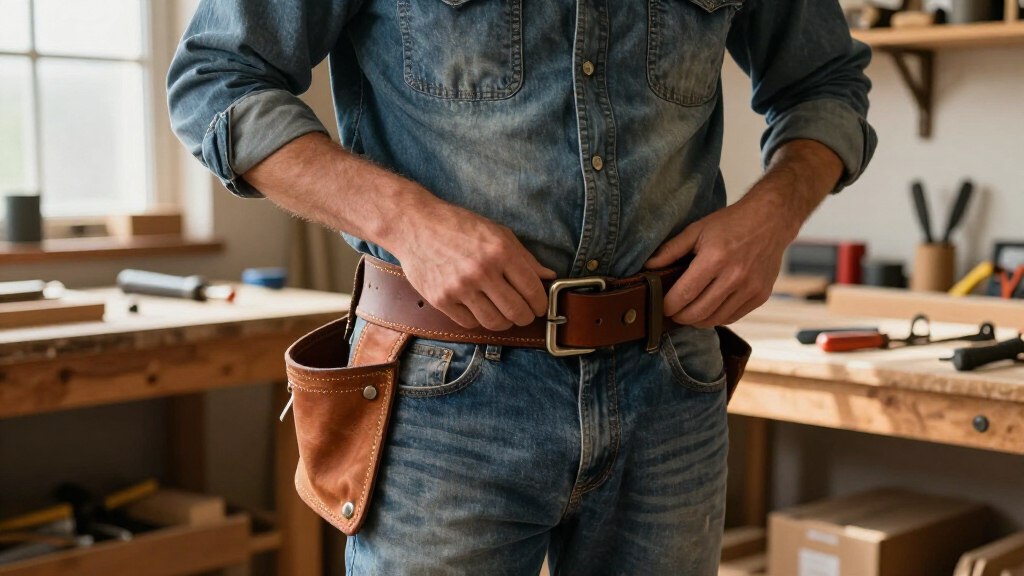

A heavy-duty work belt has one job: hold up under load without stretching, cracking, or giving up by lunchtime. After comparing 14 of the most popular options, the Klein Tools 5415XL stands out as the best overall pick for anyone carrying tools daily, thanks to its genuine leather construction and contractor-grade durability. For pure value, the Dickies Industrial Strength belt is hard to beat, while the CHAOREN full grain leather belt wins for workers who want something rugged enough for the job but clean enough for after-work wear. The main tradeoff in this category is leather versus tactical nylon — leather offers stiffness and a classic look, while nylon web belts like the JUKMO and FAIRWIN options flex more and dry faster. Read on for the full breakdown of all 14 belts.

Get business pricing on tools and workshop supplies
- Business-only prices and quantity discounts
- Tax-exempt purchasing
- Multiple users, one account, clear invoices
Complete the kit


Key Takeaways
- Genuine full grain leather belts (Klein Tools 5415XL, Carhartt saddle leather, Dickies Industrial) consistently outperformed cheaper split-leather and bonded options for load-bearing durability and long-term shape retention.
- Tactical nylon belts from JUKMO, FAIRWIN, and Mozeto dominated on adjustability and comfort but should be skipped for tool pouch duty unless explicitly rated for it.
- The Klein Tools 5705 PowerLine web belt proved that webbing can be jobsite-grade when purpose-built — it outclassed generic tactical belts in strength while staying lighter than any leather option.
- Price tracked poorly with performance: the sub-$20 Dickies Industrial Strength belt beat several belts costing twice as much, making it the clear value champion.
- Belts with dual-purpose styling (CHAOREN leather, Carhartt canvas) sacrifice some rigidity for versatility — a reasonable trade for office-adjacent trades, a bad one for framers and electricians.
| CHAOREN Work Belts for Men, Leather Belt Heavy Duty for Daily Wear |  | Best Value Leather Pick | Material: Full-Grain Leather | Thickness: 3.8mm | Buckle: Double-Prong, Zinc Alloy | VIEW LATEST PRICE | See Our Full Breakdown |
| Klein Tools 5415XL Heavy-Duty Leather Tool Belt for Contractors |  | Best for Tradesmen (Large Waist) | Material: Leather | Belt Width: 2 inches | Waist Size Range: 44 to 52 inches | VIEW LATEST PRICE | See Our Full Breakdown |
| Carhartt Men’s Casual Rugged Canvas Duck Belt with Antique Brass Buckle |  | Best Canvas Work Belt | Fabric: 100% cotton duck canvas | Backing: Contrast corduroy | Buckle: Antique brass frame | VIEW LATEST PRICE | See Our Full Breakdown |
| CHAOREN Tactical Belt Men – 1.5″ Stretch Work Belt with Zinc Alloy Buckle |  | Best Stretch Comfort Pick | Fabric: 60% Recycled Polyester, 20% Spandex, 20% Polypropylene | Buckle Material: Zinc Alloy | Width: 1.5 inches | VIEW LATEST PRICE | See Our Full Breakdown |
| Carhartt Men’s Durable Full Grain Saddle Leather Classic Belt |  | Best Premium Leather | Material: 100% Saddle Leather | Leather Grade: Full-grain | Width: 1.5 inches | VIEW LATEST PRICE | See Our Full Breakdown |
| Dickies Men’s Industrial Strength Leather Belt – Workwear, Durable, Reinforced, Heavyweight |  | Best Hybrid Construction | Fabric type: 20% PU, 30% GRS bonded leather, 20% split leather, 30% polyester | Belt width: 1.5 inches | Sizing guidance: Order 2 inches larger than pant size | VIEW LATEST PRICE | See Our Full Breakdown |
| Thicken Full Grain Leather Men’s Work Belt with Brass Buckle |  | Best Premium Leather | Material: 100% full grain leather | Thickness: 5mm | Width: 38mm (1.5 inches) | VIEW LATEST PRICE | See Our Full Breakdown |
| Dickies Men’s Genuine Leather Work Casual Belt |  | Best Value Pick | Material: 100% genuine leather | Width: 1.5 inches | Adjustment holes: 7 | VIEW LATEST PRICE | See Our Full Breakdown |
| Klein Tools 5705 PowerLine Web Work Belt |  | Best for Electricians and Tool-Pouch Users | Material: Heavy-duty nylon webbing | Width: 2 inches | Max waist size: Up to 52 inches | VIEW LATEST PRICE | See Our Full Breakdown |
| FAIRWIN Men’s Tactical Belt, 1.5″ Rigger Utility Work Belt |  | Best for Heavy Loads and Tactical Use | Material: 100% nylon (1000D high-strength) | Width: 1.5 inches | Length: 53 inches | VIEW LATEST PRICE | See Our Full Breakdown |
| JUKMO Tactical Belt, Military Hiking Rigger 1.5″ Nylon Web Work Belt |  | Best for Active Trades and Outdoor Work | Material: 100% Nylon | Buckle: Aluminum alloy quick-release | Width: 1.5 inches | VIEW LATEST PRICE | See Our Full Breakdown |
| JUKMO Men’s Stretch Tactical Belt, 1.5″ Elastic Nylon Web with Flip Buckle |  | Best Value Tactical Pick | Material: 99.99% Nylon | Buckle: Zinc alloy, quick-release flip | Width: 1.5 inches | VIEW LATEST PRICE | See Our Full Breakdown |
| Mozeto Tactical Belts for Men Military Style Work Hiking Riggers Web Gun Belt |  | Best Sizing Range for Big Waists | Fabric type: 100% Nylon | Buckle material: Aluminum alloy, quick-release | Size options: S (#115cm) to 3XL (#165cm) | VIEW LATEST PRICE | See Our Full Breakdown |
| Dickies Men’s Double Prong Leather Work Belt |  | Best Classic Leather Work Belt | Material: 100% Leather | Buckle type: Double prong | Adjustability: Full adjustability along entire strap | VIEW LATEST PRICE | See Our Full Breakdown |
| heavy-duty work belt | Material | Buckle | Width |
|---|---|---|---|
| CHAOREN Work Belts for Men | Full-Grain Leather | Double-Prong, Zinc Alloy | — |
| Klein Tools 5415XL Heavy-Duty | Leather | Double-tongue | — |
| Carhartt Men’s Casual Rugged C | — | Antique brass frame | 1.5 inches |
| CHAOREN Tactical Belt Men | — | — | 1.5 inches |
| Carhartt Men’s Durable Full Gr | 100% Saddle Leather | Classic harness | 1.5 inches |
| Dickies Men’s Industrial Stren | — | — | — |
| Thicken Full Grain Leather Men | 100% full grain leather | — | 38mm (1.5 inches) |
| Dickies Men’s Genuine Leather | 100% genuine leather | Sturdy metal | 1.5 inches |
| Klein Tools 5705 PowerLine Web | Heavy-duty nylon webbing | Metal quick-release | 2 inches |
| FAIRWIN Men’s Tactical Belt | 100% nylon (1000D high-strength) | Quick-release metal, 2.4 inches wide, 5/16 inch thick | 1.5 inches |
| JUKMO Tactical Belt | 100% Nylon | Aluminum alloy quick-release | 1.5 inches |
| JUKMO Men’s Stretch Tactical B | 99.99% Nylon | Zinc alloy, quick-release flip | 1.5 inches |
| Mozeto Tactical Belts for Men | — | — | — |
| Dickies Men’s Double Prong Lea | 100% Leather | — | — |
More Details on Our Top Picks
CHAOREN Work Belts for Men, Leather Belt Heavy Duty for Daily Wear
Best value leather pick is the role this CHAOREN belt earns, and it does so by delivering full-grain leather at 3.8mm thickness for a price that undercuts the Carhartt Saddle Leather belt considerably. Compared with the Carhartt, the full-length hole spacing gives it more fine-tuned adjustability, which matters if your waist sits between standard sizes. The vintage double-prong buckle adds grip that a single-prong design can’t match under load.
The tradeoff is finish quality: the Carhartt’s heavy-stitched tab and harness buckle feel more refined, and this belt asks for occasional leather conditioning to keep the grain from drying out. It straddles work and casual wear well enough, but it won’t pass at a formal office.
Pros:- Genuine full-grain leather resists cracking at a budget-friendly price
- Full-length adjustability with evenly spaced holes fits between-size waists
- Double-prong buckle holds more securely under heavy load than single-prong designs
- Versatile enough for jobsite and weekend wear
Cons:- Requires occasional conditioning to prevent the leather from drying out
- Rugged styling limits use with formal or business attire
Best for: Budget-conscious tradesmen and DIYers who want real full-grain leather without the heritage-brand markup
Not ideal for: Buyers who want zero maintenance — the leather demands conditioning, and the double-prong buckle reads too casual for dress settings
- Material:Full-Grain Leather
- Thickness:3.8mm
- Buckle:Double-Prong, Zinc Alloy
- Adjustability:Full-length with evenly spaced holes
- Style:Vintage work / casual
- Maintenance:Occasional leather conditioning recommended
Our verdict“The smart buy if you want full-grain leather performance on a working budget and don’t mind periodic upkeep.”
Klein Tools 5415XL Heavy-Duty Leather Tool Belt for Contractors
This is the only true load-bearing tool belt in this batch, and that distinction matters. Where the CHAOREN and Carhartt options are everyday belts you can hang a pouch from, the Klein 5415XL is built to keep loaded tool pouches anchored in place through a full framing day, with a double-tongue buckle that won’t slip under 20-plus pounds of gear. It’s US-made, 2 inches wide, and sized specifically for waists 44 to 52 inches.
That sizing is both its purpose and its limitation — smaller-framed tradesmen simply can’t use it, and unlike the Klein 5705 PowerLine web belt elsewhere in this guide, there’s no padding, so all-day hip comfort depends on your pouch setup.
Pros:- Purpose-built to hold heavy tool pouches without shifting
- Double-tongue buckle stays locked under serious loads
- US-made heavy-duty leather built for years of jobsite abuse
- Comfortable, secure fit for large waist sizes often ignored by other brands
Cons:- Sized only for 44–52 inch waists, excluding most buyers
- No padding or comfort features for long shifts with heavy pouches
Best for: Carpenters, framers, and electricians with large waists who hang fully loaded pouches on their belt every day
Not ideal for: Anyone with a waist under 44 inches — and buyers wanting a dual-purpose belt for casual wear, since this is pure jobsite equipment
- Material:Leather
- Belt Width:2 inches
- Waist Size Range:44 to 52 inches
- Buckle:Double-tongue
- Made in:USA
- Intended Use:Tool pouch support for trades
Our verdict“The dedicated contractor’s choice if your waist falls in the 44–52 range and your belt carries real tools, not just your pants.”
Carhartt Men’s Casual Rugged Canvas Duck Belt with Antique Brass Buckle
The canvas duck category deserves a slot here, and Carhartt’s version stands out for turning the same material as their jackets into a belt with genuine character. The corduroy backing isn’t just styling — it grips clothing and adds comfort against the waist, something the CHAOREN tactical belt’s nylon webbing can’t replicate. Saddle leather trim reinforces the stress points where canvas alone would eventually fail.
Be aware that hand wash only is a real maintenance commitment, and sizing runs small enough that most buyers should order one size up. Compared with the Carhartt Saddle Leather belt in this guide, this one trades longevity for a softer, more flexible feel from day one.
Pros:- Cotton duck canvas construction matches Carhartt’s proven workwear durability
- Corduroy backing grips clothing and improves waist comfort
- Saddle leather trim reinforces high-stress points
- Antique brass buckle delivers timeless, rugged styling
Cons:- Hand wash only, inconvenient for a belt that sees daily jobsite dirt
- Runs small — most buyers need to size up
- Limited color options compared with nylon tactical belts
Best for: Workwear enthusiasts and outdoor laborers who want a broken-in feel from the start and appreciate heritage styling
Not ideal for: Anyone wanting low-maintenance gear — hand washing and sizing quirks make this fussier than nylon options like the FAIRWIN rigger belt
- Fabric:100% cotton duck canvas
- Backing:Contrast corduroy
- Buckle:Antique brass frame
- Width:1.5 inches
- Trim:Saddle leather
- Care:Hand wash only
- Origin:Imported
Our verdict“The pick for buyers who value workwear heritage and comfort over low-maintenance practicality.”
CHAOREN Tactical Belt Men – 1.5″ Stretch Work Belt with Zinc Alloy Buckle
This model claims the comfort crown through a blend of recycled polyester, spandex, and polypropylene — a true stretch belt in a lineup dominated by rigid leather. The infinite flip-top adjustment means no fixed holes, so it fits precisely whether you’re bending, crouching, or carrying a loaded tool belt over it. Compared with the JUKMO stretch tactical belt in this guide, the CHAOREN’s quick-release zinc alloy buckle is easier to operate one-handed with gloves on.
The compromise is load capacity: stretch webbing flexes comfortably but doesn’t hold tool pouches as rigidly as the Klein 5415XL, and the wet-wipe-only care instruction limits how you clean it after a grimy week. It’s a support belt, not a gear-carrying one.
Pros:- Stretch webbing flexes with your body during bending and crouching
- Infinite adjustment eliminates awkward hole spacing entirely
- Quick-release buckle operates one-handed, even with gloves
- High-tensile webbing with a partial recycled-content build
Cons:- Stretch construction flexes under heavy tool loads, unlike rigid leather belts
- Wet-wipe-only cleaning limits care after dirty jobs
- Limited color availability
Best for: Warehouse workers, delivery drivers, and tradesmen who bend and crouch all day and prioritize flexibility over load rigidity
Not ideal for: Contractors hanging heavy pouches — the stretch flexes under load, and it won’t work for formal settings either
- Fabric:60% Recycled Polyester, 20% Spandex, 20% Polypropylene
- Buckle Material:Zinc Alloy
- Width:1.5 inches
- Adjustment:Infinite, flip-top buckle mechanism
- Support:High-tensile nylon webbing
- Care:Wet wipe clean only
Our verdict“Buy this for all-day movement comfort; skip it if your belt needs to carry rigid loads.”
Carhartt Men’s Durable Full Grain Saddle Leather Classic Belt
If the CHAOREN full-grain belt is the value play, this Carhartt is the upgrade path. The heavy-stitched tab is the differentiator: it reinforces the holes and buckle attachment where cheap belts tear first, which is exactly the failure point you want addressed on a belt that gets daily jobsite abuse. The saddle leather develops a rich patina over time, so it looks better in year three than day one — the opposite of coated leather belts that crack and flake.
Two caveats: sizing runs small, so order a size up, and dry-cloth-only care plus occasional conditioning is part of the ownership cost. Compared with the Carhartt canvas duck belt, this one trades immediate softness for decades of lifespan.
Pros:- Full-grain saddle leather develops character rather than wearing out
- Heavy-stitched tab prevents tearing at the highest-stress point
- Classic harness buckle is robust and won’t go out of style
- Work-to-casual versatility with genuine heritage branding
Cons:- Runs small, requiring most buyers to size up
- Needs periodic conditioning and dry-cloth-only cleaning to stay looking its best
Best for: Buyers willing to pay a premium for a belt that outlasts several cheap ones and ages attractively doing it
Not ideal for: Anyone wanting machine-washable or zero-maintenance gear — this leather demands conditioning and careful sizing
- Material:100% Saddle Leather
- Leather Grade:Full-grain
- Width:1.5 inches
- Buckle:Classic harness
- Reinforcement:Heavy-stitched tab
- Care:Dry cloth clean; occasional conditioning
- Origin:Imported
Our verdict“The long-term investment pick for buyers who plan to wear one belt for years instead of replacing cheap ones annually.”
Dickies Men’s Industrial Strength Leather Belt – Workwear, Durable, Reinforced, Heavyweight
Most belts in this lineup are either full leather or full nylon, but this Dickies option splits the difference with a layered blend of bonded leather, split leather, polyester, and a nylon overlay. That reinforcement matters if you regularly clip a pouch or holster to your hip — the strap resists the stretching and tearing that pure leather suffers under repeated point loads. Compared with the Klein Tools 5705, it looks far more like an everyday belt and won’t read as “jobsite equipment” at dinner, though it lacks the Klein’s dedicated tool-pouch ecosystem. The tradeoff is care: this one is hand wash only, and the blended material won’t patina the way the Thicken full grain belt does.
Pros:- Nylon overlay resists stretching from clipped tools and pouches
- Hybrid construction is tougher than basic genuine leather belts
- Works as both workwear and casual everyday wear
- Trusted Dickies workwear pedigree
Cons:- Hand wash only — higher maintenance than wipe-clean nylon belts
- Blended materials won’t develop a premium leather patina
- Sizing runs 2 inches over pant size, so measure carefully
Best for: Tradespeople who carry gear on their belt but still want something that passes as a normal casual belt
Not ideal for: Buyers who want a single-material, full grain leather belt that ages well and needs no special cleaning
- Fabric type:20% PU, 30% GRS bonded leather, 20% split leather, 30% polyester
- Belt width:1.5 inches
- Sizing guidance:Order 2 inches larger than pant size
- Construction:Reinforced strap with nylon overlay
- Care:Hand wash only
- Style:Workwear / casual crossover
Our verdict“A smart middle ground for anyone who wants tool-belt durability without looking like they’re wearing one.”
Thicken Full Grain Leather Men’s Work Belt with Brass Buckle
Full grain leather is the top cut of the hide, and at 5mm thick, this is the most substantial leather strap in this batch. Where the Dickies Casual Belt uses generic genuine leather with edge stitching, this belt relies on material quality alone — no reinforcement needed because the leather itself is the reinforcement. The vintage brass buckle also elevates it: compared with the utilitarian hardware on the FAIRWIN tactical belt, this looks as natural under a flannel at a jobsite as it does with jeans on the weekend. The stiffness is real, though. Buyers expecting the broken-in softness of a thinner dress belt will find the first few weeks firm, and dry-clean-only care is an unusual demand for a work belt.
Pros:- 100% full grain leather — the most durable leather grade available
- 5mm thickness resists deformation under tool and pouch weight
- Brass buckle adds style the pure-utility belts here lack
- Comfortable, flexible fit once broken in
Cons:- Dry clean only — impractical care for a belt that gets dirty
- 5mm thickness may feel stiff or bulky in smaller belt loops
- Premium leather commands a higher price than synthetic options
Best for: Buyers who want one belt that shrugs off abrasion on the job and still looks sharp socially
Not ideal for: Anyone who prefers soft, pliable belts from day one or hates fussy care instructions
- Material:100% full grain leather
- Thickness:5mm
- Width:38mm (1.5 inches)
- Buckle style:Vintage brass
- Care:Dry clean only
- Style:Vintage / workwear crossover
Our verdict“The best pure-leather choice here for buyers who value longevity and looks over low-maintenance convenience.”
Dickies Men’s Genuine Leather Work Casual Belt
This is the no-drama, budget-friendly workhorse of the group. It doesn’t have the Thicken belt’s full grain pedigree or the Klein 5705’s nylon webbing, but it covers the basics well: genuine leather, reinforced edge stitching, and a sturdy metal buckle at a price that won’t sting if it gets scuffed on a ladder. The seven adjustment holes are a genuinely useful touch — more sizing granularity than most competitors offer — which matters if your waist fluctuates or you wear varying layers seasonally. The compromises are predictable at this price: the leather is a step down in density from premium options, and you’ll likely need to order one size up to get a proper fit, so factor that in before checkout.
Pros:- Affordable price for 100% genuine leather construction
- Seven adjustment holes offer finer fit tuning than rivals
- Reinforced edge stitching strengthens the most failure-prone area
- Clean styling works off the clock
Cons:- Genuine leather is less dense and durable than full grain alternatives
- Runs small — most buyers need one size up
- Thin on features compared with tactical or tool-belt options
Best for: Budget-conscious workers who want dependable leather durability without premium pricing
Not ideal for: Heavy tool carriers — the lighter genuine leather will stretch faster than full grain or reinforced hybrid straps
- Material:100% genuine leather
- Width:1.5 inches
- Adjustment holes:7
- Buckle:Sturdy metal
- Construction:Reinforced edge stitching
- Origin:Imported
Our verdict“The smart pick if you want a solid everyday work belt at the lowest reasonable price point.”
Klein Tools 5705 PowerLine Web Work Belt
This is the only belt in the batch built as part of a load-bearing system. The Klein 5705 is designed to pair with Klein’s PowerLine padded suspenders and tool pouches, which changes the math entirely: weight gets distributed across your shoulders instead of hanging off your hips. The 2-inch-wide nylon webbing is wider than everything else here — including the FAIRWIN tactical belt’s 1.5 inches — specifically to support loaded pouches without rolling or digging in. Compared with the Thicken leather belt, it sacrifices all style for function; nobody is wearing this to dinner. It’s also spare: no padding, no frills, and it caps out at a 52-inch waist, which excludes larger framers and mechanics.
Pros:- Integrates with Klein PowerLine suspenders for shoulder-based load distribution
- 2-inch webbing width resists rolling under loaded pouches
- Quick-release metal buckle for fast on/off with gloves
- Rugged nylon shrugs off jobsite abuse and weather
Cons:- No padding or comfort features of its own
- 52-inch maximum waist size excludes larger users
- Pure utility design — zero crossover appeal
Best for: Electricians and tradespeople who carry loaded tool pouches daily and benefit from suspender compatibility
Not ideal for: Anyone wanting a dual-purpose belt for casual wear, or workers with waists over 52 inches
- Material:Heavy-duty nylon webbing
- Width:2 inches
- Max waist size:Up to 52 inches
- Buckle:Metal quick-release
- Compatibility:Klein PowerLine suspenders and tool pouches
- Type:Utility web work belt
Our verdict“Buy it if you’re building a Klein PowerLine setup; skip it if you want one belt for work and weekends.”
FAIRWIN Men’s Tactical Belt, 1.5″ Rigger Utility Work Belt
With a 1100-pound weight capacity, the FAIRWIN out-muscles every other belt in this lineup — it’s rated for forces that would destroy a leather strap like the Dickies Industrial Strength. The 1000D nylon construction and quick-release metal buckle make it a natural fit for holsters, riggers, and outdoor work where failure isn’t an option. The V-ring adds genuine versatility for clipping lanyards or gear that no leather belt here can match. But this capability comes with quirks: the sizing is genuinely odd, with a 53-inch strap marketed toward a 42–46 inch waist range, so smaller waists should look at the CHAOREN stretch tactical belt instead. And unlike the Dickies Casual, this will never double as office-appropriate wear.
Pros:- 1100 lb weight capacity far exceeds leather and standard nylon belts
- 1000D high-strength nylon with reinforced stitching
- Quick-release buckle operates easily with gloves on
- V-ring provides dedicated gear attachment leather belts can’t offer
Cons:- Waist range (42–46 inches) excludes most average and smaller builds
- Stiff, aggressive design is uncomfortable for casual daily wear
- No stretch or padding — bare-bones comfort for long shifts
Best for: Tactical users, armed professionals, and outdoor workers who need extreme load ratings and gear attachment points
Not ideal for: Slimmer buyers or anyone wanting a comfortable everyday belt for office-casual settings
- Material:100% nylon (1000D high-strength)
- Width:1.5 inches
- Length:53 inches
- Waist size range:42 to 46 inches
- Buckle:Quick-release metal, 2.4 inches wide, 5/16 inch thick
- Weight capacity:1100 lbs
- Extras:V-ring for gear attachment
Our verdict“The clear choice when load rating and gear attachment matter more than comfort or style.”
JUKMO Tactical Belt, Military Hiking Rigger 1.5″ Nylon Web Work Belt
Among the tactical options in this roundup, this JUKMO rigger belt stands out for pairing a genuine aluminum alloy quick-release buckle with a stretch nylon strap — a combination built for people who bend, crouch, and climb all day. Compared with the Mozeto tactical belt, the aluminum buckle here is lighter, which matters if you’re wearing it on a long hike or a full shift. The stretch webbing moves with you instead of digging into your hips the way rigid leather belts like the Dickies Double Prong can after hours of physical work.
The tradeoff is vagueness: no stated weight capacity and no clear size range, so buyers holstering heavy gear are guessing. It’s a comfort-first pick, not a load-bearing rig.
Pros:- Aluminum alloy buckle is lightweight yet sturdy for daily wear and tear
- Stretch nylon webbing flexes with your body during physical activity
- Quick-release buckle detaches instantly for security checkpoints or end-of-shift removal
- Arrives in a gift box, making it an easy practical gift
Cons:- No published weight capacity, so heavy tool or gear loads are a gamble
- No specific size range listed, increasing the chance of a wrong fit on the first order
- Limited color options restrict style matching
Best for: Tradespeople, firefighters, and outdoor workers who need a belt that flexes during constant movement
Not ideal for: Anyone carrying a loaded tool pouch or sidearm — the stretch webbing and unstated load rating make it a poor choice for heavy gear
- Material:100% Nylon
- Buckle:Aluminum alloy quick-release
- Width:1.5 inches
- Strap type:Stretch nylon webbing
- Adjustability:Adjustable fit
- Intended use:Military, SWAT, firefighting, hiking, outdoor work
- Packaging:Gift box included
- Origin:Imported
Our verdict“Buy this if you move constantly at work and want a featherweight, flexible belt — skip it if you hang serious weight from your hips.”
JUKMO Men’s Stretch Tactical Belt, 1.5″ Elastic Nylon Web with Flip Buckle
This sibling to the JUKMO rigger belt trades the aluminum buckle for a zinc alloy flip buckle and adds true micro-adjustment, letting you dial in fit in tiny increments instead of settling for the nearest hole. That puts it a step ahead of the Mozeto for everyday comfort, since trimming webbing to size is never required here. It also competes well against the CHAOREN tactical belt on the strength of its fine-tuned sizing.
The catch is elasticity. Elastic nylon is superb for daily wear and light duty, but it sags under a heavy tool load in a way the Dickies Double Prong leather belt never will. For a rigid leather belt see other picks; this is the flexible, budget-friendly option for people whose belt mostly holds pants, not hardware.
Pros:- Micro-adjustment allows precise, incremental fit changes no hole-based belt can match
- One-handed quick-release buckle is convenient when your other hand is busy
- Stretch nylon stays comfortable through long shifts and varied activity
- Versatile enough for tactical use, hiking, and everyday casual wear
Cons:- Too stretchy for users who need a rigid, no-give platform for tools or holsters
- Zinc alloy buckle is less premium and slightly heavier than aluminum alternatives
- Limited or unspecified color choices
Best for: Budget-conscious buyers who want a comfortable, precisely adjustable belt for daily wear and light outdoor use
Not ideal for: Framers or mechanics hauling loaded tool belts — the elastic webbing stretches and sags under real weight
- Material:99.99% Nylon
- Buckle:Zinc alloy, quick-release flip
- Width:1.5 inches
- Adjustability:Micro-adjustment
- Strap type:Elastic nylon webbing
- Intended use:Outdoor, tactical, daily wear
- Operation:One-handed quick release
Our verdict“The smart buy if you want tactical-belt comfort and micro-fit precision at a low price — just don’t load it down.”
Mozeto Tactical Belts for Men Military Style Work Hiking Riggers Web Gun Belt
The Mozeto earns its slot with something rare in this category: an honest, published size range from 30 to 60 inches, spanning S through 3XL. Where the JUKMO rigger belt leaves you guessing at fit, this one tells you exactly what you’re getting — a big deal for larger-framed workers who often find tactical belts max out too small. Its high load capacity and holster compatibility also make it the more credible gun-and-gear option in this batch, closer in spirit to the Klein Tools PowerLine web belt than to stretchy casual models.
Two annoyances temper the appeal: you may need to trim the webbing yourself for a perfect length, and black is your only color. Compared with the JUKMO stretch belt, it’s sturdier but less forgiving on comfort.
Pros:- Honest sizing from 30 to 60 inches covers waists most tactical belts ignore
- High load capacity and holster compatibility suit gun and tool carry
- Aluminum quick-release buckle handles repeated fast duty cycles
- Works as tactical, hiking, and everyday wear in one package
Cons:- May require trimming the strap yourself for an exact fit
- Black is essentially the only color option
- Stiffer, less comfortable than stretch-webbing belts for all-day movement
Best for: Larger-framed workers and concealed carriers with waists up to 60 inches who need a genuinely load-rated platform
Not ideal for: Anyone wanting set-and-forget sizing out of the box — trimming webbing and melting the cut edge takes effort
- Fabric type:100% Nylon
- Buckle material:Aluminum alloy, quick-release
- Size options:S (#115cm) to 3XL (#165cm)
- Waist range:30″ to 60″
- Belt width:1.5 inches
- Buckle width:2.0 inches
- Load rating:High load capacity
- Colors:Black
Our verdict“The clear pick for big-waisted buyers and gear carriers who need documented sizing and load capacity over stretchy comfort.”
Dickies Men’s Double Prong Leather Work Belt
After three nylon tactical belts, this Dickies double prong is the traditionalist’s answer. Full 100% leather construction means zero stretch and zero sag — hang a hammer and a pouch off it and it holds shape all day, something no elastic option in this roundup, including the JUKMO stretch belt, can claim. The double-prong buckle distributes tension across two points, reducing leather creep compared with single-prong designs, and the fully adjustable strap lets you punch anywhere along its length.
The tradeoff is classic-belt friction: Dickies tells you to order two inches larger than your pant size, and ignoring that rule gets you a belt that won’t close. It also lacks a quick-release buckle and modular tactical features, so compared with the Mozeto it’s slower on and off, but far more rigid under load.
Pros:- Full 100% leather construction delivers zero-sag support under heavy tool loads
- Double-prong buckle spreads tension and keeps the belt locked in place
- Fully adjustable along the entire strap for a custom fit
- Transitions naturally from jobsite to casual weekend wear
Cons:- Requires ordering two sizes up from pant size, a sizing trap for first-time buyers
- Spot-clean-only leather care is higher maintenance than washable nylon
- No quick-release or tactical attachment features
Best for: Workers who want a no-stretch leather belt that supports heavy tool loads and still looks right with jeans off the clock
Not ideal for: Tactical users needing quick-release access or holster mounting — there’s no buckle system or MOLLE compatibility here
- Material:100% Leather
- Buckle type:Double prong
- Adjustability:Full adjustability along entire strap
- Care instructions:Spot clean
- Sizing guidance:Order 2 inches larger than pant size
- Style:Work and casual wear
- Origin:Imported
Our verdict“The go-to if you want timeless leather rigidity and tool-holding muscle over tactical convenience — just size up two inches.”

How We Picked
I evaluated each belt against the demands that actually break work belts: load capacity (how it handles a loaded tool pouch, drill holster, or hammer loop), material quality (full grain versus genuine versus bonded leather, and nylon webbing weight ratings), buckle security under repeated bending and snagging, and shape retention — the single most common failure point, where a belt stretches and rolls within months. Comfort over a full shift and adjustability also factored in, since a belt that digs in gets abandoned regardless of how tough it is.
The ranking logic follows a simple hierarchy: purpose-built contractor belts that carry tools safely sit at the top, followed by high-quality general work belts, then tactical nylon belts rated by their comfort and versatility rather than raw load capacity. Value played a role in ordering within tiers — a belt that performs at 90% for half the price outranks a marginally better premium option. Finally, I flagged which belts work for dual work-and-casual wear, because plenty of buyers want one belt that does both, and that changes the calculus considerably.
Factors to Consider When Choosing Heavy-duty Work Belts
Before picking a belt from the list above, it helps to understand what actually separates a belt that lasts a decade from one that’s landfill bait within a year. These are the factors that shaped my rankings — and the mistakes I see buyers make most often.Leather Grades: Full Grain vs. Genuine vs. Bonded
This is where most buyers get burned, because labeling is deliberately confusing. Full grain leather is the top layer of the hide, unrefined, and it’s what you want in a work belt — it stiffens into shape and resists stretching for years. ‘Genuine leather’ sounds better than it is; it’s a lower layer of the hide that’s been sanded and treated, and while serviceable, it rolls and softens faster under load. Bonded leather is essentially leather scraps glued together and should be avoided entirely for heavy-duty use — it delaminates when exposed to sweat and jobsite moisture. A quick field test: full grain belts feel stiff and show natural hide texture, while bonded belts feel smooth and slightly plasticky. If the price seems too good for ‘full grain,’ it probably is.
Nylon Webbing: When Tactical Beats Leather
Tactical nylon belts solve problems leather can’t. They’re infinitely adjustable with no holes to stretch out, they don’t absorb sweat or rain, and they dry fast — a real advantage for outdoor trades and anyone working in humidity. The catch is that most tactical belts are designed for EDC and light carry, not tool pouches. A 1.5″ nylon belt rated for hiking will flex and twist under a 15-pound tool load unless it’s purpose-built like the Klein 5705. Check whether the webbing is stiffened or double-layered; floppy single-layer webbing is the telltale sign of a casual belt masquerading as a work belt. If your belt carries a phone and keys, nylon is arguably the better choice. If it carries a framing hammer, stick with leather or a rated web belt.
Buckle Types and Failure Points
The buckle is the second most common failure point after stretch, and each style has tradeoffs. Roller buckles and prong designs (like the Dickies double prong) are traditional, repairable, and secure, but prongs eventually widen the holes they sit in. Flip and quick-release metal buckles on tactical belts are fast to adjust but can pinch skin and typically aren’t rated for fall protection or heavy pouches. Brass buckles look great on leather belts and resist corrosion, though they’re softer than zinc alloy and can bend under serious leverage. Avoid plastic hardware entirely for heavy-duty work — it’s the first thing to crack in cold weather or under a dropped tool.
Width, Thickness, and Compatibility with Tool Pouches
Width isn’t about style — it determines what your belt can actually carry. 1.5 inches is the sweet spot for most tool pouches and hammer loops, which are sized around that standard. Going wider distributes load better but won’t fit many pouch attachments; going narrower concentrates stress and causes rolling. Thickness matters just as much: a belt under 3.5mm will flex and fold when you hang a loaded pouch on it, no matter how good the leather is. If you plan to run a full tool setup, hold the belt in your hands before buying — it should feel like it could nearly stand up on its own. That stiffness is annoying for the first week and exactly what you want for the next five years.
The Sizing Mistake Almost Everyone Makes
Work belts should be sized two inches larger than your pants waist, not the same size — and even more if you layer over work pants with a full pouch pulling the belt down. Buyers who order their exact pants size end up with a belt maxed out on the last hole, which stretches that hole fast and leaves no room when you’re bent over or crouching all day. Removable-buckle belts (common with tactical and some leather styles) let you trim to size, which is a genuine advantage if you’re between sizes. Also remember that leather stretches about an inch over its break-in period, while quality nylon barely stretches at all. Buy accordingly.
When Paying More Actually Matters
There’s a real performance cliff between the $15–20 tier and the $40–60 tier — that’s where full grain leather, reinforced stitching, and name-brand quality control live. Above $60, you’re mostly paying for brand prestige or specialized features (like Klein’s contractor-specific design) rather than durability you’ll notice. The mistake I see isn’t underbuying; it’s buying mid-priced bonded leather belts that perform like the cheap ones while costing like the good ones. If budget is tight, a $20 Dickies industrial belt will genuinely outlast a $35 fashion-brand ‘work’ belt. Spend the real money only if you carry tools professionally every day.
Frequently Asked Questions
Can I use a tactical nylon belt to hold a tool pouch?
Only if the webbing is stiff enough to resist twisting, and most tactical belts aren’t. Belts like the JUKMO and FAIRWIN are excellent for EDC, light carry, and jobs where you bend and crouch constantly, but single-layer elastic or soft nylon will roll under a loaded pouch and can dump your tools. The exception in this lineup is the Klein Tools 5705 PowerLine, which is engineered specifically for tool suspension with stiffened webbing. If your daily load is a drill and a hammer, a leather belt like the Dickies Industrial or the Klein 5415XL will serve you better. If your load is a multitool and a tape measure, tactical nylon is arguably the more comfortable choice.
How do I break in a stiff full grain leather belt without ruining it?
The fastest safe method is to roll the belt back and forth across its width in both directions — this softens the fibers without stressing the stitching. Wearing it during normal work for a week or two does the rest naturally. Avoid the old trick of soaking it in water; while water does soften leather temporarily, it can also cause the belt to stretch unevenly and warp its shape permanently. A small amount of leather conditioner applied to the flesh side can help if the belt squeaks or digs in, but go light — over-conditioned leather loses the stiffness that makes it good at carrying tools. One to two weeks of patience is the honest answer, and the belt molds to your waist shape in the process.
Why did the CHAOREN leather belt rank below the Carhartt saddle leather if both are full grain?
Thickness and finishing are the difference. The Carhartt saddle leather belt is cut heavier and stitched for load-bearing work, which means it holds a tool pouch and keeps its shape for years. The CHAOREN is a genuine full grain belt but cut and finished more like a dress-casual hybrid — softer edges, lighter weight, and a buckle better suited to office wear than jobsite abuse. That makes the CHAOREN the right pick if you need one belt that transitions from work to a customer meeting, and the wrong pick if you’re hanging framing tools off it all day. Neither is defective; they’re built for different definitions of ‘heavy-duty.’
Are double prong buckles actually stronger than single prong?
Yes, and the reason is load distribution rather than raw strength. Two prongs spread the pulling force across two holes instead of one, which slows the hole-stretching that kills most prong belts and keeps the leather flatter against your body under a load. The Dickies Double Prong ranked well partly for this reason — it’s a design that’s survived decades of industrial use for a cause. The tradeoff is convenience: double prongs take longer to fasten one-handed and can be fiddly with gloves on. If you take your belt on and off many times a day, a single prong or tactical buckle will annoy you less. If it stays on from clock-in to clock-out, take the double prong.
What’s the best belt for someone who works in heat, rain, or sweat-heavy conditions?
Nylon, without much debate. Leather absorbs sweat and eventually develops salt stains, cracks, and a permanent wave shape in humid climates — even high-quality full grain suffers this, just more slowly. Belts like the JUKMO stretch tactical or the Mozeto rigger belt shed water, dry in minutes, and don’t care about humidity at all. The Klein 5705 is the pick if you need that weather resistance plus tool-carrying capability, since its webbing is stiffened for load work. The one scenario where leather still wins in bad weather is extreme cold, where nylon buckles can become brittle and leather just gets stiffer and stronger. For everything else wet, go webbing.
Conclusion
After comparing all 14 belts, the right choice comes down to what hangs off your waist every day. Best overall goes to the Klein Tools 5415XL — it’s the one belt here built specifically for people who make a living with tools on their hip, and its durability justifies the premium. Best value is the Dickies Industrial Strength belt, which delivers near-contractor performance at a price that lets you buy a spare. Best premium for those who want heirloom-grade leather is the Carhartt Full Grain Saddle Leather belt, which will likely outlast the pants it holds up.
For beginners or occasional users, the Carhartt Rugged Canvas belt is the friendliest entry point — affordable, comfortable, and forgiving while you figure out what you actually need. Best for tradespeople who prefer webbing is the Klein 5705 PowerLine. For EDC and light-duty work, the JUKMO stretch tactical belt is the comfort champion. And if you need one belt that goes from jobsite to dinner, the CHAOREN full grain leather bridges that gap better than anything else in the lineup. Match the belt to the load, not the price tag, and you’ll get years out of whichever you choose.
Fall yard work Picks

Greenworks 80V Cordless Electric Leaf Blower with 2.5Ah Battery and Charger
As an affiliate, we earn on qualifying purchases.