
TL;DR

Get business pricing on tools and workshop supplies
- Business-only prices and quantity discounts
- Tax-exempt purchasing
- Multiple users, one account, clear invoices
Full-grain leather belts are durable but need regular, gentle maintenance. Wipe, clean, condition sparingly, and store properly to keep them looking good and functioning for years.
Clean your belt regularly with a soft cloth and a gentle, pH-balanced cleaner.
Condition your full-grain leather belt every three to six months, but avoid overdoing it.
Dry soaked leather slowly and never with direct heat or sunlight.
Store your belt properly—hang or roll loosely to prevent creases and cracking.
Use products carefully: avoid household chemicals, silicone sprays, and aggressive cleaning methods.
How to Care for a Full-Grain Leather Belt
Full-grain leather rewards restraint. Remove grit, add moisture sparingly, avoid forced drying, and give the strap room to rest. That simple rhythm preserves its strength while allowing a deep, personal patina to emerge.
Adjust for climate, frequency of wear, and how the leather feels.
A quick wipe stops dirt from behaving like fine sandpaper.
Shade, airflow, and patience protect the leather fibers.
Six habits that protect the grain
Full-grain leather retains its natural surface. Treat that surface gently: small, regular actions are safer than occasional aggressive restoration.
Wipe away surface grit
Use a soft, dry cloth to remove dust, dirt, and sweat before particles settle into the grain.
Clean with restraint
Use a barely damp cloth first. For heavier soil, apply a small amount of pH-balanced leather cleaner.
Check a hidden area
Test cleaner or conditioner on the back or a concealed edge. Some formulas can darken or dull the finish.
Condition evenly
Work a small amount of smooth-leather conditioner into the grain with a clean cloth. Stop at a light sheen.
Hang or roll loosely
Hang from the buckle or roll with the buckle outward. Never fold sharply or compress the strap for long periods.
Share the stress
Alternate adjacent buckle holes or rotate between belts to reduce stretching, deep creases, and premature tearing.
Read the leather, not only the calendar
Three to six months is a useful baseline. Dry climates and daily wear may shorten the interval; a supple belt with a clean surface does not need another coat.
The normal care window
Condition sooner only when the belt feels dry, stiff, or unusually rough. Excess product can oversoften the strap, attract grit, darken the surface, and weaken its structure.
Signals to trust
Wet leather needs time, not heat
Sudden dehydration can shrink, stiffen, warp, or crack leather fibers. Restore the belt’s shape and let moisture escape gradually.
Blot gently
Lift excess water with a soft cloth. Do not rub or drive moisture deeper.
Restore shape
Lay the belt flat or hang it straight in its natural form.
Air-dry in shade
Choose a cool, ventilated place and allow the belt to dry overnight.
Reassess
Once fully dry, condition lightly only if flexibility has been lost.
Fast drying is not safer drying. Heat removes moisture unevenly and can permanently damage the surface and internal fibers.
Use the mildest effective option
No treatment makes leather truly waterproof. The goal is controlled resistance without residue, blocked breathability, or altered color.
| Product or method | Verdict | Primary effect | Best practice |
|---|---|---|---|
| Soft dry cloth | ✓Preferred | Removes loose dirt without stripping oils | Use regularly after wear |
| pH-balanced leather cleaner | ✓Suitable | Lifts heavier soil with controlled impact | Use sparingly and test first |
| Smooth-leather conditioner | ✓Suitable | Restores flexibility and limits dryness | Apply a thin, even coat |
| Traditional saddle soap | ~Caution | Strong cleaning may remove oils or shift color | Use only when compatible with the finish |
| Silicone-heavy spray | ~Caution | May leave residue or reduce breathability | Use only if the belt maker recommends it |
| Detergent, alcohol, or baby wipes | ✗Avoid | Can strip oils, discolor, or dry the grain | Keep away from the leather |
| Cooking oil or petroleum jelly | ✗Avoid | Can darken, turn rancid, and attract dirt | Never use as a conditioner |
| Soaking or machine washing | ✗Avoid | Compromises shape, finish, and structure | Use localized, gentle cleaning instead |
For water resistance, choose a compatible PFAS-free, water-based protectant and follow the belt maker’s instructions.
Fix small problems before they spread
Let leather dry completely before judging stains or color changes. Repeated gentle treatment is safer than saturation or aggressive scrubbing.
Water spots
Allow full drying first. If a boundary remains, test lightly dampening the surrounding panel to blend the contrast.
Salt or sweat residue
Wipe gently with a slightly damp cloth and air-dry. Repeat the process instead of saturating the strap.
Light scratches
Rub gently with a clean finger or soft cloth to redistribute natural oils. Seek repair for deep gouges.
Mold
Work outdoors, remove loose growth carefully, use a leather-specific mold cleaner, and correct the humidity source.
Stretched holes
Stop using a hole that is beginning to tear. A leatherworker can reinforce it without weakening nearby material.
Buckle and hardware
Check screws, snaps, and stitching. Polish metal separately and prevent metal polish from touching the leather.
Care creates character
Clean it like a pro: Keep dirt and grime off the surface
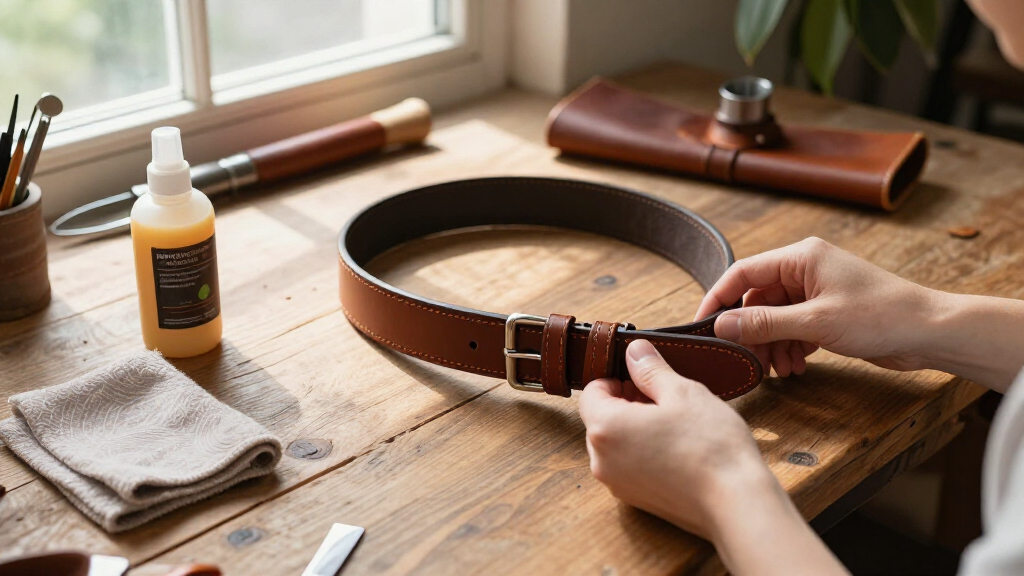
Start with the simplest step: wipe it regularly with a soft, dry cloth. Dust, dirt, and sweat can build up quickly. For stubborn spots or heavier dirt, use a barely damp cloth and let it air dry naturally. This prevents dirt from embedding into the grain, which can cause premature wear. Imagine a metalworker wiping down their tools after every shift—your belt needs the same daily respect. If you skip this, dirt acts like sandpaper, slowly polishing away the top layer of your leather’s natural grain.
When it’s time for a deeper clean, apply a small amount of pH-balanced leather cleaner with a soft cloth. Test it first on an inconspicuous spot—your belt’s backside or a hidden edge—since some cleaners can darken or dull the finish. Using too much product or aggressive scrubbing can damage the surface, leaving streaks or uneven patches. Think of cleaning as a gentle rinse, not a scrub with a wire brush.
As an affiliate, we earn on qualifying purchases.
Condition it right: Keep the leather supple without overdoing it
Conditioning is your secret weapon against dryness and cracking. Use a thin, even layer of a quality leather conditioner formulated for smooth, full-grain leather. Apply it with a clean cloth, working it into the grain. Every three to six months is usually enough—more often if you live in a dry climate or wear the belt daily. When your belt starts feeling stiff or rough, it’s a sign it needs some moisture. Think of conditioning as giving your leather a drink—this helps maintain its flexibility and prevents the leather from becoming brittle over time. Properly conditioned leather can better resist environmental stresses, such as humidity changes or temperature fluctuations, which can cause cracking or warping if neglected.
Be wary of overconditioning. More isn’t better. Excess oils can oversoften the leather, attract dirt, and even make the surface sticky. The goal is a light, even sheen that enhances the belt’s natural beauty without changing its character. Remember, a well-conditioned belt develops a beautiful patina over time—those subtle tonal shifts and soft creases that tell your story. Overdoing it can lead to a greasy surface that attracts more dirt, making maintenance more difficult and potentially shortening the belt’s lifespan.
As an affiliate, we earn on qualifying purchases.
Handle moisture the right way: Dry it slowly, not with heat
If your belt gets soaked, don’t panic. Blot excess water gently with a soft cloth—rubbing can push water deeper or damage the finish. Then, shape it back into its natural form and hang or lay it flat in a cool, shaded spot. Keep it away from radiators, direct sunlight, or hair dryers. Rapid drying can cause stiffening, shrinking, or cracking because leather fibers are sensitive to sudden temperature changes and dehydration. Think of it like drying a delicate sweater—patience is key, as rushing this process can compromise the leather’s flexibility and structural integrity. Proper drying allows the fibers to rehydrate evenly, maintaining the belt’s strength and appearance.
For example, if you walk through a rainstorm and get your belt wet, let it dry overnight. Once fully dry, consider applying a light coat of conditioner to restore flexibility. Rushing the process with heat will only make matters worse, leading to cracks or warping that are tough to fix and may permanently damage the leather’s surface and structure.
As an affiliate, we earn on qualifying purchases.
Store it smart: Keep your belt in shape when not in use
Proper storage is often overlooked but vital. Hang your belt by its buckle or roll it loosely, buckle facing out. This prevents creases and keeps the grain smooth over time. Avoid folding it sharply or stuffing it into tight spaces for long stretches, as these can cause permanent indentations and weaken the leather fibers. Think of your belt as a seasoned athlete—give it room to breathe, stretch, and rest, which helps maintain its elasticity and prevent unnecessary stress points that could lead to cracks or deformation. Proper storage reduces the risk of developing deep creases or warping, ensuring the belt retains its original shape and character over years of use.
When not wearing it, store it in a cool, dry, ventilated spot. A dedicated hook or a drawer works fine. If you have multiple belts, rotate them to avoid creating deep holes or overstretching one spot. This simple step preserves the leather’s integrity and helps it develop a beautiful patina rather than looking worn or cracked prematurely. Consistent, gentle storage practices allow the leather to age gracefully, turning minor imperfections into unique character marks that enhance its aesthetic appeal.
As an affiliate, we earn on qualifying purchases.
Smart product choices: What to use and what to avoid
Pick your products carefully: use pH-balanced cleaners, water-based protectants, and conditioners designed for full-grain leather. Avoid household detergents, alcohol wipes, silicone sprays (unless specifically recommended), and shoe polish with dyes or solvents. These can strip oils, alter color, or damage the finish. For example, a simple leather cleaner from a reputable brand is often the safest bet because it respects the leather’s natural pH and minimizes the risk of damage or discoloration, ensuring your belt maintains its intended appearance and durability.
Stay away from household oils like cooking oil, petroleum jelly, or homemade mixtures—they can darken or rancidify the leather over time. These substances can create sticky residues, attract dirt, and accelerate deterioration. Also, steer clear of soaking or machine washing your belt, as these methods severely compromise the leather’s structure and finish. When choosing a water-repellent spray, look for PFAS-free options that won’t leave a sticky residue or reduce breathability. Remember—no product makes a leather belt truly waterproof—just more resistant to water’s worst effects, and overapplication can hinder the leather’s natural ability to breathe and age authentically.
Fix common problems before they ruin your belt
Water spots? Let the belt dry completely before judging. If a boundary remains, lightly dampening the surrounding area can help blend the mark—test this first to avoid spreading the stain or causing additional damage. Salt or sweat residues should be wiped with a damp cloth and left to dry—failure to remove these can lead to corrosion or discoloration over time. For scratches, gentle rubbing can sometimes redistribute the oils, softening minor marks, but deep scratches or gouges may require professional repair to restore the belt’s integrity. Deep damage, like tearing or significant cracking, indicates that the leather’s fibers are compromised, and professional intervention is often the best way to prevent further deterioration.
If you notice mold, take the belt outdoors, brush off the spores, and clean with a leather-safe mold cleaner. Dry it in a shaded, ventilated space. Stretched holes? Avoid using them and seek professional reinforcement. Cracks? Apply conditioner early—waiting only makes repairs harder. Think of these issues as early warning signals that your belt needs a little TLC to prevent full-blown failure or irreversible damage. Addressing problems promptly can significantly extend the life of your belt and preserve its aesthetic and functional qualities.
Patina vs. damage: Recognize what’s normal and what’s not
A patina is the natural, desirable aging of full-grain leather—rich color shifts, soft creases, and slight tonal variations that develop over time with use. It’s your belt’s character, not a sign of wear. Properly developed patina indicates that the leather has been well cared for and has been exposed to a variety of environmental conditions, which enhances its aesthetic appeal and value. But cracks, peeling, torn holes, or mold are damage—signs of neglect or improper care. For example, a belt with a deep crack or peeling finish needs professional attention, whereas a gently darkened, glossy surface indicates healthy aging. Understanding these differences helps you make informed decisions about maintenance and repairs, ensuring your belt ages gracefully and retains its utility.
Treat patina as a badge of experience; damage as a call to action. Proper care can turn minor imperfections into a rich, personalized look that lasts decades, making the belt a true reflection of your journey and style.
What’s new in leather care technology?
Today’s leather care products focus on balance: gentle, pH-neutral formulas that respect the leather’s natural properties. Innovative, water-based cleaners and protectants reduce harsh odors and residues while maintaining the leather’s suppleness. Brands now disclose ingredients like waxes, oils, and silicones—helping you pick what’s right for your belt without risking damage. PFAS-free water repellents are gaining popularity, aligning with health and environmental concerns, and providing options that are safer for both your leather and the planet. These advancements mean you can now choose products that preserve the leather’s natural aging process while offering effective protection against environmental factors.
Restoration options like replaceable buckles, professional hole reinforcement, and edge refinishing make a belt last longer. Remember: “Natural” doesn’t always mean safer, especially if homemade mixtures turn rancid or darken unevenly. Staying informed about the latest innovations ensures you’re making choices that enhance your belt’s longevity and character, rather than inadvertently accelerating deterioration.
Frequently Asked Questions
How often should I condition a full-grain leather belt?
Every three to six months is usually enough, but pay attention to how your belt feels. If it starts feeling stiff or dry, it’s time to condition. Climate and use also influence frequency—hot, dry environments may require more frequent attention.Can I use mink oil on my belt?
Mink oil can soften and darken leather, which might be desirable for rugged or work belts. However, it’s often too greasy for dress belts or lighter colors. Always test on a hidden area first and follow the maker’s recommendations.Is it safe to use shoe polish on my belt?
Neutral, wax-based shoe creams are safe if they’re non-dyeing and designed for smooth leather. Avoid pigmented or solvent-based polishes that can alter the finish or transfer onto clothing. When in doubt, stick with products formulated specifically for leather belts.Does water resistance mean waterproof?
Not exactly. Water-resistant products help repel moisture but won’t make your belt fully waterproof. They’re useful for light rain or splashes but won’t hold up against heavy downpours.How can I tell if my belt is damaged beyond repair?
Look for deep cracks, peeling finish, torn holes, or mold. If the leather feels brittle, cracked, or shows signs of severe warping, it’s time for professional repair or replacement. Proper care from the start prevents these issues.Conclusion
A full-grain leather belt isn’t just a durable accessory; it’s a living piece that ages gracefully—if you treat it right. Regular cleaning, gentle conditioning, and smart storage turn everyday wear into a decades-long journey of character and strength. Think of your belt as a partner—respect its needs, and it’ll reward you with years of service and stories.Columbus Day / Indigenous Peoples' Day Picks
long weekend sales
As an affiliate, we earn on qualifying purchases.
![A Better Way To Tie Your Gym Shorts. (Or Any Drawstring) [Video]](https://bestbeltshop.com/wp-content/uploads/2026/07/a-better-way-to-tie-your-gym-shorts-or-any-drawstring-video-featured-560x300.jpg)