
TL;DR

Get tools and workshop supplies delivered free — and shop member deals
- Fast, free delivery on millions of items
- Access to Prime Big Deal Days deals on October 6–7
- Prime Video, Amazon Music and more included
A Hunker report ranks four common driveway materials from gravel to pavers, weighing upfront cost, functional lifespan, maintenance and customization. Gravel is the least expensive but needs recurring work, while pavers cost the most and are reported to last up to 50 years.
Hunker has compared four common driveway materials—gravel, asphalt, concrete and pavers—on upfront cost, functional lifespan, maintenance and customization, ranking them from least to most favorable overall. The report identifies gravel as the lowest-cost option and pavers as the most expensive, with pavers also described as the longest-lasting and most customizable choice.
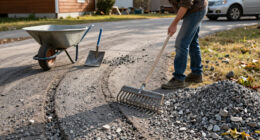
The figures in the report put a gravel driveway at about $2 to $4 per square foot, including labor. Hunker says a properly installed gravel driveway can last indefinitely, but that depends on routine upkeep: grading and adding a fresh surface layer are recommended at least every one to three years. Rain, snow and heavy use may bring additional repairs.
Asphalt costs about $7 to $13 per square foot, according to Angi figures cited by Hunker. The report estimates a typical lifespan of about 20 years, potentially longer with timely maintenance. Installers recommend resealing every two to three years; small cracks may appear after about five years and can be patched.
Concrete is estimated at $8 to $20 per square foot and is reported to last around 30 years before major repairs when properly installed. Hunker says it typically needs resealing every two to 10 years and annual pressure washing. Pavers are the costliest option in the comparison, at about $18 to $24 per square foot based on Homewyse figures cited in the report, but may last up to 50 years.
Costs Shift Over a Driveway’s Life
The comparison highlights a trade-off that homeowners can miss when looking only at installation quotes: the cheapest material may demand the most recurring attention, while higher upfront spending can bring a longer service life or easier repairs. Gravel’s low entry cost comes with periodic grading and topping up. Asphalt costs more initially, and the report recommends regular sealing and patching.
Concrete and pavers can reduce some forms of recurring work, but they bring different risks and expenses. Hunker says major concrete cracking can require replacement, while damaged pavers can generally be removed and replaced individually. Those differences may affect repair costs and how disruptive a repair is, though actual outcomes depend on installation, site conditions, climate and use.
For a homeowner choosing between bids, the ranking is a starting point rather than a universal answer. Budget, expected maintenance, climate and preferred appearance can all change which option is practical. The report does not calculate lifetime costs for a particular property, so its price and lifespan ranges should not be treated as a guaranteed total-cost comparison.
As an affiliate, we earn on qualifying purchases.
How the Four Materials Compare
Hunker says it excluded default appearance from its ranking because preferences differ: some homeowners like gravel, while others prefer asphalt. Instead, it compared four criteria: installation cost, how long a driveway functions before major repair or replacement, maintenance needs and customization potential. The order runs from gravel, asphalt and concrete to pavers, with pavers placed last in the ranking by cost but first in the report’s description of durability and design flexibility.
Each material has a distinct maintenance profile in the source. Gravel may need grading and a new top layer every one to three years. Asphalt resealing is recommended every two to three years. Concrete resealing can range from every two to 10 years, alongside annual pressure washing. For pavers, installers cited by Hunker recommend annual power washing and professional resealing every three to four years, depending on traffic; deep cleaning with re-sanding is described as necessary every two to three years.
The report also notes that customization is not limited to premium materials. Gravel can use different top-layer choices, including decomposed granite, sometimes combined with resin or poly pavement. Asphalt can be stamped, while concrete can have broom, exposed-aggregate, stamped or stained finishes. Pavers offer combinations of different shapes, colors and sizes.
“A gravel driveway can last indefinitely if properly installed and routinely maintained.”
— Hunker report
As an affiliate, we earn on qualifying purchases.
Prices and Lifespans Vary by Site
The source gives broad cost and lifespan ranges, not estimates for a particular driveway. It does not specify a shared geographic market, pricing date or assumptions behind all figures, and it does not provide a like-for-like lifetime-cost calculation. The price of a project can depend on the area, preparation, driveway size, labor and material choice.
The reported lifespans are also not guarantees. Hunker’s estimates depend on proper installation and, in several cases, timely maintenance. The source does not compare performance across specific climates or soil conditions, nor does it define how it weighed its four criteria to produce the overall order. It is therefore unclear how the ranking would change for a homeowner whose top priority is, for example, initial cost rather than durability or customization.
As an affiliate, we earn on qualifying purchases.
Compare Local Installation Quotes
Hunker’s comparison does not announce a new standard or prescribe one material for every home. Homeowners considering a driveway can use its figures as a shortlist, then ask local installers for itemized quotes that include site preparation, labor, drainage needs and maintenance recommendations. Confirm the expected lifespan and repair approach for the proposed material, and ask what conditions could affect the estimate.
Any decision should be checked against the property’s drainage, climate, planned vehicle use and budget. The report provides no follow-up project data or update schedule, so whether its price ranges will change is not stated.
As an affiliate, we earn on qualifying purchases.
Key Questions
Which driveway material has the lowest listed installation cost?
Gravel, at about $2 to $4 per square foot including labor in Hunker’s comparison. The source says that upkeep, including grading and adding a fresh surface layer, is recommended at least every one to three years.
Which material is reported to last the longest?
Pavers are reported to have a functional lifespan of up to 50 years. That is an estimate, not a guarantee, and depends on factors such as installation and use.
How much does an asphalt driveway cost in the report?
Hunker cites an Angi range of $7 to $13 per square foot, including materials and labor. Local quotes may differ, and the source does not state a date or geographic basis for the estimate.
Does concrete require less maintenance than asphalt?
The report describes concrete as needing resealing every two to 10 years and pressure washing at least annually. Asphalt resealing is recommended every two to three years, with patching as cracks develop. Those schedules do not capture every property’s conditions or repair needs.
What is not established by the ranking?
The report does not establish a guaranteed best material for every property or calculate total lifetime costs. Its figures are broad estimates, and it does not explain a precise weighting formula for the four ranking criteria.
Source: rss
Halloween Picks
halloween
As an affiliate, we earn on qualifying purchases.