
TL;DR

Get business pricing on tools and workshop supplies
- Business-only prices and quantity discounts
- Tax-exempt purchasing
- Multiple users, one account, clear invoices
Hunker’s article describes 16 ways to repurpose concrete blocks around the home and garden, including planters, furniture, art and water features. Simple decorative projects differ substantially from structural builds: stairs, walls, pools and fountains require attention to stability, waterproofing and local rules.
Hunker has published a roundup of 16 ways to reuse concrete blocks as home and garden features, including planters, tables, benches, privacy walls and water features. The ideas show how leftover or reclaimed blocks can serve decorative and practical purposes, including building a prep counter for a grill, but the source also describes projects—such as stairs and pools—that require more planning than simply stacking blocks.
The report presents concrete blocks as a durable, regularly shaped material that can be repurposed for both functional furniture and garden decor. Its examples include stacking blocks to support a TV or nightstand, placing a wood or stone surface on blocks to make a table, and arranging them into benches or other seating. Shelves can be threaded through openings or set between layers.
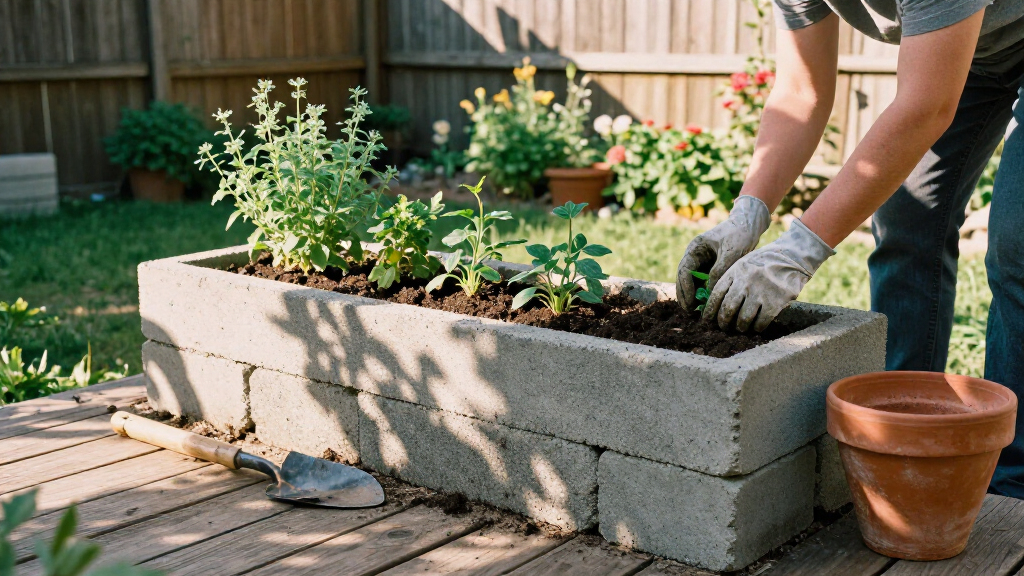
For the garden, the blocks’ hollow cores can hold plants, allowing them to be used individually, stacked into towers, or arranged as a wall. Hunker advises lining the bottom of planter openings with mesh or landscape fabric to keep soil from escaping. Other suggestions include painting blocks as seasonal decorations, using a block wall as a mural surface, and building a fountain or small pond.
The report also includes more involved construction ideas: temporary or permanent stairs, privacy walls and a small pool. It says pool walls need reinforcement and waterproofing, while permanent stairs and walls need a firm base and suitable materials to hold the blocks in place. These are project suggestions, not evidence that any particular build has been tested or approved for a specific site.
From Leftover Blocks to Useful Features
Reusing blocks can give leftover or reclaimed building materials a second purpose, reducing the need to buy purpose-made supports or planters for some projects. Their regular shape makes them adaptable: the same basic material can support a tabletop, contain planting soil, or form part of a decorative arrangement.
The range of ideas also matters because the projects carry different levels of risk. A painted block used as garden art is not comparable to a load-bearing stair, wall or water-retaining structure. Stability, suitable foundations and local requirements become more important as a project grows in size or carries weight. Readers should treat the roundup as inspiration, not a substitute for design advice or building guidance.
As an affiliate, we earn on qualifying purchases.
Why Concrete Blocks Suit DIY Projects
Hunker’s report says concrete blocks are generally durable, inexpensive and easy to repurpose, and notes that some homeowners may already have blocks left over from construction. It also says reclaimed blocks may be available at lower cost. The material’s plain appearance can be left as-is for an industrial look or changed with paint, fabric or other decorative finishes.
The article discusses concrete blocks and cinder blocks together, while cautioning that there are differences between them and that older or reclaimed blocks should be watched for damage. The supplied report does not specify which block types are appropriate for each project. That distinction matters particularly where blocks will carry substantial loads or retain water.
As an affiliate, we earn on qualifying purchases.
Project Safety Depends on the Build
The supplied material does not provide independent testing, cost estimates, detailed construction plans or engineering specifications for the 16 ideas. It is also unclear which local building codes or permit rules would apply to a particular staircase, privacy wall, pool or other permanent structure; requirements vary by location and project.
Readers considering a pool should check local regulations before starting, as the report advises. For structural or load-bearing work, block condition, foundation design, reinforcement and installation methods need to be assessed for the site. The roundup does not establish that a simple stacked-block design is safe for every use.
As an affiliate, we earn on qualifying purchases.
Check Requirements Before Building
The next step for anyone pursuing an idea is to match the project to the blocks available and the conditions at the site. For low-risk decor, that may mean cleaning and painting blocks or lining openings before adding plants. For furniture, the source recommends paying attention to alignment and stability, securing tops so they cannot slide, and using mortar where a permanent assembly is intended.
For stairs, walls, pools or other permanent construction, readers should check applicable permits and building rules and seek qualified professional guidance where structural safety is involved. The Hunker report does not announce a product, formal construction standard or follow-up test; it is a collection of project suggestions.
waterproof concrete blocks for pools
As an affiliate, we earn on qualifying purchases.
As an affiliate, we earn on qualifying purchases.
Key Questions
What are some ways to reuse concrete blocks at home?
Hunker’s ideas include making planters, tables, nightstands, TV stands, benches, garden art, privacy walls and fountains. The report also suggests more involved projects such as stairs and a small pool.
Can concrete blocks be used as planters?
Yes. The report suggests using the hollow openings for small plants and lining the bottoms with mesh or landscape fabric to keep soil from falling through. Blocks can be arranged singly or stacked into a tower or wall.
Are stacked concrete blocks suitable for a table?
They can form a table base, according to the report, but the arrangement must be stable and aligned. A top should be secured against sliding, and a larger or heavily used table needs particular attention to stability.
Can concrete blocks form part of a pool?
The article describes blocks as a possible basis for pool walls when properly assembled with reinforcement and waterproofing. It also advises checking local rules and permits. The report is not a complete construction plan or a guarantee that a design is safe.
Source: rss
Fall Picks
fall essentials
As an affiliate, we earn on qualifying purchases.