
TL;DR
Choosing a kneeling stool requires matching adjustability to your height, prioritizing padding quality, and understanding its role as part of a posture rotation. They promote better lumbar posture but aren’t a cure-all for back pain.
Imagine sitting at your workbench, feeling the tension melt from your lower back, your hips comfortably open, and your posture naturally upright. That’s the promise of a good kneeling stool. But not all stools are created equal. Choosing the right one means understanding how adjustability, padding, and frame design affect your comfort and health.
Many tradespeople and DIY enthusiasts turn to kneeling stools to tilt their work posture away from a standard chair’s rigidity. Yet, without proper fit and realistic expectations, even the best-designed stool can cause discomfort. This guide walks you through what to look for so you can pick a kneeling stool that actually works for you, not just for marketing images.
Choose a model with adjustable height to match your desk and body size.
Prioritize padding quality—thicker, dense foam cushions offer lasting comfort.
Select a frame design that matches your working style—rocking for movement, static for precision.
Use kneeling stools as part of a posture rotation, not a solo fix for back pain.
Be cautious if you have knee or circulation issues; consult a professional if unsure.
How to Choose a Work Kneeling Stool
Imagine sitting at your workbench, tension melting from your lower back, hips comfortably open, posture naturally upright. That’s the promise of a good kneeling stool — but not all stools are created equal. Fit, padding, and frame design decide whether it works for you, or just for the marketing photos.
What Actually Matters Before You Buy
Choosing the right kneeling stool means understanding how adjustability, padding, and frame design affect your comfort and health. Get any one of them wrong and even the best-designed stool can cause discomfort.
Match Your Height & Desk
A stool that’s too high or low strains your knees or back. Fixed-height wooden models fit fewer people than pneumatic steel frames.
- 20–28″ adjustable range suits a 28–30″ desk
- Example: at 5′8″, a 22–26″ range likely fits
- Verify rated limits: typically 200–300 lbs, 5′2″–6′2″
- Low desks & keyboard trays can interfere
Density Beats Softness
Padding quality decides how weight distributes and whether support survives year two — thin foam is the most common complaint.
- High-density foam keeps its supportive shape
- Memory foam is plush but can trap heat
- Breathable fabric covers beat sweaty vinyl
- Under 2 inches of cushion pressures shins & knees
Movement or Stability?
The frame determines how you move and stabilize during work — match it to your working style, not the showroom look.
- Rocking bases (Varier style): micro-movement, core engagement
- Static bases + casters: stability for precision tasks
- Look for lockable wheels & tension adjustment
- Check weld quality and bolted joints
When testing, sit with feet flat, knees at 60–70°, hips open at 110–135°. Adjust until your pelvis tilts slightly forward and your spine finds its natural curve — pressure should rest on your shins, never your kneecaps.
Which Features Are Worth Paying For?
Budget stools often sacrifice adjustability, padding, and frame durability — costing more in replacements and discomfort. Mid-range models typically hit the sweet spot for daily use.
| Feature | Budget · $50–100 | Mid-Range · $100–300 ★ | Premium · $300–600+ |
|---|---|---|---|
| Typical price | $50–100 | $100–300 | $300–600+ |
| Height adjustment | ✗ Fixed or limited | ✓ Pneumatic, reliable | ✓ Multiple adjustment points |
| Padding quality | ✗ Thin, flattens fast | ✓ ~3″ dense foam | ✓ Contoured molded cushions |
| Frame durability | ~ Basic, wears sooner | ✓ Steel, built for longevity | ✓ Premium materials & finish |
| Expected lifespan | ~ 1–3 years | ✓ 5–10 years with care | ✓ 10+ years |
| Best for | Occasional / trial use | Daily work — best value | Design-led & heavy daily use |
A mid-range stool with pneumatic height adjustment, a 3-inch foam cushion, and a steel frame can last 5–10 years — far more cost-effective than replacing budget models. Always check for warranties and trial periods; comfort is personal, and a good return policy lets you test the fit in your real workspace.
Why the Open Hip Angle Changes Everything
A kneeling stool tilts the pelvis forward and drops the thighs to roughly 60–70°. That opens the hip angle far beyond a conventional chair — the single biggest reason it encourages the spine’s natural S-curve.
The Real Benefits — and the Hard Limits
Kneeling stools can reduce lumbar load compared to traditional chairs, but their benefits depend heavily on fit and how they integrate into your posture routine. They are a valuable ergonomic tool — not a cure-all.
What It Does Well
- Opens the hips and encourages the spine’s natural curve
- Reduces lumbar load vs. conventional 90° seating
- Rocking designs engage core muscles and promote circulation through micro-movements
- Distributes weight between seat and shins, easing tailbone pressure
- Adds genuine posture variety to a sedentary workday
Where It Falls Short
- Not a standalone fix for back pain — evidence is limited and mixed
- Over-reliance can cause shin discomfort or knee strain, especially with thin padding
- Caution with knee injuries, poor lower-leg circulation, or limited ankle mobility
- Pregnant users and those with balance issues should consult a professional
- Staying in any one position too long is the real enemy
Your Next Posture Is Your Best Posture
Long-term relief comes from a balanced, multi-positional setup — alternating positions distributes strain across muscle groups, keeps circulation moving, and prevents overuse injuries.
Sit
Conventional chair for focused desk work and calls
Stand
Standing intervals keep muscles engaged and blood flowing
Kneel
Kneeling stool opens hips and unloads the lumbar spine
Move
Walk, stretch, reset — then rotate back through the cycle
Listen to your body — change positions regularly, never push through shin or knee pain
The 60-Second Buying Checklist
Run any candidate stool through these six checks and you’ll avoid the most common buying regrets.
Adjustable height confirmed
Range covers your body + desk (ideally 20–28″ against a 28–30″ desk).
Padding ≥ 2–3″ of dense foam
Sit for a few minutes — fast compression or hardness fails the all-day test.
Frame matches your work style
Rocking for movement; static with lockable casters for precision tasks.
Weight & height ratings fit you
Typical coverage is 200–300 lbs and 5′2″–6′2″ — verify the specific model.
Rotation plan in place
Pair it with sitting and standing — never kneel all day as a solo fix.
Warranty & trial period
Comfort is personal — a good return policy is a feature worth paying for.
How to Find a Kneeling Stool That Fits Your Height and Desk
First, a kneeling stool must match your height and your workspace. If it’s too high or low, you’ll strain your knees or back. Look for models with adjustable height ranges—ideally from about 20 to 28 inches—to fit a typical desk height of 28–30 inches.
For example, if you’re 5’8” and work at a standard desk, a model with a height adjustment from 22 to 26 inches likely suits you. Fixed-height wooden stools might fit some but can leave others with awkward angles. Always check the manufacturer’s guidance on weight and height limits—many models support 200–300 lbs and users from 5’2” to 6’2”.
Tip: When testing a stool, sit with your feet flat on the floor, knees at about 60–70°, and hips open at 110–135°. Adjust until your pelvis tilts slightly forward, maintaining a natural spine curve.
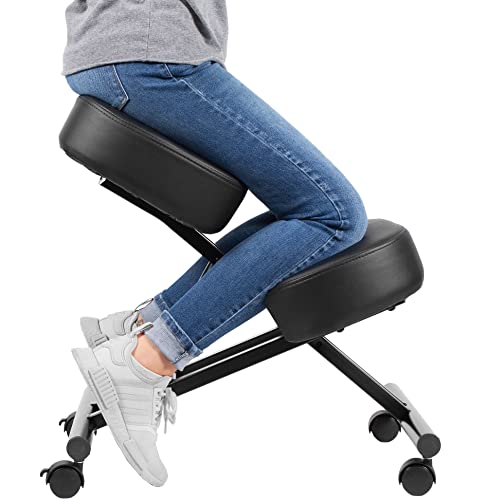
Ergonomic Kneeling Chair, Adjustable Stool for Home and Office – Improve Your Posture with an Angled Seat – Thick Comfortable Moulded Foam Cushions – Brake Casters
- Ergonomic Support: 3-inch vinyl cushion for comfort
- Improves Posture: Aligns spine and distributes weight
- Sturdy Construction: Supports up to 250 lbs with metal base
As an affiliate, we earn on qualifying purchases.
As an affiliate, we earn on qualifying purchases.
Why Padding Quality Matters More Than Looks
Ever sat on a stool that felt like sitting on a pile of rocks? Padding makes or breaks your comfort. But beyond just feeling soft, padding’s quality influences how well it distributes your weight and maintains its supportive shape over time. Low-quality foam can flatten quickly, leading to uneven pressure points that cause discomfort or even pain after extended use. Conversely, high-density foam provides consistent support, helping you maintain proper posture without sinking or shifting.
Memory foam, while plush, can trap heat and cause sweating, which might lead to discomfort during long periods. Standard foam cushions with breathable covers can offer a better balance of comfort and temperature regulation. The thickness of the padding also matters; cushions less than 2 inches may feel inadequate, especially under prolonged use, leading to pressure on shins and knees. A well-chuffed cushion supports your body evenly, reducing fatigue and potential joint stress.
Tip: When evaluating padding, consider the tradeoff between softness and support. Test by sitting for a few minutes—if it quickly compresses or feels hard, it may not be suitable for all-day use. Good padding enhances comfort and encourages proper posture, making your work sessions less taxing physically.
ergonomic kneeling chair with dense foam cushion
As an affiliate, we earn on qualifying purchases.
As an affiliate, we earn on qualifying purchases.
Which Frame and Base Design Fits Active or Static Work?
The frame is the foundation that determines how you can move and stabilize yourself during work. Different designs support different work styles and physical needs. Rocking bases, like Varier’s models, allow gentle tilts and subtle movements that can help engage your core muscles and prevent stiffness, especially during long periods of static posture. These dynamic features encourage micro-movements that reduce muscle fatigue and promote circulation, which is vital for preventing discomfort and maintaining alertness.
On the other hand, static bases with wheels or fixed legs provide stability, which is essential for tasks requiring precision or steady focus. For example, a detailed craftsman or technician working on delicate components benefits from a stable seat to avoid accidental slips or misalignments. The choice depends on your work environment and personal preference—movement or stability—each has its tradeoffs.
Tip: Consider a model with lockable wheels or adjustable tension on rocking bases. This flexibility allows you to switch between movement and stability, giving you control over your posture and focus during different tasks. The right frame design can make a significant difference in how comfortable and effective your kneeling stool is over time.
height adjustable kneeling stool for desk
As an affiliate, we earn on qualifying purchases.
As an affiliate, we earn on qualifying purchases.
Understanding the Real Benefits and Limits of Kneeling Stools
Kneeling stools promote a more upright, lumbar-friendly posture by opening the hips and encouraging your spine’s natural curve. Research shows they can reduce lumbar load compared to traditional chairs, potentially alleviating some lower back discomfort. However, they are not a standalone solution. Their benefits depend heavily on how they fit your body and how they’re integrated into your overall posture routine. Over-reliance without variety can lead to new issues, such as shin discomfort or knee strain, especially if the padding isn’t adequate or if you stay in one position too long.
Long-term relief and improved posture come from a balanced approach—alternating between sitting, standing, and kneeling. Using a kneeling stool as part of a multi-positional setup helps distribute strain across different muscle groups and joints, reducing fatigue and preventing overuse injuries. For example, a workday that includes periods of standing, sitting, and kneeling can help maintain circulation, keep muscles engaged, and support spinal health.
Warning: Overuse without proper adjustment or without listening to your body can cause shin discomfort or knee pain. It’s crucial to pay attention to signals from your body and change positions regularly. Properly used, kneeling stools are a valuable addition to your ergonomic toolkit, but they are not a cure-all. Combining their use with other ergonomic practices yields the best results for long-term health.
As an affiliate, we earn on qualifying purchases.
What’s the Price Range and Which Features Are Worth Paying For?
Expect to pay anywhere from about $50 for basic models to over $600 for premium, feature-rich stools. Budget options often sacrifice adjustability, padding quality, and frame durability, which can lead to discomfort and the need for replacement sooner. Mid-range models—typically $100–$300—strike a balance, offering better comfort through thicker, denser foam padding, more reliable adjustment mechanisms, and sturdy frames designed for longevity. Premium stools tend to include advanced ergonomic features, such as contoured cushions, multiple adjustment points, and sleek aesthetics, which can enhance comfort and style but may be more than necessary for casual use.
Investing in a higher-quality stool with adjustable height, durable materials, and supportive padding can be cost-effective over time—reducing the need for replacement and improving your overall comfort. For example, a mid-range stool with pneumatic height adjustment, a 3-inch foam cushion, and a steel frame may last 5–10 years with proper care, making it a worthwhile expense.
Tip: Always check for warranties and trial periods. A good return policy allows you to test the stool’s comfort and fit in your workspace, ensuring you’re investing in a product that truly meets your needs. Remember, a slightly higher upfront cost can save you money and discomfort in the long run if it means better support and durability.
Who Should Be Careful Before Using a Kneeling Stool
If you have existing knee injuries, poor lower-leg circulation, or limited ankle mobility, kneeling stools might exacerbate these issues or cause new discomfort. For example, if prolonged kneeling causes pain or swelling, a stool could worsen your condition rather than improve it. Pregnant users or individuals with balance challenges should seek medical advice before attempting to use a kneeling stool, as stability and comfort are crucial for safety during pregnancy or mobility limitations.
For instance, if you notice your knees or shins become painfully sore after short periods, or if you experience numbness or tingling, it’s a sign that this type of seating isn’t suitable for you. Alternative ergonomic solutions, such as adjustable chairs with lumbar support or sit-stand desks, might better accommodate your needs.
Safety is paramount: never force yourself onto a stool that causes pain or instability. Discomfort and pain are signals from your body that your current setup isn’t right. Prioritize your health and consult a healthcare professional if you’re unsure whether a kneeling stool is appropriate for your condition.
Frequently Asked Questions
Are kneeling stools actually good for your back — or just a gimmick?
Kneeling stools can improve lumbar alignment by promoting a more upright posture, but they’re not a cure-all. They work best as part of a rotation of postures, helping reduce back strain when used correctly.Can I sit on a kneeling stool all day?
It’s not recommended to stay on a kneeling stool all day. Alternate with standing and regular chairs to avoid shin discomfort and joint fatigue. Use it as a part of your posture mix.Are kneeling chairs bad for your knees or shins?
They can cause discomfort if not adjusted properly or if used for long stretches. Proper padding and correct positioning help distribute weight evenly on shins, minimizing pressure and pain.How do I adjust and sit on a kneeling stool correctly?
Set the height so your hips are slightly above your knees, with your shins resting comfortably on the pads. Keep your back straight, shoulders relaxed, and switch positions regularly.What should I look for if I want a durable, comfortable kneeling stool?
Focus on adjustable height, dense foam padding at least 2 inches thick, a sturdy frame, and lockable mobility options. Investing in quality saves money and discomfort over time.Conclusion
Your best kneeling stool balances fit, comfort, and function. It’s a tool to diversify your posture, not a one-size-fits-all solution. When chosen thoughtfully, it can bring a fresh, upright stance to your workday—without sacrificing comfort or safety.
Remember, your posture isn’t a set-it-and-forget-it deal. Regularly change positions, listen to your body, and keep your workspace flexible. That’s how a kneeling stool becomes part of a healthy, productive routine—no gimmicks, just smart choices.