
TL;DR
Choosing safety glasses that fit snugly and comfortably is vital for effective eye protection. Focus on proper sizing, adjustable features, and latest innovations like anti-fog coatings for the best experience and safety compliance.
Imagine working with debris flying at your face, or chemical splashes threatening your eyes. If your safety glasses slip, pinch, or don’t cover enough, you’re risking more than just discomfort. The right fit isn’t just about comfort — it’s about your safety and compliance.
In this guide, you’ll learn how to pick safety glasses that stay put, protect thoroughly, and feel good enough to wear all day. We’ll cover what to look for, recent tech upgrades, and common pitfalls. Because when your safety glasses fit perfectly, you see the world — and hazards — clearly and confidently.
Always choose safety glasses that fit snugly without causing discomfort or pressure points.
Adjustability features like nose pads and temple arms are essential for a custom, secure fit.
Impact-resistant materials and proper coverage protect your eyes from hazards and meet safety standards.
Recent innovations like anti-fog coatings and lightweight designs boost comfort and safety during long shifts.
Regular inspection and timely replacement keep your eye protection effective and compliant.
How to Choose Safety Glasses That Fit
Protection works only when it stays in position. The right safety glasses sit snugly without pinching, cover vulnerable angles, match the hazards around you, and remain comfortable enough to wear through an entire shift.
No slipping, pressure points, distracting gaps, or constant readjustment.
Match side shields, wraparound coverage, and lens protection to the hazard.
Look for the applicable ANSI Z87.1, EN 166, or local certification.
Fit like a glove, not a clamp
Put the glasses on and make quick head turns, bend forward, look up, and reach side to side. A reliable pair stays aligned with your eyes without squeezing your temples or sliding down your nose.
Move without slipping
The frame should remain level and secure during bending, twisting, and rapid head movement. Sliding means the width, bridge, or temple tension needs attention.
Check every contact point
Notice the nose bridge, behind the ears, and both temples. Comfortable contact is good; pinching, deep marks, or headache-inducing pressure is not.
Keep eyes centered
Your eyes should sit naturally behind the lenses with a clear field of view. The frame must not ride too high, sit on the cheeks, or obstruct peripheral vision.
The 30-second test
Put on → look around → turn quickly → bend forward → check pressure. If the glasses shift, expose a gap, touch your eyelashes, or become uncomfortable, adjust them or try another size.
Four moves to a secure fit
Small adjustments can transform fit, but they cannot rescue a frame that is fundamentally too narrow, too wide, or incompatible with your other protective equipment.
Seat the bridge
Position the nose pads evenly so the frame sits level without pinching or sliding.
Set temple width
Ease the arms outward if tight; bring them inward if the glasses feel loose.
Check side gaps
Confirm shields or wraparound lenses remain close enough to block lateral hazards.
Test with PPE
Add your helmet, earmuffs, or respirator and repeat the movement test.
If the temples pinch
Choose a wider frame or carefully relax adjustable arms. Persistent pressure usually means the base frame is too narrow.
If the glasses slide
Adjust the nose pads and temple angle. If gaps remain or the frame still moves, select a smaller or more contoured design.
Match the frame to both face and job
Measure across the temples, note the bridge fit, and compare temple length with the manufacturer’s specifications. Then choose coverage based on what could strike, splash, or reach your eyes.
Start near your measured width
A face measuring about 140 mm across may suit a frame around 135–145 mm, depending on its curvature and temple design.
Remember: measurements narrow the search. The movement and pressure-point test confirms the fit.
| Work hazard | Best coverage | Key lens feature | Fit priority |
|---|---|---|---|
| Flying debris | ✓ Side shields | Impact resistance | Close lateral coverage |
| Chemical splash | ✓ Wraparound or goggles | Chemical compatibility | Minimal exposed gaps |
| Outdoor UV | ✓ Broad coverage | UV-filtering lens | Stable during movement |
| Heat or humidity | ~ Hazard-dependent | Anti-fog coating | Ventilation without exposure |
| High splash risk | ✗ Open-side frame | Full protective barrier | Use task-rated protection |
Clarity is part of protection
Polycarbonate lenses and nylon frames are widely used for impact resistance and low weight. Hard coatings preserve vision, while modern lens treatments solve common reasons workers remove their eyewear.
Anti-fog
Supports visibility in humid environments and during temperature changes.
Hard coating
Helps resist scratches that distort vision and shorten useful lens life.
Photochromic
Adapts to changing light when work moves between indoor and outdoor areas.
Smart systems
Emerging designs add sensors, communication, or augmented-reality functions.
Certification before convenience
Anti-fog, style, and low weight improve wearability, but they do not replace task-appropriate impact protection. Confirm the eyewear carries the applicable ANSI Z87.1, EN 166, or local safety marking.
The five-point buying checklist
A good choice connects comfort, sizing, hazard coverage, certified materials, and compatibility. Missing any one of these links can reduce protection or make consistent wear less likely.
Replace damaged or unreliable eyewear
Retire safety glasses when lenses are deeply scratched, frames are cracked or distorted, coatings fail, certification requirements change, or the fit no longer stays secure.
How to Tell if Your Safety Glasses Fit Like a Glove
Proper fit starts with snugness. Your glasses should sit comfortably without pressing into your temples or nose. If they slide down or pinch, they’re not right. They should stay put during movement, whether you’re bending, reaching, or twisting.
Check the fit with a simple test: put them on, look around, and make a few quick head turns. If they stay in place, you’re good. If they slip or cause discomfort, adjust or try a different style.
Adjustable nose pads and flexible temples help customize fit, especially for prolonged wear. For example, a worker with a wider face will benefit from a frame with a broader width and adjustable features to prevent pinching or gaps.
Why it matters: a proper fit ensures that the glasses provide consistent protection without distracting you or causing fatigue. Ill-fitting glasses can shift during work, exposing your eyes to hazards or causing discomfort that discourages wearing them. Striking the right balance between snugness and comfort minimizes these risks, but it requires understanding how different features interact with your facial structure and work environment.
As an affiliate, we earn on qualifying purchases.
Size and Shape Matter: Finding Frames That Match Your Face
Safety glasses come in many shapes and sizes, but not every style fits every face. Oval or round faces often prefer angular frames that add contrast, while square faces look great in rounded or curved shapes. The goal is coverage and comfort.
Imagine wearing glasses that are too narrow—your peripheral vision suffers, and debris can sneak in. Too wide, and they slide or feel loose. Measure your face: the width across your temples, the length of your nose bridge, and the distance between your temples. Use these numbers to compare with frame specs before buying.
For example, if your face measures 140mm across, look for frames with a width of about 135-145mm. This ensures a snug fit that doesn’t pinch or slip.
Why it matters: choosing the right size and shape isn’t just about comfort—it directly impacts your safety. Ill-fitting frames can cause gaps that allow debris or chemicals to reach your eyes, or they can slide out of position during movement, reducing protection. Properly matched frames distribute pressure evenly, reducing fatigue and preventing adjustments during critical moments, which could compromise safety.
As an affiliate, we earn on qualifying purchases.
Coverage and Protection That Match Your Work Hazards
Good safety glasses cover your entire eye area, including sides. If you’re working with flying debris, side shields are a must. If chemicals or splashes are common, wraparound styles offer better protection.
For example, a construction worker on a demolition site benefits from glasses with side shields, preventing tiny rocks from hitting the sides of their eyes. In contrast, chemical workers need impact-resistant lenses with full coverage to guard against splashes.
Always check if your safety glasses meet safety standards like ANSI Z87.1 or EN 166. These ensure impact resistance and durability.
Why it matters: comprehensive coverage directly correlates with safety. Inadequate protection can leave vulnerable areas exposed, increasing the risk of injury. Side shields or wraparound designs create a barrier against unpredictable hazards, but they also add bulk or weight. Balancing coverage with comfort is key—overly bulky glasses may discourage consistent use, while insufficient coverage leaves you unprotected.
As an affiliate, we earn on qualifying purchases.
Materials That Last and Protect
Impact-resistant frames and lenses are key. Polycarbonate and nylon are popular because they withstand shocks and resist breakage. Lenses should be scratch-resistant and often coated for UV protection.
Picture a worker dropping glasses on concrete—impact-resistant materials prevent shattering. If your glasses scratch easily, your vision gets blurry, and protection diminishes. Always opt for lenses with a hard coating.
Want glasses that last? Check for impact certification and impact-resistant lens materials. They’re worth the extra investment for safety and longevity.
Why it matters: durable materials ensure your safety glasses can withstand the rigors of a demanding work environment. Impact-resistant frames and lenses prevent breakage upon accidental drops or impacts, which is critical in hazardous settings. Moreover, scratch-resistant coatings preserve clarity, ensuring that your vision remains uncompromised over time. Investing in high-quality materials reduces the need for frequent replacements, maintaining consistent protection and compliance with safety standards.
As an affiliate, we earn on qualifying purchases.
How to Adjust Your Safety Glasses for the Best Fit
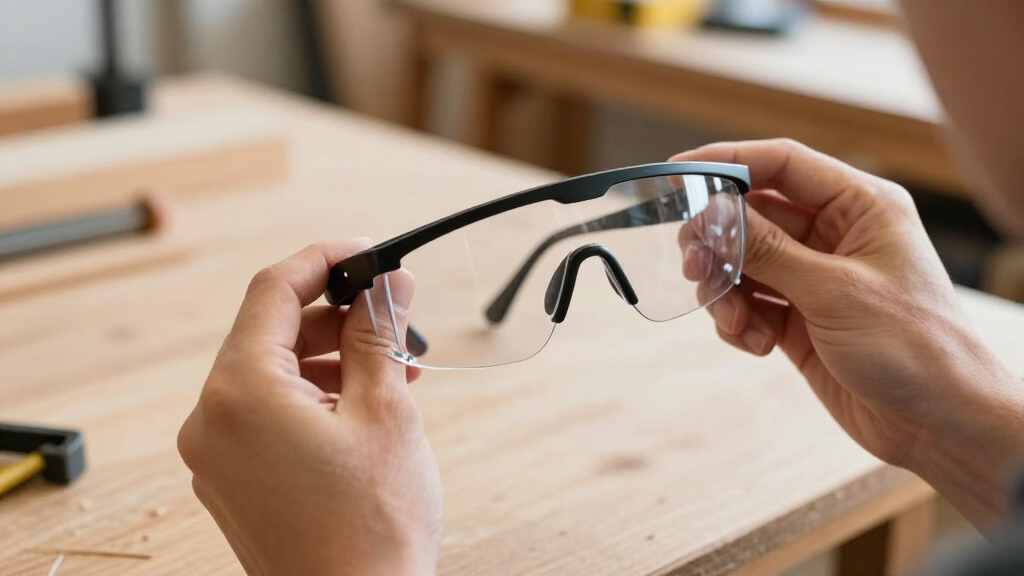
Adjustments are your best friend. Many safety glasses feature flexible temples and adjustable nose pads. Start by placing the glasses on your face, then tweak the nose pads to sit comfortably on the bridge without pinching. Next, bend or loosen the temples so they hug your head without tightness.
For example, if glasses feel tight at the temples, gently bend the arms outward. If they slide down, tighten the nose pads or adjust the temples inward.
Taking a few minutes to fine-tune your fit ensures all-day comfort and maximum protection, especially during long shifts.
Why it matters: proper adjustments are crucial because even small misalignments can cause discomfort or slippage, both of which can lead to unsafe situations. Well-adjusted glasses stay in position, reducing the need for frequent adjustments that could distract you or compromise their protective seal. Learning how to fine-tune your fit ensures consistent coverage and comfort, encouraging regular use and adherence to safety protocols.
Latest Tech and Features That Make a Difference
Recent innovations boost safety glasses beyond basic protection. Anti-fog coatings help in humid environments—imagine working in a hot, sweaty warehouse where fogged-up lenses would be dangerous. Scratch-resistant coatings extend lens life, keeping clarity sharp.
Photochromic lenses adapt to changing light, so you don’t switch glasses indoors and out. Plus, lightweight frames reduce fatigue, making it easier to wear them all day.
Emerging smart glasses incorporate sensors to monitor environmental hazards or connect with communication devices—helpful in noisy or hazardous work zones.
Why it matters: technological advancements enhance both safety and usability. Anti-fog coatings prevent lenses from fogging up during strenuous activity or in humid conditions, which maintains clear vision and reduces risk. Scratch-resistant coatings preserve the integrity of the lenses, ensuring sustained impact protection. Photochromic lenses adapt seamlessly to changing lighting conditions, reducing the need for multiple pairs of glasses, thus improving compliance. Smart features, although still emerging, promise to integrate safety monitoring directly into eyewear, potentially alerting you to hazards before they become critical. These innovations collectively support safer, more comfortable, and more effective eye protection in demanding work environments.
Compare Features to Pick Your Perfect Fit
| Feature | Impact Resistance | Fit Adjustability | Protection Level | Special Coatings |
|---|---|---|---|---|
| Basic Safety Glasses | Yes | Limited | Standard | None |
| Advanced Impact Glasses | Yes, high impact rated | Yes, adjustable nose and temples | Full coverage, side shields | Anti-fog, scratch-resistant |
Common Questions About Safety Glasses Fit
Q: How do I know if my safety glasses fit properly?
A: They should sit comfortably without slipping, cover your eyes fully, and not cause pressure points. Test by moving your head quickly.
Q: Should safety glasses be stylish?
A: Yes. Many brands now offer a variety of colors and designs that meet safety standards—so you don’t have to sacrifice style for safety.
Q: How often should I replace my safety glasses?
A: When they are scratched, cracked, or no longer fit properly. Also, follow safety standards updates.
Q: Can I get prescription safety glasses?
A: Absolutely. They’re available in many styles and provide the same impact resistance and coverage.
Q: What safety standards should they meet?
A: Look for ANSI Z87.1 (U.S.) or EN 166 (Europe) certifications for impact and safety compliance.
Conclusion
Good safety glasses do more than just meet standards—they feel like an extension of you. When they fit well, your focus stays on the task, not your eyewear.
Remember: a perfect fit isn’t a luxury—it’s your best defense against workplace hazards. Take the time to find and adjust your glasses. Your eyes will thank you.