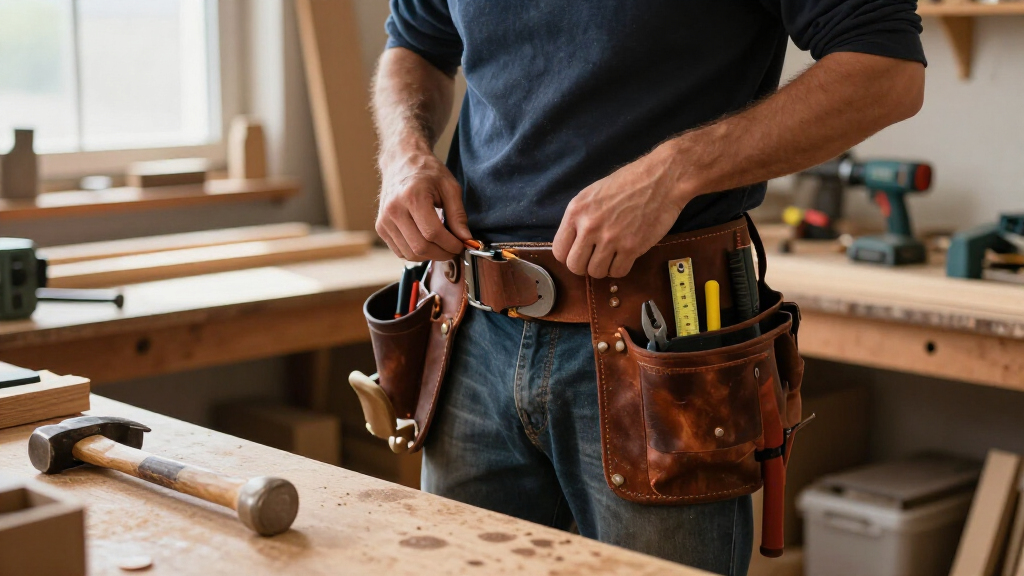

The right heavy-duty work belt has to do two jobs at once: hold up your pants through years of abuse and carry whatever you hang on it without sagging, rolling, or cracking. My top pick, the JUKMO Tactical Rigger Belt, wins on raw load-bearing strength for the money — its 1.5-inch nylon webbing shrugs off moisture and flex that destroys cheaper leather. For tradespeople who clip pouches and suspenders to their belt all day, the Klein Tools 5415XL is the more specialized choice, built specifically for contractor loads. The main tradeoff in this category is leather versus nylon: leather looks better and resists stretching under tool weight, while nylon handles weather and repeated flexing better. Read on for the full breakdown of all seven belts and who each one suits best.

Get business pricing on tools and workshop supplies
- Business-only prices and quantity discounts
- Tax-exempt purchasing
- Multiple users, one account, clear invoices
Complete the kit


Key Takeaways
- The JUKMO rigger belt took the top spot because its nylon webbing handles sustained tool loads and wet conditions better than any leather belt at or near its price — leather belts costing twice as much still stretch under heavy pouches.
- Only one belt in the lineup (the Klein Tools 5415XL) is purpose-built for contractor tool loads; every other option is a general-purpose work belt that trades load capacity for everyday versatility.
- The two Dickies belts reveal a real quality gap within the same brand: the Industrial Strength model’s reinforced construction clearly outperforms the Double Prong version for heavy loads, making it the better value despite similar pricing.
- The BISON DENIM and Timberland PRO belts are the strongest picks for people who need one belt that moves from the job site to casual wear — but both sacrifice some rigidity compared to dedicated work belts.
- The CHAOREN is the cheapest belt tested and it shows in the hardware; it’s fine for daily wear with light loads, but buyers who hang tools from it will likely replace it within a year.
| JUKMO Tactical Belt, Military Hiking Rigger 1.5″ Nylon Web Work Belt |  | Best Quick-Release Pick | Material: 100% Nylon | Buckle: Aluminum alloy quick-release | Width: 1.5 inches | VIEW LATEST PRICE | See Our Full Breakdown |
| Klein Tools 5415XL Heavy-Duty Leather Tool Belt for Contractors, X-Large |  | Best for Serious Job Sites | Material: 100% Leather | Belt Width: 2 inches | Waist Size Range: 44 to 52 inches (X-Large) | VIEW LATEST PRICE | See Our Full Breakdown |
| BISON DENIM Men’s Genuine Leather Belt for Men |  | Best Work-to-Weekend Hybrid | Material: 100% Leather (genuine cowhide) | Buckle Material: Zinc alloy, removable | Width: 1.52 inches | VIEW LATEST PRICE | See Our Full Breakdown |
| Dickies Men’s Industrial Strength Leather Belt – Workwear, Durable, Reinforced, Heavyweight |  | Best Value Workhorse | Fabric Composition: 20% PU, 30% GRS bonded leather, 20% split leather, 30% polyester | Belt Width: 1.5 inches | Buckle: Sturdy metal | VIEW LATEST PRICE | See Our Full Breakdown |
| Dickies Men’s Double Prong Leather Work Belt |  | Best for Secure, All-Day Fit | Material: 100% Leather | Buckle Type: Double prong | Adjustability: Full along entire strap | VIEW LATEST PRICE | See Our Full Breakdown |
| Timberland PRO 40mm Leather Belt |  | Best Work-to-Weekend Hybrid | Material: 100% Genuine Leather | Belt Width: 40mm | Construction: Imported | VIEW LATEST PRICE | See Our Full Breakdown |
| CHAOREN Work Belts for Men, Leather Belt Heavy Duty for Daily Wear |  | Best Full-Grain Value | Material: Full-Grain Genuine Leather | Thickness: 3.8mm | Buckle: Double-Prong Zinc Alloy | VIEW LATEST PRICE | See Our Full Breakdown |
| heavy-duty work belt | Material | Adjustability |
|---|---|---|
| JUKMO Tactical Belt | 100% Nylon | Trim-to-fit, fully adjustable length |
| Klein Tools 5415XL Heavy-Duty | 100% Leather | — |
| BISON DENIM Men’s Genuine Leat | 100% Leather (genuine cowhide) | Trim-to-fit |
| Dickies Men’s Industrial Stren | — | — |
| Dickies Men’s Double Prong Lea | 100% Leather | Full along entire strap |
| Timberland PRO 40mm Leather Be | 100% Genuine Leather | — |
| CHAOREN Work Belts for Men | Full-Grain Genuine Leather | Full-length with evenly spaced holes |
More Details on Our Top Picks
JUKMO Tactical Belt, Military Hiking Rigger 1.5″ Nylon Web Work Belt
Most heavy-duty work belts make you fight with prongs and holes, but this one takes a different approach entirely. The aluminum alloy quick-release buckle means one-handed on and off, which matters when you’re clipping and unclipping a tool belt a dozen times a day. Compared with the Dickies Double Prong Leather Work Belt, the stretch nylon here flexes with your body during physical work rather than digging into your waist when you crouch or climb. That said, this model makes tradeoffs: there are no belt holes for pouch attachment in the traditional sense, so it pairs better with MOLLE-style gear than with classic leather tool pouches like the Klein Tools 5415XL supports. The stiffness that makes it reliable under load also makes it a poor choice for casual office wear.
Pros:- One-handed quick-release aluminum buckle saves time on repeated on/off cycles
- Stretch nylon flexes during bending, crouching, and climbing
- Trim-to-fit adjustability covers a wide range of waist sizes
- Lighter than full-grain leather belts for long shifts
Cons:- No traditional holes, limiting compatibility with punched-leather tool pouches
- Nylon webbing is too stiff and technical-looking for casual or dress wear
Best for: Tradespeople and outdoor workers who need fast one-handed buckling and flexible movement during physical tasks
Not ideal for: Contractors who hang traditional leather tool pouches from belt holes — the nylon web and quick-release design don’t support that setup well
- Material:100% Nylon
- Buckle:Aluminum alloy quick-release
- Width:1.5 inches
- Adjustability:Trim-to-fit, fully adjustable length
- Intended Use:Military, tactical, hiking, work
- Origin:Imported
Our verdict“Buy this if you value speed and flexibility over traditional leather pouch compatibility; skip it if your tool setup depends on a holed leather strap.”
Klein Tools 5415XL Heavy-Duty Leather Tool Belt for Contractors, X-Large
This is the belt you buy when your livelihood depends on what hangs from your waist. The 2-inch wide full-grain leather and double-tongue buckle are built to carry loaded tool pouches day after day, something the narrower 1.5-inch options in this lineup simply can’t match without rolling or twisting. Compared with the Dickies Double Prong, the Klein gives you a wider, stiffer platform that holds pouches in place rather than letting them shift as you move. The tradeoff is weight and bulk: this is US-made leather with zero padding, so a full ten-hour day can leave your hips feeling it. It’s also sized only for waists 44 to 52 inches, so most buyers will need to check the other sizes in Klein’s range — this XL listing alone excludes a huge portion of readers.
Pros:- 2-inch wide US-made leather handles fully loaded tool pouches without rolling
- Double-tongue buckle keeps the belt locked in place under heavy loads
- Stiff leather platform keeps pouches from sliding around your waist
- Built for years of daily professional abuse
Cons:- No padding or ergonomic features, which gets uncomfortable on long shifts
- This listing only fits waists 44-52 inches, so smaller sizes require a different SKU
- Heavy and stiff compared with nylon options like the JUKMO
Best for: Professional contractors with large waist sizes who carry heavy tool pouches daily and need a US-made belt that won’t stretch out
Not ideal for: Smaller-framed workers or anyone wanting a dual-purpose belt — the stiffness, width, and XL-only sizing make it impractical off the job site
- Material:100% Leather
- Belt Width:2 inches
- Waist Size Range:44 to 52 inches (X-Large)
- Buckle Type:Double-tongue
- Belt Type:Heavy-duty leather tool belt
- Made In:USA
Our verdict“The clear choice for big-framed pros who hang serious weight from their belt; everyone else will find it oversized and overbuilt.”
BISON DENIM Men’s Genuine Leather Belt for Men
Not everyone needs a belt that survives a demolition site — some need one that handles a workweek and still looks right with jeans on Saturday. That’s the gap this option fills. Its 1.52-inch width and zinc alloy buckle sit closer to the Dickies Industrial Strength in everyday versatility, but the genuine cowhide construction and included gift box push it toward presentable rather than purely rugged. The removable buckle also lets you customize the look, something no other belt in this group offers. The honest tradeoff: this is a daily-wear belt, not a load-bearing one. If you plan to hang tool pouches from it, the Klein Tools 5415XL is in a different weight class entirely, and you’ll need to trim the strap yourself to get a clean fit.
Pros:- Genuine cowhide leather balances durability with a refined appearance
- Removable buckle allows customization and easier trimming
- Fits a broad 33-46 inch waist range out of the box
- Gift box included, making it a practical present option
Cons:- Requires do-it-yourself trimming for a precise fit
- Zinc alloy buckle is less robust than the steel or aluminum hardware on work-focused picks
Best for: Office-adjacent tradespeople and buyers who want one belt that works for light duty on the job and looks appropriate socially afterward
Not ideal for: Framers, electricians, or anyone hanging heavy tool pouches — the leather and single-prong zinc buckle aren’t rated for that kind of load
- Material:100% Leather (genuine cowhide)
- Buckle Material:Zinc alloy, removable
- Width:1.52 inches
- Waist Size Range:33 to 46 inches
- Adjustability:Trim-to-fit
- Origin:Imported
Our verdict“A sensible pick if your ‘heavy duty’ means long days rather than heavy loads; genuine tradesmen should look elsewhere.”
Dickies Men’s Industrial Strength Leather Belt – Workwear, Durable, Reinforced, Heavyweight
This pick makes the most sense for the buyer who wants proven workwear-brand durability without paying Klein-level prices. The reinforced stitching and sturdy metal buckle translate to a belt that holds up to tool clips, hammer loops, and daily abrasion, while the classic 1.5-inch profile still passes cleanly through standard work pants. Compared with the Dickies Double Prong, this version leans more toward all-day comfort and casual versatility, whereas the double-prong model prioritizes a locked-in fit. One thing buyers should know: the blended composition (bonded leather, split leather, PU, and polyester) is how the price stays low — it’s not the full-grain leather of the Klein, so long-term stretch resistance is a fair question. Sizing runs two inches over pant size, so measure before ordering.
Pros:- Reinforced stitching stands up to tool clips and daily abrasion
- Metal buckle keeps a secure fit through physical work
- Works equally well for job sites and casual outfits
- Size range spans SM through XL (30-44 inch pants)
Cons:- Bonded and split leather blend is less durable long-term than full-grain alternatives
- Hand wash only adds maintenance hassle
- Sizing runs two inches over pant size, requiring careful measurement
Best for: Budget-conscious workers who want reinforced, brand-name durability for labor-intensive jobs and casual wear on the same belt
Not ideal for: Purists who want 100% full-grain leather — the blended composition won’t age or resist stretching like the Klein Tools or BISON DENIM options
- Fabric Composition:20% PU, 30% GRS bonded leather, 20% split leather, 30% polyester
- Belt Width:1.5 inches
- Buckle:Sturdy metal
- Size Options:SM (30-32), MD (34-36), LG (38-40), XL (42-44)
- Sizing Guidance:Order belt size 2 inches larger than pant size
- Care Instructions:Hand wash only
- Origin:Imported
Our verdict“The smart middle-ground buy for moderate-duty work at a friendly price, as long as blended leather doesn’t bother you.”
Dickies Men’s Double Prong Leather Work Belt
The standout feature here is twofold: a double-prong buckle that spreads tension across two anchor points, and full adjustability along the entire strap rather than fixed holes every inch. That second point matters more than it sounds — you can dial in an exact fit mid-shift as your layers change, which the Dickies Industrial Strength with its spaced holes can’t do. The size run is also the most generous in this batch, stretching from Small up to 3X (50-52 inches), covering builders the Klein XL listing overlaps with but at a friendlier price. The tradeoff is that this is 100% leather with a straightforward build — no reinforcement features, and spot-clean-only care means maintenance is more fussy than throwing a nylon belt like the JUKMO in consideration set would be.
Pros:- Double-prong buckle distributes tension and resists slipping under load
- Fully adjustable along the entire strap for exact mid-day fit changes
- Widest size range in this lineup, Small through 3X (50-52 inches)
- 100% leather construction at an accessible price point
Cons:- Spot clean only, making routine care more demanding
- No reinforced stitching or padding, unlike pricier dedicated tool belts
- Requires ordering two inches above pant size, which catches some buyers off guard
Best for: Workers with hard-to-fit waists (up to 52 inches) who want micro-adjustable sizing and a buckle that won’t slip under load
Not ideal for: Buyers who want zero maintenance — spot-clean-only care and unlined leather demand more upkeep than synthetic alternatives
- Material:100% Leather
- Buckle Type:Double prong
- Adjustability:Full along entire strap
- Sizes:Small (30-32) through 3X (50-52)
- Sizing Guidance:Order 2 inches larger than pant size
- Care Instructions:Spot clean only
Our verdict“The go-to if fit precision and size availability are your top priorities; choose the Klein if you need true load-bearing construction instead.”
Timberland PRO 40mm Leather Belt
Not every buyer needs a suspenders-ready contractor rig like the Klein Tools 5415XL, and that’s exactly where this option finds its lane. The Timberland PRO trades raw utility for a softer, broken-in leather feel, which makes it comfortable for a full shift and presentable enough to wear straight to dinner afterward. Compared with the Dickies Industrial Strength belt, it’s less stiff out of the box but also less reinforced, so this pick makes the most sense for lighter trades rather than loaded tool pouches. The 40mm width fits standard belt loops without the bulk of a dedicated work belt. The tradeoff: sizing runs small, so ordering a size up is usually necessary, and the hand-wash care recommendation is more fuss than most job sites allow.
Pros:- Genuine leather that stays comfortable through long wear
- Clean styling suitable for casual and work settings alike
- Extended size range accommodates larger waists
- 40mm width fits standard belt loops without modification
Cons:- Sizing runs small — expect to order one size above pant size
- Hand-wash care instructions are impractical for daily workwear
- Softer leather flexes under heavy tool loads
Best for: Office-to-jobsite workers, light-duty tradespeople, and anyone who wants one belt covering both workdays and casual wear
Not ideal for: Contractors or framers hanging heavy tool pouches — the softer leather lacks the reinforcement of dedicated rigs like the Klein Tools 5415XL
- Material:100% Genuine Leather
- Belt Width:40mm
- Construction:Imported
- Care:Hand wash recommended
- Sizing:Order one size up from pant size
- Style:Work and casual hybrid
Our verdict“Buy this if you need one comfortable leather belt that handles light work duty and everyday life without the stiffness of a contractor belt.”
CHAOREN Work Belts for Men, Leather Belt Heavy Duty for Daily Wear
This is the pick for buyers who want full-grain leather without the premium price. While the BISON DENIM genuine leather belt competes on price, the CHAOREN pulls ahead with a burly 3.8mm thickness and a double-prong zinc alloy buckle that spreads load across two anchor points instead of one. That double-prong design mirrors the Dickies Double Prong Work Belt, but here it’s paired with full-length hole spacing, so fine-tuning the fit is easier across weight fluctuations. The full-grain construction resists cracking better than corrected-grain options and develops a patina over time. The honest tradeoffs: leather this thick needs occasional conditioning to stay supple, and the vintage buckle look won’t suit anyone wanting a low-profile belt under fitted work shirts.
Pros:- Full-grain leather that resists cracking and ages with a patina
- Double-prong buckle distributes tension for a more secure hold
- Evenly spaced holes across the full length allow precise fit adjustment
- 3.8mm thickness holds up under daily heavy-duty wear
Cons:- Requires occasional leather conditioning to prevent drying out
- Limited or unspecified color options restrict matching to workwear
- Thick strap and bulky buckle may not fit all belt loops
Best for: Buyers who want genuine full-grain durability and adjustable fit at a mid-range price, especially for warehouse, delivery, or general labor work
Not ideal for: Anyone wanting a sleek, minimal belt — the chunky double-prong buckle and thick strap read as rugged, not refined
- Material:Full-Grain Genuine Leather
- Thickness:3.8mm
- Buckle:Double-Prong Zinc Alloy
- Adjustability:Full-length with evenly spaced holes
- Care:Occasional leather conditioning recommended
- Style:Vintage-inspired, work and casual
Our verdict“Choose this if you want the durability of full-grain leather and a locked-in double-prong fit for daily labor — skip it if you prefer a slim, understated belt.”
How We Picked
I judged every belt against the two failures that actually matter on a job site: structural breakdown (stretching, cracking at the holes, buckle failure) and load performance (sagging, rolling, or cutting into your hips when pouches and holsters are attached). Leather belts got evaluated on thickness, full-grain versus corrected-grain construction, and how well the holes are reinforced, since those are the spots where cheap leather fails first. Nylon belts were compared on webbing stiffness, buckle mechanism security, and resistance to water and repeated flexing.
Price-to-durability ratio drove the ranking order more than raw quality alone — a belt that lasts five years at $30 outranks a belt that lasts six at $90 for most buyers. I also factored in versatility, because many people buying a heavy-duty belt want it to double as an everyday belt, and I penalized belts whose hardware or thickness makes them awkward off the clock. Sizing accuracy and ease of adjustment mattered too, since an oversized or stiff belt that’s hard to fine-tune gets abandoned in a drawer regardless of how tough it is.
| heavy-duty work belt | Adjustability |
|---|---|
| JUKMO Tactical Belt | Trim-to-fit, fully adjustable length |
| Klein Tools 5415XL Heavy-Duty | — |
| BISON DENIM Men’s Genuine Leat | Trim-to-fit |
| Dickies Men’s Industrial Stren | — |
| Dickies Men’s Double Prong Lea | Full along entire strap |
| Timberland PRO 40mm Leather Be | — |
| CHAOREN Work Belts for Men | Full-length with evenly spaced holes |
Factors to Consider When Choosing Heavy-duty Work Belts
Before picking a belt from the list above, it helps to understand what actually separates a belt that survives the trades from one that fails within months. These are the factors that drove my ranking — and the mistakes I see buyers make most often.Leather vs. Nylon: Match the Material to Your Job
The biggest fork in the road is material, and the right answer depends on your working conditions. Full-grain leather like the Klein or Timberland PRO offers the best stiffness for hanging tool pouches — it resists the downward roll that makes pouches swing into your knees. Nylon webbing, like the JUKMO’s, handles rain, sweat, mud, and repeated machine washing far better, and it won’t crack if you work outdoors year-round. The mistake I see most often is framers and plumbers buying fashion-grade leather belts marketed as “work” belts; bonded or corrected-grain leather delaminates within months of daily sweat exposure. If you rotate between indoor and outdoor work, nylon wins; if you load up with tools at a fixed bench or site, stiff leather wins. There’s no universally correct answer, only the one that matches your worst working day, not your average one.
Thickness and Width: Stiffer Isn’t Always Better
Belt thickness is where marketing numbers mislead buyers. Anything under 3.5mm in leather will stretch and develop a permanent sag under tool weight, but belts pushing past 5mm create their own problems: they fight your belt loops, resist breaking in, and can feel like a splint around your waist by hour ten. Width matters just as much — 1.5 inches is the sweet spot for most work pants, fitting standard loops while spreading load across your hips. Wider 1.75-inch and 2-inch belts (like some rigger styles) distribute weight better but only work with pants built for them. A common mistake is buying the thickest belt available and then discovering it won’t thread through half your wardrobe. Match the belt to the pants you actually wear to work, not the ones you think you should wear.
Buckle Hardware: The Most Overlooked Failure Point
When a work belt dies, it usually dies at the buckle, not the strap. Cheap zinc-alloy buckles bend, plated finishes flake onto clothing, and stamped metal frames deform until the belt won’t hold tension. Look for solid brass, stainless steel, or heavy-gauge rolled steel frames, and check how the buckle attaches — riveted attachments outlast sewn ones under tool loads. Rigger-style friction buckles (like the JUKMO’s) have a different failure mode: cheap imitations slip under load, so the mechanism needs to grip the webbing without loosening through a shift. Prong buckles are the classic choice, but double-prong designs distribute stress across two holes, slowing the hole-stretch that ruins single-prong belts. Whatever the style, flex the buckle in the store or check the return policy — hardware quality is hard to judge from photos.
Sizing: Why Your Pants Size Is the Wrong Number
More belts get returned for sizing than for any other reason, because sizing conventions vary wildly between brands. A leather work belt should be sized two inches above your pants waist measurement in most brands, giving room for the thickness of work pants plus a tucked-in shirt — but tactical nylon belts often use total strap length instead, which throws off anyone comparing across categories. Add another consideration: if you hang tools on the belt, the added weight pulls the belt lower on your hips, which effectively changes your fit mid-shift. Buy from retailers with free returns, and when in doubt size up on leather (you can always punch a new hole) and down on rigger-style nylon (excess webbing flaps around and catches on things). The mistake to avoid is assuming a “size 36” means the same thing across the seven belts in this roundup — it doesn’t.
When to Pay More — and When It’s Wasted Money
The honest price curve in this category has a plateau around $35–$60. Below that, you’re gambling on bonded leather and soft hardware; above it, you’re mostly paying for brand heritage, finish quality, or American manufacturing rather than measurable durability gains. Where spending more genuinely pays off: full-grain leather with brass hardware if you’re a tradesperson wearing the belt daily for years, because the cost-per-wear math beats replacing a $25 belt annually. Where it doesn’t: buying a premium full-grain belt for occasional yard work or warehouse shifts with no tool load. A well-made mid-range belt like the Dickies Industrial Strength handles light-to-moderate duty for a decade. The buyers who waste the most money are the ones who buy premium for status and mid-range for daily abuse — flip that logic and you’ll spend less over time.
Break-In and Maintenance: The Longevity Factor
A heavy-duty belt is a maintenance item, and how you treat it in the first month determines whether it lasts two years or ten. Leather belts need a break-in period — wearing them daily for a couple of weeks before loading them with tools lets the leather mold to your waist instead of cracking at stress points. Twice-yearly conditioning with a neutral leather balm prevents the sweat-salt damage that stiffens and cracks work belts from the inside out. Nylon belts are lower-maintenance but not zero-maintenance: webbing absorbs grime that abrades the fibers, so occasional hand-washing actually extends lifespan. One habit worth building regardless of material: rotate between two belts if you work daily. Giving a belt a day to dry out between wears roughly doubles the life of both leather and nylon. Most premature belt failures are maintenance failures in disguise.
Frequently Asked Questions
Can a nylon tactical belt really replace a leather work belt for tool loads?
For most trades, yes — with one caveat. A properly built rigger belt like the JUKMO uses webbing stiff enough that loaded pouches hang without the belt rolling at the attachment points, and nylon’s stretch resistance actually beats mid-grade leather over time. The caveat is rigidity: leather distributes weight across a wider, stiffer band, so electricians and carpenters carrying ten-plus pounds of tools often find leather more comfortable by the end of a shift. Nylon also wins decisively if you work in rain, heat, or anywhere the belt gets soaked repeatedly, since wet leather is what cracks belts. If your tool load stays under about five pounds, nylon is the more durable choice; above that, stiff full-grain leather earns its higher price.
Why do work belts stretch out, and can I fix one that already has?
Stretch comes from three sources: low-grade leather (bonded or corrected-grain layers that separate under load), holes elongating from a single prong bearing all the tension, and nylon webbing with poor weave density. A stretched leather belt can sometimes be revived — hole stretch is fixable with a leather hole punch to make a fresh hole ahead of the worn one, and mild overall stretch responds to conditioning and a week of rest. But if the leather itself has delaminated or the belt has a permanent sag when held horizontally, it’s dead and no amount of oil brings it back. Prevention matters more than repair: buy full-grain leather, prefer double-prong buckles for heavy loads, and rotate belts so the material gets recovery time. The two Dickies belts in this roundup illustrate the difference — reinforced construction resists stretch far longer than standard leather at a similar price.
Is it worth paying contractor-tool-belt prices, or will a regular heavy-duty belt work?
It depends entirely on how you load the belt. A general-purpose heavy-duty belt handles a phone, a tape measure, and a single pouch without issue — paying Klein Tools money for that duty cycle is overspending. Dedicated contractor belts earn their price when you attach multiple loaded pouches, suspenders, or a hammer holder, because they’re built with the thickness, width, and reinforced attachments that prevent sagging and torsion under 15+ pounds of gear. They also fail differently: a contractor belt that wears out gradually is safer than a standard belt whose buckle lets go without warning under load. If you’re a full-time tradesperson, the cost-per-day math favors the specialized belt within the first year. Weekend warriors and light-duty workers should pocket the difference and buy a good mid-range belt instead.
How do I pick between the two Dickies belts, since they look so similar?
The difference comes down to internal construction, and it matters more than the small price gap suggests. The Industrial Strength belt is built with a heavier hide and reinforced stitching at the stress points, which keeps it rigid under tool pouches and slows the hole-stretch that kills single-prong belts. The Double Prong version distributes tension across two holes — genuinely useful for longevity — but its slightly softer leather is happier holding up pants than supporting a loaded tool rig. My rule: if anything heavier than a phone hangs from your belt during the workday, the Industrial Strength is the only choice of the two. If you want a tough belt for general workwear and casual wear, the Double Prong is actually the better pick because it breaks in faster and is more comfortable for all-day wear. Buying the wrong one for your load is the most common regret between these two.
Can one belt work for both the job site and everyday casual wear?
Yes, but you have to accept compromises in one direction or the other, and the lineup here shows the spectrum. The Timberland PRO and BISON DENIM belts sit at the presentable end — full-grain leather that looks right with jeans while still handling light tool loads — but neither is stiff enough for a fully loaded contractor rig. The JUKMO rigger belt sits at the opposite end: unmatched durability and load capacity, but the tactical buckle and webbing look out of place in an office or restaurant. The CHAOREN splits the difference on style but not on durability, so it only suits buyers whose “work” is light duty. The honest answer is that most people who seriously load a belt eventually buy two — a dedicated work belt and a casual one — because the features that make each excel directly conflict. If you’ll only own one, decide based on where you’ll wear it most, not where you’ll wear it occasionally.
Conclusion
After comparing all seven belts, the right choice comes down to what hangs from it and where you wear it. Best overall goes to the JUKMO Tactical Rigger Belt — its nylon webbing delivers the best durability-to-price ratio in the lineup and handles both tool loads and weather abuse. For best value, the Dickies Industrial Strength Belt is the smartest leather buy here, offering reinforced construction that outperforms belts costing twice as much. The Klein Tools 5415XL is the best premium/specialist pick — full-time contractors carrying loaded pouches and suspenders should treat the higher price as the cost of doing business. For beginners or light-duty buyers, the Dickies Double Prong offers an easy, forgiving entry point with no break-in drama. If you need one belt that works on and off the clock, the Timberland PRO 40mm is the most versatile of the bunch, while the BISON DENIM suits style-conscious buyers who still want full-grain toughness, and the CHAOREN covers the tightest budgets for daily wear without tool loads. Match the belt to your actual workload, and any of these will outlast the generic belt it replaces.
Halloween Picks
halloween
As an affiliate, we earn on qualifying purchases.